
Safer Antibiotic Use. Better Outcomes.
The Arkansas Children’s Antimicrobial Stewardship Program (ASP) is dedicated to ensuring that every child receives the right antibiotic, at the right time, for the right duration. Our program works to improve patient outcomes, reduce unnecessary antibiotic exposure, and preserve the effectiveness of antimicrobial therapies for future generations of children. Our multidisciplinary team – including the program director (Holly Maples), two physician medical directors (Adriana Sarmiento-Clemente, Ashleah Courtney), two full-time ASP pharmacists, microbiology partners, data analysts, and frontline clinicians – collaborates across inpatient and outpatient settings to guide antimicrobial decision-making, support clinicians in real time, and implement evidence-based practices. Through prospective audit and feedback, clinical partnerships, and data-driven interventions, we work to optimize care while minimizing harm.
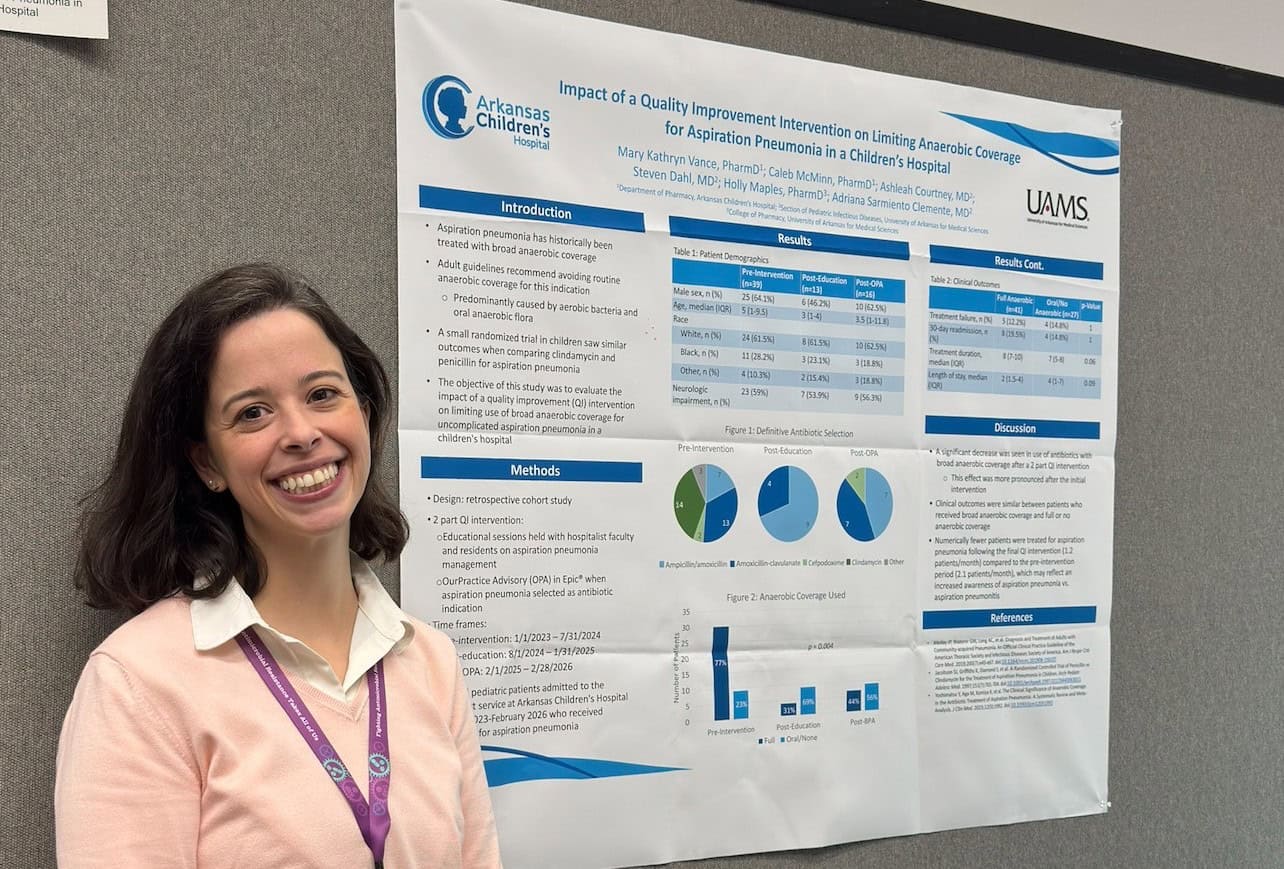
Adriana Sarmiento Clemente presents the ASP team’s work on antibiotic prescribing for aspiration pneumonia at the 16th Annual International Pediatric Antimicrobial Stewardship Conference.
A cornerstone of our approach is physician–pharmacist “handshake rounds,” which provide real-time, collaborative feedback on antimicrobial use. This model has been associated with meaningful reductions in broad-spectrum antibiotic use and more consistent, high-quality prescribing practices. Sustained engagement through these efforts has been critical to driving lasting change in clinician behavior and improving patient care.
Equally important is our leadership in developing clinical pathways that promote appropriate antibiotic prescribing, optimize diagnostic testing, and standardize evidence-based care across our health system. Our stewardship team also partners closely with the Pharmacy and Therapeutics Committee to evaluate and oversee infectious diseases–related initiatives that may influence clinical practice and antimicrobial use.
Diagnostic Stewardship: Reducing Harm and Waste
In addition to optimizing antibiotic prescribing, our program is increasingly focused on improving the use of infectious diseases diagnostic tests; recent initiatives have reduced low-value bronchoalveolar lavage culture testing by more than 70%, streamlined bronchoscopy workflows to reduce redundant testing and improve diagnostic efficiency, and evaluated high-cost send-out molecular diagnostics, identifying limited clinical impact despite substantial cost—efforts that together reduce unnecessary antibiotic exposure and improve the overall efficiency of care.
Expanding Stewardship Beyond the Hospital
Recognizing that most antibiotic prescribing occurs in outpatient settings, Arkansas Children’s has expanded stewardship efforts into ambulatory care. Current initiatives focus on improving antibiotic selection and duration for common pediatric infections, promoting evidence-based management strategies, reducing unnecessary antibiotic use, and addressing variation in prescribing practices across clinical settings. These efforts leverage provider education, clinical decision support tools, prescribing feedback, and quality improvement methodologies to support high-quality care throughout the state.
Advancing Stewardship Through Collaboration
The Arkansas Children’s ASP is actively engaged in national collaboratives that support data-driven improvement and innovation, including ASPIRE and OPerAtiC 2.0. Through these partnerships, we leverage shared data platforms, peer benchmarking, and structured quality improvement frameworks to identify gaps in antimicrobial use, implement targeted interventions, and measure impact over time. Each initiative targets a critical area of stewardship – from improving equity in outpatient prescribing (ASPIRE), to optimizing perioperative antibiotic use (OPerAtiC 2.0). Together, these efforts allow us to align local practice with national standards, accelerate the adoption of evidence-based care, and sustain meaningful improvements in antimicrobial use and patient outcomes.
Our program has also prioritized collaborative efforts within the health system to advance antimicrobial stewardship and improve patient care. Examples include partnering with the neonatology team on a quality improvement initiative to reduce unnecessary broad-spectrum antibiotic use; collaborating with pediatric critical care and pediatric hospital medicine teams to decrease use of broad anaerobic agents for aspiration pneumonia; working with radiology and orthopedic surgery to implement a non-sedated MRI protocol for evaluation of suspected musculoskeletal infections; and partnering with general pediatrics to increase use of watchful waiting for acute otitis media and promote age- and severity-appropriate antibiotic prescribing.
In addition, we have established a microbiology–stewardship collaborative that meets monthly to address diagnostic challenges, review emerging issues, and identify opportunities for quality improvement. These partnerships have strengthened our ability to implement evidence-based practices, improve clinical outcomes, and expand infectious diseases and stewardship efforts across Arkansas.