
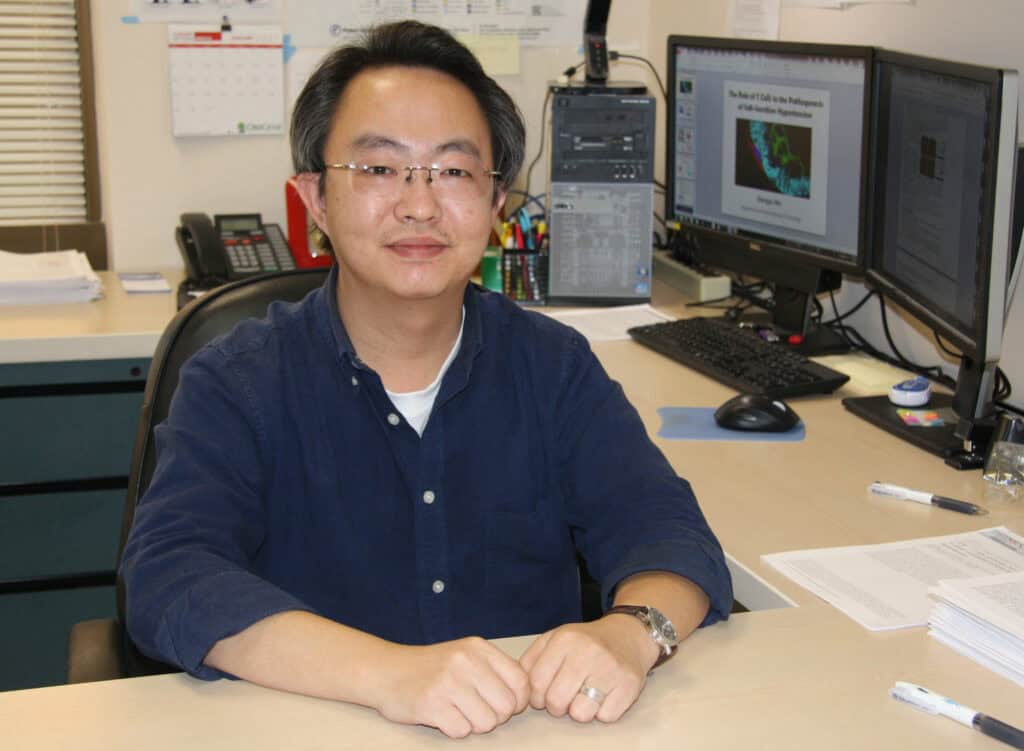
Welcome to the Department of Pharmacology and Toxicology in the College of Medicine at the University of Arkansas for Medical Sciences (UAMS).
It is both an honor and a privilege to serve as Chair of this exceptional department. For more than six decades, our faculty have advanced the understanding of disease mechanisms, drug actions, and therapeutic discovery while educating generations of scientists, physicians, and healthcare professionals. Building upon this strong foundation, we are committed to advancing innovative science, fostering interdisciplinary collaboration, and improving human health through discovery, education, and service.
Pharmacology and toxicology are uniquely positioned at the intersection of basic science and medicine. Nearly every therapeutic advance -from uncovering disease mechanisms to developing safer and more effective treatments- depends upon discoveries rooted in our discipline. As biomedical science becomes increasingly complex, solving today’s most important health challenges requires collaboration across traditional scientific boundaries. Our department embraces this philosophy by bringing together investigators with diverse expertise to address fundamental questions that have meaningful translational impact.
One of our greatest strengths is the breadth and depth of our scientific expertise. Our faculty pursue innovative research across cardiovascular and renal diseases, metabolic disorders, neuroscience, cancer biology, toxicology, substance use disorders, and other emerging areas of biomedical science. This diversity creates an intellectually vibrant environment where ideas are freely exchanged, collaborations develop naturally, and investigators work together to solve complex problems that no single discipline can address alone. We believe that transformative discoveries begin with scientific curiosity, are strengthened through collaboration, and ultimately improve lives through innovation.
Education and mentorship are central to our mission. We are committed to providing exceptional training for graduate students, medical students, postdoctoral fellows, and future scientists while cultivating curiosity, critical thinking, integrity, resilience, and a lifelong passion for discovery. Our commitment extends beyond scientific training; we strive to prepare leaders who will advance biomedical research, education, healthcare, industry, and public service. The accomplishments of our alumni are a lasting testament to the strength of our educational mission and the culture of mentorship that defines our department.
As Chair, my goal is to build on our department’s longstanding tradition of excellence by fostering a culture in which people are our greatest strength. I believe the strongest departments are built on mutual respect, open communication, and a shared commitment to helping one another succeed. Outstanding science is made possible by outstanding people, and our success depends on the collective talents of our faculty, staff, trainees, and collaborators. We are committed to recruiting exceptional scientists, supporting faculty development at every career stage, expanding opportunities for interdisciplinary collaboration, and creating an environment where innovation, mutual respect, and shared purpose enable every member of our community to thrive. Together, we will strengthen our research enterprise, embrace emerging technologies and scientific opportunities, and ensure that our department remains a destination for outstanding faculty, trainees, and collaborators from around the world.
The future of biomedical science will be shaped by curiosity, collaboration, and the courage to pursue bold ideas. Our department is committed to creating an environment where those ideas can flourish, where the next generation of scientists can reach their full potential, and where discoveries made in our laboratories ultimately improve the lives of patients and communities.
Whether you are a prospective student, postdoctoral fellow, faculty member, collaborator, alumnus, or friend of the department, I invite you to explore our programs, meet our faculty, and learn more about the exciting work taking place at UAMS. We welcome opportunities to partner with those who share our passion for advancing biomedical science, educating future leaders, and improving human health.
Thank you for visiting the Department of Pharmacology and Toxicology. We look forward to welcoming you to our community and to the discoveries we will make together.
Shengyu Mu,
Professor and Department Chair