

Assistant Professor
Phone: 501-603-1087
Fax: 501-686-8970
Email: YLiu5@uams.edu
Education and Training
- Ph.D. – New York Medical College, Department of Pharmacology. 2013
- Postdoctoral training– University of Arkansas for Medical Sciences, Department of Pharmacology & Toxicology, Rusch laboratory. 2019
Research Interests
Metabolic syndrome persists as a leading cause of morbidity and mortality among adults in the United States. Specifically, the co-existence of type 2 diabetes (T2D) and hypertension are hallmarks of Metabolic syndrome. Our research aims to establish a clear connection between these two conditions through the role of immune cells. Here, we hypothesize that activated CD8T cells in diabetic subjects are “culprits” contributing to the co-morbidity of hypertension. Central to our investigation is how excessive ATP and insulin in HFD-T2D sustain chronic activation of CD8T cells, thereby leading to the development of hypertension. Our study encompassed multidisciplinary approaches, including full spectrum flow cytometry, seahorse metabolic analysis, echocardiography, and radiotelemetry to examine systemic immune cell activity and cardiovascular function. Our work will shed light on new therapeutic targets to decouple diabetes and hypertension, thus mitigating the burden of metabolic syndrome and its complications. My lab closely collaborates with Dr. Shengyu Mu and current lab members include one graduate student, one senior lab technician and one junior technician
Liu Lab Team
Faith Stephens: Graduate Student
Anessa Haney: Research Associate
Duo Bessette: Junior Technician
Cutting Edge Technology
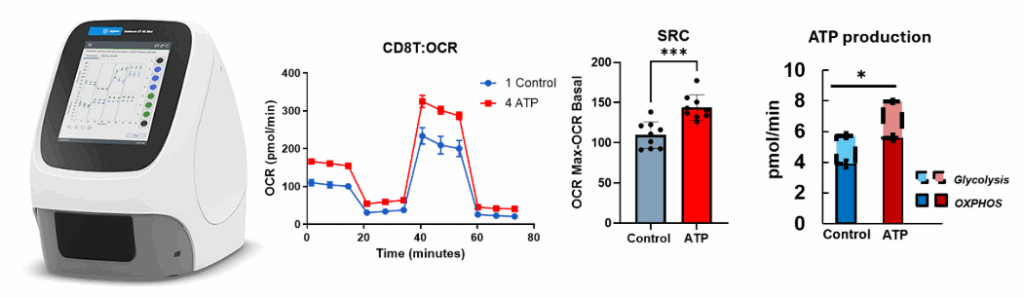
- High-sensitivity Seahorse to measure the metabolic profile of immune cells. Real-time measurement of oxygen consumption rate, ATP production rate from mitochondrial respiration and glycolysis from both immune and non-immune cells.
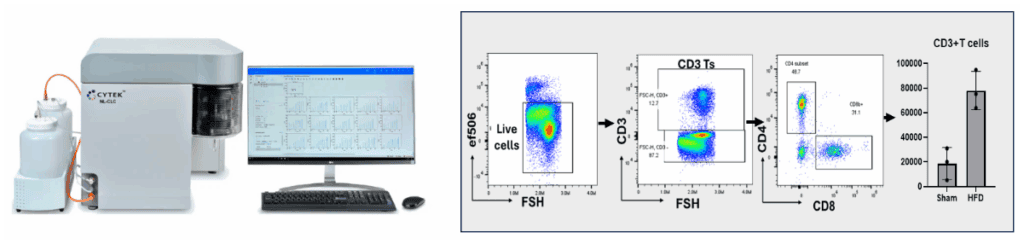
- Full spectrum flowcytometry to phenotyping immune cells in kidney and heart.
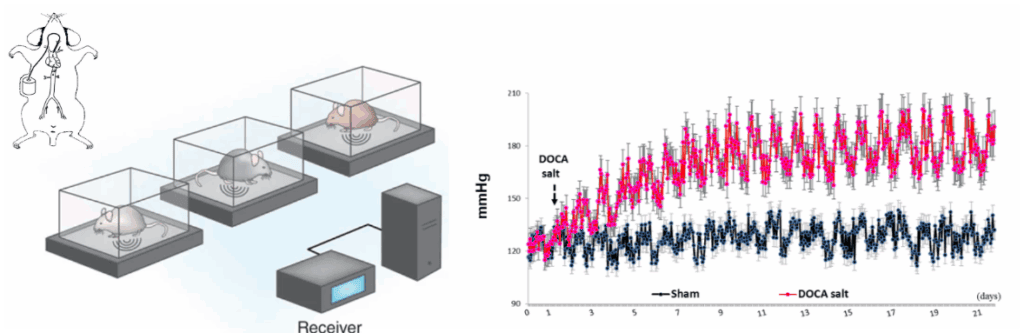
- Radio-telemetry system for cardiovascular monitoring. Real-time measurement and continuous recording of cardiovascular parameters in conscious laboratory rodents, including systolic and diastolic blood pressure, heart rate, and locomotor activity.
Recent Research Support
- NIH-NIDDK R01 (PI), 02/05/2026-12/31/2030, Total cost $3.5 million. “Metabolic Rewiring of T Cells Bridges Diabetes to Hypertension”
- COM Pillot Grant, (PI) 4/1/2026 – 3/31/2027, Total cost $50000, “Insulin-Powered T Cells Promote Cardiac Dysfunction in Type 2 Diabetes”
- NIH-NHLBI, R01(Co-I) 4/15/2024–3/30/2029, Total cost $3.8 million “T cell homing to the kidney contributes to salt retention and blood pressure regulation”
Selected Publications
- Deck KS, Mora CJ, Deng S, Rogers P, Rafferty T, S Mu, Liu Y. Immune Dysregulation Connecting Type2 Diabetes and Cardiovascular Complications. Life 2025, 15, 1241. PMID: 40868889
- Benson LN, Deck KS, Mora CJ, Guo Y, Rafferty TM, Li LX, Huang L, Andrews JT, Qin Z, Trott DW, Hoover RS, Liu Y, Mu S. P2X7-Mediated Antigen-Independent Activation of CD8+ T Cells Promotes Salt-Sensitive Hypertension. (*co-corresponding author) Hypertension. 2024; 81: 530–540. PMID: 38193292
- Benson LN, Liu Y, Wang X, Xiong Y, Rhee SW, Guo Y, Deck KS, Mora CJ, Li LX, Huang L, Andrews JT, Qin Z, Hoover RS, Ko B, Williams RM, Heller DA, Jaimes EA & Mu S. The IFNγ-PDL1 pathway enhances CD8T-DCT interaction to promote hypertension. (*co-first author) Circulation Research. 2022; 130(10): 1550-1564. PMID: 35430873
- Liu Y, Rafferty TM, Rhee SW, Webber JS, Song L, Ko B, Hoover RS, He B & Mu S. CD8+ T cells stimulate Na-Cl co-transporter NCC in distal convoluted tubules leading to salt-sensitive hypertension. Nature Communications. 8: 14037; 2017. PMID: 28067240