
Congratulations to Eugene Nyamugenda, who successfully defended his dissertation entitled “Effect of high-fat diet on the melanocortin-4 receptor (MC4R) neurons in the paraventricular nucleus of the hypothalmus”. Eugene is a student in Giulia Baldini’s laboratory.
Department News
Victoria Hwang selected in Regeneron Science Talent Search
Victoria Hwang, a senior at the Arkansas School for Mathematics, Sciences, & the Arts, has been named a top 300 Scholar in the 79th Regeneron Science Talent Search. Victoria was selected for her work entitled “POLKKO GBM-derived Cells Exhibit Increased Replication Catastrophe” in Dr. Robert Eoff’s laboratory. Congratulations Victoria!
December publications
Mechanistic Insights into Chemoresistance Mediated by Oncogenic Viruses in Lymphomas.
Chen J, Kendrick S, Qin Z.
Viruses. 2019
Duah Alkam invited to present at Nanopore Community Meeting
Duah Alkam, a Ph.D. student in Mark Smeltzer‘s and Dave Ussery‘s laboratories was invited to present her work at the Nanopore Community Meeting in New York. A description of her presentation from Oxford Nanopore Technologies is below.
Duah Alkam – PCR-free transposon sequencing (TnSeq): Cas9/dCas9-mediated transposon enrichment
Duah Alkam (University of Arkansas for Medical Sciences) opened the Targeted Sequencing breakout session by introducing the goal of her team: to find therapeutic targets for the prominent bacterial pathogen Staphylococcus aureus. Staphylococcus bacteria are a leading cause of healthcare-associated infections, with Methicillin-resistant S. aureus (MRSA) causing over 80,000 severe infections and over 11,000 deaths per year.
Duah and the team take a whole-genome screening approach to the search for novel therapeutics via transposon sequencing (TnSeq), enabling analysis of the genes that affect the fitness of microorganisms in a particular condition. She described how, in a transposon library, each cell is mutagenized by a transposon – a DNA segment that inserts into a gene, resulting in dysfunction. The transposon library used by Duah and her colleagues is in a background of a clinically-relevant strain of S. aureus; Duah gave an overview of a typical workflow, in which the libraries are grown in different conditions, then enriched for the region of interest. The current protocol for TnSeq requires PCR amplification of the transposon-library junctions prior to sequencing; Duah noted that this method has been used in many papers. However, Duah explained, there’s a problem with this method: inherent bias is introduced through the PCR steps. Looking to overcome this, Duah asked: “can we enrich for the transposon via a PCR-free method?”. Here, Duah explained, the team turned to Oxford Nanopore and decided to explore PCR-free dCas9/Cas9-mediated transposon enrichment.
Duah outlined the four methods tested to investigate Cas9-mediated enrichment and nanopore sequencing of S. aureus TnSeq libraries; in each case, samples were prepared for sequencing without PCR using the Ligation Sequencing Kit and sequenced on the MinION device.
In the first condition, the TnSeq library was sequenced without any enrichment. This no-enrichment condition resulted in just 8,566, or 0.2% of the 5.1m reads representing transposons, as expected – transposons are “pretty rare in the library”. This confirmed the need for enrichment of the transposons.
In the second condition, CRISPR/Cas9 was used to induce a double-stranded cut targeting transposon insertion sites, then the library was sequenced. Duah outlined the CRISPR/Cas9-mediated enrichment method: firstly, the 5′ ends of all strands in the sample are dephosphorylated. Next, the Cas9 enzyme is directed to and cleaves DNA at transposon sites via RNAs including custom transposon-specific probes. This reveals phosphorylated ends, to which sequencing adapters can be ligated so that the enriched DNA can be sequenced. In this dataset, transposons were successfully enriched, representing 45% of reads in sequencing – “we were very excited when we saw this” – but sequencing yield was depleted, so that this was comprised of 3.7k reads.
To investigate whether yield could be improved, in the third condition, dCas9 – “dead” Cas9, an inactive form of the enzyme which does not cut the DNA – and biotinylated RNA probes were used, so that the biotinylated targets could be captured using Streptavidin beads then prepared for sequencing. Whilst this protocol resulted in only 0.8% transposon reads, sequencing output was higher, resulting in 94.6k reads.
Aiming to make the most of the enrichment from Cas9 and yield from dCas9, in the last condition, a combination of these methods were used. dCas9 and biotinylated probes were first used to capture the DNA, then active Cas9 was used to cleave the transposons at a single site prior to sequencing. Here, enrichment was lower than when using Cas9 alone, with 31% of reads representing transposons, but as sequencing output was higher, 19.4k reads were on-target.
Summarising, Duah concluded that she and her team had successfully devised and utilized a PCR-free method of transposon enrichment from a TnSeq S. aureus library, representing the first time this has been achieved without PCR. Furthermore, the use of dCas9 in pulldown prior to cleavage by Cas9 improved sequencing yield, enabling a greater number of transposon reads. They are now optimizing their protocol to further improve sequencing yield and recover greater numbers of insertions.
Congratulations Dr. Mukiza!
Congratulations to Tresor O. Mukiza, who successfully defended his dissertation entitled “Multiple DNA Sequence-Specific Protein-DNA Complexes Activate Meiotic Recombination Hotspots Via Chromatin Remodeling”. Tresor is a student in Wayne Wahls‘ laboratory.
New position for Jacy Wagnon
Jacy Wagnon, who earned her Ph.D. in Dr. Wayne Wahls’ laboratory, has now obtained a tenure-track faculty position at The Ohio State University. Doctor Wagnon is an Assistant Professor in the Department of Neuroscience, with research interests in epilepsy, neurodegenerative disorders, and genetics of neurological diseases.
November publications
 Structural basis for DNA unwinding at forked dsDNA by two coordinating Pif1 helicases.
Su N, Byrd AK, Bharath SR, Yang O, Jia Y, Tang X, Ha T, Raney KD, Song H.
Nat Commun. 2019

Ramirez AM, Byrum SD, Beenken KE, Washam C, Edmondson RD, Mackintosh SG, Spencer HJ, Tackett AJ, Smeltzer MS. ACS Infect Dis. 2019
 Synthesis and Anticancer Activity of Tertiary Amides of Salinomycin and Their C20-oxo Analogues.
Czerwonka D, Urbaniak A, Sobczak S, Piña-Oviedo S, Chambers TC, Antoszczak M, Huczyński A.
ChemMedChem. 2019
 Integration of Flow Cytometry and Single Cell Sequencing.
Andreyev DS, Zybailov BL.
Trends Biotechnol. 2019
Cancer Research Highlights Largest-Ever Showcase of Medical Discoveries
Nov. 27, 2019 | Scientists conducting cancer research in the lab, clinic and community gathered Nov. 20 at the 26th UAMS Showcase of Medical Discoveries to share their projects and discuss ways to work together.
A quarterly event, the showcase is designed to highlight research areas across UAMS and encourage collaboration among scientists. Cancer research served as the focus of the event held at the UAMS Winthrop P. Rockefeller Cancer Institute. It attracted about 170 attendees from research and clinical areas to learn about the university’s wide scope of cancer research projects.
The showcase was co-sponsored by the UAMS Office of Research in conjunction the Cancer Institute, College of Medicine and Office of Institutional Advancement.
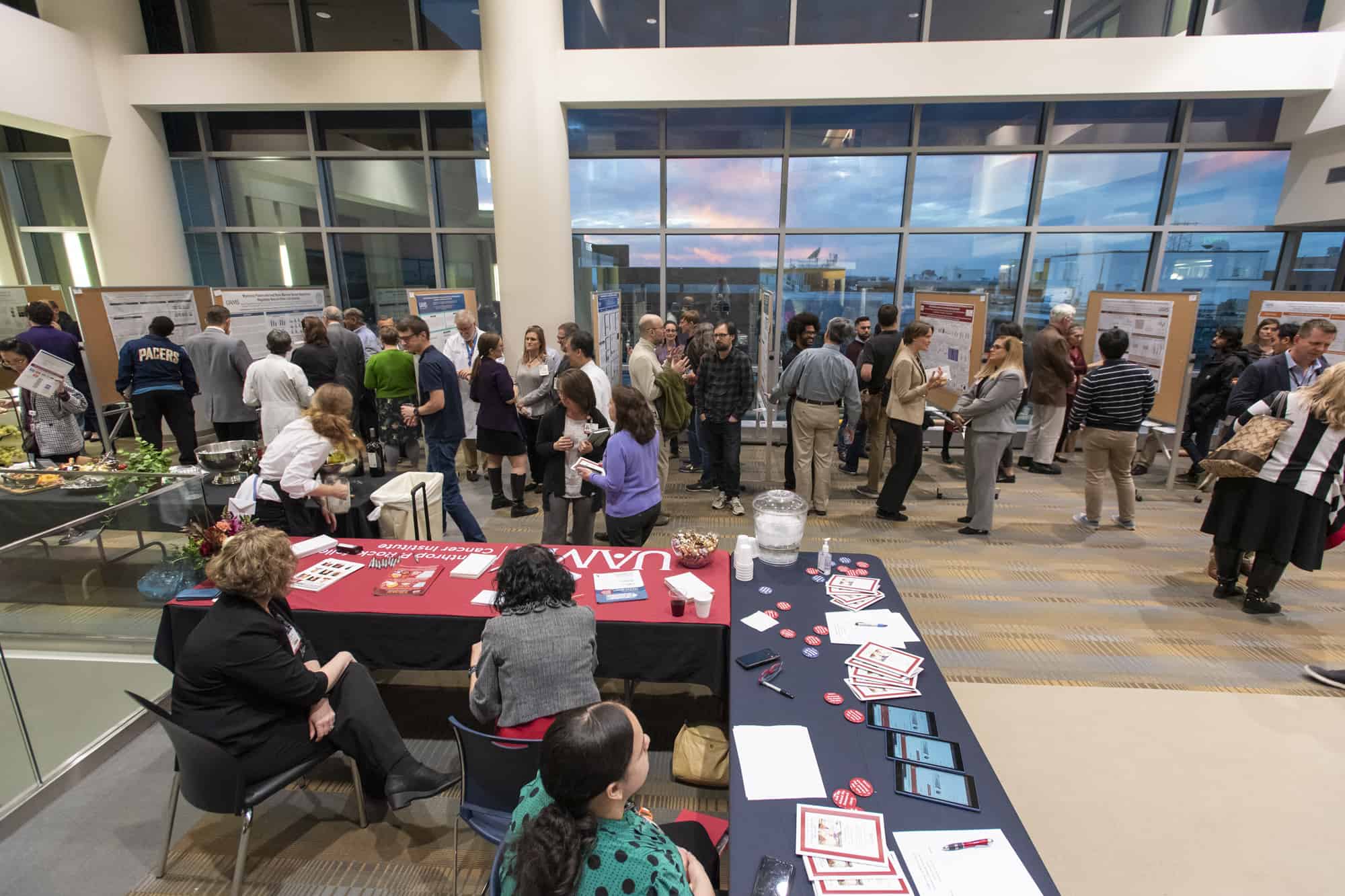
About 170 people attended the Showcase of Medical Discoveries, which featured 40 posters highlighting cancer research programs and services at UAMS.
“This is an excellent time to highlight our cancer research programs, as we focus our efforts on attaining National Cancer Institute Designation and transition to new Cancer Institute leadership under director Dr. Michael Birrer. As we take stock of our strengths, we look forward to advancing our research programs on a strong new trajectory in the upcoming decade,” said Shuk-Mei Ho, Ph.D., vice chancellor of research.
Birrer, a medical oncologist who specializes in gynecologic cancers, joined the Cancer Institute as vice chancellor and director in late 2019.
In early 2019, the UAMS Cancer Institute received unanimous support in both the Arkansas Senate and House for its quest to achieve designation by the National Cancer Institute. An annual state allocation of $10 million will support this effort.
Ho stressed that the allocation designated by the Legislature is essential and illustrates the overarching support for designation among leaders and citizens in Arkansas.
“We have established a good foundation at UAMS toward achieving NCI Designation. The state’s support and enthusiasm for this important goal is a vital part of that,” Ho said.
To achieve designation, cancer centers undergo a highly competitive assessment process that demonstrates an outstanding depth and breadth of basic laboratory, patient/clinical and population-based research. The designation brings with it many benefits, including expanded access to federal funding for researchers and improved access to clinical trials for patients.
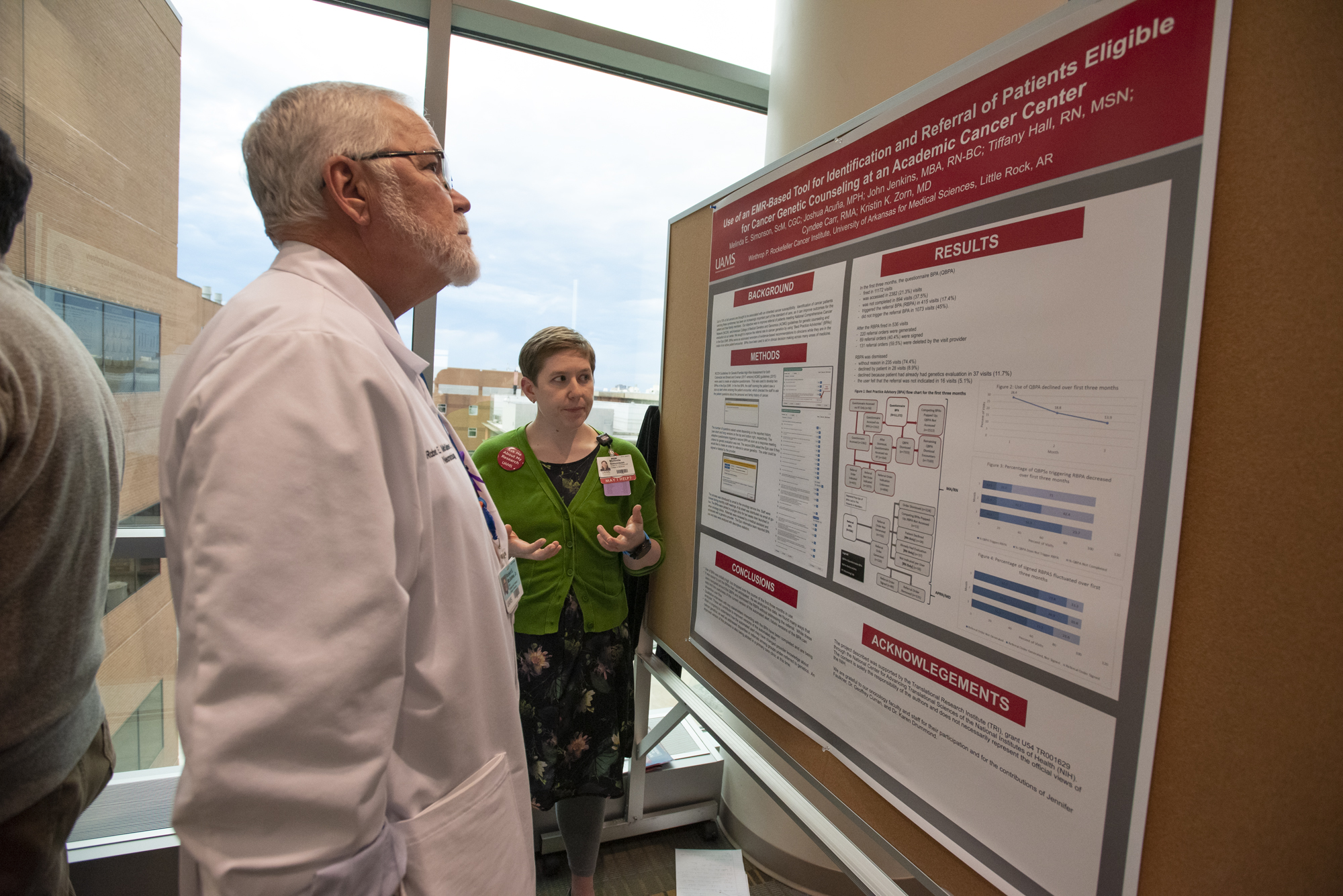
Genetic counselor Mindy Simonson discusses her research with Robert McGehee Jr., dean of the UAMS Graduate School.
At the showcase, researchers displayed 40 scientific posters representing Cancer Institute programs and numerous UAMS colleges and academic departments. Together with their colleagues, the scientists joined in lively discussions about the implications and goals of their research. Of the 26 showcases the UAMS Office of Research and Innovation has presented, this one was by far the largest, Ho said.
Genetic counselor Mindy Simonson and Kristin Zorn, M.D., chair of the Division of Gynecologic Oncology, shared a poster they recently presented at the National Society of Genetic Counselors Annual Meeting in Salt Lake City.
Their project examines how better to identify and streamline the referral process for patients with hereditary cancers.
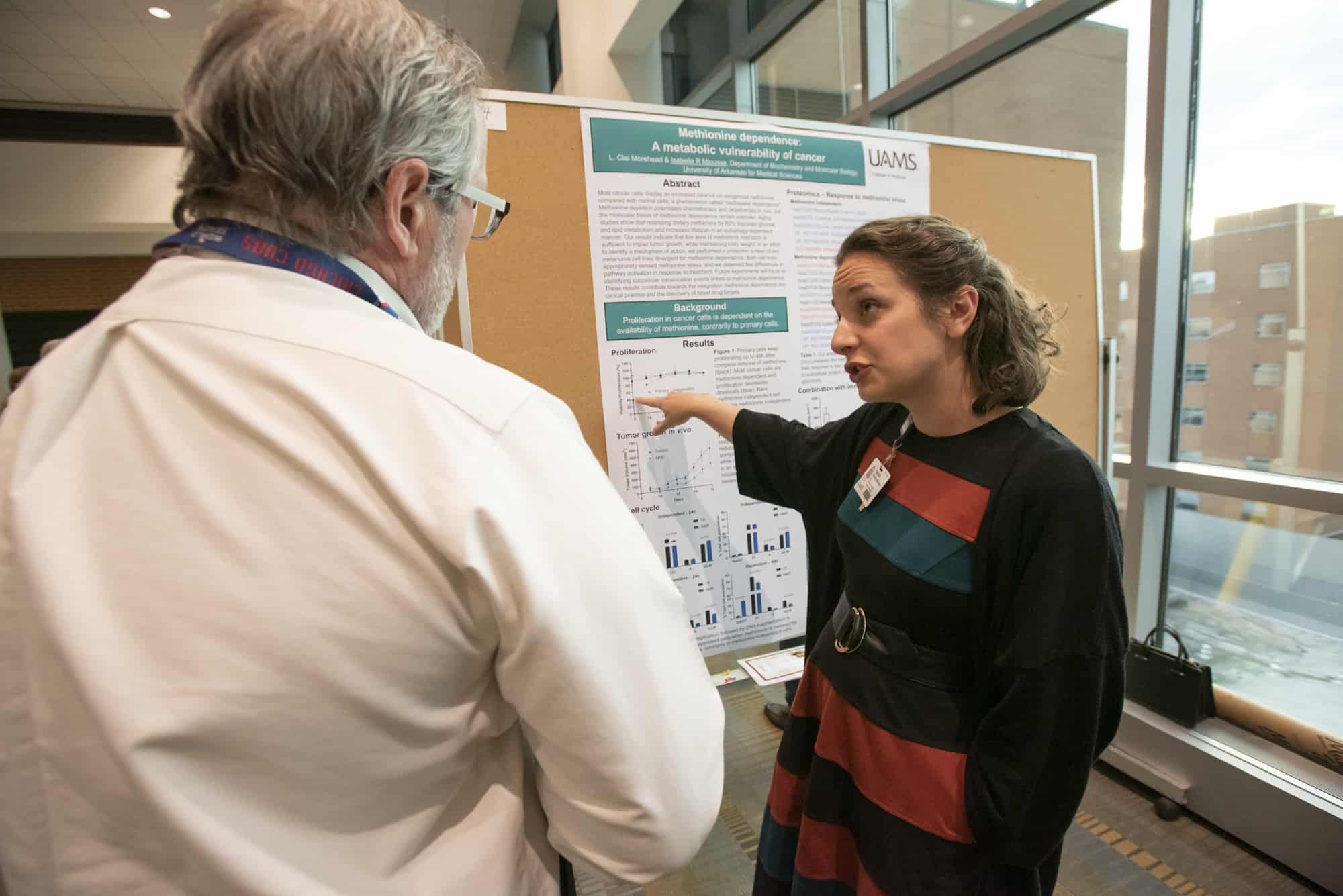
Isabelle Racine Miousse, Ph.D., assistant professor in the UAMS Department of Biochemistry and Molecular Biology, shares information about her cancer research.
“We are working to build an adaptive questionnaire using electronic medical records to automatically generate a referral for patients who meet certain qualifications related to hereditary cancers,” Simonson said.
Although the process has presented technological challenges, the idea generated much excitement among participants at the Utah conference.
“A lot of people are interested in this concept and have talked to us about how it could work in various settings,” Simonson said.
Other scientists shared information related to their laboratory research, including Samantha Kendrick, Ph.D., assistant professor in the UAMS College of Medicine Department of Biochemistry and Molecular Biology.
Kendrick’s research focuses on treatment resistance in aggressive diffuse large B-cell lymphoma.
“We are working to find a way to shut off B-cell receptor signaling pathways at the DNA level. If we can develop a drug to target these genes, the disease could become more sensitive to chemotherapy and lead to better outcomes for patients,” Kendrick said.
In addition to viewing the wide range of cancer research programs and gathering information about potential collaborations, attendees also learned about the Cancer Institute’s infrastructure and research core facilities available to support their work.

Shuk-Mei Ho, Ph.D., (left) recognized Laura Hutchins, M.D., (right) at the event and honored for her many years of service to UAMS.
In a brief presentation, Ho recognized Laura Hutchins, M.D., for her more than 30 years of service to UAMS and its cancer programs. Hutchins served in multiple roles at UAMS, including division director of the UAMS Division of Hematology/Oncology for 15 years and program director of the UAMS Hematology/Oncology Fellowship Program for 10 years.
She held the prestigious Virginia Clinton Kelley Endowed Chair for Clinical Research from March 2007-December 2018 and was associate director for clinical research in the Cancer Institute for 20 years. For 18 months, she served as Cancer Institute interim director while the search for the new director was underway.
“Dr. Hutchins is one the strongest friends of research we have at UAMS. She champions this place in many ways and we are so thankful for her contributions,” Ho said. Hutchins plans to retire in early 2020.
Women in Research Poster Session
Nov. 15, 2019 | By Amy Widner
The Women’s Faculty Development Caucus celebrated 30 years by turning a spotlight on women in research at UAMS, while also setting new goals to ensure that progress continues.
The Women in Research Poster Showcase was held Nov. 7 in the Fred W. Smith Conference Center on the 12th floor of the Jackson T. Stephens Spine & Neurosciences Institute. All women researchers on campus were invited to present posters. The presenters went in groups, allowing participants to visit other posters and network.
The format enabled visitors to see that women are advancing research in all aspects of health care and in all colleges and departments on campus.

Research Committee Chair Taren Swindle, Ph.D., welcomes participants to provide ideas for continuing to improve work life for women scientists. Sam Giannavola
“I am really impressed by the wide range of projects that I see around the room,” said Mari K. Davidson, Ph.D., an associate professor in the Department of Biochemistry and Molecular Biology in the College of Medicine. “I just talked to one person about safe sleep for babies, another about Stop the Bleed. We can get caught in a place where we just stick to our own area, so it’s really fun to see what’s going on.”
The Women’s Caucus was founded in 1989 at UAMS as a professional development and mentoring program to help women advance their careers and assume leadership positions. Its professional development efforts have resulted in an expanding organization that addresses the needs of all UAMS faculty members and trainees. The caucus provides leadership training, mentoring/advising, faculty handbook publications, faculty development, and networking opportunities.
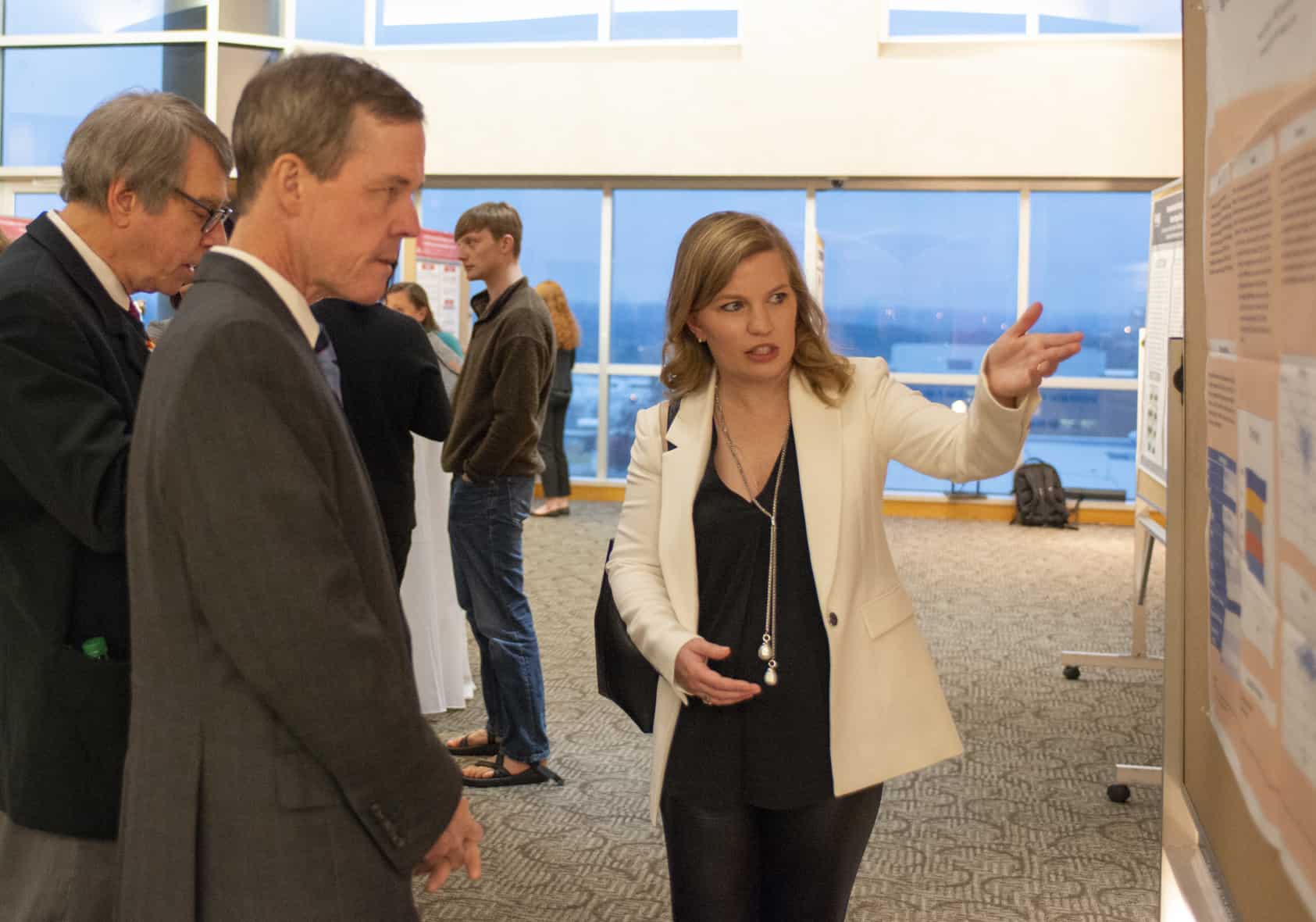
Neurosurgery resident Heather Pinckard-Dover, M.D., presents her research to UAMS Chancellor Cam Patterson, M.D., MBA, center, and neurosurgery Professor T. Glenn Pait, M.D. Sam Giannavola
The caucus is structured around faculty-led committees with rotating leadership, which simultaneously gives women leadership opportunities and provides new ideas and energy behind caucus activities.
Research Committee Chair Taren Swindle, Ph.D., assistant professor in the Department of Family and Preventive Medicine Research and Evaluation Division, welcomed the crowd with information on caucus history and inspiration for its future.
“For women in science, we have made some progress,” Swindle said. “The National Institutes of Health, for example, just announced last week they are extending early career status for career development applications after childbirth. Another example is here at UAMS, promotion and tenure guidelines have been changed to accommodate familial needs for men and for women. These are wonderful areas of progress, but we still have work to do.”
Swindle shared statistics that paint a picture of the remaining gender gaps:
- Only 32% of scientists in North America are women, according to a UNESCO report.
- While there is no difference in productivity between young male and female scientists, the first grant given to female scientists is $40,000 less on average, and that gap increases to almost double at Big 10 universities, according to a report published in JAMA.
- Women scientists are 20% less likely than men to come back to work after starting a family, according to an article in Nature.
- Only 21% of full professors are women, according to the American Medical Association.

Eva Woodward, Ph.D., presents her work in the implementation science field. Sam Giannavola
Swindle pointed to a poster near the entrance which provided attendees an opportunity to list strengths, weaknesses, opportunities and challenges facing women faculty at UAMS. The committee supplied a few bullet points in each category, and the participants were encouraged to use sticky notes to provide their own insights.
“We’re really seeking your perspective on this,” Swindle said. “The Women’s Faculty Development Caucus has decided to broaden the research committee. In the past, the committee has focused on promoting students. These statistics and others show us that not only do students and young researchers need help, mid-career faculty face challenges too. There is a gap to bridge between young, promising researchers and full tenured professors, so we’re looking at how we can address that issue. This will also result in serving the faculty more broadly and better promoting all women in science.”
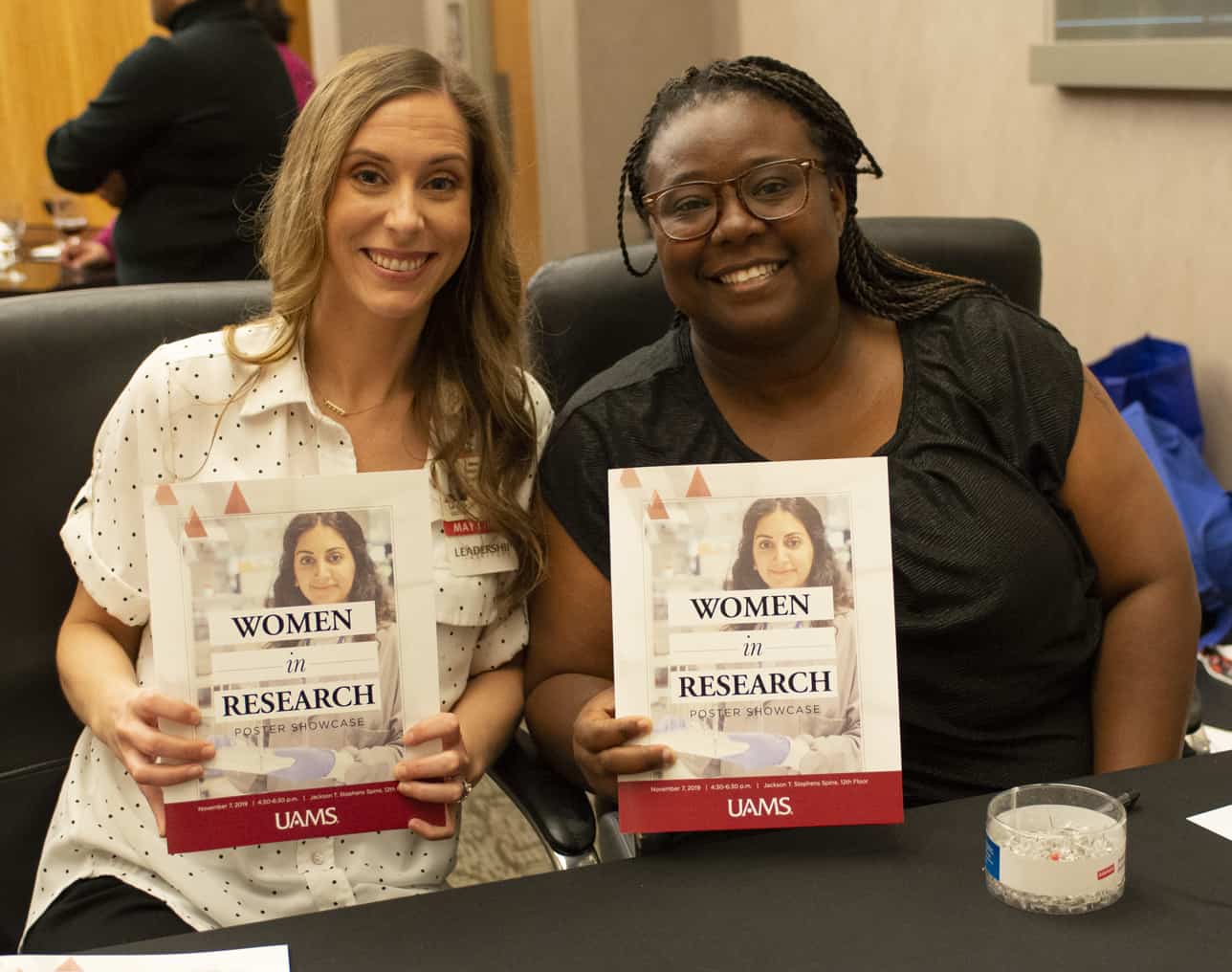
Image by Sam Giannavola
Eva Woodward, Ph.D., an assistant professor in the Department of Psychiatry in the College of Medicine, was swarmed by interest in her recent publication about ways to address health inequity using the tools of implementation science. Between interested visitors, she paused to say that the points made by Swindle were exactly why she welcomed the opportunity to take part in the research showcase.“While men and women start out even at the assistant professor level, by the time you’re talking about full professor, the women fall out and the men dominate those positions, and we still have huge disparities to address,” Woodward said. “I’m taking time out of my schedule for this because it’s one way in which I can provide witness to the work of other women scientists who aren’t necessarily underrepresented in their field, but are underrepresented in positions of leadership, and also to be seen as well. It seems simple, but it’s important.”
On the cover
Congratulations to graduate student Tresor Mukiza and his co-authors, Reine Protacio, Mari Davidson, Walter Steiner and Wayne Wahls. Cover art for their new article on chromosome dynamics is featured on the home page of Genetics for November, 2019. The editors also selected this paper to be featured in a highlight in Genetics.