
Enabling Access to Optimal Therapy in CF
 Cystic Fibrosis Transmembrane Conductance Regulator (CFTR) modulators (elexacaftor/tezacaftor/ivacaftor) have revolutionized CF patient care, restoring normal function to people with CF (pwCF) who respond. Yet, a substantial proportion of pwCF experience no or suboptimal therapeutic benefit, and many report adverse physical and psychological side effects that limit tolerance or adherence. Understanding variation in genetic response to pharmacological treatments and personalized CFTR modulator response is crucial to the optimization of the use of these novel compounds; expansion to all patients who might benefit from them; and development of predictive biomarkers. In addition, the ability to tailor modulator choice and dosing to individuals will mitigate risk of side effects and improve clinical response.
Unanswered Questions about CFTR Modulators
- Can genetic variation between individuals help explain differences in those who will have little to no response to CFTR modulator therapy?
- Which factors contribute to changes in concentration and effectiveness of CFTR modulators, long-term?
- Is there a relationship between non-optimal CFTR modulator dosage and unwanted side effects?
Significance
This study will provide innovative data on concentration and pharmacogenetic variability among a large prospective observational study of CFTR modulator use in people with CF (The PROMISE Study), prospective data on the utility of concentration data and dose titration to optimize the clinical response of TC in the lungs, as well as throughout the body. Our prospective study is also designed to evaluate a balance between lung function response from CFTR modulator and side effect profiles, particularly of an increasingly observed effect causing neuropsychological deterioration (i.e., worsening anxiety, depression, and cognition).
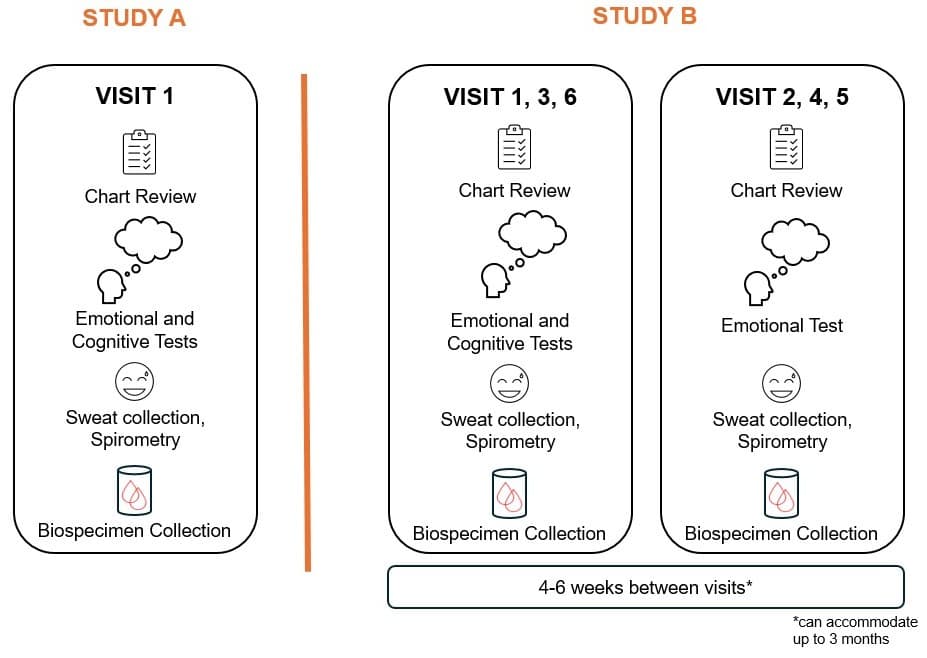
Study Procedures and Timeline
Recruitment Sites



Research Resources

The PROMISE Study
A Prospective Study to Evaluate Biological and Clinical Effects of Significantly Corrected CFTR Function
Learn More