
Asthma Disparities and Health Outcomes Research Utilizing Novel Technology to Impact High-Risk Populations
Significant disparities in asthma among low-income and minority populations have been proven for decades, yet large-scale research initiatives specifically tailored to the needs and environment of high-risk children living outside of inner-city environments have not been established. High rates of morbidity coupled with poor access to specialty asthma care confirmed the need for tailored interventions to address the significant burden of asthma in predominantly rural, agricultural regions. As a result, Dr. Perry and her research team have designed and implemented innovative interventions utilizing technology-based solutions to test their effectiveness in aiding the delivery of guidelines-based asthma care. These technology-based solutions include the utilization of telemedicine and smartphone applications.

Telemedicine offers the ability to overcome significant challenges presented by inadequate healthcare access and travel distance for rural pediatric asthma populations. In addition to telemedicine, interventions utilizing smartphone applications offer an innovative method of integrating asthma self-management into patients’ daily routines and have the potential to improve provider-patient interactions through smart technology.
The mechanisms that produce disparate asthma outcomes in minority children are poorly understood, but social determinants of health account for at least 50% of asthma health disparities. As a result, Dr. Jefferson’s research is designing novel approaches to study differences in asthma outcomes between rural and urban children with asthma to better understand the role of place-based social determinants. This research also examines the association between asthma quality metrics and adverse outcomes in rural and urban children.
Lung Cell Biology Laboratory utilizes human lung platforms to explore mechanisms of disease and evaluate immunologic responses to viral infections
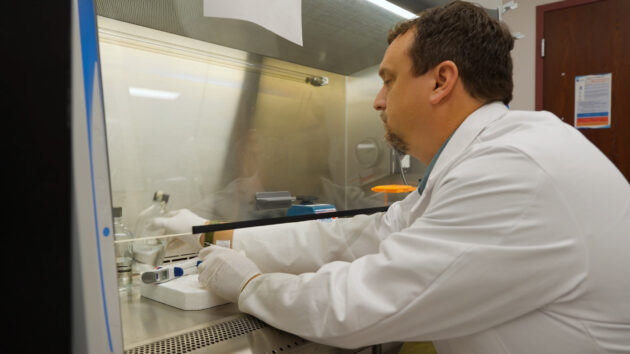
The focus of the LCBL is to evaluate mechanisms of disease related to asthma and lung disease, in particular using precision-cut human lung slices from human tissue acquired from the NIH donor bank to evaluate airway hyper-responsiveness to a variety of stimuli and clinically relevant tolerance to inhaled medications. These same tissues are used to evaluate immune responses and airway hyper-responsiveness when exposed to viruses. Primary bronchial epithelial cells are derived from these lungs to study immune responses to viral infection as well.
Fellows will have the opportunity to participate in the preparation, ex vivo culture and analysis of cells and tissues derived from viable human lungs collected post mortem by transplant teams. Fellows will participate in collaborative projects supported by an NIAID funded Asthma Center based at UCSD and an interinstitutional NHLBI funded Program Project Grant based at Rutgers, among others. Current areas of interest include mucus secretion, rhinoviral infection and bronchodilator tachyphylaxis as they relate to asthma and inflammatory responses and use tissues derived from normal and asthmatic donors. The fellows will be exposed to physiological approaches used to monitor bronchoconstriction and bronchodilation in lung slices and to molecular approaches used to evaluate gene expression.
Cross-Sectional Prospective Studies of Asthma Exacerbations and Viral Infections in the Emergency Department and Clinics
Cross-sectional studies of asthma exacerbations and viral infections in children are being conducted in the Emergency Department and Outpatient Clinics at Arkansas Children’s Hospital. These studies enroll children with a diagnosis of asthma and those with cold symptoms to evaluate differences in acute symptoms and immune responses between the groups. Biologic samples are obtained and paired with clinical asthma measures of disease burden to evaluate a variety of clinical, signaling and immunophenotyping signals using a variety of technologies including viral genome sequencing, microbial composition, host RNAseq, Luminex, among others.
Clinical Trials and Population-based Studies in special asthma populations including Severe Asthma and Hispanic Asthma/Allergy Clinics
Severe Asthma registries are designed to better understand potential modifiers of disease and barriers to care. These specialized clinics and registries will allow for longitudinal studies of severe asthmatics and asthma involving special populations across Arkansas which will allow for development and implementation of projects aimed at reducing health care disparities, directly addressing social determinants of health. These registries are also designed to enhance enrollment in clinical trials and provide an opportunity for expansion into national networks. In addition, the Asthma Research Program is a member of the NIH, ECHO–based clinical trials network (ISPCTN), focused on implementing studies protocols in high-risk, under-served populations in the US to impact care among children with asthma, obesity and other chronic conditions. . The Arkansas Children’s Severe Asthma Program is also a part of the Severe Pediatric Asthma Consortium (SPAC), a multicenter group that evaluates the management of severe asthmatics.