
Introduction
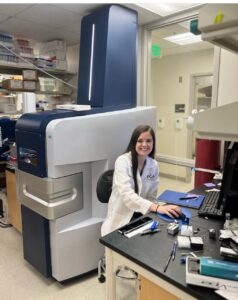
Current student Sydnye Shuttleworth working in the Koss lab
The goal of dual degree training is to equip students with the tools and skills to become future leaders as clinician scientists. Our program offers unique opportunities to develop physician scientists from this and regional, similarly rural states. Physician scientists in academia have been called an “endangered species”, and there is a deep need for health care workers who can truly bridge the translational impact of research and the science of clinical practice. Notably, the populations of Arkansas, Mississippi, Oklahoma, and Louisiana have some of the worst health outcomes in the United States, highlighting the need for innovations in treatment and healthcare delivery for these historically underserved states and training for the population who would develop and deliver those innovations.
The UAMS M.D./Ph.D. program was formalized in 2007 and has been supported by the College of Medicine since that time. In 2026, UAMS was awarded Medical Scientist Training Program (MSTP) designation and NIH funding to support program growth. Historically, the M.D./Ph.D. program has actively recruited and accepted between one to five students annually, with an average of three to four per year, and currently maintains an annual class size of 4 students. The program has consistently graduated a small, diverse, and successful pool of clinician-scientists. Graduates of our existing M.D./Ph.D. program are pursuing competitive and prestigious residency training programs, and are equipped to be leaders in academic medicine and industry. Many of our graduates have returned to practice in Arkansas, including several alumni currently in UAMS faculty positions. Other graduates lead health initiatives at other academic institutions.
Training Timeline
Seven to eight years of academic study are usually required to complete the rigorous requirements of the CREST M.D./Ph.D. program. Students must be admitted into the College of Medicine and into Graduate School through the Interdisciplinary Biomedical Sciences (GPIBS) Ph.D. Program or another UAMS college Ph.D. program of their choice. Supported by the rich resources of UAMS and Arkansas Children’s Research Institute (ACRI), UAMS M.D./Ph.D. students benefit from innovative and cutting-edge scientific laboratory experiences during their Ph.D. studies.
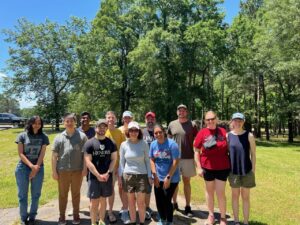
End of the year celebration picnic. May 2024
Students integrate early into the program, with options to pursue early research rotations even before the start of their medical school coursework. Each student develops an individualized learning plan that serves as a map for their ensuring training and future career goals. Enrolled students complete the initial two preclinical years of the College of Medicine curriculum, then enter the Graduate School for the Ph.D. portion of their dual degree training. The Graduate Program IBS umbrella program provides flexibility for students to pursue their dissertation research in a number of varied disciplines, from molecular biology and computational bioinformatics, to neurosciences and microbiology. Any member of the UAMS Graduate Faculty is eligible to serve as a major advisor for the Ph.D. training portion if they are affiliated with an IBS Interdisciplinary Track and have an active, funded research program.
Graduate training is tailored to meet the individual interests and needs of the M.D./Ph.D. student. During this phase the student takes advanced course work, passes the Ph.D. candidacy examination, conducts original research under the direction of a faculty advisor, and writes and defends the dissertation. Credits earned in medical school during the preclinical basic science courses satisfy requirements for graduate coursework, preventing redundancy and duplication. Additional required courses include Scientific Communications and Ethics (Grant Writing), Biostatistics, Seminar and advanced courses, if required by students’ dissertation committees. While additional courses may be taken or prescribed, the focus of the graduate phase is on hands-on research training.
Upon completion of graduate research and defense of the trainee’s dissertation, students re-enter medical school to complete their last two years of clinical training, comprised of required and elective clinical clerkships. College of Medicine and Graduate School standards of academic achievement apply separately for the M.D. and Ph.D. degrees; however, students are expected to maintain high academic standards at all times to remain qualified for continued scholarship support.
Eligibility
The CREST MSTP (M.D./Ph.D.) Program is offered to a limited number of qualified students who have an exceptional potential for research. Qualified students applying to the UAMS College of Medicine may apply for this program at the time of their application through AMCAS. In addition, freshman (M1) or sophomore (M2) medical students may also apply. Program trainees are required to pass Step 1 of the United States Medical Licensing Examination at the conclusion of the sophomore year of medical school in order to begin full-time study in the Graduate School. Students are expected to remain in good academic and professional standing once admitted to the program.
An M.D./Ph.D. application form should be completed and submitted before November 1 for entry the following year.
Financial Support
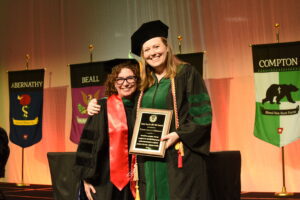 Each year, CREST scholars are supported through a combination of NIH federal funding and institutional scholarships and other financial support. Students are awarded full tuition support and a stipend during the entire course of their study. Health insurance coverage is also a provided benefit. . This scholarship will be equal to the amount of tuition for each year of the medical school curriculum. Year to year renewal of support and program is contingent upon satisfactory academic progress. Satisfactory academic performance includes maintaining a grade point average that will meet the requirements of the Graduate School and passing of Step 1 of the USMLE. During the graduate phase of the program Graduate School tuition and a stipend of $35,000 per year will be provided for students by their major advisor. Students in the CREST program are expected to submit a training grant application (e.g., Kirschstein NRSA Individual Training Grant (F30), or similar from other extramural sources) during the course of their graduate training.
Note from the Program Directors
The science that forms the basis of medical care is progressing at a remarkable rate, generating novel concepts relating to the understanding, diagnosing, and treating of human diseases. Cancer survival rates are dramatically increasing, new drugs provide the promise of relief from chronic diseases, and new imaging technology increases the accuracy of diagnoses. Yet, emerging infectious diseases, the rise in antibiotic-resistant pathogens, and intractable cancers and metabolic diseases cry out for new ideas and approaches to patient treatment. UAMS has a highly competitive, expanding research enterprise and exemplary clinical training. The CREST Program takes advantage of these resources to provide high-quality training for students who want to make a difference. State-of-the-art technologies combined with clinical training provides the tools to approach difficult medical problems in novel and productive ways.
For students who welcome the challenge of finding ways to improve medical treatment for the future, the UAMS M.D./Ph.D. CREST Program provides an exceptional opportunity. If you are interested in a career in academic medicine, combining patient care with medical research, we encourage you to investigate the opportunities afforded by our dual degree, CREST MSTP Program.
For more information, contact:
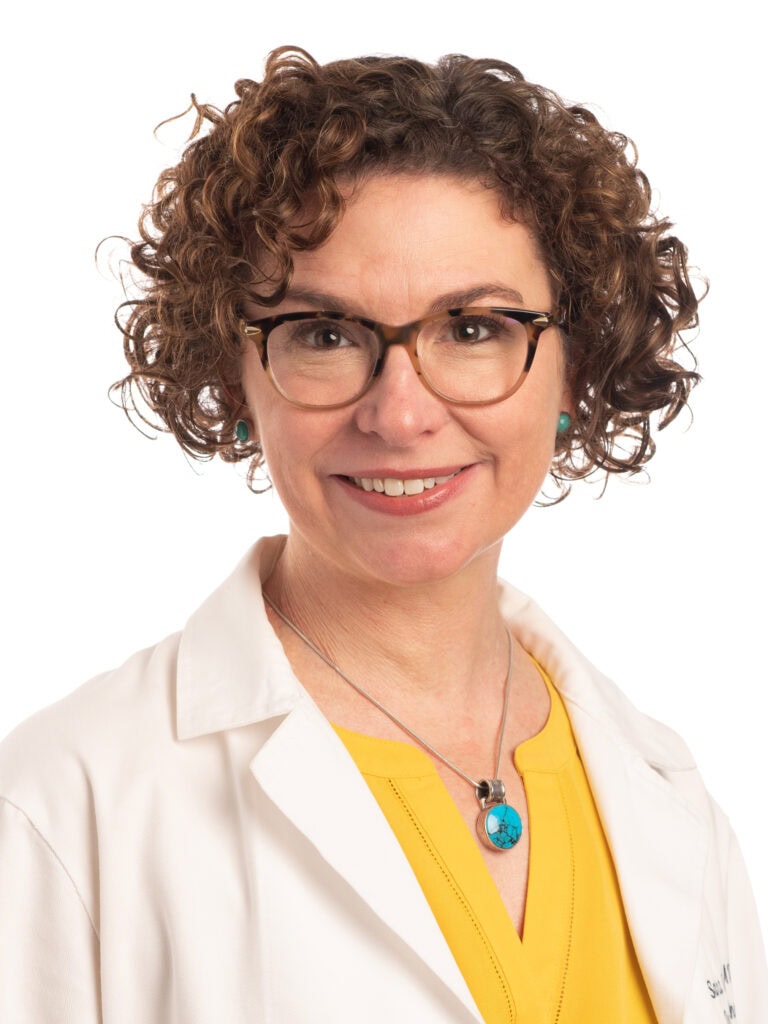

Sara Shalin, M.D., Ph.D.
Professor of Pathology and Dermatology
Director, UAMS M.D./Ph.D. program
Email: MDPhDInfo@uams.edu
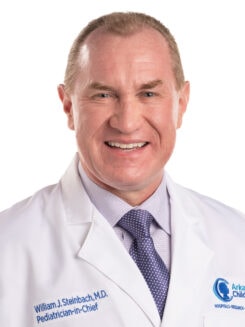
William J. Steinbach, M.D.
Professor of Pediatrics
Email: WSteinbach@uams.edu
Mark Smeltzer, Ph.D.
Professor of Microbiology & Immunology and Orthopaedics
Email: smeltzermarks@uams.edu