
A shout-out to MD/PhD student L. Clai Morehead, a student in Isabelle Miousse’s and Alan Tackett’s labs, who has been selected to present a talk at the annual MD/PhD National Student Conference this week. Clai also received a Diversity Award to support her participation in the virtual conference. Her talk, “Caloric restriction mimetics as an adjuvant to immune checkpoint inhibitors for treatment of melanoma,” is one of only six in the conference’s general medicine category, and Clai is among just 24 MD/PhD students chosen to present at the conference. Clai’s talk tied for best student talk. We’re proud of you Clai!
News
$1.9 Million Grant Funds DNA Damage Research by Justin Leung, Ph.D.
A $1.9 million grant from the National Institute of General Medical Studies (NIGMS) will allow a scientist at the University of Arkansas for Medical Sciences (UAMS) to advance his research of DNA damage response (DDR) in cancer and genetic disorders.
Justin Leung, Ph.D., received the five-year grant for his project titled “Deciphering the Chromatin-based DNA Damage Response Pathway.” NIGMS, a part of the National Institutes of Health, supports basic research that improves understanding of biological processes and lays the foundation for advances in disease diagnosis, treatment and prevention.
“DNA damage is a constant threat to our genetic material, so our bodies evolved a surveillance system called the DDR pathway. This pathway maintains our genome integrity by protecting our cells from damage to the genetic information that results in mutations and cell malignancies,” said Leung, assistant professor in the UAMS College of Medicine Department of Radiation Oncology and researcher in the UAMS Winthrop P. Rockefeller Cancer Institute.
An intact DDR pathway and network of DNA-repair proteins are essential for maintaining genome stability. When any component of the DDR pathway is compromised, DNA mutations will accumulate in cells, which potentially lead to diseases including cancer and genetic disorders.
“Our lab aims to understand how cells precisely repair DNA damage at the right place and right time. We investigate how the DDR is initiated and the mechanism by which DNA repair proteins are brought to the DNA breaks,” Leung said.
Leung’s grant, known as an R35 Maximizing Investigators’ Research Award, will be used to build a roadmap of the chromatin-based DDR pathway. The study will potentially provide insight into the causes of cancer and DDR-related genetic diseases. It will also help to develop therapeutic strategies for cancer treatment.
Research Findings Published
Findings from a collaborative project on DNA damage response conducted by Leung and Michael Huen, Ph.D., of the University of Hong Kong, was published July 1 in the scientific journal PNAS (Proceedings of the National Academy of Sciences of the United States of America).
The article titled “Screen identifies DYRK1B network as mediator of transcription repression on damaged chromatin,” outlines the team’s identification of a protein called DYRK1B and its functional network as a new branch of the DNA damage response to protect our genetic materials.
“Our work explains how DYRK1B dysregulation may fuel cancer progression. It also guides the development of a therapeutic strategy for the treatment of cancer and several rare genome instability-associated diseases,” Leung said.
The study uses a comprehensive proteomics approach supported by the IDeA (Institutional Development Award) National Resource for Quantitative Proteomics at UAMS to build an atlas for DYRK1B functions through profiling the potential biological pathways in which DYRK1B is involved.
“This study will open up new avenues for scientific discovery to study not only DNA repair but also a wide range of protein modifications in diverse cellular functions,” Leung said.
Postdoctoral fellow Kirk West, Ph.D., is the UAMS author of the study.
Duah Alkam Student Highlight
Duah is a GPIBS Ph.D. student in the Biochemistry and Molecular Biology track. She is starting her 5th year in the laboratories of Dr. Mark Smeltzer and Dr. David Ussery.
She has a B.S. in Pharmaceutical Sciences and a M.S. in Pharmacology from The Hebrew University of Jerusalem.
Research Interest Statement
Osteomyelitis, or bone infection, is a devastating disease with limited treatment options. My dissertation explores the molecular pathways involved in the pathogenicity of the major cause of osteomyelitis, the bacterial agent Staphylococcus aureus. We draw on genome sequencing technologies coupled with comprehensive bioinformatic analyses to define the genetic landscape of the bacterium during in vivo osteomyelitis. These studies revealed strategies the bacterium employs to survive within the bone while fending off attacks by the host. Targeting these pathways may aid in the development of therapeutics to combat S. aureus infections.
Something Notable about Time as a Graduate Student
There is a pervasive positivity across the UAMS graduate school that I’ve been fortunate to experience through interactions that spanned three departments. My co-mentors exemplified this spirit through their collaboration and commitment to guiding me on topics ranging from the intricate details of Staphylococcus aureus biology to the value of comparative genomics. Equally crucial were the bioinformaticians on our team who taught me how to critically evaluate big data. These interactions have been the highlight of the past four years.
Career Goals
I plan to remain in the genomics/bioinformatics field.
Experiment or Technique You Would Most Like to Do
Anything involving genomic engineering, particularly with CRISPR/Cas9, is always fun.
Fun fact
My husband, Ziad, and I are on a quest to visit every major National Park in the United States – our favorite so far is the Grand Canyon.
Publications
Alkam D, Jenjaroenpun P, Wongsurawat T, Udaondo Z, Patumcharoenpol P, Robeson M, et al. Genomic characterization of mumps viruses from a large-scale mumps outbreak in Arkansas, 2016. Infect Genet Evol. 2019;75:103965
Alkam D, Wongsurawat T, Jenjaroenpun P, Connor S, Hobbs C, Wassenaar TM, et al. Three Complete Genome Sequences of Genotype G Mumps Virus from the 2016 Outbreak in Arkansas, USA. Genome Announc. 2017;5(32)
August Publications

Genome-wide Cas9 binding specificity in Saccharomyces cerevisiae.
Waldrip ZJ, Jenjaroenpun P, DeYoung O, Nookaew I, Taverna SD, Raney KD, Tackett AJ.
PeerJ.
Shponka V, Reveles CY, Alam S, Jaramillo M, Maguire A, Rimsza LM, Kendrick S.
AIDS.
Pinson A, Yarbrough AL, Bush JM, Cabanlong CV, Shoeib A, Jackson BK, Fukuda S, Gogoi J, Fantegrossi WE, McCain K, Prather PL, Fujiwara R, Radominska-Pandya A.
Pharmacol Biochem Behav.
On the cover
Congratulations to Aaron Storey and his co-authors on their publication featured on the August 2020 cover of Molecular Omics. The project was a collaboration between multiple labs and the proteomics and bioinformatics core facilities lead by Stephanie Byrum.
Alan Tackett receives $10.6 Million Grant to Expand National Proteomics Resource at UAMS
A $10.6 million grant from the National Institutes of Health (NIH) will allow the University of Arkansas for Medical Sciences (UAMS) to greatly expand its proteomics resource. This grant will establish the IDeA National Resource for Quantitative Proteomics as the first NIH National Resource in Arkansas, which will serve biomedical researchers across the nation.
Proteomics is the large-scale study of proteins that can lead to the development of new therapies and screening approaches for many diseases, including cancer.
The five-year grant was awarded to Alan Tackett, Ph.D., professor in the Department of Biochemistry and Molecular Biology and associate director for basic science at the UAMS Winthrop P. Rockefeller Cancer Institute. Tackett serves as an administrative director of this new national resource.
Other key contributors at UAMS are Rick Edmondson, Ph.D.; Samuel Mackintosh, Ph.D.; and Stephanie Byrum, Ph.D.; as well as Michael Kinter, Ph.D., at the Oklahoma Medical Research Foundation who serves as a co-administrative director.
The national resource was initially created through the Arkansas INBRE (IDeA Network of Biomedical Research Excellence) — an NIH program that promotes biomedical research for undergraduate students and faculty. Lawrence Cornett, Ph.D., professor in the UAMS College of Medicine Department of Physiology and Biophysics, serves as principal investigator and director of Arkansas INBRE.
“With this new funding, we will transition our proteomics resource to an NIH National Resource and expand our ability to provide highly advanced research support to scientists in underfunded areas throughout the United States,” said Tackett, who holds the Scharlau Family Endowed Chair for Cancer Research at UAMS.
Certain regions of the United States, designated as the IDeA Network, have historically received low levels of research funding from NIH. Scientists in these regions face challenges for accessing state-of-the-art proteomics resources.
The IDeA National Resource for Quantitative Proteomics at UAMS was established to address these gaps in services.
“Due to a lack of federal funding, it is often difficult for scientists in the IDeA Network to access the advanced instruments and trained personnel needed to analyze and interpret their research data. With this new funding, we will now be able to serve a diverse group of IDeA investigators for their research, which ranges from studies on model organisms to diseases such as cancer,” said Tackett, professor of biochemistry and molecular biology in the UAMS College of Medicine.
The expanded national resource will support researchers by providing highly advanced data analysis, outreach opportunities and education to scientists across the nation.
“Our goal is to increase the ability for scientists in the 23 IDeA states and Puerto Rico, as well as other NIH-supported investigators across the nation, to perform innovative research by providing unmatched access to advanced quantitative proteomics platforms and staff skilled in interpreting and analyzing complex biological data,” Tackett said.
The educational opportunities offered by the national resource include workshops that are designed to help faculty and student researchers across the nation better utilize proteomics in their research.
This federal grant will bolster the Cancer Institute’s ongoing efforts to receive National Cancer Institute Designation. To achieve designation, cancer centers undergo a highly competitive assessment process that demonstrates an outstanding depth and breadth of research in three areas: basic laboratory, patient/clinical and population-based. The designation brings with it many benefits, including expanded access to federal funding for researchers and improved access to clinical trials for patients.
Cancer Institute Member Spotlight — Alan Diekman, Ph.D.
Professor
Department of Biochemistry and Molecular Biology
Department of Urology
UAMS College of Medicine
Research Interest Statement
Research in the Diekman laboratory focuses on galectin-3, a carbohydrate-binding protein, in cancer and normal male reproductive function. Galectin-3 is implicated in the progression of multiple cancers, including prostate and breast cancer. Previously, we investigated the interactions of galectin-3 with prostate specific antigen (PSA), which is mainly known as a screening marker for prostate cancer. PSA is a serine protease that is secreted into semen where it functions as a proteolytic enzyme. PSA function during local and metastatic prostate cancer has also been proposed. We were the first to demonstrate that galectin-3 is a proteolytic substrate for PSA and investigated the function regulation of galectin-3 by PSA. We developed a novel strategy to purify PSA for these studies. Significantly, polymorphisms (SNP) in the coding region of the human galectin-3 gene create amino acid polymorphisms in the galectin-3 protein, and genotype analysis indicated that these SNPs are associated with increased odds of prostate cancer. We currently are investigating the impact of these amino acid polymorphisms on the molecular function of galectin-3. We anticipate that elucidation of the functional aspects of galectin-3 phenotypic variation relevant to disease etiology and pathology will contribute to development of individualized, precision medicine strategies to improve cancer prevention and treatment.
Dr. Diekman’s Cancer-related Grants
UAMS Executive Breast Committee: AWD00051704
Alan Diekman: PI
Title “Galectin-3 Genetic and Phenotypic Polymorphism in Breast Cancer”
09/1/2016 – 08/31/2020
$75,000*
*cancer-related direct cost
Dr. Diekman’s UAMS Collaborators
- Alicia Byrd, Ph.D., Department of Biochemistry and Molecular Biology, College of Medicine
- Joseph Su, Ph.D., M.P.H., Department of Epidemiology, College of Public Health
Opportunities for Collaboration
I have expertise in biochemistry, reproductive biology and glycobiology and am always interested in collaborating with colleagues. My research is focused on the role of carbohydrate-binding proteins in prostate cancer, but my interests extend to other cancers, including breast and colorectal cancer.
You May Not Know That …
I am the proud owner of a 1923 arts and crafts airplane bungalow in Hillcrest, but something always needs to be fixed. My hobbies include physical fitness, science fiction and annoying my children with dad jokes.
Recent Cancer-related Publications
- Saraswati, S., Block, A.S., Davidson, M.K., Rank, R.G., Mahadevan, M., Diekman A.B. (2011) Galectin-3 is a substrate for prostate specific antigen (PSA) in human seminal plasma. The Prostate 71:197-208, DOI: 10.1002/pros.21236. PMCID: PMC3606048.
- Kovak M.R., Saraswati S., Goddard, S., Diekman A.B. (2013) Proteomic identification of galectin-3 binding ligands and characterization of galectin-3 proteolytic cleavage in human prostasomes. Andrology 1:682-691, PMCID: PMC4180284.
- Bailey, L.A., Jamshidi-Parsian A., Patel T., Koonce N.A., Diekman A.B., Cifarelli .P., Marples B., Griffin R.J.: (2015) Combined temozolomide and ionizing radiation induces galectin-1 and galectin-3 expression in a model of human glioma. Tumor Microenvironment and Therapy 2:19-31.
Dr. Tackett appointed to NIH study section
Dr. Alan Tackett, Professor of Biochemistry and Molecular Biology, has been invited to serve as a standing member of the NIH Mechanisms of Cancer Therapeutics-1 (MCT1) Study Section, one of the major review boards for evaluation of cancer research by the Center for Scientific Review. The four-year appointment recognizes Dr. Tackett, who also serves as the Scharlau Family Endowed Chair in Cancer Research at UAMS, as a leader in this field. Congratulations to Dr. Tackett.
July publications
Neonatal Diet Impacts Circulatory miRNA Profile in a Porcine Model.
Carr LE, Bowlin AK, Elolimy AA, Byrum SD, Washam CL, Randolph CE, MacLeod SL, Yeruva L.
Front Immunol. 2020
Screen identifies DYRK1B network as mediator of transcription repression on damaged chromatin.
Dong C, West KL, Tan XY, Li J, Ishibashi T, Yu CH, Sy SMH,Leung JWC, Huen MSY.
Proc Natl Acad Sci 2020
Novel advances in biotransformation and bioactivation research-2019 year in review.
Khojasteh SC, Driscoll JP, Jackson KD, Miller GP, Mitra K, Rietjens IMCM, Zhang D.
Drug Metab Rev. 2020
Dr. Miller Appointed to NIH Study Section
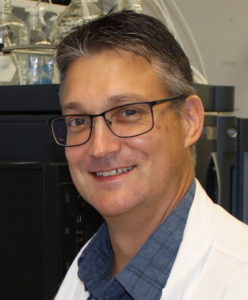 Congratulations to Dr. Grover Miller, Professor of Biochemistry and Molecular Biology, on his appointment to the Xenobiotic and Nutrient Disposition and Action (XNDA) Study Section in the National Institutes of Health’s Center for Scientific Review. Dr. Miller will serve a four-year term on the panel, whose members are selected for their excellence and achievement in their scientific discipline. At UAMS, Dr. Miller and his team develop and apply new and powerful strategies to better assess drug liabilities that cause significant adverse drug events including cardio- and hepato-toxicity.