• Skip to main content
  • Skip to main content
Choose which site to search.
University of Arkansas for Medical Sciences Logo University of Arkansas for Medical Sciences
College of Medicine: Department of Biochemistry and Molecular Biology
  • UAMS Health
  • Jobs
  • Giving
  • About Us
    • News
  • Faculty/Staff
    • Primary Faculty
    • Secondary Faculty
    • Adjunct Faculty
    • Professor Emeritus
    • Track Members
    • Research and Administrative Staff
  • Research Areas
    • Cancer Biology
    • Experimental Therapeutics
    • Systems Biology and Bioinformatics
      • Systems Biology News
    • Structural Biology and Enzymology
    • Nutrition and Metabolism
    • Chromatin Biology, Nucleic Acid Chemistry, and Genetics
    • Neurobiology and Neurobiochemistry
  • Students
    • Graduate Program
    • Elective Courses
    • Student Highlight
    • Alumni
      • Graduates
      • Where Are They Now?
    • Grant Opportunities
    • Career Information
    • Resources for Current Students
    • Resilience
    • About the Area
  • Seminars
    • Faculty Seminars
    • Student Seminars
    • Webinars and Conferences
  • Undergraduate Programs
    • Summer Research
      • Program Details
      • Application Materials
      • Research Opportunities
      • Information for Participants
      • Prior Participants
      • SURF Related Publications
      • Contact Information
      • Frequently Asked Questions
    • Arkansas Undergraduate Summer Research Symposium
      • Details
      • Registration
      • Directions and Parking
      • Top Presentations
      • Contact
  • Research Resources
  1. University of Arkansas for Medical Sciences
  2. College of Medicine
  3. Department of Biochemistry and Molecular Biology
  4. Author: Chris Lesher
  5. Page 15

Chris Lesher

Cancer Institute Member Spotlight — Isabelle Racine Miousse, Ph.D.

Assistant Professor
Department of Biochemistry and Molecular Biology
UAMS College of Medicine

Research Interest Statement

Cancer cells fundamentally differ from healthy cells in the way they metabolize the amino acid and methyl donor methionine. This phenomenon is known as methionine dependence. It manifests as an increased reliance on an exogenous supply of methionine for growth and alterations in DNA and histone methylation patterns.

My work investigates these crucial differences between healthy cells and cancer cells. My expertise covers the absorption, processing and utilization of methyl groups, as well as epigenetic changes associated with cancer. I utilize metastatic melanoma models in vitroand in vivo to investigate the molecular bases of methionine dependence, relate dietary methionine levels to changes in the gut environment, and, finally, leverage this knowledge to improve the response rate in patients with metastatic melanoma receiving immunotherapy. With my work, I aim to improve the outcomes of cancer therapy for patients.

Dr. Miousse’s Grants

Pilot Award, UAMS College of Medicine

$25,000*

01/01/19 – 12/31/19

Methionine and autophagy in metastatic melanoma

*cancer-related annual direct costs

UAMS Collaborators

  • Alan Tackett, Ph.D. (Biochemistry and Molecular Biology)
  • Igor Koturbash, M.D., Ph.D. (Environmental and Occupational Health)
  • Stephanie Byrum, Ph.D. (Director of Bioinformatics Core, Arkansas Children’s Research Institute)
  • Stepan Melnyk, M.D., Ph.D. (Director of the Core Metabolomics Laboratory, Arkansas Children’s Research Institute)
  • Laxmi Yeruva, Ph.D. (Pediatrics)
  • Alicia Byrd, Ph.D. (Biochemistry and Molecular Biology)

External Collaborators

  • David Rosenblatt, M.D., Ph.D. (McGill University)
  • Alexandra Noel, Ph.D. (LSU School of Veterinary Medicine)

Opportunities for Collaboration

I welcome collaborations on the topics of DNA and histone modifications, as well as methyl donors such as folic acid and vitamin B12. I also have an interest in nutrition and metabolism.

You Might Not Know That …

I have two passions outside of work. I enjoy cooking, for the creative aspect (anything but desserts!) I also enjoy rock climbing for the problem-solving skills it requires and have done that for 10 years.

Cancer-related Publications

  • Miousse IR, Ewing LE, Kutanzi KR, Griffin RJ, Koturbash I. DNA Methylation in Radiation-Induced Carcinogenesis: Experimental Evidence and Clinical Perspectives. Crit Rev Oncog. 2018;23(1-2):1-11.
  • Miousse IR, Tobacyk J, Quick CM, Jamshidi-Parsian A, Skinner CM, Kore R, Melnyk SB, Kutanzi KR, Xia F, Griffin RJ, Koturbash I. Modulation of dietary methionine intake elicits potent, yet distinct, anticancer effects on primary versus metastatic tumors. Carcinogenesis. 2018 Sep 21;39(9):1117-1126.
  • Miousse IR, Pathak R, Garg S, Skinner CM, Melnyk S, Pavliv O, Hendrickson H, Landes RD, Lumen A, Tackett AJ, Deutz NEP, Hauer-Jensen M, Koturbash I. Short-term dietary methionine supplementation affects one-carbon metabolism and DNA methylation in the mouse gut and leads to altered microbiome profiles, barrier function, gene expression and histomorphology. Genes Nutr. 2017 Sep 6;12:22.
  • Miousse IR, Chang J, Shao L, Pathak R, Nzabarushimana É, Kutanzi KR, Landes RD, Tackett AJ, Hauer-Jensen M, Zhou D, Koturbash I. Inter-Strain Differences in LINE-1 DNA Methylation in the Mouse Hematopoietic System in Response to Exposure to Ionizing Radiation. Int J Mol Sci. 2017 Jul 4;18(7). pii: E1430.
  • Miousse IR, Tobacyk J, Melnyk S, James SJ, Cheema AK, Boerma M, Hauer-Jensen M, Koturbash I. One-carbon metabolism and ionizing radiation: a multifaceted interaction. Biomol Concepts. 2017 May 24;8(2):83-92.
  • Miousse IR, Kutanzi KR, Koturbash I. Effects of ionizing radiation on DNA methylation: from experimental biology to clinical applications. Int J Radiat Biol. 2017 May;93(5):457-469.
Filed Under: Department News

Student Research Day 2019

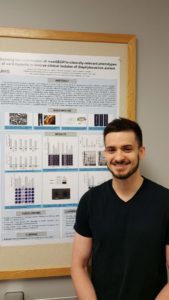
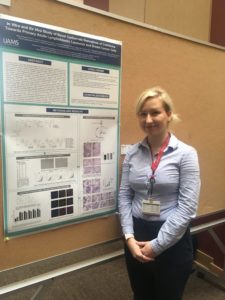
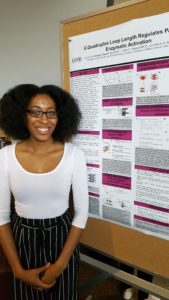
Students and postdocs from across campus participated in the 2019 Student Research Day poster presentations on March 12th.  Numerous award winners are affiliated with the Biochemistry and Molecular Biology department.  The Bhuvan Award is given to the project which makes the best use of biochemistry.  Andrea Edwards (Raney lab), Duah Alkam (Ussery and Smeltzer labs) and Joseph Rom (Smeltzer lab) were the winners.  Zach Waldrip (Burdine lab) and Alicja Urbaniak (Chambers lab) earned the top two prizes in the post-doctoral category and Zach also won the best poster overall.  Congratulations to all!

Andrea Edwards

Andrea Edwards, 1st place Bhuvan Award

Duah Alkam

Duah Alkam, 2nd place Bhuvan Award

Joseph Rom

Joseph Rom, 3rd place Bhuvan Award


Zach Waldrip

Dr. Zach Waldrip, 1st place postdoctoral category and 1st place overall

Alicja Urbaniak

Dr. Alicja Urbaniak, 2nd place post-doctoral category

Filed Under: Department News

Brian Koss Receives Prestigious NCI Fellowship

UAMS Graduate School student has received a fellowship from the National Cancer Institute to support his melanoma research.
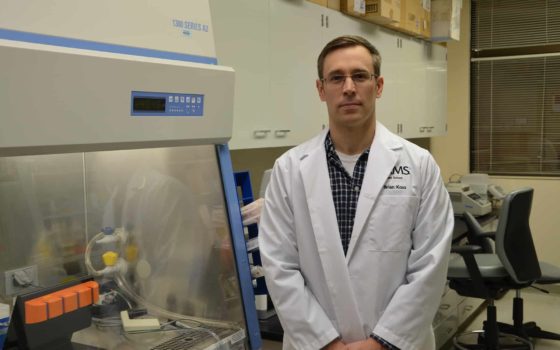
Brian Koss has received a fellowship from the National Cancer Institute to support his melanoma research.

March 6, 2019 | A prestigious fellowship from the National Cancer Institute (NCI) will allow UAMS Graduate School student Brian Koss to advance his melanoma research.

The Ruth L. Kirschstein National Research Service Award for Individual Predoctoral Fellows (F31) will provide Koss with a three-year award of $124,851 to fund his research focusing on the protection of tumor-infiltrating immune cells in melanoma patients.

Koss, a third-year student in the UAMS Graduate Program in Interdisciplinary Biomedical Sciences, is now one of a select few scientists at UAMS ever to receive an F31 fellowship from the NCI.

“Becoming a National Cancer Institute-funded fellow has positioned Mr. Koss for immediate success during his graduate training, and also has primed him to become a nationally competitive cancer researcher in the future. These awards are highly competitive, so receiving this fellowship is a testament of Mr. Koss’s hard work, innovation and desire to help cancer patients in Arkansas and across our nation,” said Alan Tackett, Ph.D., associate director for basic research in the UAMS Winthrop P. Rockefeller Cancer Institute.

Koss is in his third year as a member of Tackett’s lab team at the UAMS Cancer Institute.

“Melanoma tumors apply many repressive factors on immune cells, which can prevent the success of standard immunotherapies,” Koss said.

Immunotherapy is a type of treatment that stimulates a person’s own immune system to recognize and destroy cancer cells. It has been found to be a very successful method of treatment for many, but not all, patients with melanoma, the deadliest form of skin cancer, and is now considered standard of care for the disease.

Koss’ research has revealed a method to protect immune cells in the harsh melanoma microenvironment which is known to prevent successful outcomes for some patients. His fellowship award will allow him to further define his findings and apply them to preclinical models of melanoma.

“This fellowship is impactful not only for Mr. Koss, but also for UAMS, as it highlights the innovative cancer research at the Winthrop P. Rockefeller Cancer Institute and supports our ongoing mission to become a National Cancer Institute-Designated Cancer Center,” Tackett said.

Filed Under: iBioDS Highlights, Student Highlights

Cancer Institute Member Spotlight — Marie Burdine, Ph.D.

Assistant Professor
Department of Surgery, Division of Surgical Research
Department of Biochemistry and Molecular Biology (secondary appointment)
UAMS College of Medicine

Research Statement

Gastrointestinal cancers are particularly difficult to treat with reoccurrence and chemoresistance prevalent. It is the mission of the Burdine laboratory to work with surgical oncologists across UAMS campus to analyze the epigenetic profiles of gastrointestinal cancers in order to provide insight into the molecular mechanisms that drive gastrointestinal cancer progression and chemoresistance.

In addition, our laboratory focuses on the prevention of post-transplant lymphoproliferative disorder (PTLD), a type of lymphoma resulting from uncontrolled B cell proliferation and an unfortunate side effect of chronic immunosuppression in solid organ and hematopoietic stem cell transplant patients. We are investigating a novel form of immunosuppression that inhibits the proliferation of B cells and the production of donor-specific antibodies that contribute to antibody-mediated organ rejection. In vivo models of EBV-associated PTLD are used in the lab to determine the effectiveness of this immunosuppression therapy in PTLD prevention.

Dr. Burdine’s Grants

Winthrop P. Rockefeller Cancer Institute Foundation Envoys

Seeds of Science

$10,000*

2/2018-2/2019

A Novel Mechanism for Regulating the Oncogenic Activity of ATAD2

Marion B. Lyon New Scientist Development Award

$13,041*

5/2018 – 5/2020

Inhibition of DNA-PK(cs) as Novel Immunosuppression Therapy for Pediatric Transplant Patients

* cancer-related annual direct costs

UAMS Collaborators

  • Kevin Sexton, M.D. (Surgery)
  • Lyle Burdine, M.D., Ph.D. (Surgery)
  • Camilo Barreto, M.D. (Surgery)
  • Jill Mhyre, M.D. (Anesthesiology)
  • Nadir El Sharawi, M.D. (Anesthesiology)
  • Sara Shalin, M.D., Ph.D. (Dermatology, Pathology)
  • Felicia Allard, M.D. (Pathology)
  • Eric Yee, M.D. (Pathology)
  • Stephanie Byrum, Ph.D. (Bioinformatics Core)

External Collaborators

  • Michael Schulz, Ph.D. (Virginia Tech, Chemistry)
  • Brady Hall, Ph.D. (Virginia Tech, Chemistry)
  • Jay Chung, Ph.D. (NIH/NHLBI)
  • Anthony Davis, Ph.D. (UT Southwestern, Radiation Oncology)

Opportunities for Collaborations

I welcome collaborations with any scientist or clinician who is interested in analysis of human tumor samples for identifying novel therapeutic approaches. As part of the Division of Surgical Research, I would like to encourage any clinician with basic science ideas or novel procedural techniques to contact me to help get your project up and running.

You Might Not Know That …

I enjoy listening to 1310 The Ticket for sports news, as well as hiking, fishing and a building a campfire on a cool night!

Cancer-Related Publications

  • Schluterman, Burdine MK, Chapman SL, Korpanty G, Ozumi K, Fukai T, Yanagisawa H and Brekken RA. Loss of endogenous fibulin-5 inhibits pancreatic tumor growth by increasing the level of ROS in the tumor microenvironment. Dis Model Mech. 2010 May-Jun;3(5-6):333-42.
  • Burdine, L, Burdine MS, Moreland L, Fogel B, Orr LM, James J, Turnage RH, Tackett AJ. Proteomic Identification of DNA-PK Involvement within the RET Signaling Pathway. PLoS One. 2015 June 11;10(6)e0127943.
  • Kim Wiese A, Schluterman Burdine M, Turnage RH, Tackett AJ, Burdine LJ. DNA-PKcs controls calcineurin mediated IL-2 production in T lymphocytes. PLoS One. 2017 Jul 27;12(7):e0181608.

Filed Under: Department News

February Publications

Proteomic Characterization of the Arsenic Response Locus in S. cerevisiae.Tackett lab

West KL, Byrum SD, Mackintosh SG, Edmondson RD, Taverna SD, Tackett AJ.

Epigenetics.


Drs. Baldini and PhelanThe melanocortin pathway and control of appetite-progress and therapeutic implications.

Baldini G, Phelan KD.

J Endocrinol.

Filed Under: Department News

Congratulations Dr. Davis!

Congratulations to Lauren Davis who successfully defended her dissertation entitled “Histone Posttranslational Modifications as Diagnostic Markers for Melanoma” on February 20th.  Lauren is a student in Alan Tackett’s lab.

Filed Under: Department News

Oleg Karaduta Selected for the MSACL 2019 US Young Investigator Educational Grant

Oleg Karaduta was selected to receive a Young Investigator Educational Grant to study clinical application of mass spectrometry during the MSACL 11th Annual Conference.

Curriculum includes short courses, practical training sessions and a variety of workshops.  Congratulations Dr. Karaduta!

Filed Under: Department News

UAMS Scientists Awarded Grants for Cancer Research

By Susan Van Dusen

Feb. 5, 2019 | Researchers at the UAMS Winthrop P. Rockefeller Cancer Institute received a funding boost thanks to the efforts of two volunteer groups.

One small grant award of $50,000 and three pilot awards of $15,000 each were presented to UAMS cancer researchers at a reception and research poster showcase hosted by the Envoys volunteer advocacy group Jan. 31.

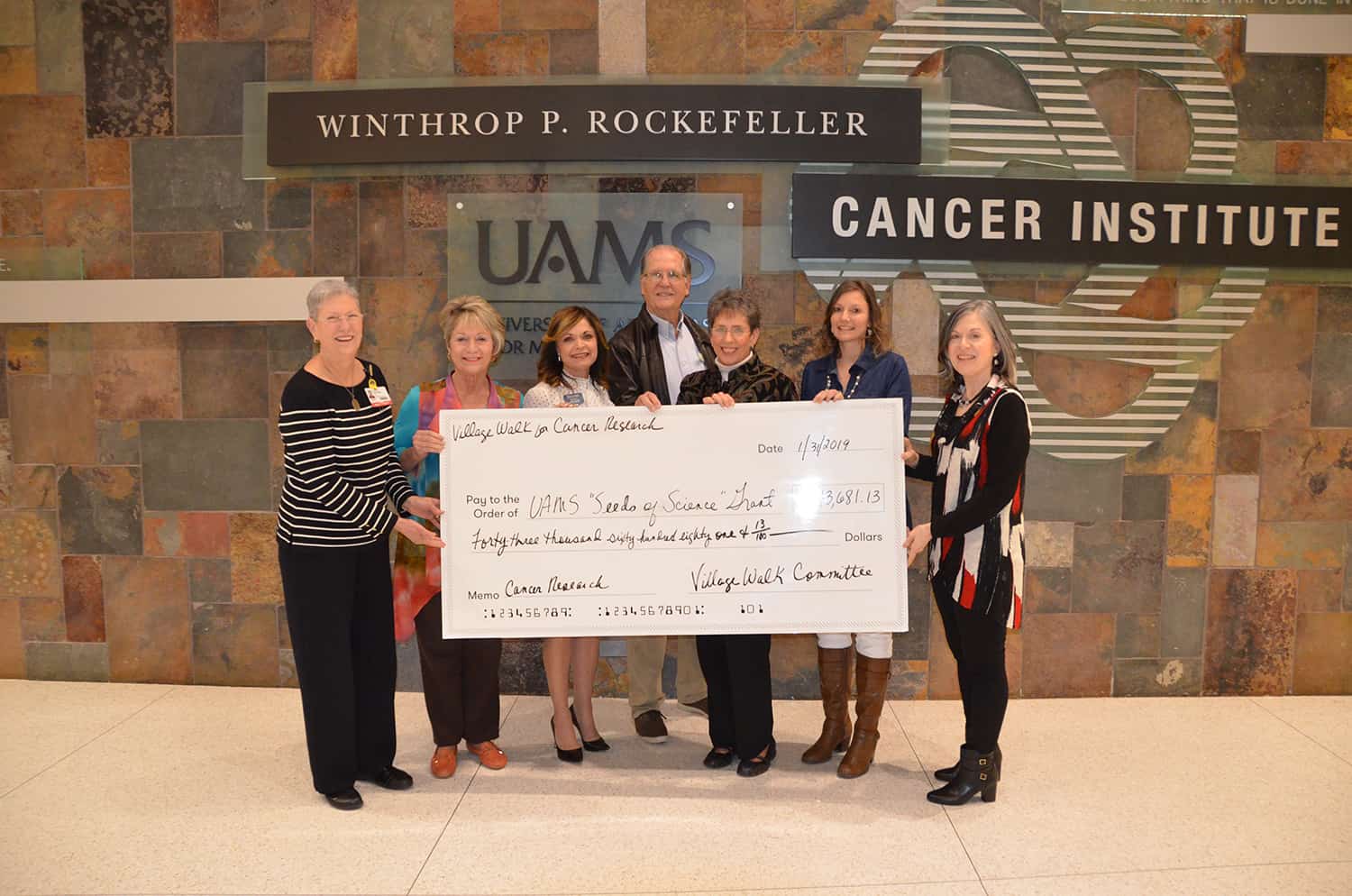
Volunteers from the Hot Springs Village Walk for Cancer Research present funds for the Seeds of Science small grant award to Samantha Kendrick, Ph.D. (second from right). Also pictured (from left) are Cancer Institute Interim Director Laura Hutchins, M.D.; Christy Etheridge; Donna Aylward; Bob Hebert; Lynne Border; and Melanie Pederson. Kendrick's co-investigator Brendan Frett, Ph.D., is not pictured.

Volunteers from the Hot Springs Village Walk for Cancer Research present funds for the Seeds of Science small grant award to Samantha Kendrick, Ph.D. (second from right). Also pictured (from left) are Cancer Institute Interim Director Laura Hutchins, M.D.; Christy Etheridge; Donna Aylward; Bob Hebert; Lynne Border; and Melanie Pederson. Kendrick’s co-investigator Brendan Frett, Ph.D., is not pictured.

The small grant award was funded by proceeds from the 17th annual Village Walk for Cancer Research, held Sept. 29, 2018 in Hot Springs Village. Organized by volunteers, the walk unites the community, which is located one hour southwest of Little Rock, in support of cancer research.

“Knowing the money we raise is used to advance cancer research right here in Arkansas is very satisfying for those of us who organize the walk and participate in it,” said Melanie Pederson, event chair. Donna Aylward serves as co-chair.

Since 2002, the Village Walk for Cancer Research has raised about $500,000 for research programs at the UAMS Cancer Institute. The 2019 walk is scheduled for Sept. 28 at Balboa Pavilion in Hot Springs Village.

A team of two researchers received the small grant award for their work addressing drug resistance to aggressive lymphoma.

Brendan Frett, Ph.D., assistant professor in the Department of Pharmaceutical Sciences in the UAMS College of Pharmacy, and Samantha Kendrick, Ph.D., assistant professor of Department of Biochemistry and Molecular Biology in the UAMS College of Medicine, are collaborators on the project. They are exploring using a proteolysis targeting chimera molecule along with targeted therapies to break down the cancer-promoting protein Nek2

found in aggressive lymphoma. This dual treatment approach has the potential to reduce drug resistance and lead to better patient outcomes.

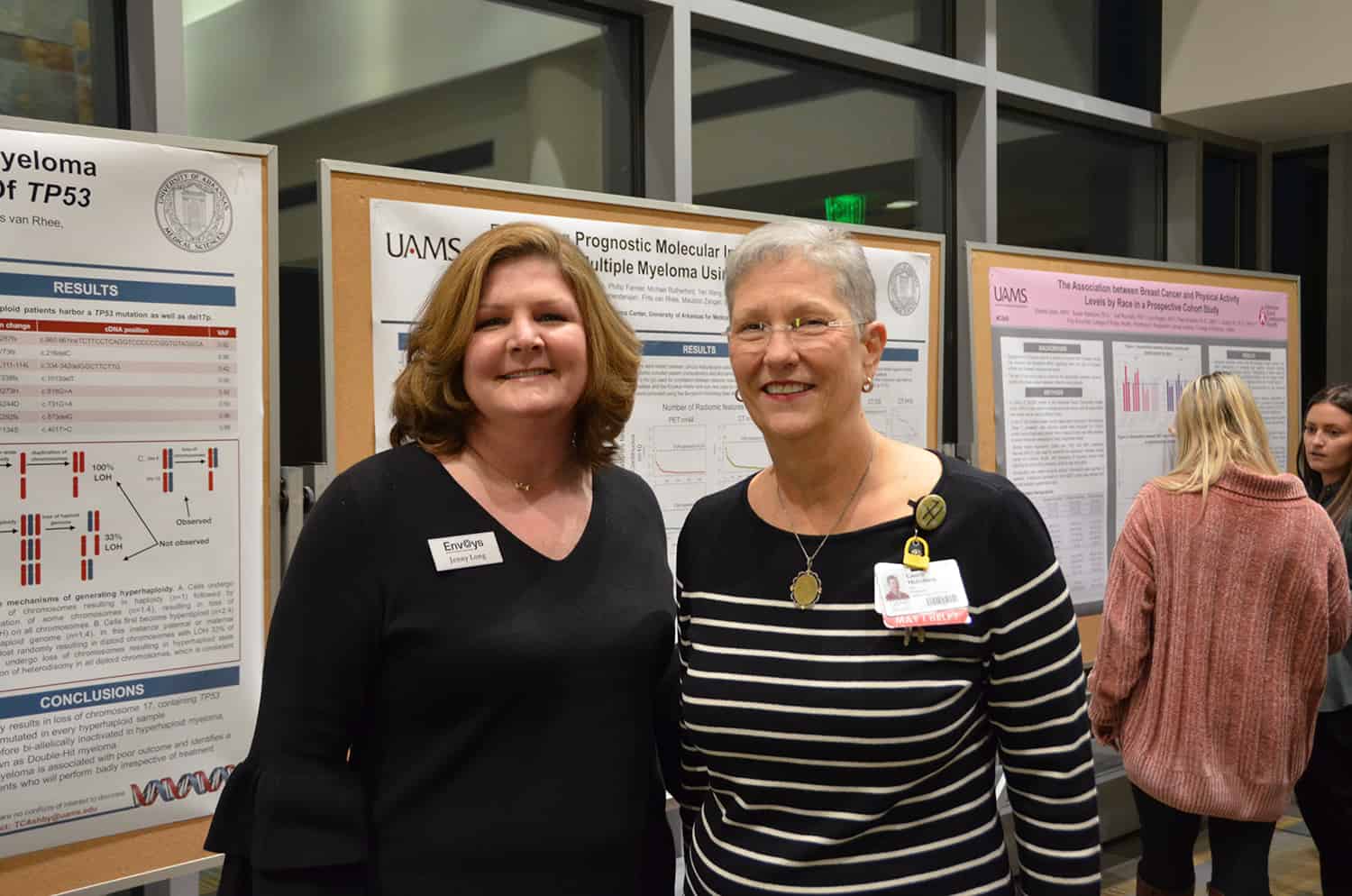
Jenny Long, president of the UAMS Cancer Institute Foundation Envoys, and Laura Hutchins, M.D., Cancer Institute interim director, were on hand to congratulate the Seeds of Science award recipients.

Jenny Long, president of the UAMS Cancer Institute Foundation Envoys, and Laura Hutchins, M.D., Cancer Institute interim director, were on hand to congratulate the Seeds of Science award recipients.

Three $15,000 pilot awards were presented to researchers for their work in a variety of areas. Funding for the awards was made possible by RockStar Lounge, an annual fundraising event hosted by the Envoys.

This year’s RockStar Lounge is set for April 5 at Cajun’s Wharf in Little Rock and will feature a performance by Memphis-based band Doctor Zarr’s Amazing Funk Monster. One-hundred percent of the net proceeds from RockStar Lounge is used to fund cancer research projects at UAMS.

“We are always excited and pleased to present grants to our very worthy scientists for their innovative projects,” said Jenny Long, Envoys president.

Recipients of the pilot awards were:

  • Alicia Byrd, Ph.D., and Stephanie Byrum, Ph.D., assistant professors in the Department of Biochemistry and Molecular Biology in the UAMS College of Medicine

Byrd and Byrum’s project aims to identify new targets for cancer therapy by investigating the regulation of the DNA damage response pathway in cancerous and normal cells.

  • Robert Eoff, Ph.D., associate professor in the Department of Biochemistry and Molecular Biology in the UAMS College of Medicine

Eoff’s project attempts to determine if a regulatory pathway normally associated with immune suppression in brain tumors also plays a role in resistance to the anti-cancer drug Temodar. Results of this study could increase understanding of how the elements involved in treatment resistance are regulated in malignant brain tumors.

  • Zhiqiang Qin, M.D., Ph.D., associate professor in the Department of Pathology in the UAMS College of Medicine

The subtype of lung cancer known as non-small cell lung cancer (NSCLC) is a leading cause of cancer death in Arkansas. Qin’s project examines the use of the gene EIF4G1 as a therapeutic target for NSCLC and could provide the framework for the development of a clinical trial evaluating EIF4G1-targeted therapy.

Filed Under: Department News

January publications

Eugene Nyamugenda and Marcus Trentzsch

Injury to hypothalamic Sim1 neurons is a common feature of obesity by exposure to high fat diet in male and female mice.

Nyamugenda E, Trentzsch M, Russell S, Miles T, Boysen G, Phelan KD, Baldini G.

J Neurochem


Tackett lab

Loss of E-cadherin inhibits CD103 anti-tumor activity and reduces checkpoint blockade responsiveness in melanoma.

Shields BD, Koss B, Taylor EM, Storey AJ, West KL, Byrum SD, Mackintosh SG, Edmondson R, Mahmoud F, Shalin SC, Tackett AJ.

Cancer Res.


Metaproteomics reveals potential mechanisms by which dietary resistant starch supplementation attenuates chronic kidney disease progression in rats.

Zybailov BL, Glazko GV, Rahmatallah Y, Andreyev DS, McElroy T, Karaduta O, Byrum SD, Orr L, Tackett AJ, Mackintosh SG, Edmondson RD, Kieffer DA, Martin RJ, Adams SH, Vaziri ND, Arthur JM.

PLoS One

Filed Under: Department News

Dr. Miousse receives pilot award from Barton Foundation

Congratulations to Dr. Isabelle Racine-Miousse who received a pilot grant from the Barton Foundation for her studies of methionine and autophagy in metastatic melanoma.

Filed Under: Department News

  • «Previous Page
  • Page 1
  • Interim pages omitted …
  • Page 13
  • Page 14
  • Page 15
  • Page 16
  • Page 17
  • Interim pages omitted …
  • Page 19
  • Next Page»
UAMS College of Medicine LogoUAMS College of MedicineUniversity of Arkansas for Medical Sciences
Mailing Address: 4301 West Markham Street, Little Rock, AR 72205
Phone: (501) 686-7000
  • Facebook
  • X
  • Instagram
  • YouTube
  • LinkedIn
  • Pinterest
  • Disclaimer
  • Terms of Use
  • Privacy Statement
  • Legal Notices

© 2026 University of Arkansas for Medical Sciences