• Skip to main content
  • Skip to main content
Choose which site to search.
University of Arkansas for Medical Sciences Logo University of Arkansas for Medical Sciences
College of Medicine: Department of Biochemistry and Molecular Biology
  • UAMS Health
  • Jobs
  • Giving
  • About Us
    • News
  • Faculty/Staff
    • Primary Faculty
    • Secondary Faculty
    • Adjunct Faculty
    • Professor Emeritus
    • Track Members
    • Research and Administrative Staff
  • Research Areas
    • Cancer Biology
    • Experimental Therapeutics
    • Systems Biology and Bioinformatics
      • Systems Biology News
    • Structural Biology and Enzymology
    • Nutrition and Metabolism
    • Chromatin Biology, Nucleic Acid Chemistry, and Genetics
    • Neurobiology and Neurobiochemistry
  • Students
    • Graduate Program
    • Elective Courses
    • Student Highlight
    • Alumni
      • Graduates
      • Where Are They Now?
    • Grant Opportunities
    • Career Information
    • Resources for Current Students
    • Resilience
    • About the Area
  • Seminars
    • Faculty Seminars
    • Student Seminars
    • Webinars and Conferences
  • Undergraduate Programs
    • Summer Research
      • Program Details
      • Application Materials
      • Research Opportunities
      • Information for Participants
      • Prior Participants
      • SURF Related Publications
      • Contact Information
      • Frequently Asked Questions
    • Arkansas Undergraduate Summer Research Symposium
      • Details
      • Registration
      • Directions and Parking
      • Top Presentations
      • Contact
  • Research Resources
  1. University of Arkansas for Medical Sciences
  2. College of Medicine
  3. Department of Biochemistry and Molecular Biology
  4. Student Highlights
  5. Page 3

Student Highlights

Graduate Student Explores Potential of Handheld DNA/RNA Sequencers in Outbreaks

By Amy Widner

 Imagine there’s an outbreak of an infectious disease. Could health officials on the ground harness the power of new handheld DNA and RNA sequencers to monitor outbreaks in real-time and quickly contain them?

This question lies at the heart of research published in the journal Infection, Genetics and Evolution by UAMS Biochemistry and Molecular Biology track graduate student Duah Alkam. She and her advisers from the College of Medicine Department of Biomedical Informatics and the Department of Microbiology and Immunology collaborated with the Arkansas Department of Health to look at specimens collected during a 2016 mumps outbreak in Northwest Arkansas.

It took the Human Genome Project 13 years to complete the first sequence of a human genome in 2003. As sequencers became available for purchase, they were large, expensive and slow.

Alkam holding tech in palm of hand
Alkam used the the Oxford Nanopore Technologies MinION to sequence the samples in her study.Amy Widner

That has changed. Alkam used a device called the Oxford Nanopore Technologies MinION to sequence each sample in a matter of hours. To offload the data, she simply connected the MinION through a USB port to a laptop.

“You see results on your computer in real time,” Alkam said. “It’s fast, affordable and simple. The idea is that something like this might be useful during an outbreak, especially in a rural setting. If you can quickly identify a strain, you’re that much closer to understanding the origin of the outbreak, which may help contain it and protect the at-risk population.”

The new challenge for scientists is how to interpret the massive amount of data produced by these powerful sequencers. That is where the relatively new field of biomedical informatics comes in.

“Biomedical informatics allows us to look at genomes within a matter of hours and compare them, pinpointing connections and what might be important about these datasets,” Alkam said. “In this way, biomedical informatics is sort of the bridge between raw data and relevant information.”

In this case, Alkam was able to determine the unique characteristics of the specific variation of the mumps virus that was behind the 2016 outbreak. They used a computational technique called immunoinformatics to plot a “family tree” of sorts for the virus.

“We found that it was very similar to a strain that started an outbreak in Massachusetts around the same time in 2016, and it was also related to another strain that spread in Washington state, which may suggest that all three outbreaks originated from the same strain.”

While Alkam’s experiment was not conducted during an active outbreak, she and her advisers believe the results demonstrate great promise for the technique to be applied in the real world. Earlier in 2019, other scientists in the Department of Bioinformatics collaborated with researchers around the world for the first demonstration that the MinION could be used for the rapid genetic sequencing of multiple human viruses.

“The possibility of infectious disease outbreaks in health care settings and communities is something that unites us across the globe. We’re all vulnerable,” said Se-Ran Jun, Ph.D., Alkam’s adviser for the project and an assistant professor in biomedical informatics. “So at UAMS, it’s exciting each time we demonstrate how we can harness the power of new sequencing technology, big data science and analytics, and high performance computing in biomedical informatics to offer solutions.”

The project was funded with a grant to Jun from the UAMS for Translational Research Institute.

Alkam is a student in the UAMS Graduate School’s Graduate Program in Interdisciplinary Biomedical Sciences (GPIBS). Her other advisers are David Ussery, Ph.D., a professor in the Department of Biomedical Informatics; and Mark Smeltzer, Ph.D., a professor in the Department of Microbiology and Immunology.

Filed Under: iBioDS Highlights, Student Highlights

Eugene Nyamugenda Student Highlight

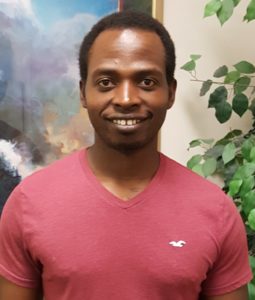
Eugene Nyamugenda

Eugene is a Ph.D. Student in his 5th year in the Biochemistry and Molecular Biology Department in the laboratory of Dr. Giulia Baldini.

He has a B.A. in Biochemistry and Molecular Biology from Hendrix College.

Research Interest Statement

The hypothalamus plays a central role in maintaining healthy energy homeostasis. The arcuate nucleus (ARC) of the hypothalamus receives anorexigenic signals from the periphery mediated by increased circulating leptin and insulin, which bind to receptors expressed by proopiomelanocortin (POMC) neurons in the ARC. When activated, POMC neurons release α-Melanocyte stimulating hormone (α-MSH). In the paraventricular nucleus (PVN), α-MSH binds to the melanocortin-4 receptor (MC4R) to signal decreased food intake and increased energy expenditure. Single-minded-1 (Sim1) neurons in the PVN include the population of MC4R neurons. My research uses mice to study the effect of obesity by a high-fat (HF) diet on the PVN neurons expressing Sim1 transcription factor and MC4R.  When mice are fed HF diet, they have increased body weight as a result of increased caloric intake. We found that exposure to HF diet induces loss of Sim1 neurons in the PVN and, in male mice, loss of POMC neurons and α-MSH abundance.  Because there are no reliable commercial antibodies that can detect MC4R, we generated a knock-in mouse line expressing HA-tagged MC4R (MC4R-HA) by using CRISPR/Cas9 technology to detect MC4R protein. We found that HF diet induces injury to MC4R neurons in the PVN as indicated by loss of MC4R protein, decreased mitochondrial abundance, and mitochondrial network size. The data suggest that HF diet induces loss of MC4R protein rather than of MC4R neurons, suggesting that expression of MC4R could be a target for anti-obesity therapy.

Something Notable about Time as a Graduate Student

Overall my time in graduate school has been excellent. I would say that I happened to fall into the right group of people. The life lesson I learned is never to translate a joke. The chances are either the joke is not funny, none understands it, or you will offend someone.

Career Goals

I want to do a postdoctoral fellowship for a few years and look for opportunities in biotech and pharmaceutical companies.

Experiment or Technique You Would Most Like to Do

I like to do many experiments. I love making DNA constructs. It excites me. If my labmates wanted to subclone anything, I would volunteer to do it.

Fun fact

When I grew up, my mother treated every ailment with a specific type of food (she still does). When I got sick in boarding school, I asked permission to go home. She would cook food for me, and the next day I would feel better and go back to school. Food is still my over-the-counter medicine today.  If you see me sick, the first treatment to give me is food (enough of it).

Publications

Nyamugenda E, Cox AB, Pierce JB, Banning RC, Huynh ML, May C, Marshall S, Turkal CE, Duina AA. Charged residues on the side of the nucleosome contribute to normal Spt16-gene interactions in budding yeast. Epigenetics. 2018; 13(1):1-7. doi: 10.1080/15592294.2017.1418132. Epub 2018 Feb 8. PMID: 29271283

Nyamugenda E, Trentzsch M, Russell S, Miles T, Boysen G, Phelan KD, Baldini G. Injury to hypothalamic Sim1 neurons is a common feature of obesity by exposure to a high-fat diet in male and female mice. J Neurochem. 2019 Apr; 149(1):73-97. doi: 10.1111/jnc.14662. Epub 2019 Feb 11. PMID: 30615192

Awards

Rwanda Presidential Scholarship

Filed Under: Student Highlights

Brian Koss Receives Prestigious NCI Fellowship

UAMS Graduate School student has received a fellowship from the National Cancer Institute to support his melanoma research.
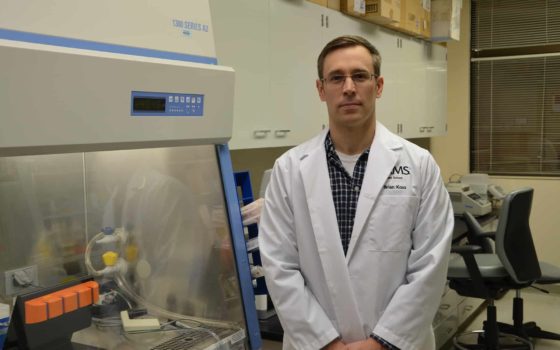
Brian Koss has received a fellowship from the National Cancer Institute to support his melanoma research.

March 6, 2019 | A prestigious fellowship from the National Cancer Institute (NCI) will allow UAMS Graduate School student Brian Koss to advance his melanoma research.

The Ruth L. Kirschstein National Research Service Award for Individual Predoctoral Fellows (F31) will provide Koss with a three-year award of $124,851 to fund his research focusing on the protection of tumor-infiltrating immune cells in melanoma patients.

Koss, a third-year student in the UAMS Graduate Program in Interdisciplinary Biomedical Sciences, is now one of a select few scientists at UAMS ever to receive an F31 fellowship from the NCI.

“Becoming a National Cancer Institute-funded fellow has positioned Mr. Koss for immediate success during his graduate training, and also has primed him to become a nationally competitive cancer researcher in the future. These awards are highly competitive, so receiving this fellowship is a testament of Mr. Koss’s hard work, innovation and desire to help cancer patients in Arkansas and across our nation,” said Alan Tackett, Ph.D., associate director for basic research in the UAMS Winthrop P. Rockefeller Cancer Institute.

Koss is in his third year as a member of Tackett’s lab team at the UAMS Cancer Institute.

“Melanoma tumors apply many repressive factors on immune cells, which can prevent the success of standard immunotherapies,” Koss said.

Immunotherapy is a type of treatment that stimulates a person’s own immune system to recognize and destroy cancer cells. It has been found to be a very successful method of treatment for many, but not all, patients with melanoma, the deadliest form of skin cancer, and is now considered standard of care for the disease.

Koss’ research has revealed a method to protect immune cells in the harsh melanoma microenvironment which is known to prevent successful outcomes for some patients. His fellowship award will allow him to further define his findings and apply them to preclinical models of melanoma.

“This fellowship is impactful not only for Mr. Koss, but also for UAMS, as it highlights the innovative cancer research at the Winthrop P. Rockefeller Cancer Institute and supports our ongoing mission to become a National Cancer Institute-Designated Cancer Center,” Tackett said.

Filed Under: iBioDS Highlights, Student Highlights

  • «Previous Page
  • Page 1
  • Page 2
  • Page 3
UAMS College of Medicine LogoUAMS College of MedicineUniversity of Arkansas for Medical Sciences
Mailing Address: 4301 West Markham Street, Little Rock, AR 72205
Phone: (501) 686-7000
  • Facebook
  • X
  • Instagram
  • YouTube
  • LinkedIn
  • Pinterest
  • Disclaimer
  • Terms of Use
  • Privacy Statement
  • Legal Notices

© 2026 University of Arkansas for Medical Sciences