
When Larry Cornett, Ph.D., talks about Arkansas INBRE, he doesn’t start with grants or research publications. He talks about students.
After more than two decades leading the Arkansas IDeA Network of Biomedical Research Excellence (INBRE), Cornett has helped hundreds of students discover careers in science and medicine. Many have gone on to become physicians, scientists, and professors, including some who now serve on the UAMS faculty.
This spring, the National Institutes of Health (NIH) renewed Arkansas INBRE for another five years, awarding the program $19.6 million. The renewal brings the program’s continuous federal funding since 2001 to a staggering $107 million.
“We’ve managed to develop a whole ecosystem that promotes biomedical research in Arkansas,” Cornett said. “After more than 20 years, we have students who were introduced to research by INBRE and are now career scientists or physicians.”
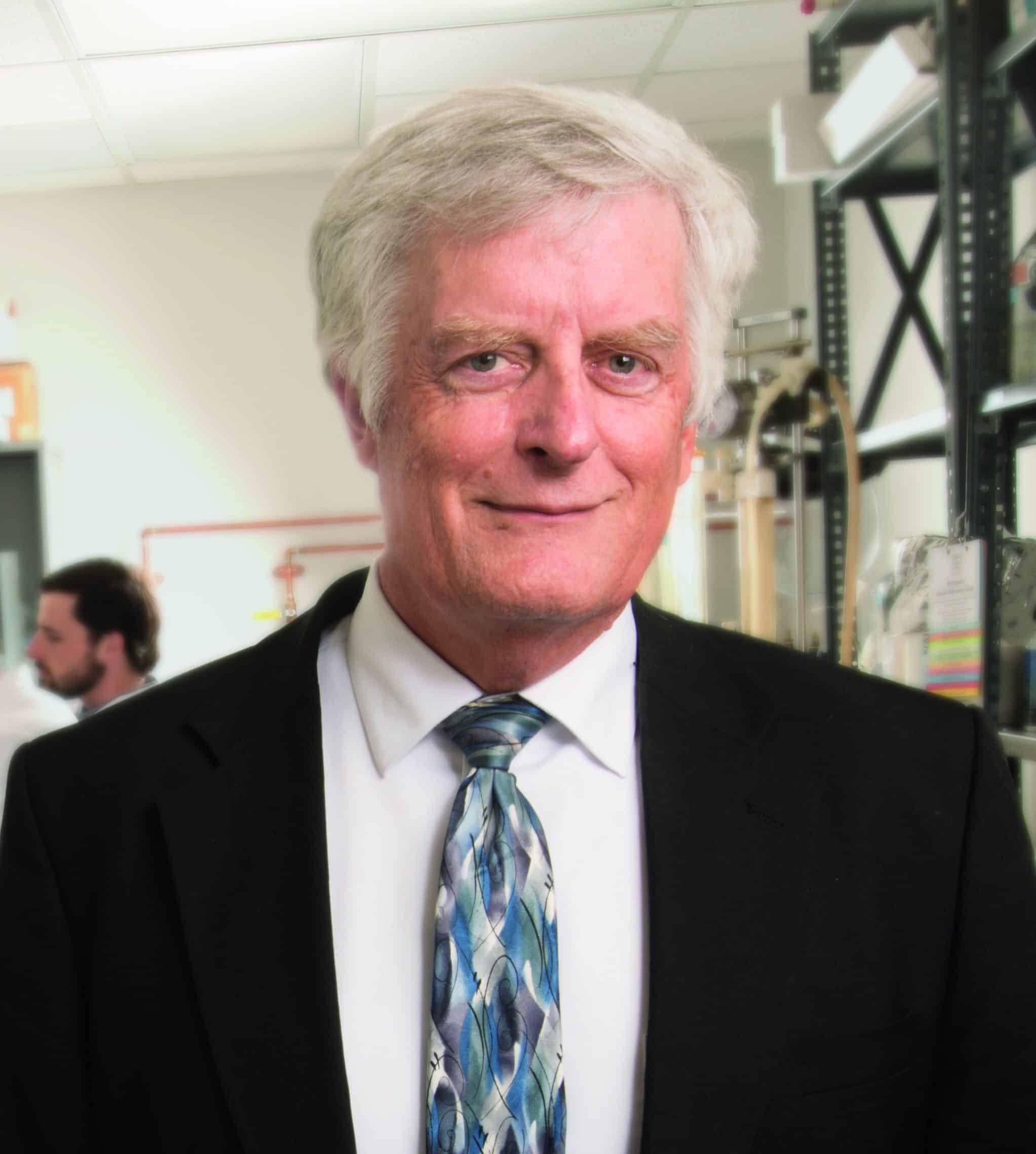
A Distinguished Professor of Physiology and Cell Biology, Cornett has served as the program’s principal investigator since its early years. Under his leadership, Arkansas INBRE has grown into a statewide research network that includes UAMS, the University of Arkansas at Fayetteville, Arkansas Children’s Research Institute (ACRI), and 16 undergraduate colleges and universities across Arkansas.
The program is also part of a larger NIH effort aimed at helping states like Arkansas grow their research programs. Over the past two decades, substantial federal investments through Arkansas INBRE and the NIH’s Centers of Biomedical Research Excellence (COBRE) program have helped attract talented scientists to the state, establish nationally recognized research centers, and strengthen Arkansas’ biomedical research infrastructure.
Today, Arkansas is home to nine active NIH IDeA programs, including eight COBREs. UAMS leads six of those programs: Arkansas INBRE; the Center for Molecular Interactions in Cancer; the Center for Studies of Host Response to Cancer Therapy; the Center for Musculoskeletal Disease Research; the Center for Microbial Pathogenesis and Host Inflammatory Responses; and the Maternal and Reproductive Community Health Center.
“At UAMS, we have strong nationally competitive researchers in fields such as neuroscience, infectious diseases, and cancer because of past and current COBREs,” Cornett said.
For Cornett, Arkansas INBRE’s impact is best seen in the students it serves.
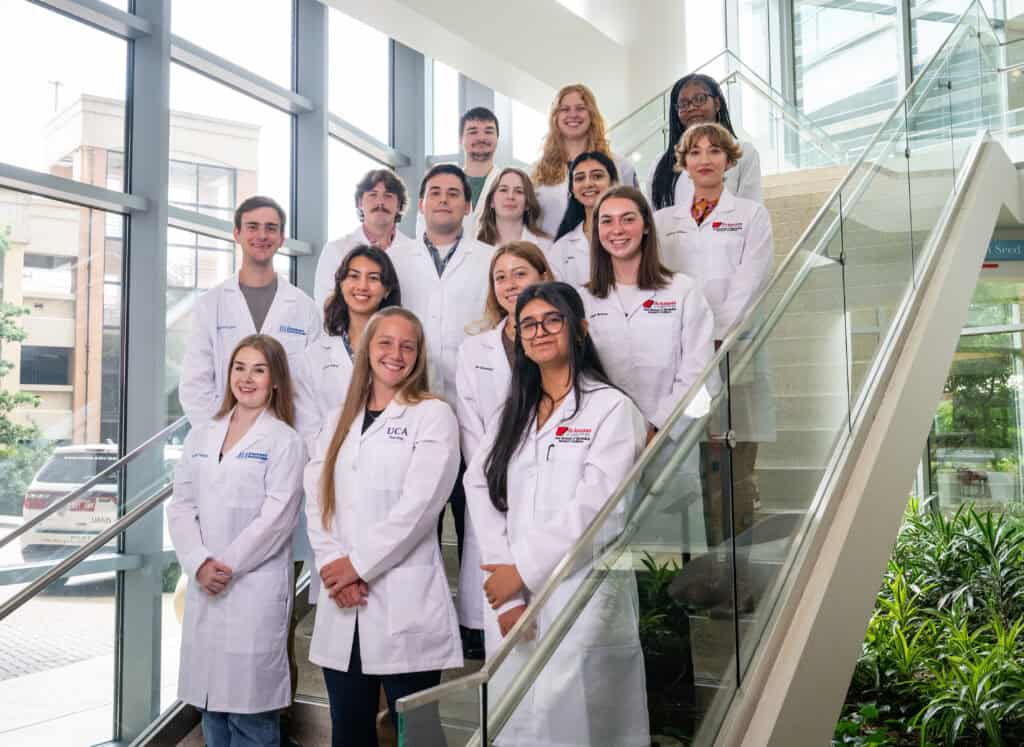
Each summer, undergraduate students from colleges and universities across Arkansas spend 10 weeks working in research laboratories at UAMS and the University of Arkansas at Fayetteville. For many, it’s their first experience working in a research environment.
“I think the biggest impact that we’ve had is increasing the number of Arkansas students who pursue careers that impact human health,” Cornett said. “Many of our students are first-generation college students who were given an opportunity to participate in research.”
Michael Bauer, Ph.D., Associate Professor in the Department of Biomedical Informatics and a member of the Winthrop P. Rockefeller Cancer Institute, was one of the first graduates of the UAMS/UALR Joint Bioinformatics Graduate Program established by Arkansas INBRE in 2004.
Nakita Lovelady, Ph.D., Assistant Professor in the College of Public Health, participated in the Arkansas INBRE Summer Research Program as a student at the University of Arkansas at Pine Bluff.
Lindsey Dayer, Pharm.D., Associate Professor in the College of Pharmacy, first conducted research through Arkansas INBRE while attending the University of the Ozarks.
Arkansas INBRE also invests heavily in faculty development, providing pilot funding, research grants, mentoring, and professional development that helps researchers build successful research programs.
Those investments often lead to long-term collaborations and discoveries by researchers at UAMS and faculty at colleges and universities throughout Arkansas.
Recent examples include a partnership among Robert Eoff, Ph.D., and Samantha Kendrick, Ph.D., in the Department of Biochemistry and Molecular Biology, and Hendrix College physicist Julie Gunderson, Ph.D., that resulted in a publication in Nucleic Acids Research; Daniel Voth, Ph.D., and Lyon College chemist Irosha Nawarathne, Ph.D., describing new antibacterial compounds in Molecules; and Robert Griffin, Ph.D., Professor in the Department of Radiation Oncology, UALR chemist Noureen Siraj, Ph.D., and Philander Smith’s Mahfuzul Hasan, Ph.D., that reported a promising class of nanomedicines for cancer treatment in the International Journal of Pharmaceutics.
With the new funding, Arkansas INBRE will launch a new Research Career Development Workshop Series for students and faculty. Topics will include mentoring, scientific communication, and the responsible use of artificial intelligence in research.
For Cornett, those additions are the next logical step in preparing Arkansas researchers for a rapidly changing scientific landscape.
The larger goal, however, remains unchanged.
“Every student who discovers a passion for research, every faculty member who launches a new project, and every collaboration that leads to scientific discovery strengthens Arkansas’ ability to improve human health,” he said.
Looking back, Cornett sees just how far the program’s impact has reached.
“When Arkansas INBRE began, we were focused on creating opportunities for students and faculty. Twenty-five years later, we’re seeing the long-term impact. Students became scientists. Faculty built research programs. Research programs became centers. Together, they’ve helped create a stronger biomedical research enterprise for Arkansas.”
The team that keeps Arkansas INBRE running across institutions and research sites includes Jerry Ware, Ph.D., co-principal investigator with Cornett. A group of faculty leaders support key components of the program, including Samantha Kendrick, Ph.D., who works directly with primarily undergraduate institution faculty; Eric Enemark, Ph.D., directs efforts connecting researchers with UAMS and University of Arkansas core facilities; and Chris Wardell, Ph.D., leads the program’s data science core alongside colleagues in biomedical informatics.
The program also includes dedicated staff who manage day-to-day operations, including Shani Worrell, Ph.D., who serves as evaluator, Carolyn Miller Robinson, who manages financial operations, and Diane McKinstry, who oversees the summer undergraduate research program.