
The Path to UAMS’ First NIH Medical Scientist Training Program
For nearly a decade, a small but determined group of UAMS faculty pursued an ambitious goal: earning a National Institutes of Health (NIH) Medical Scientist Training Program (MSTP) award.
This summer, that vision became a reality when UAMS secured a five-year, $2.8 million NIH grant to establish the Clinician Research Education and Scientific Training (CREST) Program.
The award places UAMS among an elite group of medical schools recognized by the NIH for their ability to train physician-scientists at the highest level. Of the 160 accredited M.D.-granting medical schools in the U.S., only 60 have NIH-funded medical scientist training programs.
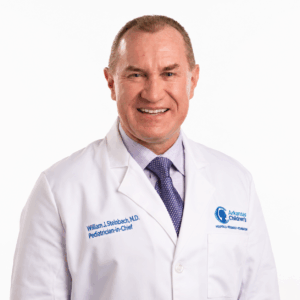
“This grant is really a testament to what UAMS has built over many years,” said William Steinbach, M.D., Chair of the Department of Pediatrics and one of the grant’s principal investigators. “The NIH looked at our research environment, the caliber of our faculty, our students, and our institutional commitment and recognized that we can train physician-scientists at the same level as long-established research powerhouses.”
“NIH medical scientist training programs are among the most selective training grants in academic medicine,” said Alan Tackett, Ph.D., Distinguished Professor and Executive Associate Dean for Basic Science Research. “This award represents far more than a new source of funding. It reflects years of deliberate planning, investment, and purposeful improvement in research infrastructure across UAMS.”
That supportive research infrastructure now includes robust resources across UAMS and the Arkansas Children’s Research Institute, including the Translational Research Institute, multiple NIH-funded Centers of Biomedical Research Excellence (COBREs), existing NIH training programs, and collaborative research partnerships across the state.
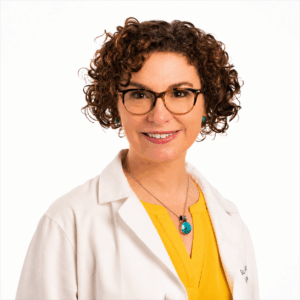
The push for the NIH training grant traces back to 2017, when Sara Shalin, M.D., Ph.D., Director of the UAMS M.D./Ph.D. program, Chair of the Department of Dermatology, and herself a graduate of an NIH-funded medical scientist training program at Baylor College of Medicine, began discussions about what it would take for UAMS to compete for the grant.
“We started talking seriously about going for the grant shortly after I arrived at UAMS nine years ago,” said Shalin. “But we knew we first had to show that our existing program was successful, and that took years of work by students, faculty, and institutional leaders.”
The existing M.D./Ph.D. program at UAMS was formalized in 2007 and has been supported by the College of Medicine since that time. The program has consistently graduated a small, diverse, and successful group of physician-scientists. Those graduates are pursuing competitive residency programs, and many have returned to practice in Arkansas, including six currently in UAMS faculty positions.
“Our students have been doing outstanding work for years,” Shalin said. “What this grant does is allow us to provide additional structure, mentorship, financial support, and opportunities that will help students maximize their potential.”
With the NIH award, the program can now provide full tuition for both medical and graduate school, health insurance, a living stipend, and research training support for the duration of student training, which can take up to eight years. UAMS matches the funding so that all students can benefit.
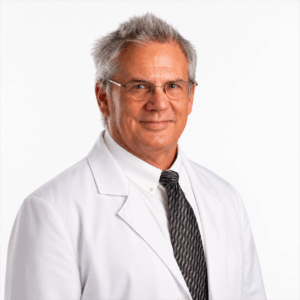
Another key faculty member who helped lead the effort is Mark Smeltzer, Ph.D., Professor in the Department of Microbiology and Immunology. Together, he, Shalin, and Steinbach spent years refining the vision, gathering institutional support, and developing a proposal that highlighted UAMS strengths. The three of them are the principal investigators on the grant.
When Smeltzer retires at the end of August 2026, Jesús Delgado-Calle, Ph.D., Associate Professor in the Department of Physiology and Cell Biology, will succeed him as co-principal investigator, helping ensure continuity in the program’s leadership as the program moves into its next phase.
A defining feature of CREST is its focus on the health needs of Arkansas and neighboring states. As the only federally funded MSTP serving Arkansas, Mississippi, Louisiana, and Oklahoma — all designated as Institutional Development Award (IDeA) states due to high rates of chronic disease, health disparities, and shortages of physician-scientists — program leaders believe the region’s health challenges present an opportunity.
“We want to train students who understand the health issues facing our communities because they’ve lived here or want to serve here,” Shalin said. “Our goal is to develop researchers whose discoveries will have a direct impact on the people of Arkansas and the broader mid-South.”
The first cohort of students funded by the CREST program is expected to begin training this year, marking the start of what leaders hope will be a new pipeline of physician-scientists rooted in Arkansas and working on its most pressing health challenges.
Students applying to the UAMS College of Medicine may apply through the AMCAS. First- and second-year UAMS medical students are eligible to apply.