• Skip to main content
  • Skip to main content
Choose which site to search.
University of Arkansas for Medical Sciences Logo University of Arkansas for Medical Sciences
College of Medicine: Department of Biochemistry and Molecular Biology
  • UAMS Health
  • Jobs
  • Giving
  • About Us
    • News
  • Faculty/Staff
    • Primary Faculty
    • Secondary Faculty
    • Adjunct Faculty
    • Professor Emeritus
    • Track Members
    • Research and Administrative Staff
  • Research Areas
    • Cancer Biology
    • Experimental Therapeutics
    • Systems Biology and Bioinformatics
      • Systems Biology News
    • Structural Biology and Enzymology
    • Nutrition and Metabolism
    • Chromatin Biology, Nucleic Acid Chemistry, and Genetics
    • Neurobiology and Neurobiochemistry
  • Students
    • Graduate Program
    • Elective Courses
    • Student Highlight
    • Alumni
      • Graduates
      • Where Are They Now?
    • Grant Opportunities
    • Career Information
    • Resources for Current Students
    • Resilience
    • About the Area
  • Seminars
    • Faculty Seminars
    • Student Seminars
    • Webinars and Conferences
  • Undergraduate Programs
    • Summer Research
      • Program Details
      • Application Materials
      • Research Opportunities
      • Information for Participants
      • Prior Participants
      • SURF Related Publications
      • Contact Information
      • Frequently Asked Questions
    • Arkansas Undergraduate Summer Research Symposium
      • Details
      • Registration
      • Directions and Parking
      • Top Presentations
      • Contact
  • Research Resources
  1. University of Arkansas for Medical Sciences
  2. College of Medicine
  3. Department of Biochemistry and Molecular Biology
  4. News
  5. Page 28

News

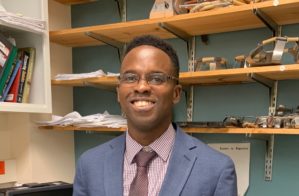
Eugene Nyamugenda Student Highlight

Eugene Nyamugenda

Eugene is a Ph.D. Student in his 5th year in the Biochemistry and Molecular Biology Department in the laboratory of Dr. Giulia Baldini.

He has a B.A. in Biochemistry and Molecular Biology from Hendrix College.

Research Interest Statement

The hypothalamus plays a central role in maintaining healthy energy homeostasis. The arcuate nucleus (ARC) of the hypothalamus receives anorexigenic signals from the periphery mediated by increased circulating leptin and insulin, which bind to receptors expressed by proopiomelanocortin (POMC) neurons in the ARC. When activated, POMC neurons release α-Melanocyte stimulating hormone (α-MSH). In the paraventricular nucleus (PVN), α-MSH binds to the melanocortin-4 receptor (MC4R) to signal decreased food intake and increased energy expenditure. Single-minded-1 (Sim1) neurons in the PVN include the population of MC4R neurons. My research uses mice to study the effect of obesity by a high-fat (HF) diet on the PVN neurons expressing Sim1 transcription factor and MC4R.  When mice are fed HF diet, they have increased body weight as a result of increased caloric intake. We found that exposure to HF diet induces loss of Sim1 neurons in the PVN and, in male mice, loss of POMC neurons and α-MSH abundance.  Because there are no reliable commercial antibodies that can detect MC4R, we generated a knock-in mouse line expressing HA-tagged MC4R (MC4R-HA) by using CRISPR/Cas9 technology to detect MC4R protein. We found that HF diet induces injury to MC4R neurons in the PVN as indicated by loss of MC4R protein, decreased mitochondrial abundance, and mitochondrial network size. The data suggest that HF diet induces loss of MC4R protein rather than of MC4R neurons, suggesting that expression of MC4R could be a target for anti-obesity therapy.

Something Notable about Time as a Graduate Student

Overall my time in graduate school has been excellent. I would say that I happened to fall into the right group of people. The life lesson I learned is never to translate a joke. The chances are either the joke is not funny, none understands it, or you will offend someone.

Career Goals

I want to do a postdoctoral fellowship for a few years and look for opportunities in biotech and pharmaceutical companies.

Experiment or Technique You Would Most Like to Do

I like to do many experiments. I love making DNA constructs. It excites me. If my labmates wanted to subclone anything, I would volunteer to do it.

Fun fact

When I grew up, my mother treated every ailment with a specific type of food (she still does). When I got sick in boarding school, I asked permission to go home. She would cook food for me, and the next day I would feel better and go back to school. Food is still my over-the-counter medicine today.  If you see me sick, the first treatment to give me is food (enough of it).

Publications

Nyamugenda E, Cox AB, Pierce JB, Banning RC, Huynh ML, May C, Marshall S, Turkal CE, Duina AA. Charged residues on the side of the nucleosome contribute to normal Spt16-gene interactions in budding yeast. Epigenetics. 2018; 13(1):1-7. doi: 10.1080/15592294.2017.1418132. Epub 2018 Feb 8. PMID: 29271283

Nyamugenda E, Trentzsch M, Russell S, Miles T, Boysen G, Phelan KD, Baldini G. Injury to hypothalamic Sim1 neurons is a common feature of obesity by exposure to a high-fat diet in male and female mice. J Neurochem. 2019 Apr; 149(1):73-97. doi: 10.1111/jnc.14662. Epub 2019 Feb 11. PMID: 30615192

Awards

Rwanda Presidential Scholarship

Filed Under: Student Highlights

Robert Eoff, Ph.D., Receives $1.2 Million Grant from National Science Foundation

By Amy Widner

Researcher Robert Eoff, Ph.D., has received a $1.2 million grant from the National Science Foundation to continue his work at the University of Arkansas for Medical Sciences (UAMS) on DNA damage, cell replication and its implications for diseases like dementia, ALS and cancer.

Eoff is an associate professor in the Department of Biochemistry and Molecular Biology in the UAMS College of Medicine and a member of UAMS’ Winthrop P. Rockefeller Cancer Institute. Julie Gunderson, Ph.D., assistant professor of physics at Hendrix College in Conway, is collaborating with Eoff on the project. The four-year grant will also support graduate student training at UAMS and undergraduate trainees at Hendrix.

Eoff’s research team studies what happens when DNA damage is not repaired in a timely manner and ends up blocking the mechanics behind how copies of new cells are made. Specifically, he studies the effect of large amounts of guanine in DNA sequences, which can form unusual structures called G-quadruplexes (G4).

“Imagine trying to copy a document containing over six billion letters in the span of a few hours,” Eoff said. “Now imagine finding that the text contains many words like ‘Mississippi,’ ‘Czechoslovakia,’ ‘Oberschleissheim’ and ‘Solgohachia.’ Even though you’re on a tight schedule, you might have to slow down a bit when you come to those tricky words.

“As it turns out, this is probably a good analogy for what happens when enzymes involved in DNA replication encounter certain sequences that contain an abundance of guanine bases,” Eoff said.

Errors in these G4 sequences can lead to changes in the genome that are associated with human disease. For example, neurological diseases such as frontotemporal dementia, amyotrophic lateral sclerosis (ALS), and the intellectual disability fragile X syndrome have all been linked to dysfunctional G4 maintenance.

There is also a substantive and growing body of literature linking G4 to the biology of cancer and cancer therapies. Many cancer-related genes are controlled by G4 motifs, and chromosomes in tumor specimens tend to be broken more frequently near G4 sites than other DNA sequences.

However, scientists do not fully understand how these errors occur.

For this specific grant, Eoff will study the role of a special enzyme called Rev1 in copying G4 sequences. Rev1 is a DNA polymerase — an enzyme that catalyzes synthesis of new strands of DNA.

“Successful completion of this research will give us a better understanding of how G4 replication errors occur and how they might have come about in the first place,” Eoff said. “Hopefully, this will give us new insight into replication barriers, which cause a wide range of issues in humans and other species, as a first step toward putting this greater understanding to use in the form of new treatments and therapies.”

Filed Under: Department News

Cancer Institute Member Spotlight

Alicia Byrd, Ph.D.

Assistant Professor
Department of Biochemistry and Molecular Biology
UAMS College of Medicine

Research Interest Statement

DNA damage occurs tens of thousands of times per day in human cells from both endogenous and environmental sources. In order to preserve the genetic material, cells have evolved multiple mechanisms to detect and repair DNA damage. Mutations in genes encoding proteins involved in the DNA damage response result in a variety of DNA repair syndromes, which have increased risks of cancers, often in childhood. However, inaccurate DNA repair can also cause genomic instability such as chromosomal rearrangements and expansion of repetitive sequences, which can lead to the development of cancer.

My research focuses on the enzymes that regulate the DNA damage response, in particular, a family of enzymes called helicases that remove secondary structures from DNA. These proteins have critical roles in DNA repair and loss of activity results in genomic instability and predisposition to many types of cancer. The molecular mechanisms of these proteins, both individually and as components of multi-protein complexes, are of interest, as are the effects of posttranslational modifications on their activity. Increased understanding of the regulation of these DNA repair processes that are critical for maintaining genomic integrity could ultimately lead to the design of better cancer therapies.

Dr. Byrd’s Grants

Winthrop P. Rockefeller Cancer Institute

Seeds of Science Pilot Award

Regulation of the DNA Damage Response in Breast Cancer

2/1/19 – 1/31/20

$15,000*


NIGMS – 3 R35 GM122601-03S1

Functions and Mechanisms of Helicases and G-Quadruplex Nucleic Acids

5/01/2017-4/30/2022

Role: Co-I (Kevin Raney, PI)

$129,583*

*cancer-related annual direct costs

Dr. Byrd’s UAMS Collaborators

Stephanie Byrum, Ph.D. (Department of Biochemistry and Molecular Biology)

Robert Eoff, Ph.D. (Department of Biochemistry and Molecular Biology)

Kevin Raney, Ph.D. (Department of Biochemistry and Molecular Biology)

Samantha Kendrick, Ph.D. (Department of Biochemistry and Molecular Biology)

Justin Leung, Ph.D. (Department of Radiation Oncology)

Nirmala Parajuli, DVM, Ph.D. (Department of Pharmacology and Toxicology)

Dr. Byrd’s External Collaborators

Mark Dillingham, Ph.D. (University of Bristol)

Opportunities for Collaboration

I am just beginning my independent research program at UAMS and welcome new collaborations. My primary area of interest is the DNA damage response, but anything related to genome maintenance interests me. My lab has expertise in enzymology, protein-DNA interactions, and G-quadruplex DNA, and we are particularly interested in breast cancer.

You May Not Know That …

I have visited 48 of the 52 Arkansas State Parks with my family on a geocaching adventure. Petit Jean is my favorite so far, but stay tuned; we have four parks left to see.

Recent Cancer-Related Publications

Gao J, Byrd AK, Zybailov BL, Marecki JC, Guderyon MJ, Edwards AD, Chib S, West KL, Waldrip ZJ, Mackintosh SG, Gao Z, Putnam AA, Jankowsky E, Raney KD. (2019) DEAD-box RNA helicases Dbp2, Ded1 and Mss116 bind to G-quadruplex nucleic acids and destabilize G-quadruplex RNA. Chem Commun (Camb). 55, 4467-4470.

Marecki, JC, Aarattuthodiyil S, Byrd AK, Penthala NR, Crooks PA, Raney KD (2019) N-Naphthoyl-substituted indole thio-barbituric acid analogs inhibit the helicase activity of the hepatitis C virus NS3. Bioorg Med Chem Lett. 29, 430-434.

Byrd AK, Bell, MR, Raney KD (2018) Pif1 helicase unfolding of G-quadruplex DNA is highly dependent on sequence and reaction conditions. J Biol Chem. 293, 17792-17802.

Byrd AK and Raney KD (2017) Structure and function of Pif1 helicase. Biochem Soc Trans. 15, 1159-1171.

Griffin WC, Gao J, Byrd AK, Chib S, Raney KD. (2017) A biochemical and biophysical model of G-quadruplex DNA recognition by positive coactivator of transcription 4. J Biol Chem. 292, 9567-9582.

Byrd AK, Zybailov BL, Maddukuri L, Gao J, Marecki JC, Jaiswal M, Bell MR, Griffin WC, Reed MR, Chib S, Mackintosh SG, MacNicol AM, Baldini G, Eoff RL, Raney KD. (2016) Evidence that G-quadruplex DNA Accumulates in the Cytoplasm and Participates in Stress Granule Assembly in Response to Oxidative Stress. J Biol Chem. 291, 18041-57.

Filed Under: Department News

Sam Mackintosh Awarded $764,000 NIH Grant For Highly Advanced Research Equipment

By Susan Van Dusen

A grant of almost $764,000 from the National Institutes of Health (NIH) will allow the University of Arkansas for Medical Sciences (UAMS) to purchase biomedical research equipment with new capabilities unavailable elsewhere in Arkansas.

UAMS scientist Samuel G. Mackintosh, Ph.D., received the NIH S10 High-End Instrumentation Award totaling $763,971 to fund the purchase of a mass spectrometer, a piece of equipment used to identify and compare proteins essential for the development of new therapies for cancer and other diseases.

Mackintosh, an Associate Professor in Biochemistry and Molecular Biology, serves as co-director of the UAMS Proteomics Core, a shared resource at the UAMS Winthrop P. Rockefeller Cancer Institute that provides access to technologies, services and scientific consultation for scientists throughout the university, across the country and in Puerto Rico.

“Our goal is to identify new avenues for diagnosis and treatment by comparing proteins present in diseases to proteins present in healthy individuals. The UAMS Proteomics Core supports this research by identifying and quantifying large numbers of proteins from cells, tissues, blood and other biological sources,” said Mackintosh, who also is an associate professor in the UAMS College of Medicine Department of Biochemistry and Molecular Biology.

The core facility is co-directed by Rick Edmondson, Ph.D., associate professor of medicine and director of proteomics. Core staff members include Renny Lan, Aaron Storey, Lisa Orr and Robert Brown.

“Investments by the College of Medicine and Winthrop P. Rockefeller Cancer Institute in the rapidly developing field of mass spectrometry have allowed us to keep up with the advances in the field, ensuring that state-of-the-art technology is available to UAMS researchers,” Mackintosh said.

Three NIH instrument grants have been awarded in Arkansas since 2015, with two going to Mackintosh.

The NIH grant also builds on recent efforts at UAMS to strengthen collaboration between research programs funded by the NIH Institutional Development Award (IDeA) program, which seeks to expand scientific research in 23 historically underfunded states and Puerto Rico.

It also will support proteomics research through three Centers for Biomedical Research Excellence (COBRE), IDeA research centers at UAMS and Arkansas Children’s Hospital that focus on career development for young scientists and expansion of institutional research capabilities.

The COBRE research centers the grant will support focus on three areas:

  • The Center for Translational Pediatric Research at Arkansas Children’s Research Institute directed by Alan Tackett, Ph.D., associate director of basic research at the UAMS Winthrop P. Rockefeller Cancer Institute and professor in the UAMS College of Medicine Department of Biochemistry and Molecular Biology;
  • The Center for Microbial Pathogenesis and Host Inflammatory Responses at UAMS directed by Mark Smeltzer, Ph.D., professor in the UAMS College of Medicine Departments of Microbiology and Immunology and Orthopaedics;
  • The Center for Musculoskeletal Disease Research at UAMS directed by Charles O’Brien, Ph.D., professor in the UAMS College of Medicine Department of Internal Medicine-Endocrinology.

Other UAMS researchers supporting the instrument grant application include Kevin Raney, Ph.D.; Maria Almeida, Ph.D.; and Srinivas Ayyadevara, Ph.D.

The Bioinformatics and Systems Biology Core, directed by Stephanie Byrum, Ph.D., will play a key role in analyzing data generated by the new mass spectrometer.

This federal grant will bolster the Cancer Institute’s ongoing efforts to receive National Cancer Institute Designation.

To achieve designation, cancer centers undergo a highly competitive assessment process that demonstrates an outstanding depth and breadth of research in three areas: basic laboratory, patient/clinical and population-based. The designation brings with it many benefits, including expanded access to federal funding for researchers and improved access to clinical trials for patients.

Filed Under: Department News

Undergraduates Learn By Doing at Summer Research Symposium

By Amy Widner

Learning by doing and reinforcing concepts through presentation — those practices were the core lessons on display at the eighth annual Central Arkansas Undergraduate Summer Research Symposium at UAMS.

About 115 undergraduate students from across Arkansas and the nation gathered in the I. Dodd Wilson Education Building to give poster presentations and oral presentations on summer research projects. The projects were the culmination of weeks — sometimes years — of work with various programs, some at UAMS and others at colleges and universities across the state, as well as the U.S. Food and Drug Administration National Center for Toxicological Research at Jefferson.

“Doing research is the best way to understand research and that’s why we’ve spent so much time and effort making these opportunities available,” said Grover P. Miller, Ph.D., professor in the Biochemistry and Molecular Biology Department in the UAMS College of Medicine.

Female student presenting research
Amanda Coleman of Harding University talks about her summer research.

“If you’re like me, you went into science thinking it was all about doing experiments,” Miller said. “Well, it’s about more than that. Over the summer, you’ve learned a lot of techniques, you’ve learned a lot about your project, but science is really about stories. And so today, you’re going to be telling us your stories. This is part of your journey: to pause, reflect on all you were able to achieve, and tell others about that experience.”

Miller asked how many students had conducted summer research for the first time and about 80 percent of the room raised their hands.

That was the case for Mason Archer, a senior from Ouachita Baptist University in Arkadelphia who worked with the Arkansas INBRE program (IDeA Network of Biomedical Research Excellence).

Femal student at podium giving oral presentation
Laura Osborn of Ave Maria University gives an oral presentation on summer research she did at UAMS.

Archer studied six strains of bacteria that are developing resistance to antibiotics and are problematic in nursing home and hospital settings. They are known as ESKAPE — Enterococcus faecium, Staphylococcus aureus, Klebsiella pneumoniae, Acinetobacter baumannii, Pseudomonas aeruginosa and Enterobacter species. Archer also worked with bacteria commonly found in soil and tested about 14 of these to see if any had antibacterial properties effective against the ESKAPE group.

“I was excited to find that almost all of them were able to inhibit more than one of the ESKAPE pathogens,” Archer said. “So we would hope to use this data in the future to possibly use some of the bacteria to test them against other pathogens as well and potentially produce a new antibiotic from one of them.”

Crowd shot in auditorium
Oral presentations were held in the first-floor auditorium of the I. Dodd Wilson Education Building.

Archer hopes to become a pharmacist. He said the summer research will help him enter pharmacy school in the fall with a deeper understanding of concepts he’ll be studying.

“The research was perfect for me because I was able to work directly with antibiotics, which are — of course — really important for the pharmaceutical industry,” Archer said. “To do research with antibiotics and see firsthand how antibiotics work and how each one effects different pathogens was great.”

Female student presenting poster
Alexis Baker of Hendrix College presents her poster.

Alexis Baker — a senior from Hendrix College in Conway who worked with the Hendrix Odyssey Program for the second year in a row — also thinks her participation in summer research and the Summer Research Symposium will help with her career goals. She wants to be a neurosurgeon and just took the Medical College Admission Test (MCAT).

Baker worked with pain-sensing neurons and clarifying how they develop during the embryonic process.

“I definitely felt like doing summer research was worthwhile,” Baker said. “I learned so much by working in the lab that when I went back into the classroom, I felt like I was way ahead of the other students. I also feel like it helped me prepare for the MCAT.”

Student presenting to judge
Sebastian Bustillo presents his summer research to Alan Diekman, Ph.D., of the Department of Biochemistry at UAMS.

Baker said it’s been important for her to learn to talk about science. Last year, she didn’t present, she just observed her teammates. This year, she was on her own.

“I’ve been practicing on my family,” she said. “I’m the first one to go to college, so they don’t have any idea what I’m talking about. It challenges me to think about it and come up with a way to explain it so that they’ll understand. It will be the same someday when I’m interacting with patients, plus, when I have to really break it down and think about it, it helps me understand it better, too.”

Overhead shot of posters
The poster sessions were held in the lobby of the I. Dodd Wilson Education Building.

Miller said experiences like Archer’s and Baker’s are by design. He hopes the symposium is realistic and practical for the students, who will encounter similar situations throughout their scientific careers. In addition, the symposium gives them a chance to network with faculty and fellow students and find out more about their future educational and career options.

The symposium was hosted by the Graduate School and Department of Biochemistry and Molecular Biology at UAMS as well as the National Institutes of Health-supported INBRE program and the UAMS Summer Undergraduate Research Program (SURP) to Increase Diversity in Research.

Filed Under: Department News

Fellowship Program Gives Undergrads Glimpse Into Biomedical Research Careers

By Susan Van Dusen

A rising college senior, Huddoy Walters’ sights are set on a career in biomedical research.

“I want to be a scientist, most definitely,” said Walters, a native Jamaican and biochemistry major at the University of Arkansas at Pine Bluff.

That dream of a future in the research field was cemented by Walters’ two-time participation in a summer fellowship at UAMS sponsored by Arkansas INBRE, a program funded by the National Institutes of Health (NIH) and designed to promote biomedical research capacity and support for promising undergraduate students.

Larry Cornett, Ph.D., associate vice chancellor for research at UAMS, serves as principal investigator for Arkansas INBRE and has worked on the Summer Research Fellowship Program since its inception in 2002.

“The summer program is one of the most exciting parts of my job. It opens doors for students, many of whom are the first person in their family to attend college, and shows them firsthand what it takes to be part of a research team,” Cornett said.

INBRE Summer Research Fellow Huddoy Walters (back) works with mentor Antino Allen, Ph.D., in his lab at UAMS.

In addition to pairing rising juniors and seniors with scientists at UAMS, students in the 10-week program also are placed at the University of Arkansas in Fayetteville and the University of Arkansas at Little Rock, which participate in Arkansas INBRE as research-intensive lead institutions. In 2019, a total of 13 students participated at UAMS, and three took part at the University of Arkansas.

During his first stint in the program during summer 2018, Walters conducted biochemistry research in a lab at the University of Arkansas. He spent the following summer at UAMS working alongside Antino Allen, Ph.D., associate professor in the UAMS College of Pharmacy Department of Pharmaceutical Sciences.

“My first research experience was in a program much like the INBRE Summer Research Fellowship. Now, by serving as a mentor, I can provide the same type of opportunities to the next generation of scientists,” said Allen, whose research examines how inflammation and oxidative stress affect neuronal anatomy and cognitive function after exposure to X-rays, heavy ion irradiation or traumatic brain injury.

For participant Madison Blue, the program provided the chance to experience graduate-level research before completing her biochemistry degree at Hendrix College in Conway.

“The fellowship program helped prepare me for what I’ll encounter in graduate school, and I didn’t have to leave Arkansas to participate,” said Blue, a Jonesboro native.

Blue, Walters and the additional fellows also participated in weekly workshops addressing topics such as research ethics and science writing. To wrap up their experience, they presented their research at the Central Arkansas Undergraduate Research Symposium, held July 26 at UAMS. A travel award offered to each summer fellow gives them an additional opportunity to present their research at an upcoming symposium or conference of their choice.

Robert Eoff, Ph.D., a cancer researcher who served as Blue’s mentor, said working with undergraduates brings a renewed energy to his lab and helps him improve his own teaching skills.

“For many of the students, this is their first exposure to biomedical research, so we have to break things down to be sure that the rationale for the study design and experimental details are clear and understandable,” said Eoff, associate professor in the UAMS College of Medicine Department of Biochemistry and Molecular Biology.

Eoff’s research team studies what happens when DNA damage is not repaired in a timely manner and ends up blocking the ability to replicate cells.

The fellowship program also serves the important function of connecting UAMS to undergraduate institutions across the state, where up-and-coming researchers begin their training.

The UAMS-based Arkansas INBRE program manages the initiative for partners that include the University of Arkansas at Pine Bluff, Arkansas State University, Hendrix College, Ouachita Baptist University, John Brown University and others.

“From my perspective, there’s a great cooperative spirit between UAMS and the colleges we work with across the state. It’s our goal to provide students with opportunities and experiences that elevate them to a level where they know first-hand what it means to perform biomedical research, which helps them become better advocates for science and more competitive applicants for grad school or other educational opportunities in the future,” Eoff said.

Cornett agreed, stating that he and the mentors grow attached to their students and continue to monitor their educational process. Two Summer Research Fellows have even gone on to become UAMS faculty members: Lindsey Dayer, Pharm.D., associate professor in the UAMS College of Pharmacy, and Stephanie Byrum, Ph.D., assistant professor in the UAMS College of Medicine.

“It’s always satisfying to see our fellows succeed in their chosen field,” Cornett said.

INBRE (IDeA Network of Biomedical Research Excellence) is funded by a grant from the National Institutes of Health under the Institutional Development Award (IDeA) Program of the National Institute of General Medical Sciences.

Filed Under: Department News

Binyam Belachew presents at helicase meeting

Binyam Belachew, a graduate student in Kevin Raney’s lab presented a poster at the theFASEB Helicase and Nucleic Acid-based Machine Conference in Steamboat Springs, CO.

Binyam Belachew
Binyam Belachew on the group hike to Rabbit Ears Pass.

Filed Under: Department News

Summer Undergraduate Researchers Get First Taste of Real Science

By Amy Widner

July 26, 2019 | Twelve undergraduate students from across the United States worked in real labs, doing real research this summer at UAMS — many of them for the first time.

The Summer Undergraduate Research Program to Increase Diversity in Research is hosted annually by the UAMS Graduate School and Center for Diversity Affairs and is funded by the National Heart, Lung and Blood Institute, part of the National Institutes of Health.

For nine weeks, the students perform research at UAMS with the help of a mentor. They network with scientists, see real-life surgeries, cultivate leadership skills and attend lectures on conducting research skillfully and ethically. At the end of their journey, they present their work at the Central Arkansas Undergraduate Summer Research Symposium at UAMS.

Nikyshaliz Velazquez is one of the 2019 SURP students. She is a senior studying microbiology at the University of Puerto Rico. She spent the summer working with Jerry Ware, Ph.D., on platelets in the UAMS College of Medicine Department of Physiology and Biophysics.

“We want to know if platelets have another function,” Velazquez said. “We know that platelets form clots, but we want to know if they also play a role in systematic inflammation.”

Outside of the lab, the students have gotten together throughout the summer for seminars on everything from preparing a CV to career options to finding your voice as a leader and uncovering your strengths.

“This is my first time doing research in a lab,” Velazquez said. “The most useful part of the program to me has been being in the lab because I don’t know what I’m going to do after graduation. I’m thinking of doing a Ph.D. or going to med school. So doing the actual work has helped me get closer to making that decision and so have the seminars.”

SURP participant Eva Davis said she is asking herself the same question: Ph.D., M.D., or both. Davis is from Fayetteville, North Carolina, and is going into her junior year at Hampton University in Virginia, where she is studying cellular and molecular biology. She knows she wants to teach at a historically black college or university and be part of increasing the number of black women in scientific careers, but she doesn’t know which degree path is best for her.

Davis worked with Mari K. Davidson, Ph.D., as her mentor in the Department of Biochemistry and Molecular Biology. She is working on a project involving aneuploidy, or an abnormal number of chromosomes in a cell, and one of its major causes, recombination error, or the loss or gain of genetic material when chromosomes are copied.

“So I’m looking into what happens during the process and what proteins are important for recombination,” Davis said. “That understanding is important because it can lead us to further understanding the pathways that lead to aneuploidy, which is a common cause of many genetic disorders, including Down syndrome.”

Davis still doesn’t know for sure what the future holds, but she does have a better understanding of what it means to be a scientist.

“Science consists of a lot of failures, but the end results are usually very rewarding,” Davis said. “People can tell you that all day long, but until you experience it yourself, you don’t really know.”

This is the ninth year for the SURP program at UAMS.

“SURP helps individuals, but it also invests in our scientific community of the future,” said Brian E. Gittens, Ed.D., vice chancellor for diversity, equity and inclusion at UAMS. “We hope these students stay in the sciences and increase the diversity among career research scientists. When we have diversity among research topics, our reward is a diversity of thought, problem solving and solutions that impact the lives and health of all Arkansans and the broader society.”

“The SURP program introduces many key scientific concepts that will serve these students throughout their careers,” said Robert E. McGehee Jr., Ph.D., dean of the UAMS Graduate School. “They learn what it’s like to be in a lab, they learn the sometimes rocky road to scientific success, and they learn the important step of communicating their work to the public.”

Students receive a salary and financial assistance with travel. The program is open to all, but students with a background in biology or chemistry who are from an underrepresented group (African American, Hispanic American, Native American, Alaska native, Hawaiian native, or native of the U.S. Pacific Islands), disabled, or from a disadvantaged background are encouraged to apply. The application is typically due in February. For more information, find the SURP program online or contact Dr. Latrina Prince (princelatrina@uams.edu).

Filed Under: Department News

July publications

Wayne Wahls

Opinion: The National Institutes of Health needs to better balance funding distributions among US institutions

Wahls WP

PNAS 2019


Miller lab

A Time-Embedding Network Models the Ontogeny of 23 Hepatic Drug Metabolizing Enzymes.

Matlock MK, Tambe A, Elliott-Higgins J, Hines RN, Miller GP, Swamidass SJ.

Chem Res Toxicol. 2019

Filed Under: Department News

Five Early Career Researchers Receive KL2 Scholar Awards

The Translational Research Institute (TRI) announced today that five early career UAMS researchers will receive KL2 Mentored Research Career Development Program Scholar Awards.

The program provides two years of didactic and mentored research training. Scholars receive 75% salary support and up to $25,000 per year for research, tuition, travel expenses and education materials.

The KL2 Scholars were chosen from 11 applicants. Below are the new scholars, their college, department and title of their KL2 project:

  • Tara Johnson, M.D.; College of Medicine, Department of Pediatrics, Neurology; Implementation and Quantification of the General Movement Assessment for Early Detection of Neurodevelopmental Disabilities in Infants
  • Stephanie Kennon-McGill, Ph.D.; College of Public Health, Department of Environmental and Occupational Health; Fetal Exposure to Cannabinoids: Exposure, Methylation and Neurodevelopmental Effects
  • Pearman Parker, Ph.D., M.P.H., RN; College of Nursing, Department of Nursing Science;  An exploration of the mental health needs of young women with breast cancer and implications for developing patient educational materials
  • Isabel Racine-Miousse, Ph.D.; College of Medicine, Department of Biochemistry; Decreasing Methionine Intake to Improve Survival in Patients with Metastatic Melanoma
  • Jennifer Vincenzo, Ph.D., M.P.H., P.T.; College of Health Professions, Department of Physical Therapy; Development of a Falls Prevention Self-Management Plan to Improve Older Adults Adherence to Prevention Strategies after Community-Based Falls Risk Screenings

Filed Under: Department News

  • «Previous Page
  • Page 1
  • Interim pages omitted …
  • Page 26
  • Page 27
  • Page 28
  • Page 29
  • Page 30
  • Interim pages omitted …
  • Page 35
  • Next Page»
UAMS College of Medicine LogoUAMS College of MedicineUniversity of Arkansas for Medical Sciences
Mailing Address: 4301 West Markham Street, Little Rock, AR 72205
Phone: (501) 686-7000
  • Facebook
  • X
  • Instagram
  • YouTube
  • LinkedIn
  • Pinterest
  • Disclaimer
  • Terms of Use
  • Privacy Statement
  • Legal Notices

© 2026 University of Arkansas for Medical Sciences