• Skip to main content
  • Skip to main content
Choose which site to search.
University of Arkansas for Medical Sciences Logo University of Arkansas for Medical Sciences
College of Medicine: Department of Biochemistry and Molecular Biology
  • UAMS Health
  • Jobs
  • Giving
  • About Us
    • News
  • Faculty/Staff
    • Primary Faculty
    • Secondary Faculty
    • Adjunct Faculty
    • Professor Emeritus
    • Track Members
    • Research and Administrative Staff
  • Research Areas
    • Cancer Biology
    • Experimental Therapeutics
    • Systems Biology and Bioinformatics
      • Systems Biology News
    • Structural Biology and Enzymology
    • Nutrition and Metabolism
    • Chromatin Biology, Nucleic Acid Chemistry, and Genetics
    • Neurobiology and Neurobiochemistry
  • Students
    • Graduate Program
    • Elective Courses
    • Student Highlight
    • Alumni
      • Graduates
      • Where Are They Now?
    • Grant Opportunities
    • Career Information
    • Resources for Current Students
    • Resilience
    • About the Area
  • Seminars
    • Faculty Seminars
    • Student Seminars
    • Webinars and Conferences
  • Undergraduate Programs
    • Summer Research
      • Program Details
      • Application Materials
      • Research Opportunities
      • Information for Participants
      • Prior Participants
      • SURF Related Publications
      • Contact Information
      • Frequently Asked Questions
    • Arkansas Undergraduate Summer Research Symposium
      • Details
      • Registration
      • Directions and Parking
      • Top Presentations
      • Contact
  • Research Resources
  1. University of Arkansas for Medical Sciences
  2. College of Medicine
  3. Department of Biochemistry and Molecular Biology
  4. News
  5. Page 29

News

Cancer Institute Member Spotlight — Kevin Raney, Ph.D.

Professor and Chair
Department of Biochemistry and Molecular Biology
UAMS College of Medicine

Research Interest Statement

The Raney laboratory is interested in the mechanisms and functions of nucleic acid enzymes called helicases. Helicases play central roles in all aspects of DNA and RNA metabolism; therefore they are key enzymes in maintaining genomic stability. Genetic mutations in many helicases have been correlated with numerous cancers. The Pif1 helicase is a major focus of study. Mutations in Pif1 have been linked to increased incidence of breast cancer. We are studying how such mutations alter the biochemical mechanism and ultimately biological function of the enzyme, thereby leading to cancer.

A related interest of the Raney lab is in non-canonical structures of DNA and RNA that form in guanine-rich sequences termed G-quadruplex. Over 500,000 potential G-quadruplex sequences exist in the human genome but their function is largely unknown. We have identified a novel function for G-quadruplex sequences that appears to be fundamental to cellular responses to reactive oxygen species. In response to DNA damage due to oxidative stress, G-quadruplex sequences are removed from the genome, then interact with a variety of proteins. Telomeric and mitochondrial DNA are particularly susceptible to oxidative stress and contain many sequences that readily fold into quadruplex structures. We and others have found that the excised DNA quadruplexes can modulate multiple cellular activities including cell death. We hypothesize that such mechanisms involving G-quadruplexes are important to carcinogenesis. G-quadruplex structures have emerged as a target for developing anti-cancer therapies.

Dr. Raney’s Grants

National Institute of General Medical Sciences

Functions and mechanisms of helicases and g-quadruplex nucleic acids

05/01/2017 – 04/30/2022

$360,000*

*cancer-related annual direct costs

Dr. Raney’s UAMS Collaborators

  • Robert Eoff, Ph.D., Biochemistry and Molecular Biology
  • Guilia Baldini, Ph.D., Biochemistry and Molecular Biology
  • Angus MacNicol, Ph.D., Neurobiology and Developmental Sciences
  • Alicia Byrd, Ph.D., Biochemistry and Molecular Biology
  • Boris Zybailov, Ph.D., Biochemistry and Molecular Biology
  • Stephanie Byrum, Ph.D., Biochemistry and Molecular Biology
  • Peter Crooks, Ph.D., D.Sc., Pharmaceutical Sciences

Dr. Raney’s External Collaborators

  • Craig Cameron, Ph.D., Pennsylvania State University
  • Maria Spies, Ph.D., University of Iowa
  • Nayun Kim, Ph.D., University of Texas Health Science Center

Opportunities for Collaboration

New ideas emerge from discussions with scientists outside of one’s field. We welcome discussions and will gladly pursue opportunities in areas closely or loosely related to DNA damage response mechanisms. Other areas of interest include drug discovery.

You May Not Know That …

My wife, Veronica, and I have been married for 33 years. We have three children and two grandchildren. I was raised in north Arkansas where I enjoyed canoeing, hiking and caving.

Recent Cancer-Related Publications

  • Gao J, Byrd AK, Zybailov BL, Marecki JC, Guderyon MJ, Edwards AD, Chib S, West KL, Waldrip ZJ, Mackintosh SG, Gao Z, Putnam AA, Jankowsky E, Raney KD. “DEAD-box RNA helicases Dbp2, Ded1 and Mss116 bind to G-quadruplex nucleic acids and destabilize G-quadruplex RNA.” Chem Commun (Camb). 2019, Apr 11;55(31): 4467-4470. doi: 10.1039/c8cc1009h. PMID: 30855040
  • Marecki JC, Aarattuthodiyil S, Byrd AK, Penthala NR, Crooks PA, Raney KD. “N-Naphthoyl-substituted indole thio-barbituric acid analogs inhibit the helicase activity of the hepatitis C virus NS3”. 2019. Bioorg Med Chem Lett. 2019 Feb 1;29(3):430-434. doi: 10.1016/j.bmcl.2018.12.026. Epub 2018 Dec 13. PMID: 30578035PMCID: PMC6377802 [Available on 2020-02-01]
  • Griffin, W.C., Gao, J., Byrd, A.K., Chib, S., and Raney, K.D. (2017) “A Biochemical and Biophysical Model of G-quadruplex DNA Recognition by Positive Coactivator of Transcription 4.” J. Biol. Chem. June 9;292(23):9567-9582. PMID: 28416612. PMCID: PMC5465483.
  • Lopez, C.R., Singh, S., Hambarde, S., Griffin, W.C., Gao, J., Chib, S., Yu, Y., Ira, G., Raney, K.D., and Kim, N. (2017) “Yeast Sub1 and human PC4 are G-quadruplex binding proteins that suppress genome instability at co-transcriptionally formed G4 DNA.” Nucleic Acids Res. 45:5850-5862. PMID: 28369605. PMCID: PMC5449603.
  • Byrd, A.K., Zybailov, B.L., Maddukuri, L., Gao, J., Marecki, J.C., Jaiswal, M., Bell, M.R., Griffin, W.C., Reed, M.R., Chib, S., Mackintosh, S.G., MacNicol, A.M., Baldini, G., Eoff, R.L., and Raney, K.D., (2016) “Evidence that G-quadruplex DNA Accumulates in the Cytoplasm and Participates in Stress Granule Assembly in Response to Oxidative Stress” J. Biol. Chem. Aug. 19; 291:18041-18057. Doi: 10.1074/jbc.M116.718478. Epub 2016 Jul. 1. PMID: 27369081. PMCID: PMC5016190.
  • Byrd, A.K. and Raney, K.D., “Structure and function of Pif1 helicase.” 2017. Biochem Soc. Trans. Oct 15;45(5):1159-1171. doi: 10.1042/BST20170096. Epub 2017 Sep 12. Review. PMID: 28900015. PMCID: PMC5870758. DOI: 10.1042/BST20170096

Filed Under: Department News

UAMS Researcher Awarded $1.75 Million Grant to Study New Therapies for Metastatic Melanoma

See story on KARK

By Susan Van Dusen

Alan Tackett, Ph.D., a cancer researcher at the University of Arkansas for Medical Sciences (UAMS), has received a five-year $1.75 million grant from the National Cancer Institute (NCI) to identify new tumor targets in the treatment of metastatic melanoma.

Tackett is a professor in the UAMS College of Medicine Department of Biochemistry and Molecular Biology and serves as associate director of basic research in the UAMS Winthrop P. Rockefeller Cancer Institute.

Although melanoma is less common than other forms of skin cancer, it is the most deadly form of the disease. About 96,480 Americans – including 760 Arkansans – are estimated to be diagnosed with melanoma of the skin in 2019. While not all of these cases will metastasize, or move to other areas of the body, for those that do, treatment options are limited and often unsuccessful.

In recent years, a type of immunotherapy known as immune checkpoint inhibition has shown unprecedented success in the treatment of metastatic melanoma. Immunotherapy harnesses the body’s natural immune system to seek and destroy cancer.

However, while immunotherapies, such as the drugs Keytruda and Opdivo, are successful for many patients, others fail to receive the same positive outcome.

“While these new therapies show great promise for many people, approximately half of metastatic melanoma patients do not respond to immune checkpoint inhibitors. My laboratory is focused on understanding why some patients do not respond to these immunotherapies, so we can use that information to turn these patients into responders” said Tackett, who holds the Scharlau Family Endowed Chair for Cancer Research at UAMS.

To accomplish this task, Tackett uses a sophisticated approach called proteomics that allows his team to measure molecular changes in melanoma cells at the atomic level.

In 2016, Tackett received funding from the National Institutes of Health to implement a National Resource for Proteomics at UAMS, which provides a biomarker discovery platform to researchers at UAMS, as well as those in 23 other states and Puerto Rico.

“By defining pathways active in certain types of melanomas, we can identify new targets for drug development that could increase responsiveness to immune checkpoint inhibitors and thereby save the lives of thousands of patients each year,” said Tackett, whose research has been highly funded by the National Institutes of Health for his entire career.

To accomplish its research, Tackett’s team works closely with UAMS surgeons, oncologists and pathologists to obtain fresh tumor samples removed during surgery at UAMS Medical Center.

“Getting fresh tissue out of surgery and into our lab very quickly is key. This gives us the ability to sort it into individual cell populations and analyze it in ways that are difficult to do with older, fixated tissue samples,” he said.

New patients at the UAMS Winthrop P. Rockefeller Cancer Institute are asked in the early stages of treatment about their interest in donating a portion of their surgically removed tumor, or other specimen such as blood or urine, to benefit research.

The procurement of donated tumor tissue does not require any type of additional procedure, but makes use of a portion of the tissue that was removed during the normal surgical process.

“The research environment at UAMS is ideal for these types of studies as basic scientists work seamlessly with clinicians to move research from the lab to the clinic as quickly as possible,” said Tackett.

This federal grant will bolster the Cancer Institute’s ongoing efforts to receive National Cancer Institute Designation, which requires the institution achieve at least $20 million in annual direct cost research funding from an approved list of funding agencies.

To achieve designation, cancer centers undergo a highly competitive assessment process that demonstrates an outstanding depth and breadth of research in three areas: basic laboratory, patient/clinical and population-based. The designation brings with it many benefits, including expanded access to federal funding for researchers and improved access to clinical trials for patients.

Filed Under: Department News

Allie Davis and Alicja Urbaniak win poster awards

Congratulations to Allie Davis and Alicja Urbaniak, Ph.D. for winning the poster competitions at the Drug Discovery and Development Colloquium on June 13-16.  Allie is a student in Dr. Paul Miller’s lab, and she won the Outstanding Graduate Student Poster Presentation for her poster entitled “BIOACTIVATION OF HALOGENATED AROMATIC DRUGS AS A PRECURSOR TO DRUG-INDUCED HEPATOTOXICITY”.  Dr. Urbaniak is a postdoctoral fellow in Dr. Tim Chamber’s lab, and she won the first place poster presentation in the postdoctoral fellow category for her poster entitled ” ACTIVITY OF COLCHICINE DERIVATIVES TOWARDS PRIMARY ALL AND BREAST CANCER CELLS”.

Filed Under: Department News

May publications

Congratulations to first author, Amit Ketkar and other members of Robert Eoff’s lab on their manuscript, Inhibition of Human DNA Polymerases Eta and Kappa by Indole-Derived Molecules Occurs through Distinct Mechanisms. that is featured on the cover of ACS Chemical Biology.


Inhibition of Human DNA Polymerases Eta and Kappa by Indole-Derived Molecules Occurs through Distinct Mechanisms

Ketkar A, Maddukuri L, Penthala NR, Reed MR, Zafar MK, Crooks PA, Eoff RL.

ACS Chem Biol. 2019 May

Filed Under: Department News

Summer Undergraduate Research Fellows

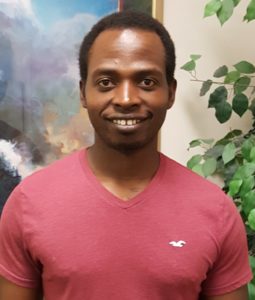
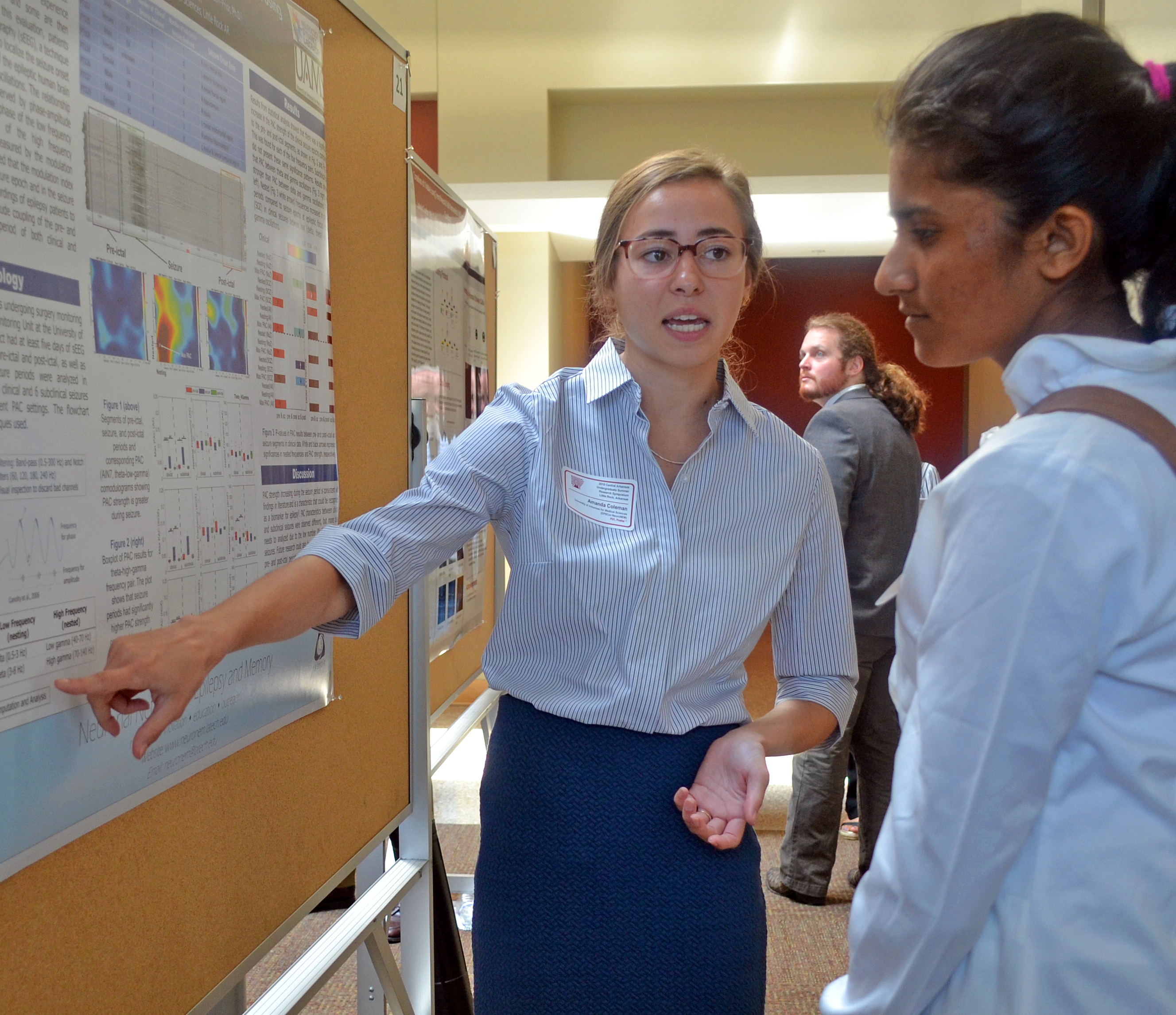
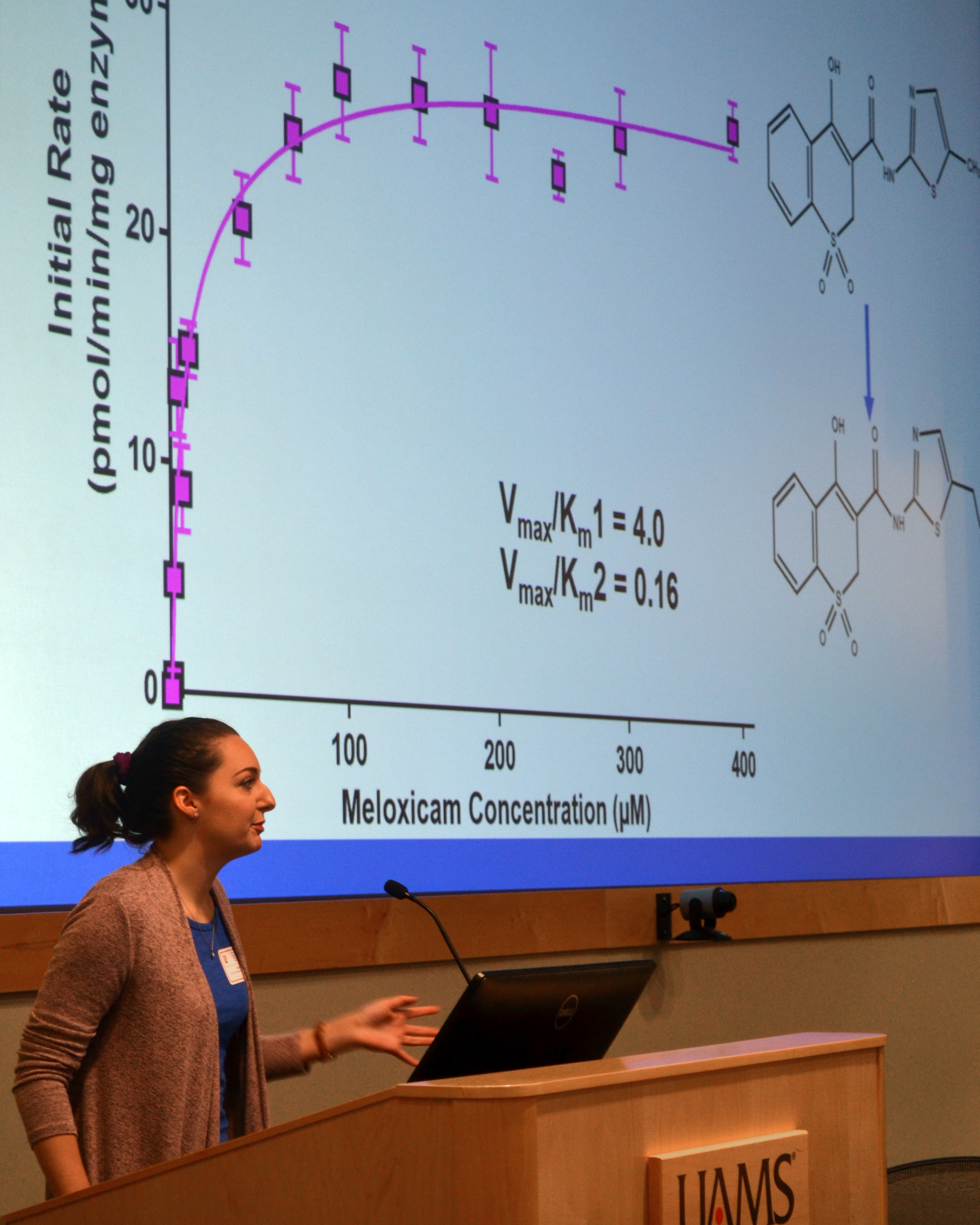
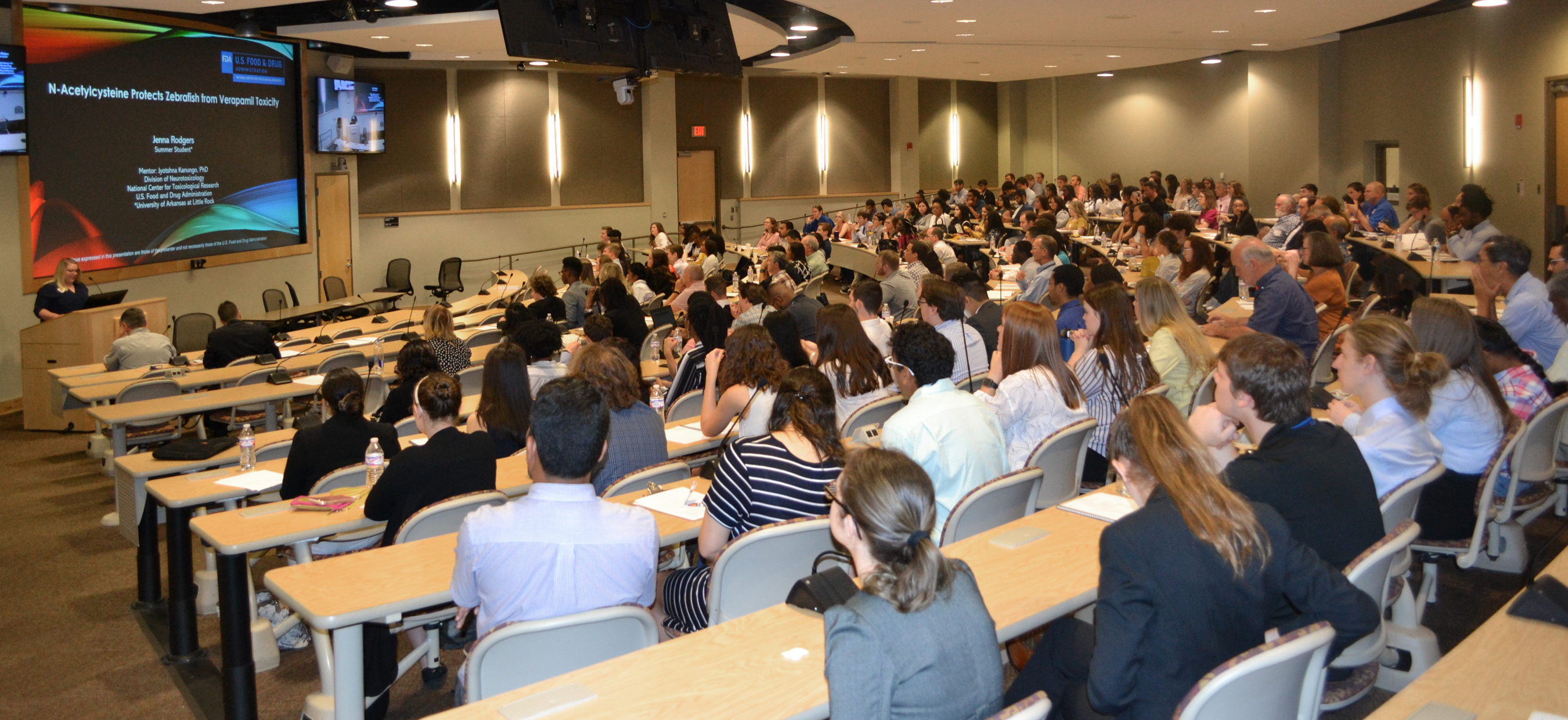
On May 20th, nine undergraduate students began their summer research experience in the SURF program.  Students will spend 10 weeks carrying out a research project under the direction of a mentor and will present their research at the Central Arkansas Undergraduate Summer Research Symposium in July.  Welcome to UAMS!

Filed Under: Department News

Congratulations 2019 graduates!

On May 18 three students from our department received their PhD: Lauren Davis, Magdalena Delgado, and Anthonya Cooper.  Congratulations!

Lauren Davis

Lauren Davis

Magdalena Delgado

Magdalena Delgado

Anthonya Cooper

Anthonya Cooper

graduation photos

Filed Under: Department News

Dr. Diekman wins Golden Apple

Dr. Alan Diekman received the Golden Apple Award from the freshman medical students.  The Golden Apple is awarded to the faculty member who has been their best teacher for that year.


Filed Under: Department News

Dr. Karaduta Receives Collaborative Research Grant

Congratulations to Dr. Oleg Karaduta  in the Zybailov lab who has been selected to receive a Collaborative Research Grant from Burroughs Wellcome Fund for his project entitled:  “Subjunctive Interfaces: novel approach to support parallel setup, viewing and control of changes in the gut microbiota”.

This work is the result of joint effort between Dr. Karaduta and Dr. Zaman from University of Ontario Institute of Technology. The collaboration is set to utilize subjunctive interfaces for comparison and analysis of biomedical data using what-if scenarios. Creation of interfaces for parallel setup, viewing and controlling scenarios will have a strong contribution in the fields of biomedical and data visualization research. This could potentially lead to new diagnostic and predictive techniques.

Filed Under: Department News

Cancer Institute Member Spotlight

May 14, 2019

by Susan Van Dusen

Alan Tackett, Ph.D.

Professor of Biochemistry and Molecular Biology, UAMS College of Medicine
Associate Director of Basic Research, UAMS Winthrop P. Rockefeller Cancer Institute

Dr. Tackett’s research focuses on the identification of biomarkers and drug targets to treat melanoma. Specifically, he focuses on the identification of molecular and epigenetic pathways dysregulated in metastatic melanoma patients who are non-responsive to immune checkpoint therapy. Immune checkpoint therapy has revolutionized the treatment of metastatic melanoma, but only approximately half of patients show responsiveness to treatment. Dr. Tackett’s laboratory uses state-of-the-art proteomics and epigenomics to uncover the molecular differences between patient tumors that are either responsive or non-responsive to therapy. Targets and molecular pathways identified from these studies are biologically validated in melanoma cell culture and in vivo models.

Furthermore, Dr. Tackett is interested in how dysregulation of epigenetics, namely histone posttranslational modifications, reprograms certain melanomas to drive cancer progression and therapy responsiveness.

All of Dr. Tackett’s research is highly collaborative and translational as his team works closely with UAMS clinicians in the Department of Surgery, Division of Medical Oncology and Department of Pathology to obtain tissue samples for his studies. In addition to the ongoing cancer research in his laboratory, Dr. Tackett received funding from the National Institutes of Health in 2017 to create a Center of Biomedical Research Excellence (COBRE) focused on systems biology, which provides training for young scientists and core facility infrastructure development. In 2016, Dr. Tackett leveraged funding from the National Institutes of Health to develop a National Resource for Proteomics at UAMS, which provides a biomarker discovery platform to UAMS investigators as well as 23 other states and Puerto Rico.

Dr. Tackett’s Grants

NIGMS – 5 P20 GM121293-02
Center for Translational Pediatric Research
07/11/2017-06/30/2022
$1,618,994* (not all projects are cancer-related)
Role: PI

NIGMS – 5 R01 GM118760-03
Epigenetic Profiling and Enzymatic Regulation of H3K23ME3 During Cellular Differentiation
03/01/2017-01/31/2021
$37,500*
Role: PI

NIGMS – 5 P20 GM103429-18
Partnerships for Biomedical Research in Arkansas
Director of Research Technology Core
05/01/2015–04/30/2020
$193,619**
Role: PI

NCI – Awaiting NOA (Notice of Award) for specific project dates and budget figures.
Identification of Druggable Targets to Complement Melanoma Therapy
Role: PI

In addition to leading his own Centers of Biomedical Research Excellent (COBRE) grant (5 P20 GM121293-02), Dr. Tackett serves as a project mentor for two other UAMS COBRE grants: Center for Musculoskeletal Disease Research (PI: Charles O’Brien: 5 P20 GM125503-02) and Center for Studies of Host Response to Cancer Therapy (PI: Martin Hauer-Jensen: 5 P20 GM109005-05).

*cancer-related annual direct costs
**annual direct costs, not cancer-related, relevant to facilitation of campuswide research

Dr. Tackett’s Collaborators

Dr. Tackett has worked with dozens of researchers across numerous institutions and countries. Some of the collaborators for his most recent melanoma-focused studies include:

  • Juan Barreto, M.D., UAMS
  • Stephanie Byrum, Ph.D., UAMS
  • Rick Edmondson, Ph.D., UAMS
  • Laura Hutchins, M.D., UAMS
  • Sam Mackintosh, Ph.D., UAMS
  • Issam Makhoul, M.D., UAMS
  • Sara Shalin, M.D., Ph.D., UAMS
  • Sean Taverna, Ph.D., Johns Hopkins School of Medicine

Opportunities for Collaboration

I am always looking for opportunities to collaborate with colleagues at UAMS. I have an open-door policy for discussing new ideas, projects and collaborations. My scientific expertise is in systems biology technologies, which can often drive new collaborations.

You Might Not Know That …

I enjoy fishing, boating and spending time on the lakes in Hot Springs. That city has so much to offer and it is an easy drive from Little Rock. I may be biased because I was born there.

Cancer-Related Publications

1: Shields BD, Koss B, Taylor EM, Storey AJ, West KL, Byrum SD, Mackintosh SG, Edmondson R, Mahmoud F, Shalin SC, Tackett AJ. Loss of E-Cadherin Inhibits CD103 Antitumor Activity and Reduces Checkpoint Blockade Responsiveness in Melanoma. Cancer Res. 2019 Mar 15;79(6):1113-1123. doi: 10.1158/0008-5472.CAN-18-1722. Epub 2019 Jan 23. PubMed PMID: 30674537; PubMed Central PMCID: PMC6420873.

2: Mahmoud F, Shields B, Makhoul I, Avaritt N, Wong HK, Hutchins LF, Shalin S, Tackett AJ. Immune surveillance in melanoma: From immune attack to melanoma escape and even counterattack. Cancer Biol Ther. 2017 Jul 3;18(7):451-469. doi: 10.1080/15384047.2017.1323596. Epub 2017 May 17. Review. PubMed PMID: 28513269; PubMed Central PMCID: PMC5639850.

3: Shields BD, Mahmoud F, Taylor EM, Byrum SD, Sengupta D, Koss B, Baldini G, Ransom S, Cline K, Mackintosh SG, Edmondson RD, Shalin S, Tackett AJ. Indicators of responsiveness to immune checkpoint inhibitors. Sci Rep. 2017 Apr 11;7(1):807. doi: 10.1038/s41598-017-01000-2. PubMed PMID: 28400597; PubMed Central PMCID: PMC5429745.

4: Sengupta D, Tackett AJ. Proteomic Findings in Melanoma. J Proteomics Bioinform. 2016 Apr;9(4). pii: e29. Epub 2016 Apr 27. PubMed PMID: 27274624; PubMed Central PMCID: PMC4888906.

5: Mahmoud F, Shields B, Makhoul I, Hutchins LF, Shalin SC, Tackett AJ. Role of EZH2 histone methyltrasferase in melanoma progression and metastasis. Cancer Biol Ther. 2016 Jun 2;17(6):579-91. doi: 10.1080/15384047.2016.1167291. Epub 2016 Apr 22 Review. PubMed PMID: 27105109; PubMed Central PMCID: PMC4990393.

Filed Under: Department News

Biochemistry faculty speak at Cancer Institute Retreat

The Winthrop P. Rockefeller Cancer Institute held a research retreat at Heifer International. Speakers included Drs. Samantha Kendrick, Robert Eoff, and Alan Tackett.

Filed Under: Department News

  • «Previous Page
  • Page 1
  • Interim pages omitted …
  • Page 27
  • Page 28
  • Page 29
  • Page 30
  • Page 31
  • Interim pages omitted …
  • Page 34
  • Next Page»
UAMS College of Medicine LogoUAMS College of MedicineUniversity of Arkansas for Medical Sciences
Mailing Address: 4301 West Markham Street, Little Rock, AR 72205
Phone: (501) 686-7000
  • Facebook
  • X
  • Instagram
  • YouTube
  • LinkedIn
  • Pinterest
  • Disclaimer
  • Terms of Use
  • Privacy Statement
  • Legal Notices

© 2026 University of Arkansas for Medical Sciences