

Dr. Fantegrossi trained as a behavioral pharmacologist at the University of Michigan and the Yerkes National Primate Research Center. When not lifting weights or slaying imaginary dragons, his research focuses on the behavioral pharmacology of emerging drugs of abuse, including designer psychostimulants (“bath salts”), cannabinoids (“K2 / Spice” products), and hallucinogens. His lab employs a variety of in vivo assays to study drug actions, including biotelemetry, intravenous drug self-administration, conditioned place preference, drug discrimination, operant behavior, antinociception, and drug-elicited behaviors. The ultimate goal of these studies is to better understand the abuse-related effects of novel pharmacological entities in order to inform clinicians, develop therapeutic strategies, and guide legislation.
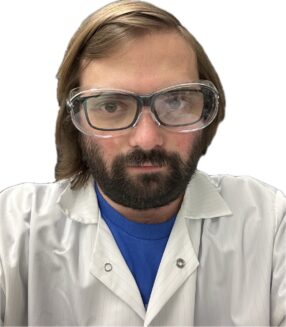
Kevin Honeywell is a postdoctoral fellow in the Fantegrossi Lab at the University of Arkansas for Medical Sciences. He earned his M.S. in General Psychology at the University of Memphis where he studied the effects of cannabinergic drugs on the mesolimbic dopamine system. He earned his Ph.D. in Psychological and Brain Sciences with an emphasis in Bioengineering at the University of California, Santa Barbara where he studied the pharmacokinetic-pharmacodynamic relationship of psychoactive drugs. His current research focuses on exploring the compartmental distribution and self-administration of posited drugs of abuse.

Justin is a graduate student in the Fantegrossi Lab. His research focuses on in vivo drug-drug interactions between psychiatric medications and synthetic cannabinoid receptor agonists.

Spencer Snow is a graduate student in the Fantegrossi Lab at the Department of Pharmacology and Toxicology at UAMS. His research focuses on the use of psychedelic drugs and their potential therapeutic effects on substance use disorders, particularly on opioid use disorder. Using in vivo approach, he investigates how these compounds influence withdrawal and whether they can attenuate withdrawal signs in a mouse model.

Andriy Fomin is a Research Assistant at the Fantegrossi Lab at the Department of Pharmacology and Toxicology at UAMS. He earned his M.A. degree in Psychological Sciences at Montclair State University, where he investigated the question of how rapid antidepressants modulate the mechanisms of serotonin neurotransmission in major depressive disorder. He also holds an M.A. with a concentration in Behavioral Neuroscience from Baylor University, where he explored biobehavioral correlates of opioid exposure in animal models of addiction. His current interests lie in the neurobiological basis of addiction and its intersection with stress and anxiety. At the Fantegrossi Lab, Andriy is helping to apply modern behavioral and bioanalytic methods and techniques with the purpose of discovering the properties of novel illicit drugs, especially in the context of multi-drug use.