• Skip to main content
  • Skip to main content
Choose which site to search.
University of Arkansas for Medical Sciences Logo University of Arkansas for Medical Sciences
College of Medicine: Department of Biochemistry and Molecular Biology
  • UAMS Health
  • Jobs
  • Giving
  • About Us
    • News
  • Faculty/Staff
    • Primary Faculty
    • Secondary Faculty
    • Adjunct Faculty
    • Professor Emeritus
    • Track Members
    • Research and Administrative Staff
  • Research Areas
    • Cancer Biology
    • Experimental Therapeutics
    • Systems Biology and Bioinformatics
      • Systems Biology News
    • Structural Biology and Enzymology
    • Nutrition and Metabolism
    • Chromatin Biology, Nucleic Acid Chemistry, and Genetics
    • Neurobiology and Neurobiochemistry
  • Students
    • Graduate Program
    • Elective Courses
    • Student Highlight
    • Alumni
      • Graduates
      • Where Are They Now?
    • Grant Opportunities
    • Career Information
    • Resources for Current Students
    • Resilience
    • About the Area
  • Seminars
    • Faculty Seminars
    • Student Seminars
    • Webinars and Conferences
  • Undergraduate Programs
    • Summer Research
      • Program Details
      • Application Materials
      • Research Opportunities
      • Information for Participants
      • Prior Participants
      • SURF Related Publications
      • Contact Information
      • Frequently Asked Questions
    • Arkansas Undergraduate Summer Research Symposium
      • Details
      • Registration
      • Directions and Parking
      • Top Presentations
      • Contact
  • Research Resources
  1. University of Arkansas for Medical Sciences
  2. College of Medicine
  3. Department of Biochemistry and Molecular Biology
  4. Author: akbyrd
  5. Page 10

akbyrd

UAMS-TRI Training Program Helps Postdocs Develop Entrepreneurial Spirit, Form Competition-Winning Pharmaceutical Startup

Megan Reed and Julia Tobacyk
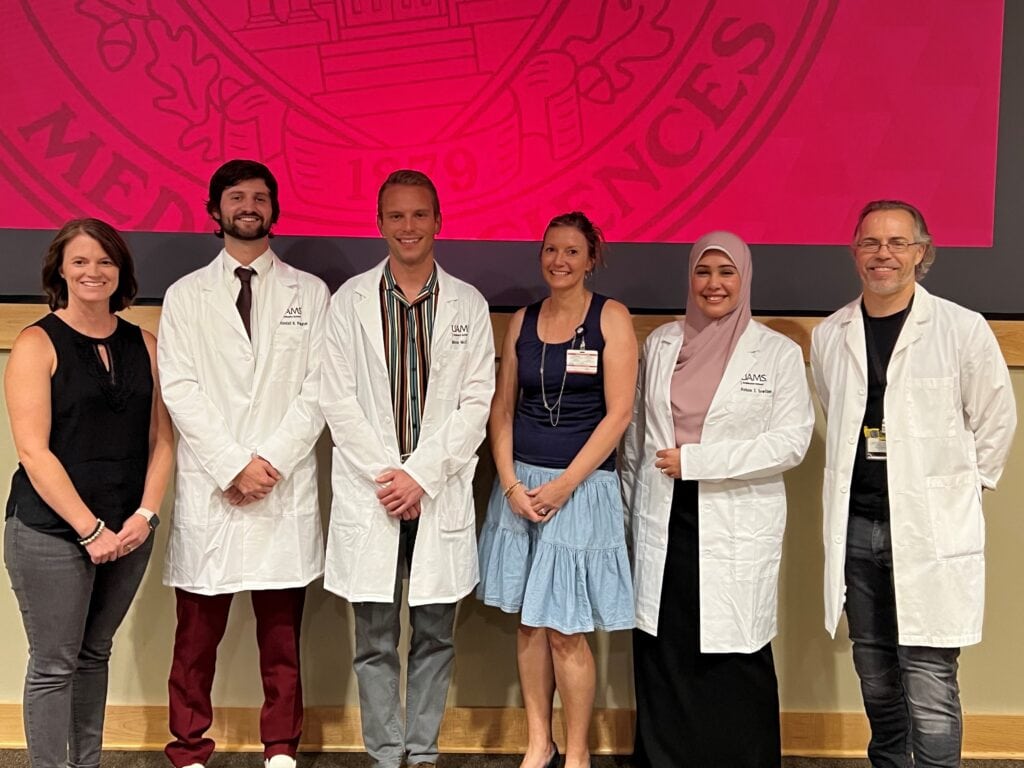
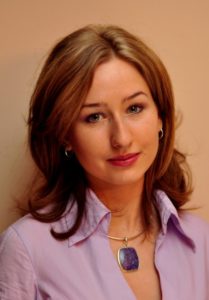
Megan Reed, Ph.D. (left), and Julia Tobacyk, Ph.D., formed the company Pediatrica Therapeutics.

By David Robinson

May 24, 2023 | Only two years ago, the idea of commercializing their future research discoveries was a novel concept for Julia Tobacyk, Ph.D., and Megan Reed, Ph.D. Today they can say they created a startup company as postdoctoral fellows in the Health Sciences Innovation and Entrepreneurship (HSIE) training program, which is the National Institutes of Health’s (NIH) National Research Service Award training core of the Translational Research Institute at the University of Arkansas for Medical Sciences (UAMS).

The HSIE program is unlike traditional academic postdoctoral education — the goal is to transform scientists to think like entrepreneurs and channel their research discoveries into commercial ventures to bring new health care products to patients.

Tobacyk and Reed are in their second year of the HSIE training program, and it is intensive. In addition to mentored laboratory research, HSIE postdocs take business classes in the Graduate Entrepreneurship Program in the Sam M. Walton College of Business at the University of Arkansas, Fayetteville. They attend mentoring workshops from entrepreneurs and venture capitalists, form teams to develop a business plan for a health science discovery with classmates from diverse ethnic and academic backgrounds, and compete in pitch competitions.

“At first, the fast-paced environment is a culture shock for most HSIE postdocs, but we all quickly adapt and develop our inner entrepreneurial spirit,” Tobacyk said.

Tobacyk’s research in the laboratory focuses on developing treatment strategies for opioid use disorder in pregnant women without negatively affecting their babies. Alarming statistics reveal that a baby is born physically dependent on opioids every 15 minutes in the United States. The gold standard treatment for opioid-dependent pregnant mothers is buprenorphine (BUP). Although BUP treatment may prevent pregnant mothers from relapsing, it also contributes to withdrawal in their babies, also known as neonatal opioid withdrawal syndrome (NOWS).

Tobacyk, along with her research mentor, Lisa Brents, Ph.D., assistant professor in the UAMS College of Medicine Department of Pharmacology and Toxicology, filed a provisional patent application with co-workers in September 2022 to protect their invention of a deuterated form of BUP (BUP-D2). Applying precision deuteration is thought to alter the metabolism of BUP to minimize formation of the harmful metabolite that contributes to NOWS.

In January 2023, Tobacyk and Reed formed a company called Pediatrica Therapeutics, LLC, a pharmaceutical startup company dedicated to bringing BUP-D2 through the drug development pipeline. In recent months, the startup team has won or placed in a number of business plan competitions across the U.S. and in Canada. In April, they won first place in the Arkansas Governor’s Cup Collegiate Business Plan Competition, which came with a $20,000 prize.

Their team finished second with a $10,000 prize in the graduate business plan competition at the 2023 Stu Clark New Venture Championships in Winnipeg, Canada. They also took third place ($750) for their elevator pitch at that competition. The team was a finalist ($1,500) in the Baylor New Venture Competition as well as finalists in the UA Heartland Challenge and the international Rice Business Plan Competition ($1,500).

The graduate entrepreneurship students and founding business partners of Pediatrica Therapeutics, LLC, are:

  • Megan Reed, Ph.D., chief executive officer, who has experience in biochemistry, drug development and patenting of pharmaceutical compounds; she is a HSIE postdoctoral fellow in the College of Medicine Department of Biochemistry and Molecular Biology.
  • Julia Tobacyk, Ph.D., chief scientific officer, who co-invented BUP-D2 and performed preclinical studies; she is a HSIE postdoctoral fellow in the College of Medicine Department of Pharmacology and Toxicology.
  • Hayot Tuychiev, B.A., chief marketing officer, who is a two-time Emmy-winning documentary filmmaker and manages scientific and public communications for the company.
  • Veronica Garcia, B.A., chief operating officer, who is the former director of Community Engagement and Inclusion at the Springdale, Arkansas, Chamber of Commerce and has assisted 75 entrepreneurs to form businesses.

In addition to their business classes and founding their new company, Tobacyk and Reed continue to work in the laboratory, publish papers and develop their careers as translational scientists. However, the HSIE training program has empowered them to look at their research through a new, entrepreneurial lens.

With the team members concluding their final year of HSIE training in June, Reed, Tuychiev and Garcia are moving on to pursue other career goals.

“Julia and I both agree that academic research holds plenty of unexploited potential to leverage discoveries to improve health care,” Reed said. “Pediatrica Therapeutics will not be our last venture.”

Tobacyk and Brents hope to advance the company’s goals with a Small Business Innovation Research program award, which they will apply for this year as co-principal investigators.

Reed and Tobacyk are supported by the UAMS Translational Research Institute through the NIH National Center for Advancing Translational Sciences, Clinical and Translational Science Award grants UL1 TR003107 and TL1 TR003109. Brents is a graduate of the Translational Research Institute’s KL2 Mentored Research Career Development Scholar Awards Program, also supported through NCATS.

This article was based on a first-person account by Julia Tobacyk, Ph.D.

Filed Under: Department News

Wayne Wahls wins 2023 Chancellor’s Award of Excellence for Scholarship

Wayne Wahls

Congratulations to Wayne P. Wahls, Professor of Biochemistry and Molecular Biology.  Dr. Wahls was awarded the 2023 Chancellor’s Award of Excellence for Scholarship.  In presenting this award, UAMS Chancellor Cam Patterson highlighted sustained contributions to laboratory research, educational research and interdisciplinary team science.  Dr. Wahls’ research on meiotic chromosome dynamics has established several new paradigms for a fundamental biological process that is used by almost all eukaryotes, including humans.  His discoveries have provided important insight into genome dynamics, causes of congenital birth defects, and the evolution of species.  Dr. Wahls’ research on science funding policy has revealed causes and consequences of vast disparities in allocations of NIH grant funding among institutions and states.  “Credit for this award should be given to the talented students, trainees, technicians and colleagues who have contributed to my research program,” said Dr. Wahls.  “Their insight has guided my thinking and their research efforts have fueled each of our new discoveries.”

Filed Under: Department News

4th place finish for Eoff lab student at the International Science and Engineering Fair

Shreyam Tripathi at ISEF

Congratulations to Mr. Shreyam Tripathi on his fourth place finish at the 2023 International Science and Engineering Fair (ISEF) in Dallas, sponsored by Regeneron! Sheyam is a student at the Arkansas School for Math, Science and Arts (ASMSA) who worked on this project with Dr. Amit Ketkar, in Dr. Robert Eoff‘s lab.

Filed Under: Department News

Jessica Kelliher wins WPRCI student poster competition

Jessica Kelliher with her poster

Congratulations to Jessica Kelliher who won the award for the best student poster at the Winthrop P. Rockefeller Cancer Institute retreat for her poster entitled, “Induction of an intrinsic DNA damage response during T cell exhaustion.” Jessica is a student in the lab of Brian Koss, Ph.D.

Filed Under: Department News

Students present at Midwest DNA Repair Symposium

Reham Sewilam poster presentation

Reham Sewilam, second year student in the lab of Robert Eoff, Ph.D. presented a poster entitled “The Role of DNA Polymerase Kappa (pol κ) as a Sensor of Redox Imbalance in Glioblastoma Multiforme (GBM)”.


Matthew Thompson poster presentation

Matthew Thompson, a third year student in the lab of Alicia Byrd, Ph.D., presented a poster entitled “HELB Maintains Genomic Stability in Response to Replication Stress”.

Filed Under: Department News

Dr. Diekman Wins Golden Apple Award

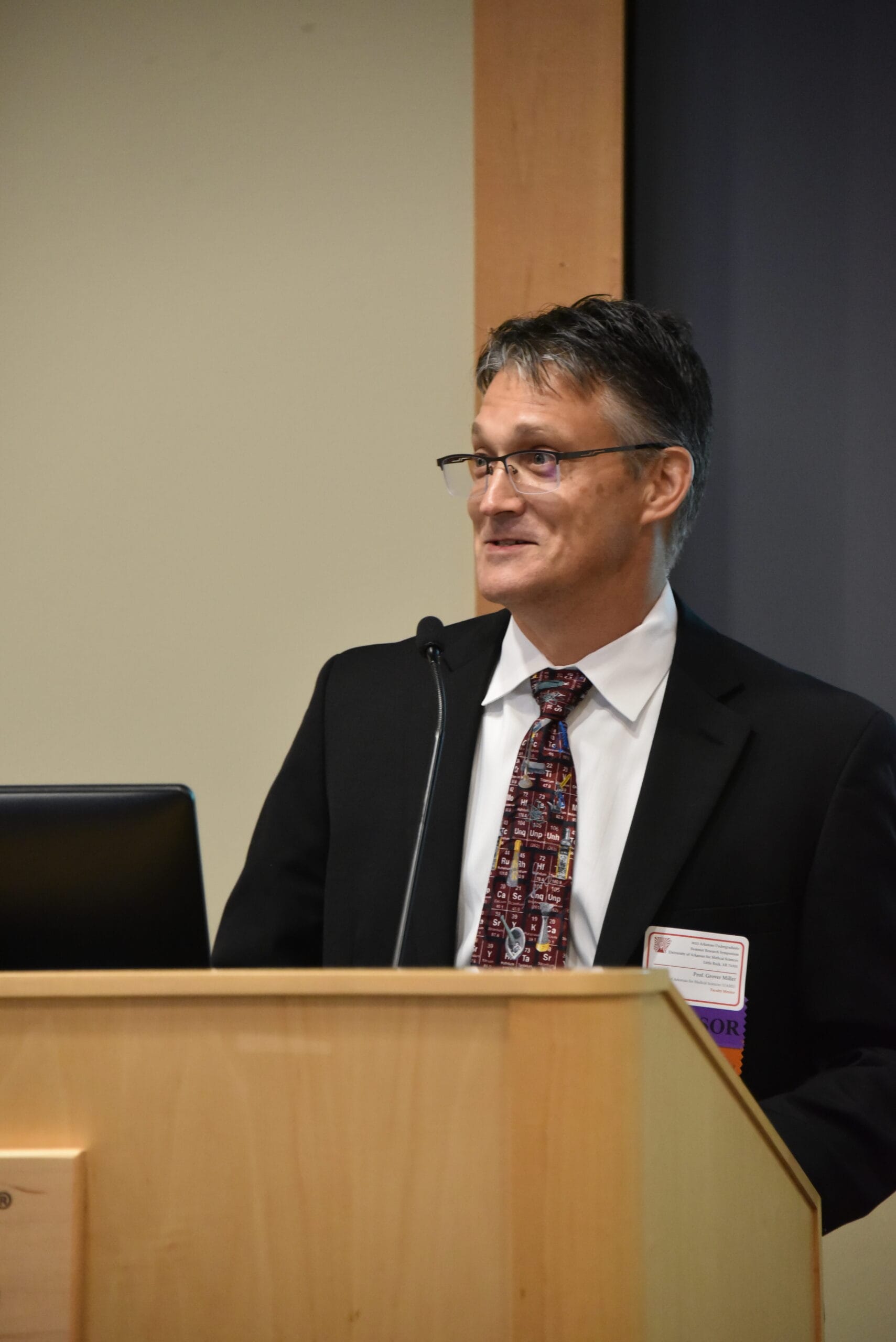
Alan Diekman, Ph.D.

Every year, students in each of the four medical classes vote for the faculty member they consider to be their best teacher of the year. Congratulations to Alan Diekman, Ph.D., for winning his 11th Golden Apple from freshmen medical students who rave about his teaching and support as Course Director for the Molecules to Cells module. He also is Course Director for the M2 Endocrine/Reproduction course.

Filed Under: Department News

Clai Morehead defends dissertation

Clai Morehead

Congratulations to Lauren “Clai” Morehead who successfully defended her dissertation entitled “Dietary restriction increases susceptibility of melanoma to immune attack.” Clai is an M.D./Ph.D. student in the labs of Isabelle Miousse, Ph.D., and Alan Tackett, Ph.D. She will be returning to medical school to complete the final two years of her medical training.

Filed Under: Department News

March 2023 Publications

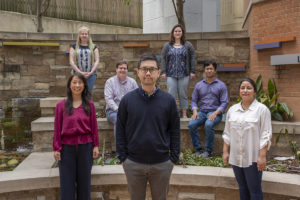
Alicja Urbaniak, Alan Tackett, and Billie Heflin

CRISPR/dCas9-KRAB-Mediated Suppression of S100b Restores p53-Mediated Apoptosis in Melanoma Cells.
Roy Choudhury S, Heflin B, Taylor E, Koss B, Avaritt NL, Tackett AJ.
Cells. 2023


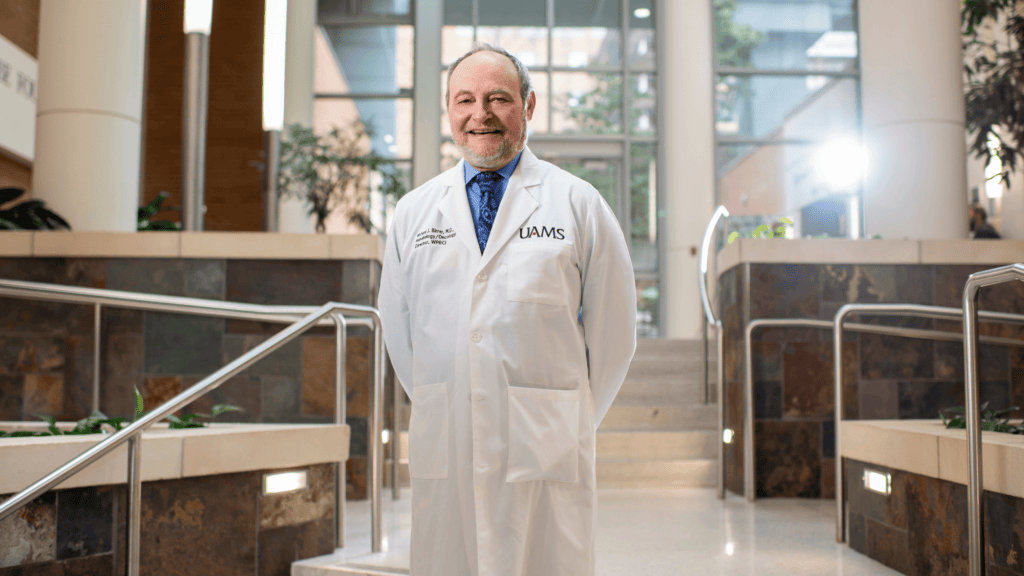
Dr. Michael Birrer

Final survival analysis of topotecan and paclitaxel for first-line treatment of advanced cervical cancer: An NRG oncology randomized study.
Tewari KS, Sill MW, Birrer MJ, Penson RT, Huang H, Moore DH, Ramondetta LM, Landrum LM, Oaknin A, Reid TJ, Leitao MM, Michael HE, Monk BJ.
Gynecol Oncol. 2023

Filed Under: Department News

Mason McCrury awarded NSF-GRFP

Mason McCrury and Samantha Kendrick
Mason McCrury and Samantha Kendrick, Ph.D.

Congratulations to Mason McCrury, a Ph.D. student in the lab of Dr. Samantha Kendrick, for receiving a NSF-GRFP. The Graduate Research Fellowship Program supports outstanding graduate students who have demonstrated the potential to be high achieving scientists and engineers. Mason’s project is entitled “Investigating DNA Secondary Structure Formation and Mutagenesis.”

Filed Under: Department News, Student Highlights

National Proteomics Symposium

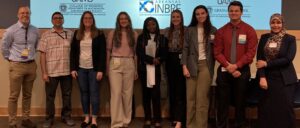
Proteomics Symposium participants

By Marty Trieschmann

Feb. 17, 2023 | The University of Arkansas for Medical Sciences’ (UAMS) Winthrop P. Rockefeller Cancer Institute welcomed proteomics directors and staff from across the country Feb. 8 and 9 for a continuing education symposium.

Sponsored by the IDeA National Resource for Quantitative Proteomics located within the Cancer Institute, the symposium facilitated two days of collaboration and best practice sharing among proteomics experts from 11 different states.

Proteomics is the high throughput study of the abundance and activity of proteins. Most diseases, including cancer, are manifested at the level of protein activity.

The IDeA National Resource for Quantitative Proteomics at UAMS is the only one of its kind to be designated as a national resource by the National Institutes of Health. Alan Tackett, Ph.D., Professor of Biochemistry and Molecular Biology, serves as director.

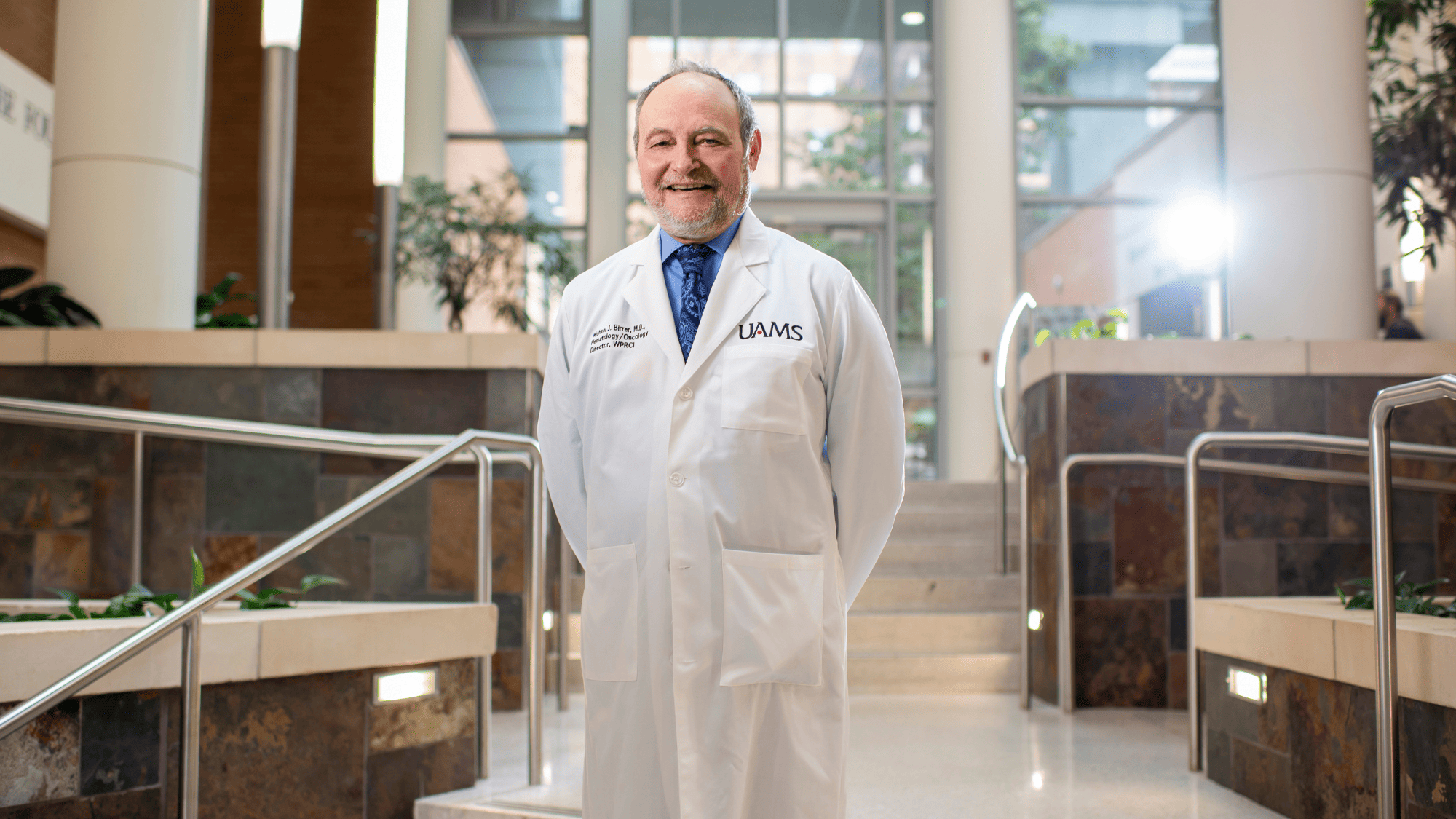
“We were thrilled to convene proteomics experts from across the country at our Cancer Institute, as our group serves as an NIH hub for disseminating training and education in this discipline of biomedical research,” said Tackett, who also serves as deputy director of the Winthrop P. Rockefeller Cancer Institute and is the Scharlau Family Endowed Chair in Cancer Research at UAMS.

The symposium included poster sessions and a keynote address by John Koomen, Ph.D., scientific director of the Proteomics and Metabolomics Core at Moffitt Cancer Center. His talk was titled “Evolving a Proteomics and Metabolomics Core to Support Cancer Research.”

Breakout sessions covered topics such as quality control, sample preparation and workflows, bioinformatics and administration.

“Prior to this symposium, very little was known about other proteomic cores in IDeA states, including staff and capabilities,” said David Quilici, Ph,D., director of the Nevada Proteomics Center who has been attending the symposium for seven years.

The IDeA program works to build research capacity in states with historically lower levels of NIH funding. The program is open to 23 states, including Arkansas, and Puerto Rico.

“The UAMS staff and attending proteomic directors have provided insights which have allowed our core to enhance our services to our researchers,” said Quilici. “I have established relationships and contacts across the country ensuring that researchers are able to achieve their desired proteomic goals, whether it be by our current enhanced services or by directing them to a core that can address their needs.”

Directors from St. Jude Children’s Research Hospital, LSU Health, Tulane, the University of Rhode Island and Puerto Rico attended the event.

Proteomics has identified proteins that offer promise as diagnostic or prognostic markers, or as therapeutic targets in a range of illnesses, including cancer. The IDeA National Resource for Quantitative Proteomics at the Winthrop P. Rockefeller Cancer Institute provides these resources to not only investigators at UAMS, but also has enabled research for hundreds of investigators covering every state in the United States.

Filed Under: Department News

  • «Previous Page
  • Page 1
  • Interim pages omitted …
  • Page 8
  • Page 9
  • Page 10
  • Page 11
  • Page 12
  • Interim pages omitted …
  • Page 16
  • Next Page»
UAMS College of Medicine LogoUAMS College of MedicineUniversity of Arkansas for Medical Sciences
Mailing Address: 4301 West Markham Street, Little Rock, AR 72205
Phone: (501) 686-7000
  • Facebook
  • X
  • Instagram
  • YouTube
  • LinkedIn
  • Pinterest
  • Disclaimer
  • Terms of Use
  • Privacy Statement
  • Legal Notices

© 2026 University of Arkansas for Medical Sciences