• Skip to main content
  • Skip to main content
Choose which site to search.
University of Arkansas for Medical Sciences Logo University of Arkansas for Medical Sciences
College of Medicine: Department of Biochemistry and Molecular Biology
  • UAMS Health
  • Jobs
  • Giving
  • About Us
    • News
  • Faculty/Staff
    • Primary Faculty
    • Secondary Faculty
    • Adjunct Faculty
    • Professor Emeritus
    • Track Members
    • Research and Administrative Staff
  • Research Areas
    • Cancer Biology
    • Experimental Therapeutics
    • Systems Biology and Bioinformatics
      • Systems Biology News
    • Structural Biology and Enzymology
    • Nutrition and Metabolism
    • Chromatin Biology, Nucleic Acid Chemistry, and Genetics
    • Neurobiology and Neurobiochemistry
  • Students
    • Graduate Program
    • Elective Courses
    • Student Highlight
    • Alumni
      • Graduates
      • Where Are They Now?
    • Grant Opportunities
    • Career Information
    • Resources for Current Students
    • Resilience
    • About the Area
  • Seminars
    • Faculty Seminars
    • Student Seminars
    • Webinars and Conferences
  • Undergraduate Programs
    • Summer Research
      • Program Details
      • Application Materials
      • Research Opportunities
      • Information for Participants
      • Prior Participants
      • SURF Related Publications
      • Contact Information
      • Frequently Asked Questions
    • Arkansas Undergraduate Summer Research Symposium
      • Details
      • Registration
      • Directions and Parking
      • Top Presentations
      • Contact
  • Research Resources
  1. University of Arkansas for Medical Sciences
  2. College of Medicine
  3. Department of Biochemistry and Molecular Biology
  4. Author: Chris Lesher
  5. Page 8

Chris Lesher

February publications

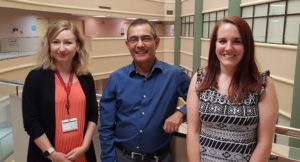
Members of the Chambers labSynthesis, biological evaluation and molecular docking studies of new amides of 4-chlorothiocolchicine as anticancer agents.

Klejborowska G, Urbaniak A, Maj E, Preto J, Moshari M, Wietrzyk J, Tuszynski JA, Chambers TC, Huczyński A.

Bioorg Chem.
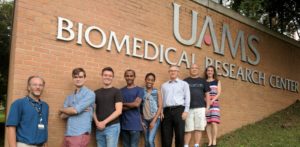
 

Members of the Raney labExcessive excision of correct nucleotides during DNA synthesis explained by replication hurdles.

Singh A, Pandey M, Nandakumar D, Raney KD, Yin YW, Patel SS.

EMBO J.


Tackett lab

Accurate and Sensitive Quantitation of the Dynamic Heat Shock Proteome Using Tandem Mass Tags.

Storey AJ, Hardman RE, Byrum SD, Mackintosh SG, Edmondson RD, Wahls WP, Tackett AJ, Lewis JA.

J Proteome Res.
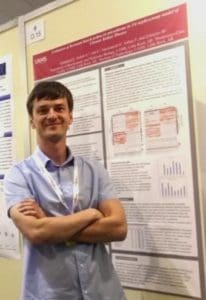


Oleg KaradutaDesigning the Uniform Stochastic Photomatrix Therapeutic Systems

Oleg K. Karaduta, Aleksei F. Deon, and Yulian A. Menyaev

Algorithms

Highlighted on the journal’s home page.

Filed Under: Department News

Duah Alkam and Dean McGehee on Channel 7

Channel 7 News featured UAMS yesterday in their College Week segment.  Duah Alkam, a Ph.D. student in the biochemistry track doing her research in the labs or Mark Smeltzer and David Ussery, participated with the dean of the graduate school, Dr. McGehee. Duah’s project involves DNA sequencing to track outbreaks such as the 2016 mumps outbreak and to find vulnerabilities in infectious agents such as Staphylococcus aureus (staph).

Filed Under: Department News

Grover Miller and Allie Schleiff selected as finalists for the Sternfels Prize for Drug Safety Discoveries

Dr. Grover Paul Miller and Allie Schleiff, a graduate student in Dr. Miller’s lab were separately selected as finalists for the Sternfels Prize for Drug Safety Discoveries.  Congratulations to both!

The Sternfels Prize in Drug Safety Discoveries is an annual award created to foster the reduction of risks associated with the real-world use of pharmaceuticals through recognition of the most novel, clinically relevant and testable idea.

Dr. Miller’s group develops and applies new and powerful strategies to better assess drug liabilities causing significant Adverse Drug Events including cardio- and hepato-toxicity. Insights gained from these studies will generate a strong basis for more informed decision-making in drug development, management and regulation toward safer therapeutic interventions.

Dr. Miller and Allie Schleiff submitted individual proposals on possible projects for the Sternfels Prize.

Dr. Miller proposed determining the mechanistic role of pexidartinib bioactivation in drug-induced liver injury. The adverse outcome is significant enough for black box labeling; however, the FDA still approved the drug last year due to its high efficacy in treating tenosynovial giant cell tumors. The proposed studies would identify the source of that risk for facilitating pharmacovigilance efforts relevant to current clinical use and in the long term, potential insights on ways to engineer out drug liabilities.

Allie Schleiff developed her own proposal from a more generalized perspective reflecting her dissertation research. She integrated bioinformatic, computational, and experimental approaches for rapidly assessing which substituents on a drug scaffold may lead to drug-induced liver injury during metabolism. As a practical test case, she chose to focus on non-steroidal anti-inflammatory drugs (NSAIDs), which are both highly prescribed and frequently hepatotoxic, according to the FDA. 

Filed Under: Department News

Alicja Urbaniak selected for the “Guppy Tank” Translational Science Pitch Showcase

Alicja Urbaniak has been selected to present in the “Guppy Tank” Translational Science Pitch Showcase at the American Society for Pharmacology and Experimental Therapeutics (ASPET) meeting.  Alicja is a postdoctoral fellow in Timothy Chamber‘s lab. Congratulations Alicja!

Filed Under: Department News

Proteomics Symposium Draws Leaders from Across the Country

By Susan Van Dusen

To conduct biomedical research, scientists must be able to identify, analyze and compare proteins in biological samples. This complex process requires facilities – known as proteomics cores – that house the specialized equipment and highly trained staff required for such a task.

The fourth annual Proteomics Facility Staff Symposium on Jan. 29-30 at UAMS brought together 30 proteomics core directors and staff members to learn how best to operate and maintain these facilities at their institutions.

All of the participants came from IDeA (Institutional Development Award) states and Puerto Rico, all of which have been identified by the National Institutes of Health as historically receiving less grant funding for biomedical research than other states.

“The first symposium was in 2017, and it has grown each year since. By getting together on a regular basis, we can learn from each other, share our successes and ensure we all have the support and knowledge to meet the needs of our researchers,” said Alan Tackett, Ph.D., associate director for basic science in the UAMS Winthrop P. Rockefeller Cancer Institute.

people at proteomics symposium

Thirty proteomics core directors and staff members attended the annual event at UAMS.

Tackett also serves as co-director of the IDeA National Resource for Quantitative Proteomics, a partnership between the Arkansas INBRE (IDeA Networks of Biomedical Research Excellence) and Oklahoma INBRE.

The national resource combines the strengths of the two INBREs to guide and assist other IDeA states where core facilities may be underfunded or lack resources.

“At UAMS, our discovery phase proteomic capabilities are very strong, while Oklahoma has a state-of-the-art, targeted validation proteomics program. Together we offer expertise and access to equipment that facilities in other IDeA states may lack,” Tackett said.

Mike Kinter, Ph.D., of the University of Oklahoma Health Sciences Center, serves as co-director of the national resource with Tackett.

The INBRE program supports research in public and private four-year colleges by building research capacity and raising awareness about career opportunities in biomedical research. It is supported by the National Institutes of Health (NIH) Institutional Development Award (IDeA), which was established to broaden the geographic distribution of NIH funding for biomedical and behavioral research.

Lawrence Cornett, Ph.D., professor in the UAMS College of Medicine Department of Physiology and Biophysics, serves as principal investigator and director of Arkansas INBRE.

Symposium participants took part in breakout sessions and heard speakers on administrative topics related to operating a proteomics core and establishing a rate structure, as well as information on topics such as sample preparation and data collection. Sessions were led by UAMS faculty Sam Mackintosh, Ph.D.; Rick Edmondson, Ph.D.; and Stephanie Byrum, Ph.D.

“We covered a wide range of topics to help core directors and staff develop and maintain programs that will succeed at their universities,” said Tackett, who also serves as a professor in the UAMS College of Medicine Department of Biochemistry and Molecular Biology.

The Proteomics Core at UAMS is one of several core facilities where technology, tools and collaborative services are pooled together and made available on a pay-per-use basis to investigators both within and outside of UAMS who may not otherwise have access to them in their individual labs.

In the Proteomics Core, staff use a process known as mass spectrometry to help researchers identify proteins. The core is a one-stop-shop, where staff not only process the samples but can help researchers design experiments and analyze results.

A Discovery-Phase Proteomics Faculty and Student Workshop is scheduled for Feb. 27-28 at UAMS and will emphasize new approaches that researchers can implement in their own laboratories and how to best use the resulting data to be more competitive for extramural funding.

Filed Under: Department News

Article from Tackett and Raney labs featured in mSphere

The American Society for Microbioogy journal mSphere recently launched a new series of commentaries called “mSphere of Influence.” Young scientists were invited to write about how one or more important papers made a substantial impact on their own work and thinking. The paper “A CRISPR-based approach for proteomic analysis of a single genomic locus​” which was a collaborative effort between the labs of Kevin Raney and Alan Tackett was recognized by Lucy Glover in her commentary.

Filed Under: Department News

Dustyn Barnette Student Highlight

Dustyn is a Ph.D. Student in his 5th year in the Biochemistry and Molecular Biology Department. He joined the laboratory of Dr. Grover P. Miller for his research studies.

He has a B.S. in Biology from Ouachita Baptist University with minors in chemistry and art.

Research Interest Statement

A major obstacle in drug development is the occurrence of drug-induced liver injury (DILI).  DILI can cause drugs to be rejected for market approval, or it can be idiosyncratic, meaning that it may not be discovered until after market approval.

The focus of my graduate research is to study metabolic activation of drugs to form toxic metabolites, which is one of the possible causes of idiosyncratic DILI.  I am interested in the development and use of in vitro systems and computational models to serve as alternatives to in vivo trials for predicting and investigating mechanisms of drug induced hepatotoxicity.  I have conducted thorough analyses of metabolic pathways of three marketed drugs (warfarin, terbinafine, and meloxicam) with special focus on pathways that contribute to bioactivation or detoxification.  Through these efforts, I am working to establish the mechanisms that explain the idiosyncratic DILI observed for some drugs.  The clinical application of this mechanistic knowledge is to be able to predict which patients will be vulnerable to DILI based on factors that affect metabolism such as genetics, environmental exposures, and drug-drug interactions.

Something Notable about Time as a Graduate Student

Last spring, I got to go to Baltimore to present my research at the annual Society of Toxicology meeting.  Of course, the very first thing I did when I got there is take the metro train from the airport to the convention center.  When the train got to my final stop, I walked over to the door ready to get off.  I had no idea that this station was closed for construction, and the train was only stopping there because it had to wait on a crossing.  No worries though, I found this all out very quickly after the train suddenly lurched ahead again, sending my unsuspecting self toppling like a flailing rag doll straight onto the lap of some random guy sitting next to the door.  Sometimes, to only way to learn things is the hard way.

Career Goals

Once I get my Ph.D. I want to enroll in a post-doctoral position in a government research lab.  Long term, I want my career to facilitate the development, improvement, and use of in vitro systems and computational models as alternatives to in vivo for predicting and investigating mechanisms of drug induced hepatotoxicity.

Experiment or Technique You Would Most Like to Do

I always enjoy when I get to use fluorescent compounds to chemically label the metabolites that I’m studying.  There is something very fulfilling about working with brightly colored samples.

Fun fact

I like to hike.  One of my favorite trails in Arkansas is the Lost Valley Trail near Ponca.  At the hike’s end there’s a big cave with a waterfall in it, but my favorite part is actually around the halfway point.  There’s a little cave located a couple hundred feet off the main trail that my cousins and I just stumbled upon by chance one time.  You have to crawl to get into it, but once you’re in, you get to see dozens of little aquatic invertebrate fossils all over the walls and ceiling.  It looks very cool!

Publications

Comprehensive kinetic and modeling analyses revealed CYP2C9 and 3A4 determine terbinafine metabolic clearance and bioactivation.  Dustyn A. Barnette, Mary A. Davis, Noah Flynn, Anirudh S. Pidugu, S. Joshua Swamidass, and Grover P. Miller.  Biochemical Pharmacology.  October 9, 2019.  doi: 10.1016/j.bcp.2019.113661, PMID: 31605674.

CYP2C19 and 3A4 dominate metabolic clearance and bioactivation of terbinafine based on computational and experimental approaches.  Mary A. Davis, Dustyn A. Barnette, Noah R. Flynn, Anirudh S. Pidugu, S. Joshua Swamidass, Gunnar Boysen, Grover P. Miller.  Chemical Research in Toxicolgoy.  2019 Apr 10. doi: 10.1021/acs.chemrestox.9b00006, PMID: 30925039.

Lamisil (terbinafine) toxicity: Determining pathways to bioactivation through computational and experimental approaches. Dustyn A. Barnette, Mary A. Davis, Na L. Dang, Anirudh S. Pidugu, Tyler Hughes, S. Joshua Swamidass, Gunnar Boysen, Grover P. Miller.  Biochemical Pharmacology.  August 2018, 156, 10-21.  doi:  https://doi.org/10.1016/j.bcp.2018.07.043, PMID: 30076845.

Stereospecific Metabolism of R- and S-Warfarin by Human Hepatic Cytosolic Reductases.  Dustyn A. Barnette, Bryce P. Johnson, Dakota L. Pouncey, Robert Nshimiyimana, Linda Desrochers, Thomas E. Goodwin, Grover P. Miller.  Drug Metabolism and Disposition.  September 2017, 45 (9) 1000-1007.  doi: https://doi.org/10.1124/dmd.117.075929, PMID: 28646078.

Exposure cessation during adulthood did not prevent immunotoxicity caused by developmental exposure to low-level trichloroethylene in drinking water.  Kathleen M. Gilbert, Shasha Bai, Dustyn Barnette, and Sarah J. Blossom.  Toxicological Sciences.  March 2017, 157 (2): 429-437.  doi:10.1093/toxsci/kfx061, PMID: 28369519.

Evaluation of virulence and antimicrobial resistance in Salmonella enterica serovar Enteritidis isolates from humans and chicken- and egg-associated sources. Jing Han, Kuppan Gokulan, Dustyn Barnette, Sangeeta Khare, Anthony W. Rooney, Joanna Deck, Rajesh Nayak, Rossina Stefanova, Mark E. Hart, and Steven L. Foley. Foodborne Pathogens and Disease. December 2013, 10 (12): 1008-1015. doi:10.1089/fpd.2013.1518, PMID: 24102082.

Awards

UAMS Graduate Student Association Research Symposium – Third Place for Poster Presentations (Fall 2019)

Arkansas Academy of Sciences Conference – Third Place for Biochemistry/Chemistry Oral Presentation (Spring 2016)

Filed Under: iBioDS Highlights, Student Highlights

Brian Koss interview about graduate school on KATV

Brian Koss, a graduate student in the Biochemistry and Molecular Biology track, and Bobby McGehee, Dean of the Graduate School, were interviewed on KARK about graduate school at UAMS. Brian is a student in the lab of Alan Tackett.

Filed Under: Department News

Congratulations Dr. Nyamugenda

Congratulations to Eugene Nyamugenda, who successfully defended his dissertation entitled “Effect of high-fat diet on the melanocortin-4 receptor (MC4R) neurons in the paraventricular nucleus of the hypothalmus”. Eugene is a student in Giulia Baldini’s laboratory.

Filed Under: Department News

Victoria Hwang selected in Regeneron Science Talent Search

Victoria Hwang, a senior at the Arkansas School for Mathematics, Sciences, & the Arts, has been named a top 300 Scholar in the 79th Regeneron Science Talent Search. Victoria was selected for her work entitled “POLKKO GBM-derived Cells Exhibit Increased Replication Catastrophe” in Dr. Robert Eoff’s laboratory.  Congratulations Victoria!

Filed Under: Department News

  • «Previous Page
  • Page 1
  • Interim pages omitted …
  • Page 6
  • Page 7
  • Page 8
  • Page 9
  • Page 10
  • Interim pages omitted …
  • Page 19
  • Next Page»
UAMS College of Medicine LogoUAMS College of MedicineUniversity of Arkansas for Medical Sciences
Mailing Address: 4301 West Markham Street, Little Rock, AR 72205
Phone: (501) 686-7000
  • Facebook
  • X
  • Instagram
  • YouTube
  • LinkedIn
  • Pinterest
  • Disclaimer
  • Terms of Use
  • Privacy Statement
  • Legal Notices

© 2026 University of Arkansas for Medical Sciences