
Oct. 12, 2017 | Led by UAMS researchers, a new clinical study called STAMPOUT aims to help a drug user stay in treatment by keeping the effects of the drug from going into the brain.
This month, the National Institutes of Health (NIH) National Institute on Drug Abuse awarded the InterveXion/UAMS research team an $8 million, three-year grant to fund STAMPOUT (Study of Antibody for Methamphetamine Outpatient Therapy). This will be the first clinical study in methamphetamine users of a medication developed specifically for patients who are meth users.


The study will be conducted by InterveXion Therapeutics, a BioVentures LLC company housed on the UAMS campus in Little Rock.
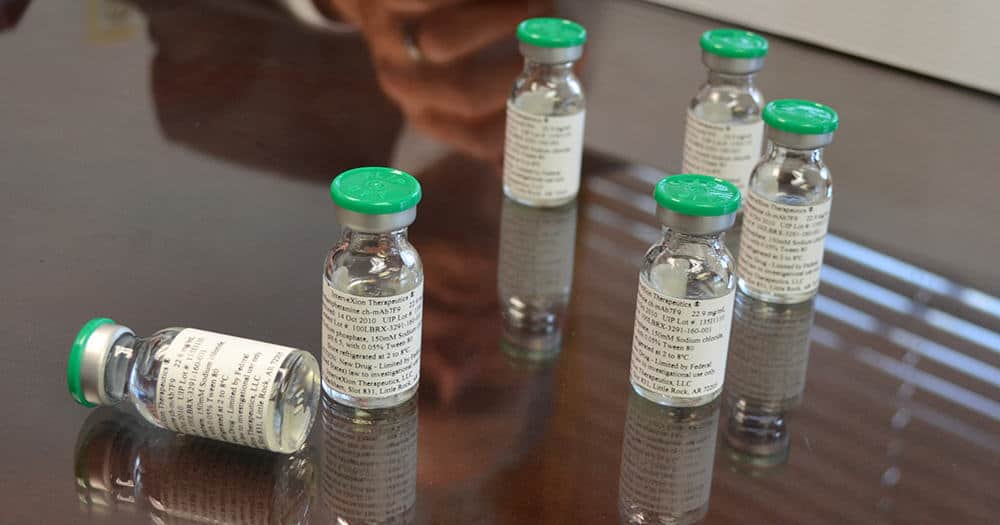
The treatment makes use of a monoclonal antibody, IXT-m200, that works to help a drug user stay in treatment. The antibody binds the methamphetamine and keeps it from going into the brain, so users don’t get the high they are expecting. The treatment is planned to be used together with behavioral therapies once approved by the FDA.
“We are thrilled to have the opportunity to test IXT-m200 in methamphetamine users for the first time,” said Misty Stevens, Ph.D., InterveXion’s operations director and co-principal investigator on the grant award. “By showing that an antibody can change the way meth acts and makes a person feel, we will have strong evidence that this type of treatment will work to reduce drug use.”
Brooks Gentry, M.D., is co-principal investigator on the new grant. He is a professor and chair of the Department of Anesthesiology in the UAMS College of Medicine and InterveXion’s chief medical officer. Michael Owens, Ph.D., a professor in the Department of Pharmacology and Toxicology in the UAMS College of Medicine, is InterveXion’s chief scientific officer. Ralph Henry is InterveXion’s vice president of biopharmaceutics and Distinguished Professor of Biological Sciences at the University of Arkansas.
The grant includes a sub-award to UAMS and funds researchers who are both founders of the company and also prominent UAMS leaders.
The antibody was tested during an earlier Phase 1 study for safety in healthy, non-methamphetamine users. In 2015, InterveXion received a $5 million grant from the National Institute on Drug Abuse to support production of the monoclonal antibody and to prepare research for the next clinical trial in methamphetamine users.
“The primary goal of this Phase 2a study is to show how IXT-m200 will alter methamphetamine’s effects in users and that it will reduce the reinforcing effects of methamphetamine that perpetuate its use,” Gentry said. “The study could also provide evidence that other immunotherapies can work, potentially changing clinical practice entirely. Understanding how this antibody works and how effective it is will help determine how other similar treatments could be used for substance use disorders.”
Also during the study, InterveXion will work with the U.S. Food and Drug Administration by planning for a Phase 2b/3 clinical study in larger groups of people who wish to quit using methamphetamine.
“STAMPOUT is a turning point,” Stevens said. “With data from this clinical study, plans can be made to study how effective IXT-m200 can be in the long term in helping meth users quit and move this game changing medication toward the market and the patients who need it.”
By Ben Boulden | October 12th, 2017