
DFPM-RED‘s WISE (We Inspire Smart Eating) was featured on KATV’s Saturday Daybreak on Saturday, June 23rd. DFPM-RED faculty member Dr. Taren Swindle appeared with Windy WISE and demonstrated a food experience from the WISE curriculum currently in use in locations all across Arkansas. Watch the segment by clicking on the image or link below.
News
Girls Shown Science, Technology Opportunities at UAMS
June 21, 2018 | A couple dozen school-aged girls broke into groups of four and five and spread out across the room. In each group, one girl stood in the center as the rest — armed with a pen, clipboard, paper and measuring tape — outfitted her with round, silvery, shiny markers to track their movement.
Everyone watched in amazement as the volunteer subjects had their movements shown on a television screen.
It was technology — made possible at the high-tech gait and motion-detection laboratory at HipKnee Arkansas Foundation and used by UAMS researchers — most from the Museum of Discovery’s Girls in STEM (Science, Technology, Engineering and Math) workshop were unfamiliar with. Special cameras at strategic spots throughout the room and the markers worn by the subjects resulted in a 3D model created by computer software that was shown right before them on television.
Erin Mannen, Ph.D., director of translational orthopaedic research and assistant professor in the UAMS College of Medicine’s Department of Orthopaedic Surgery, is one of many UAMS researchers who use the technology every day to measure muscle activity and motion in babies, learn how joint replacements affect golf swings, or identify safe yoga practice in hip and knee replacement patients.
Alexis Thompson of Ruston, Louisiana, is a veteran participant of the Girls in STEM workshop, but was still surprised to learn of this technology. It was especially interesting to her because she wants to one day research animals and the evolution of their movements.
“It is really amazing that engineers can do this and find ways to fix what might be broken,” said Alexis.
Bliss Bradford of Marked Tree was speechless.
“It shows how far technology has come,” said Bliss. “It was a once-in-a-lifetime experience. It is interesting that we’re able to do something like this.”
The reactions of Alexis and Bliss is exactly why Mannen wanted to take part in the Museum of Discovery workshop, which each summer brings middle- and high-school girls to Little Rock to learn about STEM opportunities and meet women in related careers.
“I grew up in a small town without much access to STEM,” said Mannen. “Whenever I see a workshop like this or an opportunity to teach kids, particularly girls, about careers in science and engineering, it is always something I’m happy and honored to take part in.”
Last year, the U.S. Department of Commerce reported women filled 47 percent of all U.S. jobs, but only 24 percent of STEM jobs. Mannen encountered similar disparities while studying mechanical engineering where she was one of only three females in her graduating class.
“There is a misconception that girls don’t belong in STEM fields, but by introducing them to science and technology that engages and excites them, girls are more likely to stay interested in STEM,” said Mannen. “We need women in STEM to move the fields forward, to ask new questions and to find creative solutions. I hope the girls had their eyes opened to many unique opportunities in STEM fields.”
By Lee Hogan | June 21st, 2018
$1 Million Gift to UAMS Establishes Pamela Rakhshan Chair in Otolaryngology
June 20, 2018 | The University of Arkansas for Medical Sciences (UAMS) has established the Pamela Rakhshan Chair in Otolaryngology thanks to a $1 million gift from her father, Chris Rakhshan, in gratitude to the physician who saved her life.
UAMS will name a professor to the Rakhshan Chair at a later time.
Rakhshan, of Boulder, Colorado, was living in Arkansas in 2008 when Pamela, then 18, was diagnosed with mucoepidermoid carcinoma, a malignant tumor of the trachea. The rare condition occurs only 2 or 3 times per 100,000 people per year, most often in the elderly.
James Y. Suen, M.D., distinguished professor in the UAMS College of Medicine and a world-renowned head and neck cancer surgeon, operated on Pamela for more than 10 hours and continued her follow-up care. Today, Pamela is cancer free.
“I thought for sure that we had lost her,” Rakhshan said. “But Dr. Suen told me later that he took extra time, because she’s so young, and he wanted to be sure that not only the operation was successful, but that she would never have any issues. He took extra time to make sure everything was done to perfection.”
During Pamela’s follow-up visits, her father was impressed not only with Suen’s skill but with his kind, soft-spoken and compassionate manner.
“I realized then how very lucky my family and I were to have Dr. Suen save my daughter’s life, and I determined that somehow I wanted to repay that kindness,” Rakhshan said.
Rakhshan, who moved to Colorado recently, donated his Arkansas home to UAMS, and UAMS used the proceeds of that sale – nearly $1 million – to establish the Pamela Rakhshan Chair in Otolaryngology, both to celebrate Pamela and honor Suen.
“Sometimes we mistakenly measure our fortunes with what’s in our pocket,” Rakhshan said. “And at the time, when I was going through this with my daughter, I realized that my true fortunes in life were what was in front of me – my family. And there’s no greater gratitude I could have had to Dr. Suen and UAMS for bringing her back to me.”
An endowed chair is among the highest academic honors a university can bestow on a faculty member and is established with gifts of $1 million, which are invested and the spendable distributions from the endowment are used to support the educational, research and clinical activities of the chair holder. Those named to a chair are among the most highly regarded scientists, physicians and professors in their fields of expertise. The endowment will provide funding for continued research and advancements to treatments and surgeries for head and neck cancers.
“I would like to thank Chris Rakhshan for this generous donation, especially because it’s honoring his daughter,” said Suen. “This chair will be at UAMS for as long as UAMS exists, and the interest can be used year after year for research, helping us find cures for patients that have these vascular anomalies. This gift will make a huge difference and I think will save many lives in the future. We’re grateful to Chris and Pamela for that.”
“This is kind of like the eternal flame,” said John Dornhoffer, M.D., chair of the Department of Otolaryngology-Head and Neck Surgery in the UAMS College of Medicine. “This is going to continue to support – so long as there are sick people, so long as there are diseases, so long as there’s cancer – this is going to allow us, essentially forever, to continue to research this. I think that’s a really powerful gift. For somebody who does research, for somebody who supports clinicians and researchers, this is going to allow us to do it in a way that otherwise would not be possible.”
Laura Hutchins, M.D., Named Interim Director of UAMS’ Rockefeller Cancer Institute
LITTLE ROCK — Laura Hutchins, M.D., a hematologist oncologist at the University of Arkansas for Medical Sciences (UAMS) who has devoted her medical practice and research to fight breast cancer, melanoma and brain cancer, has been appointed interim director for the UAMS Winthrop P. Rockefeller Cancer Institute effective immediately.
She succeeds Peter Emanuel, M.D., who recently resigned after leading the institute since 2007. A committee will be formed to conduct a national search for a permanent director.
Hutchins is a professor in the College of Medicine Division of Hematology/Oncology where she was division director from 1998 until September 2013. She also has served as director of clinical research at the Cancer Institute since 1998 and has held the Virginia Clinton Kelley Endowed Chair for Clinical Breast Cancer Research since 2007.
A New Jersey native, Hutchins graduated from the UAMS College of Medicine in 1977. She served her internship and residency at UAMS, followed by a fellowship in the Division of Hematology/Oncology. She joined the UAMS faculty in 1983 and is board certified in internal medicine, hematology, oncology, and hospice and palliative medicine.
She has been a co-investigator on numerous National Institutes of Health grants including those focused on detection of circulating melanoma cells, and using nanotubes to detect and purge circulating cancer cells.
She served as principal or co-investigator on multiple other grants focusing on projects ranging from the development of a South Arkansas Integrated Telehealth Oncology Program to weight management in breast cancer patients. She has been funded by the U.S. Department of Defense, Winthrop P. Rockefeller Foundation, Arkansas Breast Cancer Research Program and American Society of Clinical Oncology, among others.
Her research includes collaborating with Thomas Kieber-Emmons, Ph.D., a fellow scientist to study a UAMS-designed vaccine to prevent the recurrence of breast cancer. That vaccine, now in a phase 2 clinical trial, is being used in women newly diagnosed with breast cancer to determine if the combination of the vaccine and standard chemotherapy improve the benefit of preoperative therapy.
For many years, Hutchins has championed efforts to promote and expand participation in research clinical trials through the use of shared data. She has enrolled patients in more than 70 industry-sponsored trials for breast cancer, melanoma and supportive care, providing new treatment options to Arkansas patients and research data to advance new therapy availability.
In 2007, Hutchins received a grant of more than $120,000 from the National Cancer Institute (NCI) to participate in the Cancer Biomedical Informatics Grid (caBIG), a virtual information network enabling researchers and doctors to more easily share information and accelerate progress in cancer research. With her leadership, UAMS used caBIG’s open-source tools to personalize its own information-sharing program, which received international recognition from peer institutions and a 2009 NCI Delivering Results Award.
Hutchins was appointed by the governor to the Arkansas Breast Cancer Research Program Oversight Committee from 2001-2004. From 2004-2012, she was appointed to serve on the state Breast Cancer Control Advisory Board, serving as chairman from 2007-2008.
Hutchins has published more than 200 journal articles, book chapters and abstracts, and has presented numerous lectures at courses, symposia, workshops and other events in Arkansas and across the country.
She is a member of the American College of Physicians, American Society of Hematology, American Society of Clinical Oncology, American Association of Cancer Education and the American Medical Association.
ICARE Conference Focuses on Best Practices in Emergency Care
June 18, 2018 | Emergency care requires health care professionals and first responders to be adept at reacting quickly and efficiently to a variety of needs.
Staying abreast of the latest advancements in treating common conditions and identifying what needs to be done takes training and practice.
About 100 health care professionals, first responders, police officers and firefighters received updates and training exercises on best practices in emergency care June 1-2 at UAMS as part of the third annual ICARE Conference (Improving Critical and Acute Care through Regional Education).
The event is led by the UAMS College of Medicine’s Department of Emergency Medicine and the UAMS Office of Continuing Education. The conference’s lectures, question-and-answer periods and interactive sessions help participants assess and treat traumatic injuries, and learn evidence-based diagnostic and treatment recommendations for common emergency situations.
Participants took part in sessions on opioids, psychiatric and pediatric emergencies, traumatic injuries, stroke and sepsis.
The conference was started in 2016 to address emergency medical care preparedness in Arkansas and appeal to different specialties and disciplines that require emergency response and care.
“We have rapid-fire teaching sessions, large group discussions and panel discussions,” said Rawle A. “Tony” Seupaul, professor and chair of the Department of Emergency Medicine and ICARE course director. “This makes it a much more interactive experience for our participants.”
By Lee Hogan | June 18th, 2018
Two UAMS Northwest Regional Campus Faculty Inducted into Clinical Society
Sheldon Riklon, M.D., and Thomas Schulz, M.D., associate professors in the University of Arkansas for Medical Sciences (UAMS) College of Medicine on the Northwest Regional Campus, were recently inducted into the Southern Society for Clinical Investigation.
The society was formed by leaders of 19 southern medical schools in 1946 to advance medically related research and encourage residents and fellows to pursue academic medicine. Riklon and Schulz were inducted during the organization’s annual meeting in February in New Orleans.
Membership is through nomination by members in good standing. Peter O. Kohler, M.D., a distinguished professor in the UAMS College of Medicine, nominated both to the society. Kohler was vice chancellor for the Northwest Arkansas Region from 2009 until 2016 and remains in a research role on campus.
“Our faculty are leaders in educating future health care leaders and in conducting important research in community-based care,” said Pearl McElfish, Ph.D., MBA, associate vice chancellor for the UAMS Northwest Regional Campus. “Having two of our faculty in this prestigious society speaks loudly of their dedication to academic medicine and UAMS.”
Riklon is the Peter O. Kohler, M.D., Endowed Distinguished Professor in Health Disparities and an associate professor in the Department of Family and Preventive Medicine. He is one of only two Marshallese physicians to complete medical school and residency training from U.S.-accredited programs. Riklon trains residents in the Family Medicine Clinic on the UAMS Northwest Regional Campus and sees patients at the Community Clinic in Springdale, offering culturally appropriate care to the clinic’s Marshallese patients. Riklon earned his bachelor’s degree in biology from the University of Hawaii at Hilo and his medical degree from the John A. Burns School of Medicine at the University of Hawaii at Manoa. He joined UAMS in 2016 from the John A. Burns School of Medicine, where he was an assistant professor and the family medicine clerkship director in the Department of Family Medicine and Community Health.
Schulz is director of the internal medicine residency program and an associate professor in the Department of Internal Medicine, Division of Hematology/Oncology. He is co-director of the North Street Clinic, which provides health care to area Marshallese living with type 2 diabetes and related chronic conditions. Schulz also oversees the Internal Medicine Clinic at the UAMS Northwest Regional Campus in Fayetteville. He earned his medical degree from the University of Kansas School of Medicine and completed his residency at the University of Kansas School of Medicine – Wichita, serving as chief resident. Before joining UAMS in 2015, he served as an associate professor and associate director of internal medicine residency program at the University of Kansas School of Medicine-Wichita.
Schulz is a fellow of the American College of Physicians, and a member of the American Medical Association and the American Society of Clinical Oncology. He is board certified by the American Board of Internal Medicine in internal medicine, hematology and medical oncology.
UAMS is the state’s only health sciences university, with colleges of Medicine, Nursing, Pharmacy, Health Professions and Public Health; a graduate school; hospital; northwest Arkansas regional campus; statewide network of regional centers; and seven institutes: the Winthrop P. Rockefeller Cancer Institute, Jackson T. Stephens Spine & Neurosciences Institute, Myeloma Institute, Harvey & Bernice Jones Eye Institute, Psychiatric Research Institute, Donald W. Reynolds Institute on Aging and Translational Research Institute. It is the only adult Level 1 trauma center in the state. UAMS has 2,834 students, 822 medical residents and six dental residents. It is the state’s largest public employer with more than 10,000 employees, including 1,200 physicians who provide care to patients at UAMS, its regional campuses throughout the state, Arkansas Children’s Hospital, the VA Medical Center and Baptist Health. Visit www.uams.edu or www.uamshealth.com. Find us on Facebook, Twitter, YouTube or Instagram.
Investiture Ceremony for Frederick “Rick” E. Barr, M.D., MBA
Arkansas Children’s Hospital (ACH) and the University of Arkansas for Medical Sciences (UAMS) College of Medicine celebrated the investiture of Frederick “Rick” E. Barr, M.D., MBA as the recipient and steward of the Robert H. Fiser, Jr., M.D. Endowed Chair in Pediatrics on Tuesday, June 12.
In 2006, the Arkansas Children’s Hospital Board of Directors created this chair in honor of Dr. Fiser’s service and commitment to championing children. He served as chairman of the Department of Pediatrics at UAMS from 1975–1994. At age 32, he became the youngest pediatric department chairman in the United States.
“Arkansas Children’s proudly celebrates Dr. Rick Barr as the chair holder for the Robert H. Fiser, Jr., M.D., Endowed Chair in Pediatrics,” said Marcy Doderer, president and CEO of Arkansas Children’s. “Dr. Barr serves a vital role as a physician leader at Arkansas Children’s and his partnership is helping to change the story for children by continuing efforts to make our state one of the healthiest and safest places for children.”
On October 1, 2017, Dr. Rick Barr assumed the role of pediatrician-in-chief for Arkansas Children’s and as chair of the Department of Pediatrics and associate dean for child health in the UAMS College of Medicine. He succeeded Richard F. Jacobs, M.D., who retired in June of 2017 after 35 years of service on the UAMS faculty and Arkansas Children’s team.
“Dr. Barr is a leader who has played a key role in strengthening our partnership with Arkansas Children’s to provide a healthier tomorrow for the children of Arkansas,” said Cam Patterson, M.D., MBA, chancellor of UAMS. “Through this endowed chair, Dr. Barr will continue to lead the Department of Pediatrics to pursue innovative ideas, programs and projects to move the needle on children’s health.”
Establishing endowed chairs provides ACH and UAMS the ability to recruit top-notch leaders in the medical field who can provide the best care for patients in Arkansas. An endowed chair or professorship remains the highest academic honor a university can bestow on its most distinguished faculty. Those named to a chair or professorship are among the most highly regarded scientists, practitioners and professors in their academic fields.
Barr formerly served as the Suzan B. Thames endowed professor, chair of the Department of Pediatrics and senior associate dean for Graduate Medical Education at the University of Mississippi Medical Center. He was also physician-in-chief at Children’s of Mississippi/Batson Children’s Hospital. Barr served on the faculty at Vanderbilt University from 1995 to 2010, and was chief of the Division of Pediatric Critical Care from 2007 to 2010. He also served as co-director of Vanderbilt University Master’s in Clinical Investigation Programs). From 2010-2011 he was an endowed professor of Pediatric Critical Care and director of the Clinical and Translational Research Center at Cincinnati Children’s Hospital and the University of Cincinnati.
Barr received his medical degree from the University of Virginia in 1988, and completed his residency in pediatrics at Vanderbilt. Barr completed a clinical fellowship in pediatric critical care at the University of California San Francisco, where he was also a research fellow in the Cardiovascular Research Institute. While on the faculty at Vanderbilt, he obtained a Master’s of Science in clinical investigation.
By Ashley McNatt| June 13th, 2018|
Two Ph.D. Graduates Head to Post-docs at Emory
Two Ph.D. students in the spring graduating class of the UAMS Graduate School have accepted positions at Emory University in Atlanta to continue their postdoctoral work.
“They will join other UAMS alumni at Emory for us to have a strong presence there,” said Robert E. McGehee Jr., Ph.D., dean of the UAMS Graduate School. “We’re proud of the accomplishments of these students and look forward to following the course of their promising careers.”
Kimberly Cooney completed the Graduate Program in Interdisciplinary Biomedical Sciences program at UAMS and participated in the Initiative for Maximizing Student Development (IMSD) program, which aims to increase the number of students from underrepresented groups graduating with doctorates in the biomedical sciences.
At Emory University, she’ll be working in the College of Medicine studying cardiovascular disease and its role in upregulating inflammatory signaling pathways. During her tenure at UAMS, she was mentored by Giulia Baldini, M.D., Ph.D., where her studies focused on the function and trafficking of the Melanocortin-4 Receptor, a receptor that influences appetite regulation and energy expenditure. That experience helped her discover her passion for obesity research and other areas that can directly impact her community.
“I can see the work I did at UAMS translating later and I want to continue doing relevant research, particularly in areas of health disparities,” Cooney said.
Cooney’s ultimate career goal is to establish a lab, possibly in an academic setting, that focuses on clinical research while mentoring other minority students in STEM areas.
Johnasha Stuart, who is also an IMSD scholar, conducted her graduate studies and training in the Microbiology and Immunology Department with Karl Boehme, Ph.D., at UAMS. At Emory, she will be working with Arash Grakoui, Ph.D., on Hepatitis C virus pathogenesis and its involvement with the immune system and how contribution to liver disease.
“At UAMS, I have already had the experience of working in a virology lab, which has given me a good basis for my next step,” Stuart said.
Stuart also credited the Graduate Student Teachers of Central Arkansas for providing her with opportunities to advance her teaching experience and achieve her career goals.
“My goal is to become an independent researcher and educator so that I can use my research as a platform to educate and encourage students to pursue careers in biomedical research,” Stuart said.
By Amy Widner | June 11th, 2018 |
Dr. Luis Juncos Named Nephrology Director at CAVHS

Luis Juncos, M.D., has joined the Department of Internal Medicine as a Professor in the Division of Nephrology and Director of Nephrology at the Central Arkansas Veterans Healthcare System.
Dr. Juncos, who previously served as Nephrology Division Director at the University of Mississippi Medical Center, is nationally recognized for his expertise and contributions in acute care nephrology and continuous renal replacement therapy, as well as for his work as an educator and researcher.
Dr. Juncos is a standing member of the National Institutes of Health Kidney, Urologic and Hematologic Diseases D Subcommittee (DDK-D) and has served as an ad hoc reviewer for other study sections. He has served as Associate Editor of the Journal of the American Society of Nephrology and on the editorial boards of the American Journal of Physiology-Renal Physiology, and Critical Care Medicine. He has also served on the American Heart Association’s Council on Hypertension Publications Committee.
Well Done, Class of 2018!
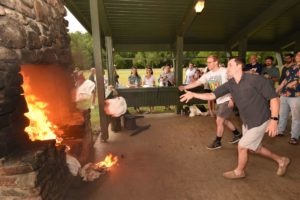
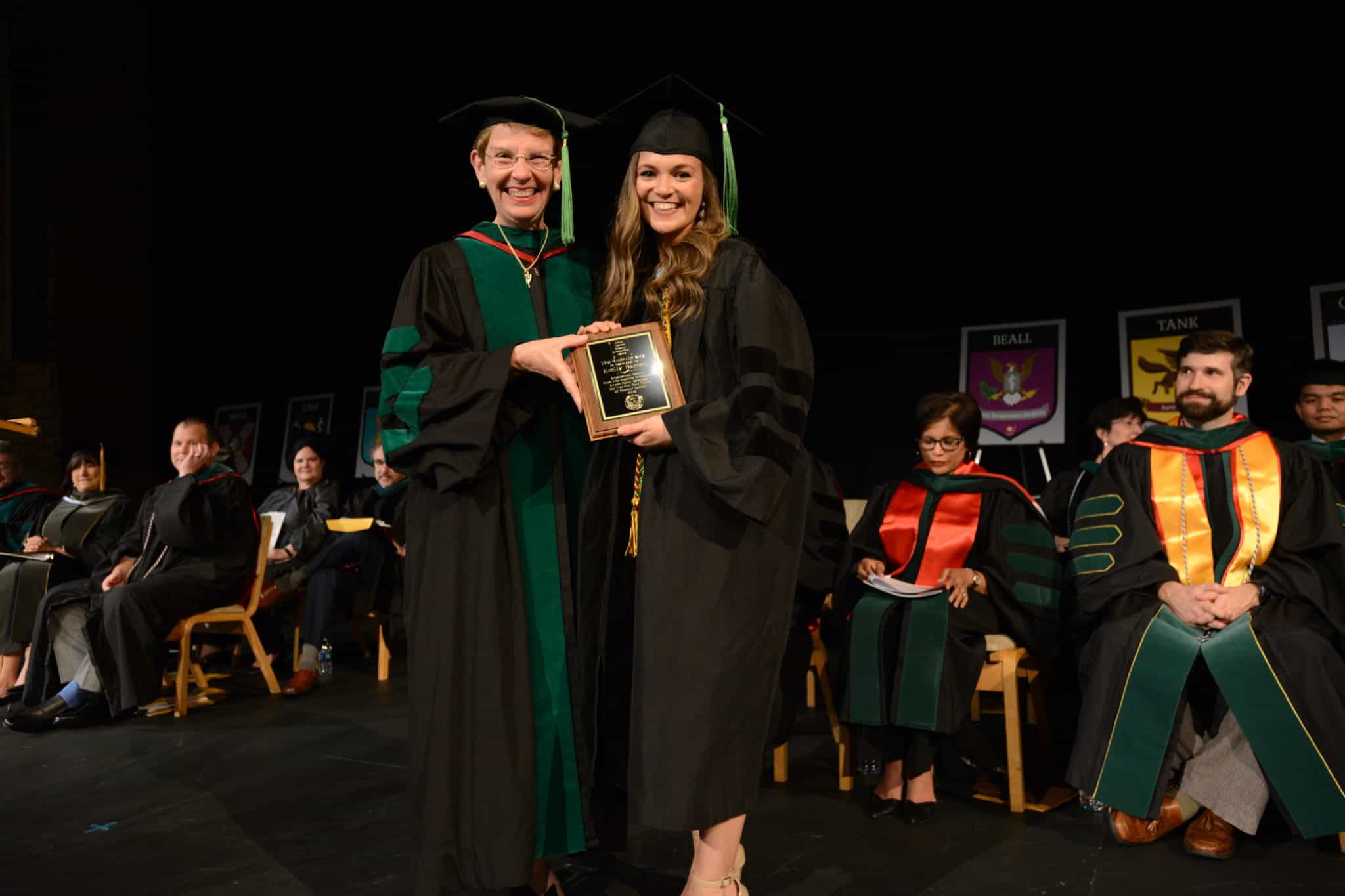
The College of Medicine Class of 2018 said goodbye to medical school with the time-honored traditions of burning their short white coats, receiving accolades at Honors Convocation, and formally receiving the M.D. after their names at the UAMS Commencement Ceremony on May 19.

Toby Vancil, M.D., spoke on behalf of the faculty at Honors Convocation, held the night before Commencement. He emphasized that UAMS has prepared the graduating seniors well for residency, the next phase of their journey to becoming licensed practicing physicians.
“As we bring this ship into the dock closing this adventure we call medical school, I would like to tell you how excited we are as a collective faculty to have been a part of your voyage thus far,” said Dr. Vancil, an Associate Professor of Internal Medicine and award-winning educator who was also chosen by students to deliver the Faculty Charge two years ago.
“My final charge to all of you is to always keep in mind who that person was who filled out that medical school application years ago,” Dr. Vancil said. “Take time every day to remember who you are, where you came from, and why you have dedicated so much time to this very moment.”
Golden Apple Winner
Selected as the most outstanding teacher of the year by a vote of each class.
Graduating seniors chose Jason Mizell, M.D., an Associate Professor in the Department of Surgery, as the recipient of their class’s Golden Apple Award. Dr. Mizell, who was unable to attend Honors Convocation this year, has received four previous Golden Apples from junior and senior classes.