• Skip to primary navigation
  • Skip to main content
  • Skip to primary navigation
  • Skip to main content
Choose which site to search.
University of Arkansas for Medical Sciences Logo University of Arkansas for Medical Sciences
College of Medicine
  • UAMS Health
  • Jobs
  • Giving
  • About Us
    • Fast Facts
    • Leadership
    • Features
    • COMmunication Newsletter
    • Maps and Directions
    • College of Medicine History
    • Professionalism Guidelines
  • Departments
  • Admissions
    • Apply
    • Financial Aid and Scholarships
    • Life in Little Rock or Fayetteville
    • Dual Degree Programs
      • M.D./MBA Program
      • M.D./Ph.D. Program
      • M.D./MPH Program
    • Three-Year M.D. Program
    • Rural Practice Programs
      • Community Match Rural Physician Recruitment Program
      • Rural Practice Scholarship Program
    • Contact Admissions
  • Students
    • Academic Calendar
    • Academic Houses
    • Career Advising
    • Financial Aid and Scholarships
    • Visiting Students
    • Mentor Spotlight Podcast
    • Preparing for Residency
    • Non-Discrimination Statement
    • Outstanding Teacher Nominations
    • Parents Club
    • Student Links
    • Honors in Research
    • UAMS Campus Security
    • Undergraduate Medical Education Competencies
  • Graduate Medical Education
  • Alumni
  • Faculty Affairs
  • Research
  1. University of Arkansas for Medical Sciences
  2. College of Medicine
  3. News
  4. Page 27

News

DFPM-RED’s Project PLAY is in the news!

The Arkansas Democrat-Gazette has highlighted the great work being led by a collaboration between UAMS, The Division of Child Care and Early Childhood Education, and Arkansas State University.  Dr. Nikki Edge was lead with Project Play but special recognition should also be given to RED’s Angie Kyzer and Zach Patterson for the development and implementation of the online BehaviorHelp system.  Dr. Edge developed Project Play, Ms. Kyzer has many talents but in this was key in conceptualizing the online system, and Mr. Patterson wrote the online computer code to make this effort a reality.

Read the full article.


Filed Under: News

Arkansas Children’s Hospital and UAMS College of Medicine Host Investiture Ceremony for Endowed Chair in Pediatric Cardiovascular Surgery

Arkansas Children’s Hospital and the University of Arkansas for Medical Sciences (UAMS) College of Medicine celebrated the investiture of Brian Reemtsen, M.D., a professor in the Department of Surgery and Director of the Heart Center at Arkansas Children’s Hospital, as the recipient and steward of the Arkansas Log A Load For Kids Endowed Chair in Pediatric Cardiovascular Surgery on April 4.

Establishing endowed chairs provides Arkansas Children’s and UAMS the ability to recruit top-notch leaders in the medical field who can provide the best care for patients in Arkansas. An endowed chair or professorship remains the highest academic honor a university can bestow on its most distinguished faculty. Those named to a chair or professorship are among the most highly regarded scientists, practitioners and professors in their academic fields.

“Arkansas Children’s is proud to celebrate Dr. Brian Reemsten as the Arkansas Log A Load For Kids Endowed Chair in Pediatric Cardiovascular surgery,” said Marcy Doderer, president and CEO of Arkansas Children’s. “His unyielding commitment to providing children in the region the best possible care will provide a positive impact and a healthier tomorrow for generations to come.”

“Endowed chairs such as this reflect the long and vital partnership between UAMS and Arkansas Children’s,” said Christopher T. Westfall, M.D., interim dean of the UAMS College of Medicine. “It’s a partnership grounded in our integrated missions of education, clinical service and research. This endowed chair is a well-earned honor for Dr. Reemtsen, and we are honored to have him on our faculty.”

“UAMS and Arkansas Children’s are proud of the innovation and collaboration that Dr. Reemtsen has brought to the team,” said Rick Barr, M.D., chair of the Department of Pediatrics and associate dean for Child Health in the UAMS College of Medicine. “It is our mission to provide the best pediatric care for children in the region and thanks to Dr. Reemtsen’s commitment to excellence, we know he will serve the cardiovascular program at Arkansas Children’s well.”

Log A Load for Kids is a national program that raises funds for Children’s Miracle Network Hospitals, while promoting the logging and forestry community. Arkansas’ Log A Load For Kids program raises money for Arkansas Children’s Hospital. The Arkansas Forestry Association and Arkansas Timber Producers Association sponsor the program.

The program started in South Carolina in 1988 when two loggers dreamed of a way they could make a positive contribution to their local communities.  Their idea spread and each year and forestry groups began to raise millions of dollars nationwide for Children’s Miracle Network Hospitals. In the last 25 years, Log A Load of Arkansas has raised more than $9 million for programs and services at Arkansas Children’s Hospital and ranks No. 1 in the nation for fundraising.

Arkansas Log A Load For Kids Endowed Chair in Pediatric Cardiovascular Surgery was established in 1999 through the group’s fundraising efforts through a $1.5 million endowed chair at Arkansas Children’s Hospital.

Additionally, Arkansas Log A Load For Kids has funded a $1.5 million endowment for the Angel One helicopter transport program, raised $1 million for a Pediatric Imaging and Radiation endowment and raised $4 million for the emergency department/trauma center in the hospital’s South Wing expansion project. In 2017, Arkansas Log a Load for Kids committed to raising $1.5 million over two years to fund the cardiothoracic surgery endowment chair.

Reemtsen earned his medical degree from New York Medical College. He completed his internship and residency at the UCLA School of Medicine, Los Angeles, and also served as chief resident at UCLA. He trained as a fellow in cardiac surgery at the University of Washington. He completed a 12-month Fellow Congenital Heart Surgery Program in 2004 at the Department of Cardiothoracic Surgery, Great Ormond Street Hospital in London, England. Reemtsen is board certified by the American Board of Surgery, American Board of Thoracic Surgery, and Congenital Heart Subspecialty. He is a member of the American Medical Association and Western Thoracic Surgical Association, president of the Longmire Surgical Society, and a candidate member of the Society of Thoracic Surgeons.

Reemtsen serves as director of the Heart Institute at Arkansas Children’s Hospital and as a professor of surgery in the UAMS College of Medicine’s Department of Surgery. As the chair holder of the Log A Load For Kids of Arkansas Endowed Chair in Pediatric Cardiovascular Surgery, he will designate endowed funds to support the cardiovascular surgery program at Arkansas Children’s Hospital.

###

About Arkansas Children’s

Arkansas Children’s, Inc. is the only healthcare system in the state solely dedicated to caring for children which allows the organization to uniquely shape the landscape of pediatric care in Arkansas. The system includes a 336-bed hospital in Little Rock with the state’s only pediatric Level 1 Trauma Center, burn center, Level 4 neonatal intensive care and pediatric intensive care units, and research institute as well as a nationally recognized transport service. It is one the 25 largest children’s hospitals in the United States and is nationally ranked by U.S. News World & Report in pulmonology, neonatal care, cardiology and heart surgery, and urology. Arkansas Children’s Northwest in Springdale includes 233,613 square feet of inpatient beds, emergency care, clinic rooms and diagnostic services. Arkansas Children’s also blankets the state with outreach programs that include telemedicine, mobile health and school-based health solutions.

A private nonprofit, Arkansas Children’s boasts an internationally renowned reputation for medical breakthroughs and intensive treatments, unique surgical procedures and forward-thinking research and is committed to providing every child with access to the best care available, regardless of location or resources. Founded as an orphanage, Arkansas Children’s has championed children by making them better today and healthier tomorrow for more than 100 years. For more info, visit www.archildrens.org.

About the University of Arkansas for Medical Sciences

UAMS is the state’s only health sciences university, with colleges of Medicine, Nursing, Pharmacy, Health Professions and Public Health; a graduate school; hospital; northwest Arkansas regional campus; statewide network of regional centers; and seven institutes: the Winthrop P. Rockefeller Cancer Institute, Jackson T. Stephens Spine & Neurosciences Institute, Myeloma Institute, Harvey & Bernice Jones Eye Institute, Psychiatric Research Institute, Donald W. Reynolds Institute on Aging and Translational Research Institute. It is the only adult Level 1 trauma center in the state. UAMS has 2,834 students, 822 medical residents and six dental residents. It is the state’s largest public employer with more than 10,000 employees, including 1,200 physicians who provide care to patients at UAMS, its regional campuses throughout the state, Arkansas Children’s, the VA Medical Center and Baptist Health. Visit www.uams.edu or www.uamshealth.com. Find us on Facebook, Twitter, YouTube or Instagram.

By Ashley McNatt| April 5th, 2018 |

Filed Under: News

Life-Saving Skills Taught at Stop the Bleed Event

Uncontrolled bleeding is the number one cause of preventable death from trauma. It only takes four to seven minutes to bleed to death from a serious injury — a short timeframe that often doesn’t give first responders enough time to get to the scene, much less get the injured person to a hospital.

Q: So what can be done?

A: Teach more people how to stop the bleed.

Doctors showing how to apply a tourniquet
Avi Bhavaraju, M.D., (left) demonstrates how to properly use a tourniquet on J.R. Taylor, M.D, at UAMS Stop the Bleed Awareness Day on March 29.

The Stop the Bleed program wants to ensure that anyone — not just first responders and health care professionals — is equipped with the knowledge and tools to stop a serious bleeding injury.

“Anyone can learn to do this,” said Ronald Robertson, M.D., medical director of trauma and chief of the Division of Trauma, Critical Care and Acute Surgery in the UAMS College of Medicine’s Department of Surgery.

At the March 29 UAMS Stop the Bleed Awareness Day event, about 150 attendees were shown how to pack a wound, apply pressure and secure a tourniquet. Information was also available about a two-to-three hour certification course.

“I can’t stress how important this information is,” said Robertson. “Knowing how to perform these skills could save your life or the lives of the people you love.”

Doctors posing with award
Ronald Robertson, M.D., (from left) Clayton Goddard of MEMS, J.R. Taylor, M.D., and Little Rock Police Chief Kenyon Buckner smile during UAMS Stop the Bleed Awareness Day. Both Goddard and Buckner were recognized for their efforts supporting the Stop the Bleed initiative.

The UAMS Stop the Bleed group also presented two awards during the event. The Above and Beyond Award was presented to the Little Rock Police Department (LRPD) and Chief Kenyon Buckner “in appreciation for your dedication, commitment and outstanding police performance in the saving of human life.”

All members of the LRPD have tourniquets in their cars and have been trained how to use them, said J.R. Taylor, M.D., assistant professor in the Division of Trauma, Critical Care and Acute Surgery.

Buckner said this training has already saved lives in Little Rock.

“During the Power Lounge shooting July 1, 2017, 25 people were shot,” he said. “All of them survived. Police applied five tourniquets and two chest seals in the field before MEMS was cleared to reach the scene.”

Clayton Goddard, MEMS special operations supervisor, received the Golden Tourniquet Award for “his extraordinary achievement, dedicated service and commitment to The Arkansas Stop the Bleed Initiative.”

Goddard took his military training and applied it to his civilian job, said Robertson. “Before Stop the Bleed became a national endeavor, Clayton was already doing it in Arkansas.”

Thanks to Goddard, Robertson said, more than 5,000 law enforcement officers in Arkansas have been trained in techniques to keep a person from bleeding to death. Goddard also approached the Arkansas Board of Education so he could train school nurses, who could then train teachers, in Stop the Bleed techniques.

A video featuring Goddard was also shown at the event, as was one by North American Rescue showing various tourniquet application techniques.

Filed Under: News

Cabot Woman Back to Active Lifestyle after Hip Procedure

Beverly Smith isn’t used to being held back.

The now-retired Cabot resident loves to be on the move. She longs to travel. She lives for cruises and trips with her husband, and the freedom to do as they please.

Last year, that way of life came to an abrupt halt when knee pain sidelined her. X-rays and scans revealed her knee was fine, but her right hip was not. A total replacement was necessary.

“I thought I was too young,” said the 63-year-old Smith. “I wasn’t ready for it.”

Smith turned to UAMS for help. She was treated by Paul Edwards, M.D., a hip-and-knee surgeon at UAMS and a professor in the UAMS College of Medicine’s Department of Orthopaedic Surgery. Any worries she had were soon put at ease by Edwards and the rest of the UAMS orthopaedics staff.

“I thought I couldn’t be so lucky, I felt comfortable with Dr. Edwards,” said Smith. “It was like talking with someone I knew. He talked to me and showed me what was wrong. I got incredible quality care from Dr. Edwards and the entire staff at UAMS.”

Smith’s hip showed signs of osteoarthritis, as the result of wear and tear in the hip joint from arthritis.

“A normal hip joint has a ball and room for cartilage, but Mrs. Edwards’s hip had no cartilage space and had a few cysts,” said Edwards. “This causes a lot of debilitating pain, which makes almost any activity hard to do.”

Immediately following the procedure, Smith noticed an odd feeling in her hip.

“The pain was gone,” she said.

Edwards said research shows the UAMS method of having an individualized plan for each patient is the most successful approach to having good outcomes rather than relying on a new technique of using robotic-arm technology.

At UAMS, the orthopaedics staff meets with patients and their families to talk about the procedure and recovery process as well as identify and lessen possible risk factors.

“They put me at ease and it made a difference,” said Smith. “A huge difference.”

Each UAMS orthopaedic surgeon specializes in a particular area. This includes hip and knee, foot and ankle, sports medicine and trauma. Four are fellowship trained in hip and knee replacement, the most of any joint replacement provider in Arkansas.

“This allows us to narrow our focus and stay up to date on the best practices in our area, which translates to superb care for our patients,” said Edwards.

A designated staff of nurses and health professionals care for patients following surgery. Post-operative care includes a visit with a physical therapist to begin recovery. Most patients return home within 24 hours of their surgery.

“This plan decreases hospital readmissions, as well as complications and infections,” said Edwards. “It improves patient outcomes in a way new robotic technology has not been able to accomplish.”

Smith said since her care at UAMS, she has been able to return to the lifestyle she loves.

“I can do anything and I don’t hurt,” she said. “With pain, you’re limited. Now I don’t feel any limitations to anything.”

By Lee Hogan| April 2nd, 2018 |

Filed Under: News

James E. McDonald, M.D., Invested in Ernest J. Ferris, M.D., Chair in Diagnostic Radiology

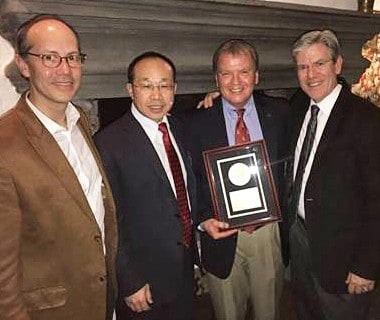
James E. McDonald, M.D., FACR, chair of the Department of Radiology in the College of Medicine at the University of Arkansas for Medical Sciences (UAMS), was invested March 27 as the holder of the Ernest J. Ferris, M.D., Chair in Diagnostic Radiology.

McDonald, who joined UAMS in 2010, was appointed department chair in November 2016. An endowed chair is among the highest academic honors a university can bestow on a faculty member and is established with gifts of at least $1 million, which are invested and the proceeds used to support the educational, research and clinical activities of the chair holder. Those named to a chair are among the most highly regarded scientists, physicians and professors in their fields.

“I congratulate Dr. McDonald for the many accomplishments that have merited this honor,” said UAMS Interim Chancellor Stephanie Gardner, Pharm.D., Ed.D. “From one Southerner to another, the best way to say this is, we appreciate you. We appreciate your leadership at UAMS of our clinical, academic and research activities that support our overall mission, and we appreciate everyone who has helped make this chair a reality.”

The chair is named in honor of Ferris, who chaired the Department of Radiology for 31 years, helping bring comprehensive subspecialty training and highly specialized radiological care to Arkansas. He trained more than 350 fellows and residents at UAMS, six of whom have gone on to become department chairs at various medical schools. Ferris ultimately expanded the department to include 50 radiologists with diverse subspecialties before he stepped down as chair in 2008.

Ferris, who attended Boston University School of Medicine, held faculty positions at Harvard University and Tufts University, and served as chief of radiology at Boston University Medical Center for eight years before being recruited to UAMS in 1977.

Well-known nationally and internationally for his contributions to the field of radiology, Ferris received the American Board of Radiology’s Distinguished Service Award in 2000 and was presented with the Radiological Society of North America’s highest honor, the Gold Medal, in 2001. At UAMS, he received the Caduceus Club’s Distinguished Faculty Award in 1996 and the Dean’s Distinguished Faculty Scholar Award in 2007. College of Medicine students recognized him four times with the Red Sash Award.

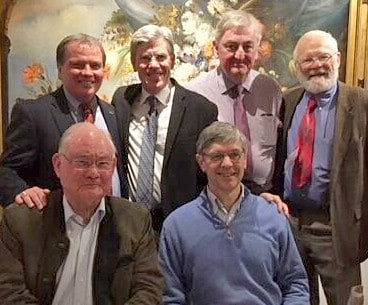
The ceremony, held in the Diner Learning Center at UAMS’ main Little Rock campus, served as a celebration of the department, with radiology staff, technologists, residents, alumni and faculty members participating. Ferris attended, along with Phillip Kenney, M.D., who served as department chair from 2008-2012. With McDonald, the three men represent more than 40 years of department history.

“Jim is an incredibly important leader on this campus, and hence in this state,” said Richard Turnage, M.D., senior vice chancellor for clinical programs and chief executive officer of UAMS Medical Center. “The department has thrived under his leadership, and we look forward to even greater success for the department and the university. This important honor is incredibly well-deserved, not just because of what you’ve accomplished, but because of the promise for the future.”

McDonald was presented with a commemorative medallion by Gardner and Christopher Westfall, M.D., interim dean of the College of Medicine.

“It goes without saying that receiving the Ernest J. Ferris Chair in Radiology is the highest honor of what’s now a pretty long career, and I’ll be forever grateful,” McDonald said. “Our more than 100 years of history in radiology at UAMS and the contributions of our founders, faculty, residents and alumni constitute a powerful legacy. It’s our privilege now to continue to build on those relationships that have made us so strong as we move into our second century.”

McDonald recognized nearly every person in the room with thanks, from department heads and faculty to technologists, staff and residents. He also thanked his wife, Donna, and his family for their support.

“The Ferris chair is primarily for our residents and their education, and the strengthening of the faculty who have the sacred responsibility to help our residents become radiologists,” McDonald said.

McDonald received his medical degree summa cum laude from the University of Mississippi School of Medicine and completed an internship in surgery and pathology at the Louisiana State University School of Medicine in New Orleans. He completed his residency in diagnostic radiology at the Mallinckrodt Institute of Radiology at Washington University in St. Louis, serving as co-chief resident in his final year, and continued his training with a fellowship in nuclear medicine at UAMS and Mallinckrodt.

He joined the College of Medicine full time as an assistant professor and director of the Division of Nuclear Medicine in 2010, and has served as director of the Nuclear Medicine Residency Program since 2013. He served as interim co-vice chair of the department from 2012 to 2014 and was promoted to interim chair in May 2014. He was promoted to associate professor in July 2016 and was named chair in November 2016.

McDonald was a partner in Radiology Associates P.A. in Little Rock from 1983 to 2010, where he served on its governing board, including a term as chair. He was active on the medical staff at St. Vincent Infirmary, now CHI St. Vincent, where he was chief of nuclear medicine from 2003 to 2010 and led a fundraising campaign for nursing education. At Southwest Regional Medical Center, his leadership posts included chief of the Department of Radiology, chief of staff, and chair of the advisory board. He also served as an adjunct clinical assistant professor in the UAMS Department of Radiology from 2003 to 2006.

In addition to leading the Department of Radiology, McDonald has championed implementing imaging decision support algorithms into the Epic electronic medical records system at UAMS and led an effort to ensure appropriate use of mobile chest radiography. He was named both director and medical director of the Imaging Service Line in 2015. Also director of Nuclear Medicine and PET and an expert on the molecular imaging of multiple myeloma, McDonald is a consultant to the UAMS Myeloma Institute. He assists in the integration of quantitative imaging and radiomics into research initiatives for the Department of Biomedical Informatics and chairs the Radiation Safety Committee.

McDonald was named a Fellow of the American College of Radiology in 2016.


UAMS is the state’s only health sciences university, with colleges of Medicine, Nursing, Pharmacy, Health Professions and Public Health; a graduate school; hospital; northwest Arkansas regional campus; statewide network of regional centers; and seven institutes: the Winthrop P. Rockefeller Cancer Institute, Jackson T. Stephens Spine & Neurosciences Institute, Myeloma Institute, Harvey & Bernice Jones Eye Institute, Psychiatric Research Institute, Donald W. Reynolds Institute on Aging and Translational Research Institute. It is the only adult Level 1 trauma center in the state. UAMS has 2,834 students, 822 medical residents and six dental residents. It is the state’s largest public employer with more than 10,000 employees, including 1,200 physicians who provide care to patients at UAMS, its regional campuses throughout the state, Arkansas Children’s Hospital, the VA Medical Center and Baptist Health. Visit www.uams.edu or www.uamshealth.com. Find us on Facebook, Twitter, YouTube or Instagram.

###

By Benjamin Waldrum| April 3rd, 2018 |

Filed Under: News

New Funding for DFPM-RED

DFPM-RED’s Dr. Leanne Whiteside-Mansell, Dr. Daniel A. Knight, LaTunja Sockwell, and Cindy Crone have been awarded funding from Gilead Investigator Sponsored Research.

This project will implement HIV education within Pulaski County Drug Court (PCDC) one of 43 Arkansas Adult Drug Courts (ADC). The training was developed in collaboration with the Arkansas Department of Health but will be modified to include clinical preventive options such as oral Pre-Exposure Prophylaxis (PrEP) and risk of Hep C. The training, titled Embracing Healthy Love (EHL), has been piloted and continues in two northwest Arkansas drug courts by RED including Isis Martel.

$248,543; 18 months of funding – community health work to be hired, part time RA and trainer.

Filed Under: News

Dr. Martin Radvany Named Chief of Interventional Neuroradiology

Martin Radvany, M.D.

Martin G. Radvany, M.D., an internationally known leader in interventional neuroradiology and specialist in vascular disorders of the brain and spine, has joined the Department of Radiology as Professor and Chief of Interventional Neuroradiology.

Dr. Radvany received his medical degree from Northwestern University in Chicago in 1991. He completed a residency in diagnostic radiology at Tripler Army Medical Center in Hawaii and a fellowship in interventional radiology at the Johns Hopkins Hospital in Baltimore. After completing his fellowship, he served for nine years at Brooke Army Medical Center in San Antonio, where he was promoted to Lieutenant Colonel and served as Chief of the Interventional Radiology Service.

Dr. Radvany returned to Johns Hopkins in 2007 for a fellowship in interventional neuroradiology and then joined the faculty as an Assistant Professor of Radiology, Neurological Surgery and Neurology. He served as Chief of Interventional Neuroradiology at the Johns Hopkins Bayview Medical Center and Director of the Interventional Neuroradiology Fellowship in the Johns Hopkins University School of Medicine. Dr. Radvany worked with teams of internationally known specialists developing endovascular techniques and medical devices for the treatment of brain aneurysms, stroke, vascular malformations and pseudotumor cerebri syndrome.

In 2015 he was recruited to York, Pennsylvania, to establish the Interventional Neuroradiology Program at WellSpan hospital, which received designation as a JCAHO-certified Comprehensive Stroke Center within three years.

Dr. Radvany has contributed chapters to more than 15 textbooks on endovascular treatment of neurovascular disorders and published over 50 articles in medical journals. He is a reviewer for several medical journals and has lectured internationally.

Filed Under: News

Dr. Jill Mhyre to Chair Anesthesiology

Jill Mhyre, M.D.

Jill Mhyre, M.D., Director of Obstetric Anesthesia and Vice Chair for Research in the Department of Anesthesiology, has been appointed to serve as Chair of Anesthesiology effective July 1.

Dr. Mhyre will succeed W. Brooks Gentry, M.D., who has decided to step down in order to focus more of his time on research and academic mentorship. The transition will enable Dr. Gentry to focus more closely on his role as Principal Investigator on the ground-breaking, National Institute on Drug Abuse-funded clinical studies for the anti-methamphetamine medications he has been working with colleagues to develop. In addition, Dr. Gentry will remain a member of the clinical faculty at UAMS, facilitate research education for departmental faculty, fellows and residents, and develop greater research collaborations for the department via work with the UAMS Translational Research Institute.

“Dr. Mhyre is known internationally for her work to improve the safety of obstetric patients,” Interim Dean Christopher Westfall, M.D., said in his March 14 announcement to the faculty. “She is a proven academic physician and leader who will advance all missions of the College of Medicine and UAMS. She will be a tremendous addition to our leadership.”

Dr. Mhyre was recruited to UAMS as an Associate Professor in 2013. She has served as Director of Obstetric Anesthesia since 2014 and as Vice Chair for Research since 2015. In 2016 she was invested as the inaugural Dola S. Thompson, M.D., Professor of Anesthesiology. She is being promoted to the rank of Professor, effective July 1.

Dr. Mhyre received her medical degree at Stanford University in 1999. She interned at Duke University and continued her training at the University of Michigan Health System, where she completed her residency in anesthesiology and research fellowships in the Robert Wood Johnson Clinical Scholars Program and the National Institutes of Health’s Building Interdisciplinary Research Careers in Women’s Health Program.

She joined the faculty at the University of Michigan Health System, serving as Director of Obstetric Anesthesiology Research from 2006 to 2013 and as Director of Quality Improvement for Anesthesiology in 2012-2013.

Dr. Mhyre’s research focuses on maternal patient safety with specific areas of interest in maternal mortality, severe obstetric morbidity, perioperative and peripartum cardiopulmonary resuscitation, regionalization of peripartum care for women with significant co-existing disease, and systems solutions to improve communication and safety on labor and delivery units.

She is the Executive Section Editor for Obstetric Anesthesia for Analgesia & Anesthesia, Editor of the International Journal of Obstetric Anesthesia, and Associate Editor of Chestnut’s Obstetric Anesthesia Principles and Practice. Earlier roles included Chair of the Society for Obstetric Anesthesia and Perinatology Patient Safety Committee, Chair of the National Partnership for Maternal Safety Subcommittee on Vital Sign Triggers, and the journal liaison for the Society of Obstetric Anesthesia and Perinatology.

Filed Under: News

The Journal of Nutrition Education and Behavior selects DFPM-RED submission as “Best of 2018”!

Congratulations on your manuscript, “GEM NO. 570: Together We Inspire Smart Eating: A Preschool Curriculum for Obesity Prevention in Low-Income Families” being selected as the 2018 Best GEM (Great Educational Materials). All GEMs published in a volume of the journal are evaluated by our Journal Committee, who selects the top articles to be voted on by our Board of Editors.

GEMs are evaluated based on the following criteria:

  • Innovativeness/creativity
  • Quality of design
  • Quality of the writing and presentation of the report
  • Quality of evaluation

Filed Under: News

$300,000 Supplemental Award Aims to Take Bone Research to Pilot Drug

Maria Almeida, Ph.D., is the first researcher at UAMS to receive supplemental funding through the NIAMS STAR program and hopes it will not only take her work to the next level but show other investigators a roadmap for their careers.

Almeida, an associate professor in the Department of Internal Medicine-Endocrinology in the UAMS College of Medicine, has spent the last 16 years studying the basic mechanisms of bone growth and skeletal aging.

With the $300,000 supplement from the National Institute of Arthritis and Musculoskeletal and Skin Diseases’ Supplements to Advance Research program, she hopes to springboard her laboratory findings into a pilot drug that she will test for its potential use in bone diseases like osteoporosis.

“They use the phrase ‘from projects to programs,’” Almeida said. “It will allow the opening of new possibilities within my lab. I will be able to take my work beyond one area of focus, and I will be able to be a little more creative with my approach. Most of my work has been in basic science, and this will allow me to be more translational – taking the basic science closer to potential treatments.”

Since its first cycle in 2015, the NIAMS STAR program has awarded only three to five investigators per year. Awardee institutions have included Harvard Medical School, the Mayo Clinic in Rochester, Duke University and Stanford University.

One of the perimeters of NIAMS STAR is that it looks to fund what it terms “high-risk ideas.” The thinking is that with high risk also comes the potential for high reward in terms of advances in medicine and impact on human health. In recent years, the National Institutes of Health has been looking for new ways to fund such research.

“Traditional NIH funding programs have certainly led to advances in human health, but there has always been speculation that promising discoveries can take too long to emerge from the lab to become treatments or diagnostics,” said Lawrence E. Cornett, Ph.D., vice chancellor for research at UAMS. “The idea behind NIAMS STAR and similar programs is to give investigators additional resources to pursue these high-risk, high-reward lines of research that have the potential to produce breakthroughs that can rapidly advance a field. Dr. Almeida is a talented investigator whose work has the potential to do just that.”

The STAR program also targets researchers like Almeida because they are at a vulnerable point in their careers. They have had early success with a scientific pursuit but may be running out of traditional funding options. Without funding, they might abandon even promising research for other pursuits.

Instead, NIAMS is looking to help these early- to mid-career scientists – or “early-established investigators (EEIs),” as they call them.

While announcing the program in 2014, NIAMS Director Stephen I. Katz, M.D., Ph.D., said that by not adequately supporting these EEIs, what is truly at stake is the loss of innovative advancements to human health and the underdevelopment of the next generation of scientists.

“The goal of the program … is to promote innovation and exploration of new research directions,” Katz said in the announcement. “Ultimately, we believe that the awards will assist EEIs in making the transition from work on a single research project to leadership of a comprehensive research program.”

Almeida received her first NIH Research Project Grant Program (R01) award in 2010. Through extensive research in her lab, she found that the interaction between the cellular-level functions of two proteins involved in gene transcription – forkhead box O and β-catenin – can decrease bone mass.

“We were lucky enough to get great results, which were published in high-impact journals,” Almeida said. “I was able to have the R01 renewed in 2016. Renewing an R01 is not very common and suggests the promising nature of the research. This supplemental funding will allow me to develop a pilot drug out of the principals we discovered, which I can then test to see if it behaves like we expect it to.”

The supplemental funding also opens up the project for collaboration with Kottayil Varughese, Ph.D., a professor in the College of Medicine’s Department of Physiology and Biophysics. Almeida’s lab and Varughese’s lab together will attempt to develop specific cell-penetrating peptides that will block or disrupt the interaction between forkhead box O and β-catenin in order to stimulate bone formation.

The work begins in April 2018.

Almeida notes that there was a small window when she was eligible for the program. At NIAMS, they are focusing on supporting this specific group of promising mid-career scientists, but at other institutes, there are new programs aimed at better supporting senior scientists who are well established or new ones just beginning their careers.

“Funding is critical,” Almeida said. “We all have to keep our eyes open for these new opportunities.”

By Amy Widner| March 28th, 2018 |

Filed Under: News

  • «Previous Page
  • Page 1
  • Interim pages omitted …
  • Page 25
  • Page 26
  • Page 27
  • Page 28
  • Page 29
  • Interim pages omitted …
  • Page 42
  • Next Page»
UAMS College of Medicine LogoUAMS College of MedicineUniversity of Arkansas for Medical Sciences
Mailing Address: 4301 West Markham Street, Little Rock, AR 72205
Phone: (501) 296-1100
  • Facebook
  • X
  • Instagram
  • YouTube
  • LinkedIn
  • Pinterest
  • Disclaimer
  • Terms of Use
  • Privacy Statement
  • Legal Notices

© 2026 University of Arkansas for Medical Sciences