• Skip to primary navigation
  • Skip to main content
  • Skip to primary navigation
  • Skip to main content
Choose which site to search.
University of Arkansas for Medical Sciences Logo University of Arkansas for Medical Sciences
College of Medicine
  • UAMS Health
  • Jobs
  • Giving
  • About Us
    • Fast Facts
    • Leadership
    • Features
    • COMmunication Newsletter
    • Maps and Directions
    • College of Medicine History
    • Professionalism Guidelines
  • Departments
  • Admissions
    • Apply
    • Financial Aid and Scholarships
    • Life in Little Rock or Fayetteville
    • Dual Degree Programs
      • M.D./MBA Program
      • M.D./Ph.D. Program
      • M.D./MPH Program
    • Three-Year M.D. Program
    • Rural Practice Programs
      • Community Match Rural Physician Recruitment Program
      • Rural Practice Scholarship Program
    • Contact Admissions
  • Students
    • Academic Calendar
    • Academic Houses
    • Career Advising
    • Financial Aid and Scholarships
    • Visiting Students
    • Mentor Spotlight Podcast
    • Preparing for Residency
    • Non-Discrimination Statement
    • Outstanding Teacher Nominations
    • Parents Club
    • Student Links
    • Honors in Research
    • UAMS Campus Security
    • Undergraduate Medical Education Competencies
  • Graduate Medical Education
  • Alumni
  • Faculty Affairs
  • Research
  1. University of Arkansas for Medical Sciences
  2. College of Medicine
  3. News
  4. Page 28

News

Robertson and Wendel Awarded by Arkansas Business

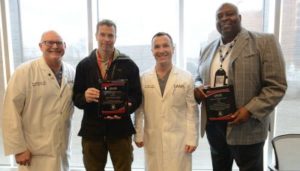
Ron Robertson, M.D., holding award

The Arkansas Business Publishing Group honored two College of Medicine faculty members this week.  The awards recognize individuals, companies and organizations that are making a significant impact on the quality of health care in Arkansas.

Ron Robertson, M.D., of the Division of Trauma, Critical Care and Acute Surgery in the Department of Surgery, received the Physician of the Year award. Read more at the Arkansas Business website.

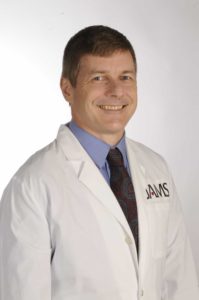
Paul Wendel, M.D.

Paul J. Wendel, M.D., professor in the Department of Obstetrics and Gynecology, was awarded the Women’s Health and Wellness Hero award. Read more at the Arkansas Business Website.

Filed Under: News

Kent C. Westbrook, M.D., Receives Lifetime Achievement Award

Kent C. Westbrook, M.D.

Kent C. Westbrook, M.D., Distinguished Professor in the Department of Surgery in the College of Medicine at UAMS, has received the Arkansas Business Healthcare Heroes Lifetime Achievement Award.

Get more information in the article on the Arkansas Business website.

Filed Under: News

Greenville Man Fitted for Robotic Arm Controlled by Thought

The first memory David Scott has following his traffic accident July 31, 2017, is a paramedic leaning over trying to help release him from underneath his 18-wheeler.

“I’m trying to pull my arm out and they’re telling me I can’t,” Scott said. “So I turn around and try and force it. But they stopped me.”

That’s because at that moment, Scott wasn’t fully aware how badly his arm had been damaged. When he arrived at UAMS, his surgeons were not able to save it. And not just the arm, they and had to amputate up to his chest.

“Typically if an extremity is reconstructable, we will reconstruct it,” said Mark Tait, M.D., an orthopaedic hand and upper extremity surgeon and assistant professor in the Department of Orthopaedic Surgery. “In this case, his nerves, arteries and vessels were so severely damaged we had to do an amputation.”

Orthopaedic surgeons examine a patient
Orthopaedic surgeons John Bracey (left), M.D. and Mark Tait (right), M.D. examine their patient’s progress following his amputation.

But Tait and John Bracey, M.D., another UAMS orthopaedic hand and upper extremity surgeon, were thinking beyond the loss of Scott’s arm. They had plans for his future.

Traditionally, Tait said, patients can receive body-powered prosthetics. But new technology allows advanced robotics to be used by amputees. Because the surgeons decided to prepare Scott to be able to use a robotic arm, the surgery took about seven hours.

Tait and Bracey identified the nerves that once flowed in his hand, wrist and elbow. They then took those nerves and plugged them into other muscles in Scott’s chest. With time, the nerve would reinnervate – supply energy to – that muscle, causing it to have a new function. So now when Scott thinks, “close hand” or “bend elbow” new muscles, operated by nerves formally in his arm, respond. That response is sensed by his robotic arm, which follows the brain’s command.

“David is very highly motivated,” Bracey said. “He understood the severity of his injury but was determined not to be limited by that. His motivation helps make this so successful.”

David Scott shows how he works his robotic prosthetic arm

UAMS is one of a few institutions in the nation able to do these kinds of surgeries and Scott is among the first here in the state to receive a robotic arm. Tait and Bracey say they’re happy to bring this option to amputees in Arkansas and the region. This procedure is also remarkable, the surgeons said, because it is intuitive. With more time and practice, a patient is able to fine-tune the way the robotic arm works with his or her body. He says they’re still working on improving the functionality.

“I told my wife, I’m not going to let this get me down,” Scott said.

And he hasn’t. His doctors expected it to take six months for him to make the progress he has made since having the arm. It’s taken him only three and each day he gets a little more control. He’s able to put the arm on and take it off with little to no help and has been very active in his church and his softball team.

“It’s amazing the things doctors have been able to come up with in medicine,” Scott said. “I’m happy to be alive and plan to make the most of my life.”

Tait and Bracey say even those who have already had an amputation could be eligible for robotic technology. Because the nerves are likely still there, they would still be able to identify them and plug them into different targets.

“It can be a good option for those even 10 years past their amputation,” Bracey said.

By Katrina Dupins| March 26th, 2018 |

Filed Under: News

Internal Medicine Chair James Marsh, M.D., Honored by American Heart Association

James D. Marsh, M.D. – chairman of the Department of Internal Medicine in the College of Medicine at the University of Arkansas for Medical Sciences (UAMS) – has been honored by the American Heart Association for his three-decade career fighting cardiovascular disease and stroke.

Marsh received the Worthen-Cornett Award on March 10 at the Little Rock Heart Ball at the Statehouse Convention Center.

Dr. Marsh receiving award from Doris Washington
James Marsh, M.D., Chair of the Department of Internal Medicine in the UAMS College of Medicine, is presented the Worthen-Cornett Award by Little Rock Heart Ball Co-Chair Doris Washington on March 10.

Named in memory of the philanthropy and dedication shown by the late George Worthen and the late James K. Cornett, M.D., the Worthen-Cornett Awarded is presented to an individual each year at the Heart Ball for excellence in volunteerism. Recipients demonstrate an outstanding commitment to working with the American Heart Association’s mission to build healthier lives, free of cardiovascular diseases and stroke.

Marsh has received numerous grants from the American Heart Association for a total of more than $500,000 during his career. It has funded research into using gene therapy to improve the function of a failing heart, stroke prevention and other topics.

Dr. Marsh and Event Director after ceremony
James Marsh, M.D., is pictured after the Little Rock Heart Ball award ceremony with Event Director Tammy Quick

“I am proud to receive this recognition,” Marsh said. “AHA research funding has touched the lives of every heart and stroke patient treated in the United States, no matter if the hospital is a research institution or not. This research has led to gold standard treatments and guidelines used by health care providers in every corner of the nation and around the world. Not only does every heart and stroke patient benefit from our research, but so do the millions of people who want to live healthier lives and prevent these diseases from every happening.

“My family, like the majority of families in Arkansas, has been affected by heart disease and stroke, with lives disrupted or ending too soon,” Marsh said. “It is a privilege to commit my career to developing preventive measures and new treatments for cardiovascular disease, and to caring for patients who are already bearing the burden of heart disease and stroke.”

A nationally prominent internist, cardiologist and cardiology researcher, Marsh served on the faculties at Harvard Medical School and Wayne State University before being recruited to UAMS in 2004 where he is also the Nolan Professor.

Marsh received his medical degree from Harvard Medical School in 1974. He trained in internal medicine at Brigham and Women’s Hospital in Boston, where he went on to complete clinical and research fellowships in cardiovascular diseases. He served on the faculty at Harvard for 13 years while also directing the cardiology fellowship program at Brigham and Women’s Hospital. In 1993 he moved to Wayne State University in Detroit, where he later was appointed director of cardiology and in 2001 became associate chair of the Department of Internal Medicine.

By Amy Widner| March 26th, 2018|

Filed Under: News

Nikki Edge, Ph.D., to be Promoted to Full Professor

Dr. Nicola “Nikki” Edge is being promoted to Full Professor in the UAMS College of Medicine, Department of Family and Preventive Medicine effective July 1, 2018. Congratulations to Dr. Edge on this wonderful, difficult and highly challenging accomplishment. It resulted from years and years of fabulous work and recognition for her many projects!

Nicola Edge joined the UAMS faculty in 2000 and was promoted to Associate Professor in 2009 in the Department of Pediatrics. In 2010, her primary academic appointment was moved into the Department of Family and Preventive Medicine. She is on the basic scientist researcher track.

Her research program is focused primarily on understanding factors that place children at risk for poor social and emotional outcomes, such as parenting concerns and traumatic experiences. She is also focused on early identification of at-risk children and designing, implementing and evaluating interventions for these high-risk children and their families.

Dr. Edge has:

  • More than 60 peer-reviewed manuscripts published or in press in key journals in her field such as Maternal Child Health, Child Abuse and Neglect, Journal of Family Psychology and Infant Mental Health Journal.
  • More than 90 presentations at national meetings, including 35 oral presentations (10 invited) and 55 posters.
  • More than 60 state and local oral presentations, including 33 invited presentations.
  • Community Service and Community Leadership

She also provides service as a long-term Court Appointed Special Advocate (CASA), a specialty trained volunteer on the child welfare system. Because of her expertise in supporting the social and emotional development of children, within Arkansas she has served on more than 10 boards, ad hoc planning groups or standing committees. Dr. Edge has been honored to receive two state awards recognizing her contributions to building the service system for young children and their families, including the AAIMH Bonnie Limbird Award recognizing her influence on policies and services systems dedicated to supporting the emotional well-being of young children in Arkansas.

Congratulations, Dr. Edge! 

Filed Under: News

UAMS to Offer Arkansas’ First-ever Radiation Oncology Residency Program

Radiation oncology is a complex and competitive field, attracting some of the brightest medical students from across the country. Until now, however, anyone in Arkansas interested in pursuing a career in radiation oncology had to leave the state for advanced training.

This summer, that will change when Arkansas’ first-ever radiation oncology residency program welcomes its inaugural resident at UAMS.

“UAMS has recognized the need for a residency program for many years, and establishing it has been high priority since I arrived in July 2016. Many people and groups at UAMS came together to support this dream and make it a reality,” said Fen Xia, M.D., Ph.D., chair of the Department of Radiation Oncology in the UAMS College of Medicine and director of the Radiation Oncology Residency Program.

The goal of the four-year program is to educate the next generation of radiation oncologists, whether they choose to treat patients, conduct research, teach or practice any combination of those. This is particularly important in a primarily rural state like Arkansas, as many radiation oncologists choose to practice in larger, more metropolitan areas.

“It’s important for our patients, for UAMS and for all of Arkansas that we are active in educating and training radiation oncologists who we hope will remain in Arkansas for their careers,” said Xia.

The program, which is accredited by the Accreditation Council for Graduate Medical Education (ACGME), holds four residency slots. The first resident will arrive in July 2018, followed by one additional resident each year for the following three years. In subsequent years, as one resident graduates, an additional one will be added, keeping the program’s participation at a total of four.

Xia hopes to see that number increase in the future. “The UAMS Radiation Oncology Center sees about 900 patients each year. As that number grows, we have the potential to increase our residency numbers as well,” she said, adding that there are only 193 radiation oncology residency slots available in all programs across the United States.

Residents for the 2018 and 2019 slots have already been selected through a highly competitive application process. Physicians interested in pursuing radiation oncology must have already completed a one-year internship, and many also have earned doctoral degrees in addition to medical degrees.

“This field draws an impressive caliber of medical students, many who have already published academic papers and conducted important research,” said Thomas Kim, M.D., assistant professor in the Department of Radiation Oncology and assistant director of the residency program.

Kim, who joined UAMS in 2017, was recruited not only to treat patients, but also to help advance the department’s educational standing. He and others in the department took an active role in the accreditation application and site visit, as well as in interviewing and selecting the program’s first residents.

“I look forward to developing the curriculum and ensuring we meet our educational goals moving forward,” said Kim.

In addition to the Department of Radiation Oncology faculty and staff, other groups and individuals at UAMS took an active role in making the residency program a reality, including Jim Clardy, M.D., associate dean, and Molly Gathright, M.D., assistant dean, of the Graduate Medical Education office and the College of Medicine administration. Xia also expressed gratitude to Peter Emanuel, M.D.,director of the UAMS Winthrop P. Rockefeller Cancer Institute, for his support and encouragement throughout the rigorous application process and to Highlands Oncology Group in northwest Arkansas for its partnership in providing additional training opportunities for residents.

“We received approval from the ACGME our first application attempt, with no conditions attached. This is a rare accomplishment and could not have happened without the support of the entire Department of Radiation Oncology and many others at UAMS,” said Xia.

By Susan Van Dusen| March 21st, 2018 |

Filed Under: News

Invasive Colon Cancer Caught Following Primary Care Visit

In the summer of 2016, Stuttgart native Blake Pond, 36, moved back to his home state after living in Dallas for 16 years. He, his wife, Ann, with their infant daughter, Caroline, wanted to be closer to family. So Pond accepted a position as chief of staff at the UAMS Myeloma Institute.

On Oct. 5, 2017 a day before Caroline’s first birthday, Pond scheduled an appointment with Chuck Smith, M.D., at the UAMS Rahling Road clinic to establish primary care.

“I told him I’d been having some symptoms over the past couple of years,” Pond said. “I just thought to mention it. But that piece of information along with my family history concerned Dr. Smith, who recommended to get it checked out just to be on the safe side.”

Blake Pond
Blake Pond was diagnosed with colon cancer when he was 35. Today he is cancer free.

Smith referred Pond to get a diagnostic colonoscopy which revealed a polyp about the size of a golf ball. He was diagnosed with invasive adenocarcinoma of the colon, the most common type of colorectal cancer.

The news came as a surprise to Pond.

“I’d been in oncology research for 10 years, so all these thoughts were going through my head. The worst part was the unknown,” he said.

Conan Mustain, M.D., a board-certified colon and rectal surgeon and assistant professor in the Department of Surgery, talked through the next steps with Pond.

“First we got a CT scan to look at his lungs and liver,” Mustain said. “Those are the two sites most common for colon cancer to spread.”

Blake’s scan came back clear. There was no evidence that the cancer had spread.

“The decision then was whether removing just the polyp was adequate treatment or if we needed to also remove part of the colon,” Mustain said.

Mustain said there were two things to consider when it came to deciding whether to remove a part of Pond’s colon: the polyp site itself and whether cancer had spread to the regional lymph nodes. For some early cancers the risk of lymph node spread is sufficiently low that complete removal by colonoscopy is considered adequate treatment. In Pond’s case pathologists had not been able to confirm if the base of the polyp’s stalk (a piece of tissue that attaches the polyp to the intestinal wall) was completely clear of cancer. Additionally, some enlarged lymph nodes were visible on his CT. Given his young age, uncertainly about these nodes could mean years of costly surveillance and worry. Pond and Mustain ultimately decided they’d remove part of the colon and the lymph nodes.

Person pointing at scan on a monitor
Dr. Conan Mustain points to enlarged lymph nodes on Pond’s scan.

The surgery was scheduled for Oct. 30. Mustain laparoscopically removed 10 inches of Pond’s colon containing the polyp site and 16 regional lymph nodes. The minimally invasive approach included three small incisions around the abdomen. Mustain says doing the procedure this way leads to less pain, lower narcotic use and a faster return to normal bowel function after surgery. Pond was discharged from the hospital after two days and back to work in two weeks.

“I’m grateful for the whole health care team at UAMS,” Pond said. “From Dr. Smith for having the wherewithal to refer me for a colonoscopy to my follow-ups after surgery. I really think this is a good example of the system working. My original primary care appointment was Oct. 5. By Nov. 5, I was back on my feet and on the road to the recovery.”

Blake and Ann Pond
Blake and Ann Pond

Pond went on a ski trip in January and performed at a level he would have prior to his diagnosis and surgery.

“No one is eager to get a colonoscopy,” Pond said. “But you have to know your body and if there are any symptoms, don’t wait to get it checked out.”

Mustain says colon cancer screening should begin at age 50 for most people. Those tests should come sooner if a patient shows symptoms or has a parent, sibling or child who was diagnosed with colorectal cancer.

By Katrina Dupins | March 19th, 2018

Filed Under: News

Emotions Run High as Medical Students Match for Residency

Tears came in all shapes and sizes at Match Day 2018 – tears of joy, tears of relief and tears from proud families.

“I’m going to cry,” College of Medicine senior class President Grant Cagle said prophetically while welcoming the audience, made up of the 155 seniors who participated in the match, their families and mentors and staff from UAMS in a packed room March 16 at the Embassy Suites in Little Rock.

A short time later, he ripped open a sealed envelope to reveal the location and specialty for his residency: internal medicine at Rhode Island Hospital/Brown University in Providence. Almost inaudible through tears, he assured the crowd that it was his dream match, and the audience erupted to share his joy.

Student with raised fist at podium
Class President Grant Cagle rallies after shedding a few tears of joy upon opening his Match Day envelope.

Student after student came to the podium, each with their own version of Cagle’s story, including the years of work, high expectations and support from others along the way. Many used their time at the mic to give thanks.

“It takes a team just for one medical student to graduate,” Cagle said.

Each year Match Day starts at 11 a.m. Central Time, with senior medical students all over the nation simultaneously opening envelopes to reveal their “match” – or where they have been accepted to continue their training in a specialty residency for the next three to seven years.

For some, the tears came later, maybe as they hugged their proud mothers and fathers waiting on the sidelines, or while hugging other members of their class – peers who can truly understand everything that has led up to this day.

Tess Coker and Alex Croft got a little misty-eyed as they looked back to that first day of school when they met. Soon after, they started dating. They had each other to lean on throughout the highs and lows of med school, and the match process for couples is especially daunting.

Match Day is conducted by the National Resident Matching Program (NRMP). Students in their fourth year apply to programs, interview and then send a ranked list to the NRMP. Residency programs also submit a list of preferred candidates, and an NRMP computer, using an algorithm, reconciles the lists as best as possible.

Group photo of students
From left, Karen Hall (matched in psychiatry at UAMS), Nathan Green (urology at UAMS), Cody McLeod (orthopaedic surgery at UAMS) and Jonathan Lowery (anesthesiology at UAMS) pose as a group after the Match Day program. They all also attended Henderson State University in Arkadelphia together.

Couples face the additional challenge of trying to match in the same geographical area, while considering each other’s career goals with regard to specialty and the prestige of the program. There is a “couple match” option through the NRMP that tries to factor in geography, but still, it’s tough. One of the students who didn’t match this year was a member of a couple who was not looking for alternatives in order to stay close to a partner.

“We both knew on Monday that we had matched somewhere, but you don’t know exactly where, and even with couple matching you still have to list some apart, and couple matching in general just limits your options,” Croft said. “We were both super nervous coming into this.”

Coker’s envelope revealed she had matched in pediatrics; Croft matched in emergency medicine – both at Indiana University School of Medicine in Indianapolis.

“We couldn’t be more happy,” Croft said.

Cody McLeod of Arkadelphia, on the other hand, said selecting his top rank was easy. At the mic, he announced his match – orthopaedic surgery at UAMS – with a bit of punch in his voice, and the crowd cheered in response. McLeod’s father is an orthopaedic surgeon in Arkadelphia and he envisions a similar future for himself.

Student at mic
Robert Ferguson announces he is going into the family medicine program at the UAMS Regional Center in Pine Bluff.

“I’ve had so many great mentors in the ortho department,” McLeod said. “It was a no-brainer for me to stay in that program. They’re doing exciting things right now, and I’m glad I’m going to get to be a part of it.”

McLeod said that in addition to his mentors, support from his wife has been key, and he’s glad he will have the support of some familiar faces as part of his residency. Derrick Henry, Timothy Hereford and Sean Parham also matched in the department.

Several students also matched in family medicine at the UAMS Regional Center in Pine Bluff, including Robert Ferguson of Booneville, who said he hopes the program will take him one step closer to his goal of becoming the rural Arkansas family doctor he aims to be.

“It’s what I’ve always wanted to be,” Ferguson said. “When I was growing up, the doctor you saw in the doctor’s office was the same one you saw in the hospital, it was the same person providing you with almost all of your care. That was my idea of what a doctor was.”

Similarly, Julie Sherrill, who grew up in Dumas and attended the University of Arkansas at Fayetteville for her undergraduate degree, matched in pediatrics at UAMS just as she hoped.

Student at the mic
Julie Sherrill announces her match in pediatrics at UAMS.

“I grew up in rural southeast Arkansas, where health care is limited and doctors are hard to find,” Sherrill said. “I want to be a primary care provider for children and adults in a small, rural community. Arkansas is my home state and I really would like to use my training to care for the people here.”

This year, 51 percent of the UAMS students matched in primary care – internal medicine, pediatrics, family medicine or obstetrics/gynecology. With an in-state tuition and fees for the 2017-2018 academic year of $32,378, many Arkansans pursuing careers in medicine see the value in a quality education at that price and chose to complete medical school at UAMS close to home.

One of UAMS’ goals is to inspire doctors to stay in Arkansas for their careers, particularly those in family medicine.

The program ranks third in the nation at retaining medical school and residency program graduates in the state. More than two thirds of Arkansas’ 75 counties include federally designated Primary Care Health Professional Shortage Areas. For five out of the last nine years, UAMS has ranked among the top 10 Doctor of Medicine programs in the nation for the number of graduates who chose family medicine.

Professor with envelopes
Richard Wheeler, M.D., holds some of the Match Day envelopes that contain where the students have ‘matched’ — or will be completing their specialty residencies.

Richard Wheeler, M.D., executive associate dean for academic affairs in the College of Medicine, started keeping statistics related to Match Day in 2005. Although there were many tears at this year’s Match Day, thankfully, few were related to students not matching at all. This year, five students did not match in the first round.

“One of the problems that students have now is the number of students graduating from medical school has increased,” Wheeler said. “The number of residencies that are opening have not kept up with that. Last year there were over 600 students in the United States who didn’t get anything at all … and that’s horrible.”

Wheeler said UAMS is working with other hospitals and programs in the state to open additional residency slots in an effort to address this issue, and every year the staff continues to help students find positions even if they didn’t match in the first round.

“We’d like to have everybody match,” Wheeler said.

The NRMP billed the 2018 Main Residency Match as the largest in history, exceeding the more than 43,000 applicants who registered for the 2017 Match and the more than 31,000 positions offered by residency programs across the nation last year.

By Amy Widner| March 16th, 2018|

Filed Under: News

New Resident Matches 2018

Congratulations to our new residents coming on board in July 2018!

Monica Ferrero, M.D., Columbia
Yasthil “Yas” Jaganath, MPH Johns Hopkins, MBBS, Mauritius
Onna Lau, B.S., Brazil, M.D., Bulgaria
Alexa Martin, B.A., University of Chicago, M.D., England
Natalia “Natasha” Obraztsova, M.D., Ukraine
Charles Sandor, B.A., Penn State, M.D., Hungary

Filed Under: News

NIH Awards $11.3 Million to Establish Bone Research Center at UAMS

University of Arkansas for Medical Sciences (UAMS) Professor Charles O’Brien, Ph.D., has been awarded $11.3 million in federal funds over 5 years to launch the Center For Musculoskeletal Disease Research.

The Centers of Biomedical Research Excellence (COBRE) grant comes from the National Institute of General Medical Sciences branch of the National Institutes of Health (NIH). The program aims to create multidisciplinary, collaborative and synergistic research centers in states with lower rates of federal research funding.

“What this funding will allow us to do is bring together a diverse group of investigators who can work as a team that is more than the sum of the parts,” said O’Brien, a professor in the Department of Internal Medicine–Endocrinology in the College of Medicine. “The COBRE approach is a proven model. Its participants are more likely to obtain independent federal funding, and it serves as a springboard for innovative, quality research.”

The $11.3 million represents Phase 1 of the COBRE grant in direct and indirect costs. It will support the research of four UAMS faculty who are early in their careers and have yet to secure independent research funding. With approval, COBRE grants can be renewed for up to three phases – representing up to $30 million in funding and support for numerous junior investigators.

Each COBRE center is organized around a theme, in this case, musculoskeletal disease. Although the participants in Phase I of O’Brien’s COBRE come from different disciplines, they are all interested in bone health.

Elena Ambrogini, M.D., Ph.D., of the Department of Internal Medicine-Endocrinology, is studying the association between atherosclerosis and osteoporosis and a therapy that could target both diseases; Jinhu Xiong, M.D., Ph.D., of the Department of Orthopaedic Surgery, is studying the mechanics behind how exercise improves bone health; Niels Weinhold, Ph.D., of the Myeloma Institute, is studying why some forms of myeloma (cancer that develops in the bone marrow) are more aggressive than others; and Srividhya Iyer, Ph.D., of the Department of Orthopaedic Surgery, is studying how different cellular stress pathways are important for issues like low bone mass.

Support for the investigators comes in many forms. They receive funding for their research. They are supported by existing technology at UAMS and the grant can fund additional technology purchases, if needed.

“Dedicated research funding is indispensable to support projects for young investigators and their path to independence,” said Associate Professor Maria Almeida, Ph.D., associate director of the Center for Musculoskeletal Disease Research. “The investigators also receive structured support in other aspects needed to develop their careers, such as budget and personnel management and professional development.”

They are exposed to mentoring and networking opportunities in several ways: from senior UAMS faculty, from each other during periodic workgroup sessions, and from distinguished outside speakers invited to UAMS on a regular basis.

They also receive detailed help applying for their own research funding. Once they secure a certain level of funding – an NIH Research Project Grant (R01) or similar level – they are considered “graduated” from the COBRE and their spot is opened to make room for another junior researcher.

“The NIH believes in this approach and so do we,” said Lawrence E. Cornett, Ph.D., vice chancellor for research. “With each graduate, the cycle continues, and over time it helps an institution develop a critical mass of investigators focused on a theme and supported by the necessary technology to do cutting-edge research.”

Ambrogini, one of the junior faculty benefitting from the grant, said she could not have dreamed of a better scenario.

“This is the perfect setup for me,” Ambrogini said. “Not only do I have the funding, I have the mentoring and expertise of seasoned investigators, and I have this environment – the resources, technology and collaborators with the technical skillsets needed to make my research possible. It’s the ideal combination of factors to help me reach the next stage in my career.”

O’Brien said that existing synergy and collegiality at UAMS built the strong foundation that made the success of the Center for Musculoskeletal Disease Research COBRE application possible. Aiding in the success of his application, he cited:

  • Support for research at UAMS, specifically among leadership of the College of Medicine.
  • Existing COBRE’s at UAMS.
  • The Center for Osteoporosis and Metabolic Bone Diseases at UAMS, led by Stavros Manolagas, M.D., Ph.D. It is one of the largest and longest-funded osteoporosis research centers in the world and is based in the Endocrinology Division.

“Dr. Manolagas led a Program Project grant for 20 years, which really allowed us to develop true synergy within the Endocrinology Division. We’ve seen the success that consistent funding can bring, so we want to build on that success and take the lessons we’ve learned in the division and share them with others,” O’Brien said.

COBRE grants are only available for Institutional Development Award (IDeA) states where NIH funding has been historically low. They include 23 states and Puerto Rico.

In addition to O’Brien’s grant, UAMS faculty lead five other COBRE centers at UAMS and the Arkansas Children’s Research Institute:

  • The Center for Translational Neuroscience; Edgar Garcia-Rill, Ph.D.; $22.5 million; third and final phase
  • The Center for Microbial Pathogenesis and Host Inflammatory Responses; Mark Smeltzer, Ph.D.; $21 million; Phase II
  • The Center for Studies of Host Response to Cancer Therapy; Martin Hauer-Jensen, M.D., Ph.D.; $10.5 million; Phase I
  • The Center for Childhood Obesity Prevention; Judith Weber, Ph.D., $9.4 million; Phase I
  • The Center for Translational Pediatric Research; Alan Tackett, Ph.D.; $11.5 million; Phase I.

UAMS is the state’s only health sciences university, with colleges of Medicine, Nursing, Pharmacy, Health Professions and Public Health; a graduate school; hospital; northwest Arkansas regional campus; statewide network of regional centers; and seven institutes: the Winthrop P. Rockefeller Cancer Institute, Jackson T. Stephens Spine & Neurosciences Institute, Myeloma Institute, Harvey & Bernice Jones Eye Institute, Psychiatric Research Institute, Donald W. Reynolds Institute on Aging and Translational Research Institute. It is the only adult Level 1 trauma center in the state. UAMS has 2,834 students, 822 medical residents and six dental residents. It is the state’s largest public employer with more than 10,000 employees, including 1,200 physicians who provide care to patients at UAMS, its regional campuses throughout the state, Arkansas Children’s Hospital, the VA Medical Center and Baptist Health. Visit www.uams.edu or www.uamshealth.com. Find us on Facebook, Twitter, YouTube or Instagram.

###

Filed Under: News

  • «Previous Page
  • Page 1
  • Interim pages omitted …
  • Page 26
  • Page 27
  • Page 28
  • Page 29
  • Page 30
  • Interim pages omitted …
  • Page 42
  • Next Page»
UAMS College of Medicine LogoUAMS College of MedicineUniversity of Arkansas for Medical Sciences
Mailing Address: 4301 West Markham Street, Little Rock, AR 72205
Phone: (501) 296-1100
  • Facebook
  • X
  • Instagram
  • YouTube
  • LinkedIn
  • Pinterest
  • Disclaimer
  • Terms of Use
  • Privacy Statement
  • Legal Notices

© 2026 University of Arkansas for Medical Sciences