• Skip to primary navigation
  • Skip to main content
  • Skip to primary navigation
  • Skip to main content
Choose which site to search.
University of Arkansas for Medical Sciences Logo University of Arkansas for Medical Sciences
College of Medicine
  • UAMS Health
  • Jobs
  • Giving
  • About Us
    • Fast Facts
    • Leadership
    • Features
    • COMmunication Newsletter
    • Maps and Directions
    • College of Medicine History
    • Professionalism Guidelines
  • Departments
  • Admissions
    • Apply
    • Financial Aid and Scholarships
    • Life in Little Rock or Fayetteville
    • Dual Degree Programs
      • M.D./MBA Program
      • M.D./Ph.D. Program
      • M.D./MPH Program
    • Three-Year M.D. Program
    • Rural Practice Programs
      • Community Match Rural Physician Recruitment Program
      • Rural Practice Scholarship Program
    • Contact Admissions
  • Students
    • Academic Calendar
    • Academic Houses
    • Career Advising
    • Financial Aid and Scholarships
    • Visiting Students
    • Mentor Spotlight Podcast
    • Preparing for Residency
    • Non-Discrimination Statement
    • Outstanding Teacher Nominations
    • Parents Club
    • Student Links
    • Honors in Research
    • UAMS Campus Security
    • Undergraduate Medical Education Competencies
  • Graduate Medical Education
  • Alumni
  • Faculty Affairs
  • Research
  1. University of Arkansas for Medical Sciences
  2. College of Medicine
  3. News
  4. Page 31

News

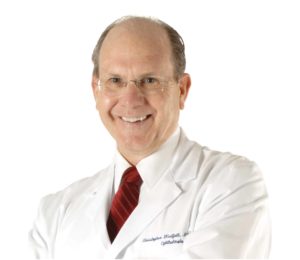
UAMS’ Christopher Trudeau Tapped for National Health Literacy Roundtable

Feb. 13, 2018 — Christopher Trudeau, J.D., an associate professor in the College of Medicine at the University of Arkansas for Medical Sciences (UAMS), has been selected for a three-year term on the Roundtable on Health Literacy with the National Academies of Science, Engineering, and Medicine.

The private, nonprofit institution provides independent, objective analysis and advice and informs public policy decisions related to science, technology and medicine. The 30-member Roundtable on Health Literacy meets in Washington, D.C. three times a year to develop, implement, and share health literacy practices in the health care community.

Christopher Trudeau, J.D.

“I look forward to contributing my legal perspective to advance the national conversation about how important clear health communication and health literacy are to creating a patient-centered health system,” said Trudeau, the first lawyer to serve on this roundtable.

Health literacy is the degree to which individuals can obtain, communicate, process, and understand the basic health information and services needed to make appropriate health decisions.

Trudeau joined the UAMS Center for Health Literacy in 2017, providing teaching, consulting, and program work. He was one of seven from the academic world recently chosen to join the roundtable. Others on the roundtable are from government agencies, non-profit organizations and industry.

Trudeau is also an associate professor of law at the University of Arkansas at Little Rock William H. Bowen School of Law. He received his law degree in 2002 from Western Michigan University Thomas M. Cooley Law School and served as a professor there for 13 years before coming to UAMS and UALR.

UAMS is the state’s only health sciences university, with colleges of Medicine, Nursing, Pharmacy, Health Professions and Public Health; a graduate school; hospital; northwest Arkansas regional campus; statewide network of regional centers; and seven institutes: the Winthrop P. Rockefeller Cancer Institute, Jackson T. Stephens Spine & Neurosciences Institute, Myeloma Institute, Harvey & Bernice Jones Eye Institute, Psychiatric Research Institute, Donald W. Reynolds Institute on Aging and Translational Research Institute. It is the only adult Level 1 trauma center in the state. UAMS has 2,834 students, 822 medical residents and six dental residents. It is the state’s largest public employer with more than 10,000 employees, including 1,200 physicians who provide care to patients at UAMS, its regional campuses throughout the state, Arkansas Children’s Hospital, the VA Medical Center and Baptist Health. Visit www.uams.edu or www.uamshealth.com. Find us on Facebook, Twitter, YouTube or Instagram.

###

Filed Under: News

Curtis Lowery, M.D., Featured in Local News Story on AR SAVES

Stroke is a leading cause of death in Arkansas, according to the Arkansas Department of Health.

When you suffer from a stoke every second counts. One program through UAMS is making it so more patients across the state can be seen by a neurologist no matter where they live.

Watch the story about AR SAVES from KARK in Little Rock. The story features Curtis Lowery, M.D., chairman of the Department of Obstetrics and Gynecology and medical director for the Center for Distance Health.

Filed Under: News

Stroke Survivor Beats the Odds with Help from AR SAVES Network

Time seemed to have run out for Larry Guthrie, 49, on April 27, 2017.

But the statewide tele-stroke network and quick-responding emergency medical professionals in Bald Knob and Searcy all saved him precious time in stroke treatment and ensured that the saved time meant a saved life.

The tele-stroke network, the Arkansas Stroke Assistance through Virtual Emergency Support (AR SAVES) at UAMS, uses a high-speed video communications system to help provide immediate, life-saving treatments to stroke patients 24 hours a day. The real-time video communication enables a stroke neurologist to evaluate whether emergency room physicians should use a powerful blood-clot dissolving agent within the critical four-and-a-half-hour period following the first signs of stroke. That’s what it did for Guthrie, too.

April 27 started out like any other for Guthrie. After finishing his lunch at home that day, he returned at 1 p.m. to work at his job as street superintendent for the city of Bald Knob. It was the last time for some time that he would remember feeling well. Minutes later, he lost his ability to speak, and co-workers called an ambulance and his daughter, Kayla Webb.

“I didn’t recognize the symptoms at first because I didn’t lose functions in my arms and legs,” Guthrie said later. “I was still walking and could move my arms. I lost my speech. I could not talk.”

Northstar EMS paramedic Jason Pugh and EMT Tim Wisinger on seeing Guthrie in his work place immediately suspected his loss of speech was due to a stroke. They called ahead to the Unity Health – White County Medical Center in Searcy so the Emergency Department there would be ready to treat him when they arrived.

  • 1:20 p.m. — Pugh and Wisinger arrived at Unity with Guthrie, and Guthrie immediately received a CT scan. That scan revealed a blood clot on his brain stem in the basal artery. The brain stem controls vital functions like breathing. Unity Health nurse Deonna Wisler and Guthrie consulted via the AR SAVES live video network with Benedict Tan, M.D., a stroke and neurocritical care specialist with AR SAVES and assistant professor in the Department of Neurology.
  • 1:40 p.m. — A clot-busting medication, alteplase, was given to Guthrie under Tan’s direction.
  • 2:20 p.m. — Guthrie arrived by helicopter air ambulance at UAMS Medical Center and was transferred to surgery.
  • 2:25 p.m. — Guthrie started to experience difficulty breathing, and UAMS physicians inserted a tube into his trachea so a ventilator machine could breathe for him.
  • 2:46 p.m. — Sertac Akdol, M.D., a UAMS interventional radiologist and instructor in the Department of Radiology, began surgery to remove the clot.
  • 3:11 p.m. — Akdol extracted the clot.
  • 3:18 p.m. — Blood flow was restored to Guthrie’s brain stem, and he was moved to a room in the medical center’s intensive care unit.

Within a day after treatment, Guthrie had recovered most of his motor functions and his breathing tube was removed. He was discharged from UAMS Medical Center four days later.

“The expectancy with basal artery occlusion and stroke is slim to none,” Akdol said. “You expect them to pass away following one. There’s almost no hope in this type of situation. His survival was due to the quick action, and I can tell you the gears were well oiled.”

Both Akdol and Tan credited the AR SAVES network and the speed with which all members of the care team responded, from Northstar to Unity Health Hospital to UAMS.

“In this case the credit goes to a combination of the patient’s family, rapid response, AR SAVES, Unity Health Hospital and UAMS,” Tan said. “If one of those links was missing, he probably wouldn’t have survived. AR SAVES played a crucial role in responding to him in Searcy and transferring him to UAMS in the fastest possible way.”

By May 2017, Guthrie returned to work and has since experienced no symptoms. He said he is now more diligent about taking his blood pressure medication and monitoring his diabetes.

In addition to Tan and Akdol and the personnel at Unity, Guthrie said Northstar ambulance personnel also were key to his timely treatment.

“Those guys never get noticed for what they do,” Guthrie said. “I’ve been there and worked as a volunteer in an ambulance service and was a volunteer firefighter for 30 years. I know what they go through.”

On Nov. 14 accompanied by his wife, Anita and daughter, Guthrie reunited in the trauma room of the White County Medical Center with Pugh, Wissinger, Wisler and other staff at the Searcy hospital. Tan and Akdol spoke to him through an AR SAVES video connection.

Both Tan and Akdol complimented him on his recovery and his return to an active life. Near the end of their conversation, Tan asked him if he was taking his medication.

After Guthrie confirmed that he was, Tan said with a smile, “Good, because I don’t want to see you again … not on an AR SAVES monitor. We’ll see you outside, not in an ICU, not in an Emergency Room.”

“I don’t want to be there either,” Guthrie said as everyone laughed.

By Ben Boulden| February 12th, 2018|

Filed Under: News

UAMS Trauma Center Featured on Local Television News

Have you ever wondered what it’s like behind the curtain at Arkansas’s only Level 1 Trauma Center? THV11 reporter Laura Monteverdi and photojournalist Bre Conyers spent more than 20 hours inside UAMS’ emergency room. The story features Ron Robertson, M.D., professor in the Trauma and Acute Care Division in the Department of Surgery.  Watch their three-part series.

Filed Under: News

High-Tech Gait Lab Maps Infant Biomechanics

Modern babies move from car seat to stroller to baby swing and back again. Meanwhile, what they aren’t moving is their muscles.

What effect does all of this containment have? What muscles are key as babies work toward developmental milestones? How can baby products have an impact – for better or worse?

These and other questions are the focus of research for Erin Mannen, Ph.D., a mechanical engineer who joined the UAMS faculty in mid-2017 to lead biomechanical studies of the spine, bone and joints. She is an assistant professor in the Department of Orthopaedic Surgery in the UAMS College of Medicine.

“Biomechanics is essentially the study of the body in motion,” Mannen said. “We

are looking at infant muscle and motion activity in various positions to get a baseline understanding of how infants are using their muscles in common positions. We want to understand optimal positioning to prevent musculoskeletal problems or motor development delays.”

Mannen is conducting her research with the help of the high-tech gait and motion-detection laboratory at the HipKnee Arkansas Foundation in Little Rock, using technology that fills an entire room. Special cameras at strategic points along the walls create a 3D capture zone. The research subject wears markers that are tracked by the cameras and recorded by the computer software.

“We are able to see how nearly every part of the body is moving,” Mannen said. “We can measure how people move using the cameras, how they load their joints using force plates embedded in the ground, and how their muscles are activating using electromyography.”

Mannen’s research is already being noticed. Two previous – but connected – studies are in the process of being published. Those studies looked at the biomechanics of adults while they carry babies in “babywearing” carrier devices.

Now, Mannen is looking at babywearing’s effect on the babies. Specifically, she wants to know if infants with hip dysplasia can safely spend time in babywearing carriers. It’s also possible that babywearing could have a similar therapeutic impact for babies as the more unpleasant orthopaedic devices that are now standard practice.

The International Hip Dysplasia Institute (IHDI) has featured her work on its website and has provided a $10,160 grant toward the promising research, which is also being funded by a $31,724 grant from Boba Inc., which makes babywearing products.

“It is hypothesized that wearing an infant inward facing in a structured baby carrier results in similar muscle activity and hip positioning as the orthopaedic devices currently used to treat babies with hip dysplasia,” Mannen said. “Appropriate babywearing has the potential to offer parents of hip dysplasia patients a ‘break’ from the cumbersome orthopaedic devices, allowing them to experience the many benefits of babywearing while not endangering their baby’s hips.”

Department of Orthopaedic Surgery Chairman C. Lowry Barnes, M.D., said research is an important part of the department’s mission.

“By researching the structure and function of human movement in a

variety of contexts, the goal is to improve the development and assessment of orthopaedic interventions and better understand injury prevention,” Barnes said. “Having researchers like Dr. Mannen on our team not only furthers medical knowledge, but has the potential to inspire students to be the kind of innovative thinkers they need to be and directly impact patient care.”

Mannen became interested in this line of research as a new mother. She used a babywearing carrier to soothe her first child, who was colicky and had trouble sleeping. While the emotional benefits of babywearing are well-established in the medical literature, she found the biomechanical research lacking.

Similarly, as she learned about how to safely put her baby to sleep on its back to prevent Sudden Infant Death Syndrome (SIDS), she also learned that preliminary research had indicated this sleeping position – while excellent at reducing the rates of SIDS – combined by a general lack of “tummy time” for babies had reduced the development of muscles in babies’ necks and upper backs. She wanted to learn more.

While the babies were hooked up to the sensors during the tummy time research, she happened to watch their biomechanics and muscle firing as they rolled over. She looked to the established research on such developmental milestones for infants and found it lacking. The biomechanical changes behind rolling over, crawling and other milestones will likely be her next research pursuit.

“Often the inspiration for research comes from personal experience,” Barnes said. “That’s one of many reasons I’m proud of the diverse team we have in the Department of Orthopaedic Surgery. Everyone brings something a little different to the table, and they are encouraged to bring their interests to bear, whether it’s for research or finding novel ways to serve our patient communities.”

In other research at the gait lab, Barnes is studying how joint replacements affect golf swing in athletes. Simon Mears, M.D., Ph.D., is studying safe yoga practice in hip and knee replacement patients.

“With this technology, we are limited only by our imaginations,” Mannen said.

By Amy Widner | February 8th, 2018

Filed Under: News

UAMS Honors Faculty, Philanthropists, Legislators for Service and Support

Feb 6, 2018 | The UAMS Foundation Fund Board recognized four honorees Feb. 1 at UAMS’ annual All Boards Luncheon with lifetime achievement awards in gratitude for their decades of service and philanthropy to UAMS.

Legislators and Interim Vice Chancellor
Arkansas House of Representatives Speaker Jeremy Gillam (at left) and state Senate Pro Tem Jonathan Dismang (at right) received Chancellor’s Awards from UAMS Interim Chancellor Stephanie Gardner, Pharm.D., Ed.D.

Also at the luncheon, UAMS Interim Chancellor Stephanie Gardner, Pharm.D., Ed.D., presented a Chancellor’s Award to state Senate President Pro Tem Jonathan Dismang and state House of Representatives Speaker Jeremy Gillam for distinguished service and leadership in supporting the resources and mission of UAMS.

The UAMS Foundation Fund Board works to advance the mission of UAMS by securing private financial support for its activities.

Jo Ellen Ford and Lee Ronnel, both of Little Rock, were named by the Foundation Fund Board as inaugural recipients of the P.O. Hooper, M.D. Volunteer Leadership Award. Hooper, along with seven other Little Rock physicians, in 1879 helped found what is now UAMS. The award recognizes UAMS donors for their exceptional support of the institution’s mission through volunteerism, leadership, and philanthropy. Like Hooper, they inspire, lead and motivate others to shape the future of the institution.

John Shock, M.D., receives award
John Shock, M.D., (center) is honored by Gardner and Foundation Fund Board Chair William Clark. Shock established the Jones Eye Institute and has served in multiple leadership roles at UAMS.

John Shock, M.D., founding director of the Harvey & Bernice Jones Eye Institute, and Kent Westbrook, M.D., distinguished professor in the College of Medicine, were named by the Foundation Fund Board as inaugural recipients of the Harry P. Ward, M.D. Visionary Award. The award recognizes current or former employees for their extraordinary ability to envision, promote and utilize philanthropy to transform the landscape and constitution of UAMS.

Ward, UAMS chancellor from 1979-2000, is remembered as a giant in the history of health care and higher education in Arkansas. A man of determination and commitment, he led UAMS’ transformation from a small medical school with a charity hospital into a health sciences university and research leader.

“Today, we honor our volunteer and employee leaders, who have, through generous donations of their time and talent, made a better future for health care in Arkansas,” said William Clark, chair of the UAMS Foundation Fund Board.

“Congratulations to Dr. Shock, Dr. Westbrook, Lee Ronnel, Jo Ellen Ford – we not only commend you, but are in awe of your extraordinary impact and impressive legacies,” said Lance Burchett, vice chancellor for Institutional Advancement.

Ford, along with her husband Joe, is a member of the Society of the Double Helix and had an instrumental role in creating both the Donald W. Reynolds Institute on Aging and the Winthrop P. Rockefeller Cancer Institute Auxiliary. She is a lifetime member and a former chair of the Foundation Fund Board, the Donald W. Reynolds Institute on Aging Community Advisory Board, and the Winthrop P. Rockefeller Cancer Institute Foundation Fund Board.

Kent C. Westbrook, M.D., receives award
Kent C. Westbrook, M.D., (center) received a Harry P. Ward, M.D., Visionary Award. Westbrook co-founded what is now the Winthrop P. Rockefeller Cancer Institute with James Suen, M.D.
Honoree and presenters
Jo Ellen Ford (center), along with her husband Joe, had an instrumental role in creating two UAMS institutions.

“I’m very grateful for this award,” Ford said. “I want to say thank you to my husband, who has always encouraged me to do whatever I felt led to do, whether it was Bible study fellowship or working at the university hospital in the cancer center and the aging center. It’s been a wonderful blessing to me to be able to help in this area.”

Honoree and presenters
Lee Ronnel (center), along with his wife Dale and their extended family, have given millions to UAMS over their long history with the institution.

Ronnel, along with his wife Dale and their extended family, has been a dedicated and passionate supporter of UAMS for more than four decades. Ronnel is a member and former chair of the University of Arkansas Foundation, Inc. Board of Directors, and a former member and chair of the UAMS Foundation Fund Board. The Ronnels, members of the Society of the Double Helix, have given millions to UAMS over their long history with the institution and have begun a scholarship program for the College of Medicine.

“It’s indeed an honor to receive the P.O. Hooper Volunteer Leadership Award,” Ronnel said. “It has been both an honor and a pleasure to have served as chairman of the UAMS Foundation Fund Board as that board’s representative to the University of Arkansas Foundation. I will treasure the Hooper Award, and I thank you for making me one of the first recipients.”

Shock joined the College of Medicine as chair of the Department of Ophthalmology in 1979, when there was only one other full-time faculty member in that department. He significantly expanded the department’s faculty and increased patient visits from about 6,000 annually to almost 20,000. Shock was one of the first to develop the ultrasonic cataract machine and established the Jones Eye Institute. He was interim dean of the College of Medicine from 2000 to 2002 and was UAMS executive vice chancellor from 2002 to 2009.

“I would like to thank the UAMS Foundation Fund Board for naming me a recipient of the Harry P. Ward Lifetime Achievement Award,” Shock said. “Dr. Ward was a master builder, and set the stage for enormous campus expansion that occurred during his tenure. He did this by giving people like Kent Westbrook and myself the opportunity and encouragement to build programs which he thought contributed to the whole. He also openly welcomed individuals who were like-minded, that shared his vision to build a campus of which we all can be very proud.”

Westbrook, a 1965 College of Medicine graduate, worked with colleagues throughout much of the 1970s and 1980s to develop comprehensive, multidisciplinary cancer programs at UAMS, culminating in the 1984 formation of the Arkansas Cancer Research Center, the predecessor of the Winthrop P. Rockefeller Cancer Institute. He served as its director for 14 years and was chief of the Division of Surgical Oncology from 1992 to 2003. Westbrook served as interim chair of the Department of Surgery from 1999 to 2002 and as interim vice chancellor for UAMS Development and Alumni Affairs, now the Division of Institutional Advancement, in 2011. He has been an associate dean and a member of the Chancellor’s Cabinet.

“It’s really thrilling to me to receive this Harry P. Ward Visionary Award,” Westbrook said. “It’s a great honor. When my wife and I came to this campus 56 years ago, I had no concept of winning an award like this. This award came about because James Suen and I had a dream of a cancer center, and I really thank all of the people who were involved in the development of the Winthrop P. Rockefeller Cancer Institute.”

Each honoree received a plaque with their name and engraved portrait. Copies of the plaques will be displayed on a commemorative wall outside the Chancellor’s Suite in the Central Building on the main UAMS campus.

Gardner commended Dismang and Gillam for their advice and support for UAMS’ mission.

“We are eternally grateful for that,” Gardner said. “Your contributions will impact the patients, students and others we serve for many years to come.”

Gardner also recognized UAMS supporters state Sen. Cecile Bledsoe, chair of the Senate Public Health Committee, and state Rep. Deborah Ferguson, vice chair of the House Public Health, Welfare and Labor Committee.

By Benjamin Waldrum | February 6th, 2018

Filed Under: News

CoBALT Website Connects Families, Providers with Trusted Autism Resources

A new website developed by the University of Arkansas for Medical Sciences (UAMS) connects families and health care professionals with information and resources about autism and other developmental disorders.

The endeavor is a result of the Community-Based Autism Liaison and Treatment Project (CoBALT). The new site – www.CoBALTAR.org – aims to be a one-stop shop for families and providers.

“If you are a parent who suspects your child might have autism or another developmental disorder, it can be overwhelming to try to find reliable, evidence-based information online. We want to eliminate the guesswork and connect families with trustworthy resources,” said Jayne Bellando, Ph.D., CoBALT co-director and associate professor of pediatric psychology in the UAMS College of Medicine’s Department of Pediatrics.

Jayne Bellando, Ph.D., shows Timothy Thomas, M.Ed., the new CoBALT website
Jayne Bellando, Ph.D., shows Timothy Thomas, M.Ed., the new CoBALT website, which gathers resources about autism and other developmental disorders into a one-stop shop for both families and health care providers. Ballando is co-director of CoBALT along with Eldon Schulz, M.D., and Thomas is director of the Dennis Developmental Center.

CoBALT is a project of the James L. Dennis Developmental Center, a part of the Department of Pediatrics that conducts diagnostic evaluations on children. CoBALT is funded by the Arkansas Department of Human Services’ Division of Developmental Disabilities Services’ Title V Children with Special Health Care Needs Program.

While in search of a diagnosis, families often face long wait times and travel distances. In search of a way to better serve families, Department of Pediatrics faculty partnered with the Title V program about eight years ago to form CoBALT.

Education is CoBALT’s primary mission. It aims to train teams of health care providers across the state with the knowledge and the confidence to screen children for developmental disorders, reducing wait times and travel distances for families – all with the goal of improving outcomes for patients.

Today, there are CoBALT teams in Lowell, Fort Smith, Clinton, Forrest City, El Dorado and Little Rock.

“The ultimate goal of empowering families with information and training more health care professionals to screen for developmental disorders is to help families get quicker access to specialized developmental screening, which may result in quicker services,” Bellando said. “Quicker services often lead to better outcomes, because when you’re dealing with children and developmental disorders – each passing week can mean another missed milestone. It’s important to start services quickly.”

The newly launched CoBALT website is the latest step in this ongoing effort.

“For families and providers alike – it’s OK to have questions. We intentionally worked to make the website as clear and accessible as possible,” said Eldon G. Schulz, M.D., CoBALT co-director and professor in the Department of Pediatrics. “There are videos, frequently asked questions and links to reputable outside sources, in addition to the text we’ve provided.”

At www.CoBALTAR.org, families will find:

  • Where to begin if a developmental disorder is suspected
  • Plans of action
  • How to find reputable information about autism and developmental disorders online
  • What to expect during an autism evaluation
  • An explanation of common treatments, therapies and support for children with autism and other developmental disorders
  • Next steps after an autism diagnosis

Providers will find:

  • How to participate in CoBALT trainings
  • Autism diagnosis criteria and treatment protocols
  • Information on typical development milestones
  • Screening guidelines
  • Resources providers can give to families

UAMS is the state’s only health sciences university, with colleges of Medicine, Nursing, Pharmacy, Health Professions and Public Health; a graduate school; hospital; northwest Arkansas regional campus; statewide network of regional centers; and seven institutes: the Winthrop P. Rockefeller Cancer Institute, Jackson T. Stephens Spine & Neurosciences Institute, Myeloma Institute, Harvey & Bernice Jones Eye Institute, Psychiatric Research Institute, Donald W. Reynolds Institute on Aging and Translational Research Institute. It is the only adult Level 1 trauma center in the state. UAMS has 2,834 students, 822 medical residents and six dental residents. It is the state’s largest public employer with more than 10,000 employees, including 1,200 physicians who provide care to patients at UAMS, its regional campuses throughout the state, Arkansas Children’s Hospital, the VA Medical Center and Baptist Health. Visit www.uams.edu or www.uamshealth.com. Find us on Facebook, Twitter, YouTube or Instagram.

###

By Amy Widner | February 5th, 2018 |

Filed Under: News

UAMS’ MASH Celebrates 30 Years of Sparking Interest in Health Care Fields

Feb. 1, 2018 | Students, graduates and supporters were in a festive mood as they gathered Jan. 26 to celebrate the 30th anniversary of the UAMS MASH program, which seeks to spark young people’s interest in the health care field.

MASH (Medical Applications of Science for Health) is a two-week summer enrichment program that allows rising high school juniors and seniors to shadow health professionals and attend workshops that enhance their experience in the health care field.

Cake
The UAMS Mash program recently celebrated 30 years of introducing young people to potential careers in health fields.

The program, begun by UAMS in 1988 in Pine Bluff, is the oldest of its kind in the nation. The program is held at UAMS regional campuses, community hospitals and colleges around the state.

“The MASH program is a pipeline that greatly supports UAMS in recruiting and training health care professionals for the state of Arkansas,” said Sterling Moore, vice chancellor for Regional Campuses. “The success of this program would not be possible without the support of our key community partners, who clearly have a vested interest in ensuring that the health care workforce needs of Arkansas are being met.”

A celebration was held at noon in the hospital gallery. Attendees sat at round tables draped with white linen, enjoyed a catered lunch, and reminisced about their experiences in the program. A large white sheet cake emblazoned with the MASH logo was saved until last.

Robin Howell, program manager for Regional Campuses, helped write the grant that created the first MASH program three decades ago. “It’s been an amazing journey,” she said.

Approximately 500 students participate in the program each summer. The goal is to entice more students into the health care professions, where shortages are common and are expected to grow.

Since its inception, MASH has encouraged more than 9,000 students to pursue careers in health care. Of those, 542 have enrolled in one of UAMS’ five colleges or the graduate school, and many more have gone on to rewarding health care careers, Howell said.

Thirty percent of the College of Medicine’s entering classes the last two years were students who either participated in MASH or were mentored by regional recruiters, Howell said.

Howell thanked each MASH recruiter and asked them to stand and be recognized. “The impact that they have on these students is obvious,” she said.

Former MASH participant at podium
Kendra McCraney, a 2008 MASH participant, is now in he cardio-respiratory care program at UAMS.

MASH covers plenty in two weeks. Students selected into the program shadow in a variety of health care locations and learn medical terminology. Through hands-on activities, they learn medical procedures such as CPR and gain insight into multiple disciplines, with a focus on interprofessional education. The program includes a tour of the UAMS main campus, several local field trips, and teambuilding activities.

“The MASH program connected those dots for me,” said Kendra McCraney, a 2008 participant who is now in the cardio-respiratory care program in the UAMS College of Health Professions. “It’s an awesome feeling to know that I can go back into my community and improve or make something better for someone else.”

Surveys conducted by UAMS show that students who attend MASH have a high rate of continuing their education in the medical field, with 95 percent more likely to pursue a health career. Perhaps more importantly, MASH participants are more likely to work in primary care and in rural and medically underserved areas of the state, where MASH does much of its recruiting.

“A lot of times, when they go to MASH, that’s when the light comes on,” Howell said. “That’s when they get excited – that’s when they say, ‘Yes! This is what I really want to do.’”

MASH is free for students thanks to community support and partnerships with Arkansas Farm Bureau, Blue Cross/Blue Shield, and Baptist Health, among others.

Arkansas Farm Bureau was recognized for 25 years of significant support of the MASH program. Moore presented Farm Bureau Executive Vice President Warren Carter with a commemorative plaque.

“We get our direction for everything we do from county leaders – and they’ve told us that the MASH program is a priority,” Carter said. “We plan to support this program for many, many years to come. Thank you for allowing this program to be what it is. It’s important to our rural communities, to Farm Bureau members, and to our state as a whole.”

Vic Snyder, M.D., corporate medical director for external affairs with Arkansas Blue Cross and Blue Shield, spoke about his own experience pursuing a medical career, and how programs like MASH help students from rural areas make connections.

“This kind of program is really, really important, and it will help Arkansas as a lot of the kids go back into those areas,” he said.

The MASH program was recently awarded a $65,000 grant from the Blue & You Foundation to further expand its reach. Arkansas Blue Cross and Blue Shield established the Blue & You Foundation in 2001 as a charitable foundation to promote better health in Arkansas.

Mark Jansen, M.D., associate professor in the College of Medicine Department of Family and Preventive Medicine and medical director for Regional Campuses, said that MASH is there to provide guidance to the age-old question: what do you want to be when you grow up?

“We’ve got a lot of health challenges coming up, and we have those challenges magnified in the rural areas,” Jansen said. “That is where the mission of Regional Campuses, and the success of the MASH program dovetail so nicely.”

By Benjamin Waldrum| February 1st, 2018

Filed Under: News

Hot Springs Village Man Still Active After Ankle Replacement

It was a slope he knew to avoid, but one his adventurous spirit wouldn’t let him.

“What I love about snow skiing is you’re in complete control of your destiny,” said 74-year-old Marcus Everett. “I got hooked on the speed.”

He was halfway down the mountain in Breckinridge, Colorado, in 2008, a location he’d frequented with cousins since the early 1990s, but an unexpected snowstorm had caused limited visibility on the slopes. Suddenly, a yellow ribbon appeared in front him, warning Everett of the point of no return.

“I turned quickly, hit an ice patch, did two 360s in the air and came down on the side of my right ski boot,” said Everett.

Everett, of Hot Springs Village, passed off his injury as a minor one, a sprain. In reality, he smashed leg bones into his ankle and damaged the joint.

The space between his two leg bones — the tibia and fibula — and his ankle was gone. It created a bone-on-bone rubbing in his lower right leg.

Pictures of Marcus Everett running, biking, and skiing
Whether biking, cycling or skiing, Everett has enjoyed being active.

Yet, he marched on, continuing his normal activities. Everett had cultivated an innate connection with running, biking, swimming and skiing. The activities helped the former college basketball player, then in his late 40s and early 50s, return to a healthier, fitter version of himself.

As he got older, when most are slowing down, Everett was just getting started. He completed a couple marathons and triathlons, along with countless 5ks and 10ks.

In 2013, five years after his initial injury, the arthritic pain in his right foot began to nag him more than ever. His physician referred him “to the best,” as Everett recalls it, Ruth Thomas, M.D., UAMS foot and ankle surgeon and professor in the UAMS College of Medicine’s Department of Orthopaedic Surgery.

It surprised Thomas to learn of Everett’s exploits after looking at his ankle.

“She told me when I was done jogging, running marathons and snow skiing, to call her,” said Everett.

Over the next year, a series of epiphanies let him know it was time.

Everett ran his last 5k in 2013 in Hot Springs, the pain was more than he’d ever experienced. The next year, on another slope in Breckinridge, he had trouble controlling his skis and wrecked.

“I knew it was over,” said Everett. “I got up, put my skis on my shoulder and started walking.”

Befuddled, his cousin asked where he was going; Everett was matter-of-fact.

“I’m going to walk to the bottom of the mountain, catch the bus back to the condo and call Dr. Thomas and tell her I’ve just retired from snow skiing and to put me on the calendar,” Everett recalled.

Marcus Everett poses with Ruth Thomas, M.D.
Marcus Everett has returned to an active lifestyle that suits him thanks to an ankle replacement performed by Ruth Thomas, M.D., a UAMS orhtopaedic surgeon.

In September of that year, Thomas performed a total ankle replacement on Everett.

“Mr. Everett was a great candidate for a replacement because he was active, motivated and had good motion in his ankle prior to the procedure,” said Thomas. “The total replacement allows him to keep his motion and return to normal activities without pain.”

Three years removed from the procedure, Everett has no signs of trouble or pain. He’s forbidden from running, playing basketball or any other activities of the like that put significant strain on the ankle, but he’s free to walk, ride a bike and even ski, said Thomas.

Everett has found fulfillment for his need to be active in kayaking, lifting weights and bike riding, and he’s thrilled with the results of his procedure under Thomas’s direction.

“I’ve had very little pain and virtually no problems,” said Everett. “I’m extremely happy with the results.”

However, Everett says he won’t be schussing down any Colorado slopes anytime soon at the behest of his wife, Bunny.

“Dr. Thomas told me as long as I glide down the mountain, I’d have no problem,” Everett said, smiling while pointing to Bunny. “She knows I’m not going to glide.”

By Lee Hogan| February 1st, 2018|

Filed Under: News

International Expert at UAMS Releases First Book on Castleman Disease

LITTLE ROCK — Castleman disease, a rare disorder of the lymph nodes and related tissues, was identified and named more than a half-century ago but, until recently, no one had written a book exclusively about it.

Frits van Rhee, M.D., Ph.D., professor of medicine in the College of Medicine and director of developmental and translational medicine at the Myeloma Institute at the University of Arkansas for Medical Sciences (UAMS), has changed that.

Professor holding book
Frits van Rhee of the UAMS Myeloma Institute has compiled the first book dedicated exclusively to Castleman disease

His new 163-page hardback book, Castleman Disease, was released recently as part of the Hematology/Oncology Clinics of North America series of clinics review articles published bimonthly by Elsevier Inc. The book features 13 chapters by 26 international physicians and researchers who specialize in the disease.

“A lot of progress has been made in the treatment of this disease and a lot of new information is available,” said van Rhee, considered an international expert on Castleman disease. He also is holder of the Charles and Clydene Scharlau Chair for Hematological Malignancies at UAMS.

He developed the idea for the book. He also wrote one of its chapters, and co-authored the preface and the book with Nikhil C. Munshi, M.D., associate director of the Jerome Lipper Myeloma Center at Dana-Farber Cancer Institute in Boston. Munshi was previously with UAMS. The book will also be published online by chapters.

Castleman disease occurs when an abnormal overgrowth of cells occurs in the lymph system, which serves as the main part of the body’s immune system. The disease, affecting 5,000 to 6,000 patients across the nation, was identified by Benjamin Castleman, M.D., in 1954.

“The average oncologist may only see one patient with Castleman disease in his career,” said van Rhee. “So it is hard for community doctors to be well-informed and a lot of patients don’t get the correct treatment.”

Unicentric Castleman disease is localized, affecting only a single lymph node region, and can often be successfully treated by surgically removing the affected area. Multicentric Castleman disease affects multiple lymph node areas and can give rise to night sweats, fevers, weight loss, anemia and in severe cases organ failure and death. Van Rhee was previously the principal investigator on a worldwide trial with a new monoclonal antibody, siltuximab. This trial led to the first FDA-approved treatment for multicentric Castleman Disease. The encouraging results of the trial also led to the approval of the drug by the European Medicine Agency

The cause in many patients is unknown, or idiopathic, and the disease has now been termed idiopathic Castleman disease (iMCD). “That is one of the main areas of focus in this book,” said van Rhee, who addresses the topic in “Treatment of Idiopathic Castleman Disease,” the chapter he wrote with research associate Amy Greenway and lab director Katie Stone at the UAMS Myeloma Institute.

Van Rhee felt a sense of urgency to create the book after co-founding the international Castleman Disease Collaborative Network in 2012 with his patient David Fajgenbaum, M.D., then in medical school and now a physician at the University of Pennsylvania.

“The timing seemed right, under this umbrella organization where physicians and researchers from around the world meet each other and exchange ideas,” said van Rhee.

While this is van Rhee’s first time to compile and edit a book, the physician, who trained in the Netherlands and United Kingdom, previously contributed chapters to other books, including those on myeloma and bone marrow transplantation, positron emission tomography (PET) scanning, and radiation therapy in treating myeloma.


UAMS is the state’s only health sciences university, with colleges of Medicine, Nursing, Pharmacy, Health Professions and Public Health; a graduate school; hospital; northwest Arkansas regional campus; statewide network of regional centers; and seven institutes: the Winthrop P. Rockefeller Cancer Institute, Jackson T. Stephens Spine & Neurosciences Institute, Myeloma Institute, Harvey & Bernice Jones Eye Institute, Psychiatric Research Institute, Donald W. Reynolds Institute on Aging and Translational Research Institute. It is the only adult Level 1 trauma center in the state. UAMS has 2,834 students, 822 medical residents and six dental residents. It is the state’s largest public employer with more than 10,000 employees, including 1,200 physicians who provide care to patients at UAMS, its regional campuses throughout the state, Arkansas Children’s Hospital, the VA Medical Center and Baptist Health. Visit www.uams.edu or www.uamshealth.com. Find us on Facebook, Twitter, YouTube or Instagram.

###

By Susan Van Dusen| January 30th, 2018

Filed Under: News

  • «Previous Page
  • Page 1
  • Interim pages omitted …
  • Page 29
  • Page 30
  • Page 31
  • Page 32
  • Page 33
  • Interim pages omitted …
  • Page 42
  • Next Page»
UAMS College of Medicine LogoUAMS College of MedicineUniversity of Arkansas for Medical Sciences
Mailing Address: 4301 West Markham Street, Little Rock, AR 72205
Phone: (501) 296-1100
  • Facebook
  • X
  • Instagram
  • YouTube
  • LinkedIn
  • Pinterest
  • Disclaimer
  • Terms of Use
  • Privacy Statement
  • Legal Notices

© 2026 University of Arkansas for Medical Sciences