• Skip to primary navigation
  • Skip to main content
  • Skip to primary navigation
  • Skip to main content
Choose which site to search.
University of Arkansas for Medical Sciences Logo University of Arkansas for Medical Sciences
College of Medicine
  • UAMS Health
  • Jobs
  • Giving
  • About Us
    • Fast Facts
    • Leadership
    • Features
    • COMmunication Newsletter
    • Maps and Directions
    • College of Medicine History
    • Professionalism Guidelines
  • Departments
  • Admissions
    • Apply
    • Financial Aid and Scholarships
    • Life in Little Rock or Fayetteville
    • Dual Degree Programs
      • M.D./MBA Program
      • M.D./Ph.D. Program
      • M.D./MPH Program
    • Three-Year M.D. Program
    • Rural Practice Programs
      • Community Match Rural Physician Recruitment Program
      • Rural Practice Scholarship Program
    • Contact Admissions
  • Students
    • Academic Calendar
    • Academic Houses
    • Career Advising
    • Financial Aid and Scholarships
    • Visiting Students
    • Mentor Spotlight Podcast
    • Preparing for Residency
    • Non-Discrimination Statement
    • Outstanding Teacher Nominations
    • Parents Club
    • Student Links
    • Honors in Research
    • UAMS Campus Security
    • Undergraduate Medical Education Competencies
  • Graduate Medical Education
  • Alumni
  • Faculty Affairs
  • Research
  1. University of Arkansas for Medical Sciences
  2. College of Medicine
  3. Author: Chris Lesher
  4. Page 30

Chris Lesher

Hot Springs Village Man Still Active After Ankle Replacement

It was a slope he knew to avoid, but one his adventurous spirit wouldn’t let him.

“What I love about snow skiing is you’re in complete control of your destiny,” said 74-year-old Marcus Everett. “I got hooked on the speed.”

He was halfway down the mountain in Breckinridge, Colorado, in 2008, a location he’d frequented with cousins since the early 1990s, but an unexpected snowstorm had caused limited visibility on the slopes. Suddenly, a yellow ribbon appeared in front him, warning Everett of the point of no return.

“I turned quickly, hit an ice patch, did two 360s in the air and came down on the side of my right ski boot,” said Everett.

Everett, of Hot Springs Village, passed off his injury as a minor one, a sprain. In reality, he smashed leg bones into his ankle and damaged the joint.

The space between his two leg bones — the tibia and fibula — and his ankle was gone. It created a bone-on-bone rubbing in his lower right leg.
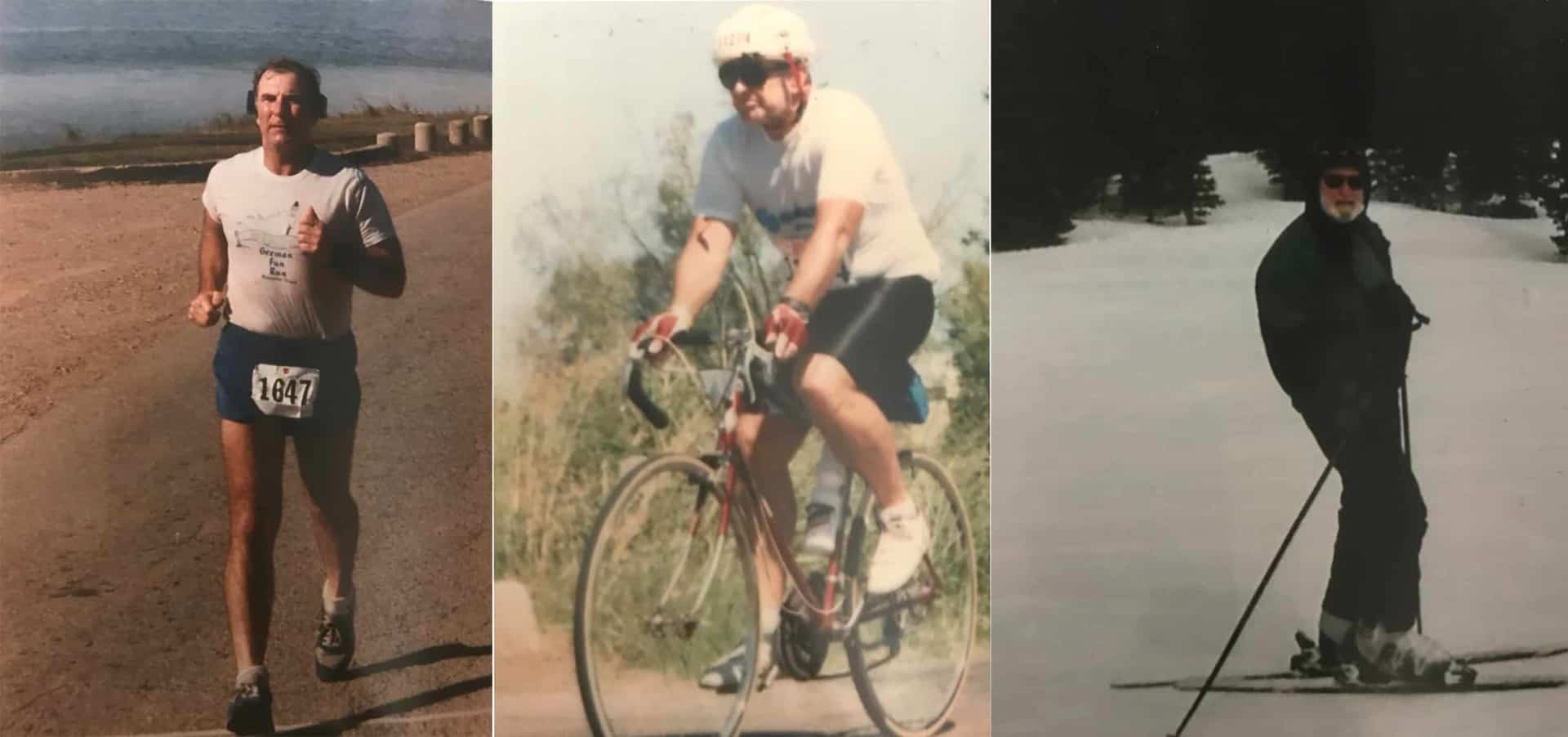
Pictures of Marcus Everett running, biking, and skiing
Whether biking, cycling or skiing, Everett has enjoyed being active.

Yet, he marched on, continuing his normal activities. Everett had cultivated an innate connection with running, biking, swimming and skiing. The activities helped the former college basketball player, then in his late 40s and early 50s, return to a healthier, fitter version of himself.

As he got older, when most are slowing down, Everett was just getting started. He completed a couple marathons and triathlons, along with countless 5ks and 10ks.

In 2013, five years after his initial injury, the arthritic pain in his right foot began to nag him more than ever. His physician referred him “to the best,” as Everett recalls it, Ruth Thomas, M.D., UAMS foot and ankle surgeon and professor in the UAMS College of Medicine’s Department of Orthopaedic Surgery.

It surprised Thomas to learn of Everett’s exploits after looking at his ankle.

“She told me when I was done jogging, running marathons and snow skiing, to call her,” said Everett.

Over the next year, a series of epiphanies let him know it was time.

Everett ran his last 5k in 2013 in Hot Springs, the pain was more than he’d ever experienced. The next year, on another slope in Breckinridge, he had trouble controlling his skis and wrecked.

“I knew it was over,” said Everett. “I got up, put my skis on my shoulder and started walking.”

Befuddled, his cousin asked where he was going; Everett was matter-of-fact.

“I’m going to walk to the bottom of the mountain, catch the bus back to the condo and call Dr. Thomas and tell her I’ve just retired from snow skiing and to put me on the calendar,” Everett recalled.

Marcus Everett poses with Ruth Thomas, M.D.
Marcus Everett has returned to an active lifestyle that suits him thanks to an ankle replacement performed by Ruth Thomas, M.D., a UAMS orhtopaedic surgeon.

In September of that year, Thomas performed a total ankle replacement on Everett.

“Mr. Everett was a great candidate for a replacement because he was active, motivated and had good motion in his ankle prior to the procedure,” said Thomas. “The total replacement allows him to keep his motion and return to normal activities without pain.”

Three years removed from the procedure, Everett has no signs of trouble or pain. He’s forbidden from running, playing basketball or any other activities of the like that put significant strain on the ankle, but he’s free to walk, ride a bike and even ski, said Thomas.

Everett has found fulfillment for his need to be active in kayaking, lifting weights and bike riding, and he’s thrilled with the results of his procedure under Thomas’s direction.

“I’ve had very little pain and virtually no problems,” said Everett. “I’m extremely happy with the results.”

However, Everett says he won’t be schussing down any Colorado slopes anytime soon at the behest of his wife, Bunny.

“Dr. Thomas told me as long as I glide down the mountain, I’d have no problem,” Everett said, smiling while pointing to Bunny. “She knows I’m not going to glide.”

By Lee Hogan| February 1st, 2018|

Filed Under: News

International Expert at UAMS Releases First Book on Castleman Disease

LITTLE ROCK — Castleman disease, a rare disorder of the lymph nodes and related tissues, was identified and named more than a half-century ago but, until recently, no one had written a book exclusively about it.

Frits van Rhee, M.D., Ph.D., professor of medicine in the College of Medicine and director of developmental and translational medicine at the Myeloma Institute at the University of Arkansas for Medical Sciences (UAMS), has changed that.

Professor holding book
Frits van Rhee of the UAMS Myeloma Institute has compiled the first book dedicated exclusively to Castleman disease

His new 163-page hardback book, Castleman Disease, was released recently as part of the Hematology/Oncology Clinics of North America series of clinics review articles published bimonthly by Elsevier Inc. The book features 13 chapters by 26 international physicians and researchers who specialize in the disease.

“A lot of progress has been made in the treatment of this disease and a lot of new information is available,” said van Rhee, considered an international expert on Castleman disease. He also is holder of the Charles and Clydene Scharlau Chair for Hematological Malignancies at UAMS.

He developed the idea for the book. He also wrote one of its chapters, and co-authored the preface and the book with Nikhil C. Munshi, M.D., associate director of the Jerome Lipper Myeloma Center at Dana-Farber Cancer Institute in Boston. Munshi was previously with UAMS. The book will also be published online by chapters.

Castleman disease occurs when an abnormal overgrowth of cells occurs in the lymph system, which serves as the main part of the body’s immune system. The disease, affecting 5,000 to 6,000 patients across the nation, was identified by Benjamin Castleman, M.D., in 1954.

“The average oncologist may only see one patient with Castleman disease in his career,” said van Rhee. “So it is hard for community doctors to be well-informed and a lot of patients don’t get the correct treatment.”

Unicentric Castleman disease is localized, affecting only a single lymph node region, and can often be successfully treated by surgically removing the affected area. Multicentric Castleman disease affects multiple lymph node areas and can give rise to night sweats, fevers, weight loss, anemia and in severe cases organ failure and death. Van Rhee was previously the principal investigator on a worldwide trial with a new monoclonal antibody, siltuximab. This trial led to the first FDA-approved treatment for multicentric Castleman Disease. The encouraging results of the trial also led to the approval of the drug by the European Medicine Agency

The cause in many patients is unknown, or idiopathic, and the disease has now been termed idiopathic Castleman disease (iMCD). “That is one of the main areas of focus in this book,” said van Rhee, who addresses the topic in “Treatment of Idiopathic Castleman Disease,” the chapter he wrote with research associate Amy Greenway and lab director Katie Stone at the UAMS Myeloma Institute.

Van Rhee felt a sense of urgency to create the book after co-founding the international Castleman Disease Collaborative Network in 2012 with his patient David Fajgenbaum, M.D., then in medical school and now a physician at the University of Pennsylvania.

“The timing seemed right, under this umbrella organization where physicians and researchers from around the world meet each other and exchange ideas,” said van Rhee.

While this is van Rhee’s first time to compile and edit a book, the physician, who trained in the Netherlands and United Kingdom, previously contributed chapters to other books, including those on myeloma and bone marrow transplantation, positron emission tomography (PET) scanning, and radiation therapy in treating myeloma.


UAMS is the state’s only health sciences university, with colleges of Medicine, Nursing, Pharmacy, Health Professions and Public Health; a graduate school; hospital; northwest Arkansas regional campus; statewide network of regional centers; and seven institutes: the Winthrop P. Rockefeller Cancer Institute, Jackson T. Stephens Spine & Neurosciences Institute, Myeloma Institute, Harvey & Bernice Jones Eye Institute, Psychiatric Research Institute, Donald W. Reynolds Institute on Aging and Translational Research Institute. It is the only adult Level 1 trauma center in the state. UAMS has 2,834 students, 822 medical residents and six dental residents. It is the state’s largest public employer with more than 10,000 employees, including 1,200 physicians who provide care to patients at UAMS, its regional campuses throughout the state, Arkansas Children’s Hospital, the VA Medical Center and Baptist Health. Visit www.uams.edu or www.uamshealth.com. Find us on Facebook, Twitter, YouTube or Instagram.

###

By Susan Van Dusen| January 30th, 2018

Filed Under: News

Stories from the Road: Residency Interviews Lead to Match Day for UAMS College of Medicine Seniors

As the arduous process of applying to residency programs winds down for this year’s seniors in the College of Medicine at the University of Arkansas for Medical Sciences (UAMS), one thing is clear: The road to Match Day is long – both figuratively and literally.

In the fall and winter of their senior year, medical students around the country juggle heavy travel and other demands of the increasingly competitive Residency Match on top of academic and clinical obligations back on campus.

Seniors face the daunting task of trying to determine which residency programs would be the best fit for them – including institutions and places they initially know little about. And they are painfully aware of national data that exhorts them to attain ample numbers of interviews in order to reasonably ensure that they successfully match.

It can be nerve-racking for any senior, including those who are likely to do well on March 16.

“Some days were just insane,” said Grant Cagle, who has served as his class president for all four years of medical school. The St. Louis native, who will graduate with both a medical degree and Master of Public Health, looks forward to training in internal medicine and a career focusing on socioeconomic disparities and health care for marginalized communities. “At the end of the day, I really enjoyed the interview process,” he said. “But it was also very stressful.”

Professor visiting with student
Sara Tariq, M.D., visits with Senior Class President Grant Cagle, whom she advised and mentored as he prepared for residency applications and interviews for programs in internal medicine.

Cagle and most of his classmates had applied to dozens of programs, heeding guidance from College of Medicine faculty as well as national experts. They had zig-zagged the country for a dozen or so interviews, sometimes driving or flying to multiple cities in a single week.

Cagle tracked it all on a master calendar and a detailed spreadsheet: where he had applied, the 13 places he interviewed, and his expenses. He scored each of the programs he visited in several areas reflecting his priorities, such as whether it had tracks relating to social justice in medicine, how well he meshed with the current residents he had met, and the location. The scores will help him finalize his ranked list of programs for the National Resident Matching Program (NRMP), which is due Feb. 21.

Barrett Burger, a Camden, Arkansas, native who will train in internal medicine and pediatrics, applied to 38 programs and interviewed at 11. He squeezed four of his interviews into one eight-day stretch.

“I was on rounds at a program in the Midwest when I received an invitation to interview with a program on the East Coast the next week, so I stepped out and borrowed a computer at the nurses’ station to book a flight,” he recalled.

UAMS student at Arkansas Children's Hospital
Barrett Burger, who will train in medicine-pediatrics, completes an anesthesiology elective at Arkansas Children’s Hospital in January.

“The next day, I was making the 12-hour drive home when I got another invite to a program in the South for the day after the one I had just scheduled,” Burger said. “I pulled into a gas station and changed the flight that I had just booked, for some exorbitant fee.” Back at home, he packed another bag, flew to the East Coast interview, and then caught a flight to the program in the South, arriving with only minutes to spare. He rented a car for the journey home, packed yet another bag, and drove back to the Midwest for the fourth interview.

“Looking back, it was exciting to visit a few places I had never been before and to meet a lot of great and unique people, and to continue pursuing my dream career,” Burger said. “I would also like to not ever do this again.”

Student at airport
UAMS College of Medicine senior Sean Parham snaps a selfie at the Lexington, Kentucky, airport while traveling for interviews with residency programs in orthopaedic surgery.

“I can confidently say that this interview season has diminished how much I like flying,” said Sean Parham, a senior from Fort Smith, Arkansas, who is pursuing orthopaedic surgery. We first caught up with him as he was answering email at the airport in Dallas on his way to an interview in California. Just days later, he was traveling again for back-to-back interviews in Ohio and Kentucky.

Parham applied to 67 programs – not uncommon for applicants in the highly competitive specialty – and subsequently accepted invitations to interview at 13. Meanwhile, he was working in January with a general medicine team at the Central Arkansas Veterans Healthcare System. “Due to the maximum allowed number of days off to comply with rotation requirements, every day that I am not traveling for interviews, I’m working,” he said.

Shannon Petrus, a senior from Hazen, Arkansas, hopes to match to a residency in general surgery in the South. A drive between back-to-back interviews in Texas and Oklahoma was particularly memorable.

Student working in ICU
With 12 interviews for general surgery residency programs behind her in January, Shannon Petrus works in the Surgical Intensive Care Unit at UAMS.

“I was in the middle of nowhere when my tire popped,” Petrus said. “That had never happened to me before, but I got through it and still made it to the interview dinner that evening on a ‘donut’ tire. I thought, this is going to be a good story to tell someday; but at the time it really stressed me out.”

Like the flat tire, residency interviews caused only short-lived stress for Petrus.

“I was very nervous at first – shaky hands, shaky voice, and I couldn’t sleep the night before,” she said. “But after I got the first couple of interviews out of the way it became fun. You meet so many people and hear many life stories. As a future surgeon, it was so interesting to talk with experienced surgeons about how they chose their specialty and how they got where they are today.”

Then and Now

James Graham, M.D., a professor of pediatrics and associate dean for undergraduate medical education in the UAMS College of Medicine, sympathizes with today’s medical students. “When I was a graduating senior, in 1985, I interviewed at seven programs, and I almost canceled my last interview because I was so tired,” he said, laughing. “That’s only about half of what today’s students must do.”

“The Match is considerably more competitive overall than it was a decade or two ago, and students generally have to spend more time and more money interviewing at greater numbers of programs,” Graham said.

Contributing factors include the increasing numbers of graduates from allopathic medical schools and the growing number of students from osteopathic medical schools competing for positions through the NRMP, Graham said. “The total number of residency positions has also increased, but not to the same extent.”

While 1,059 U.S. medical school seniors failed to match in 2017, UAMS achieved its best match rate in a decade. Eight College of Medicine students initially failed to match, but all of them subsequently obtained a position during Match Week through the NRMP’s Supplemental Offer and Acceptance Program or the college’s Transitional Year Residency Program.

“It is very important to apply to enough programs, secure enough interviews, and rank enough programs on your match list,” Graham said.

In general, Graham and other academic leaders advise students to aim for 10-12 interviews. However, circumstances vary based on the specialty, the specific schools and programs a student is interested in, and the student’s own test scores and academic achievement. Faculty advisers within specialties can help individual students understand whether they would be a competitive candidate for a residency position.

Advisers and Advocates

The UAMS College of Medicine has introduced several initiatives in recent years to help students better prepare for the Match, including the Academic Houses established in 2016. Students have long been encouraged to choose a specialty-specific adviser in their junior year, and now every student also has a house-based general adviser who provides academic and career advising throughout medical school.

For the past few years, Sara Tariq, M.D., associate dean for undergraduate clinical education, has worked with a group of students to offer all seniors a residency prep series at the start of the year. Sessions focus on the Match process, strategies and communication skills. The series concludes with mock interviews with faculty volunteers. Over half of this year’s seniors and about 30 faculty members participated. Many other faculty members provide mock interviews for students who are pursuing their specialty.

“Our faculty members understand the heightened competition and challenging environment that our students face as they are applying for residency, and they have really stepped up to the plate,” Graham said. “They are making themselves available to students as well as participating in formal activities such as the mock interviews.”

Students are grateful for that dedication.

“Everyone in the Department of Surgery has gone above and beyond,” Petrus said, noting the advocacy of several faculty members including her mentor, assistant professor Katie Kimbrough, M.D. “Dr. Kimbrough has spent countless hours with me. She helped me organize my CV. We discussed programs I might apply to, and she helped me understand which ones were my ‘reach’ programs, which were more solid, and which ones I would almost certainly be invited to for an interview.”

Cagle’s mentor, Tariq, is an associate professor of medicine as well as the associate dean overseeing undergraduate clinical education. Cagle said Tariq helped him immensely when, with more than 50 internal medicine programs on his initial list for consideration early last fall, he wasn’t sure where to start.

“Dr. Tariq asked me what I wanted in a program, what things were most important,” Cagle said. “She helped me understand myself as an applicant and shared her insights about programs around the country. She helped me find my balance.”

Residency application and interview season will never be a walk in the park, but it is likely to be a little less stressful for College of Medicine seniors in the future.

This year’s juniors will start their senior year on June 1, a month earlier than seniors have in the past, thanks to a shift in the academic calendar and curriculum changes implemented over the past three years by the college’s curriculum committee and faculty members throughout the college.

“Our seniors will have an additional four weeks to finish all of their coursework, pass their licensure exams, and devote more time to the application process and residency interviews,” Graham said. “We wanted to make the process a little easier for them.”

Filed Under: News

Five Grants Presented to UAMS Cancer Researchers

 Jan. 29, 2018 | Five newly awarded grants will assist scientists at the UAMS Winthrop P. Rockefeller Cancer Institute in their search for new and innovative cancer treatments.

The grants of $10,000 each were presented to young investigators by the Envoys, a volunteer advocacy group of the Cancer Institute Foundation, during their “Doctor is In” reception and research poster showcase Jan. 25.

The grants are made possible by the Envoys’ annual RockStar Lounge fundraiser. This year’s event is set for April 13 at Cajun’s Wharf in Little Rock and will feature a performance by Bon Jovi tribute band Slippery When Wet.

Four grant recipients
The 2018 Seeds of Science grants recipients at the UAMS Cancer Institute included (left to right) Marie Burdine, Ph.D.; Brendan Frett, Ph.D.; Samantha Kendrick, Ph.D.; and Analiz Rodriguez, M.D., Ph.D.

“In an era when research funding has become more and more scarce, we are grateful to the Envoys for providing this essential support for our scientists,” said Cancer Institute Director Peter Emanuel, M.D. “With these start-up funds, they are able to establish the preliminary data needed to secure additional larger grants in the future.”

Recipients of the grants were:

  • Marie Burdine, Ph.D., assistant professor in the Department of Surgery, UAMS College of Medicine

Burdine’s project focuses on a novel approach to regulating a protein known as ATAD2 that is highly expressed in several types of cancer, including breast, pancreas, colon and liver, as well as in metastatic disease. If successful, regulation of the protein could lead to new therapies for these types of cancer.

  • Brendan Frett, Ph.D., assistant professor in the Department of Pharmaceutical Sciences, UAMS College of Pharmacy

Precision lung cancer treatment is often effective only for the short term due to significant differences that appear in individual cases of the disease. Frett’s objective is to improve the long-term outcomes of precision lung cancer therapy by simultaneously targeting multiple facets of the disease. He will synthetically engineer single molecule drug candidates capable of impairing multiple tumor survival pathways.

  • Samantha Kendrick, Ph.D., assistant professor in the Department of Biochemistry and Molecular Biology, UAMS College of Medicine

Kendrick’s project focuses on understanding how and why certain genes repeatedly mutate and contribute to the aggressive nature of B-cell lymphoma. Her research examines the frequency of DNA structures in these specific gene targets and whether the structures contribute to an increased susceptibility to mutation. Uncovering this process can facilitate the design of new therapies to minimize the risk of chemotherapy resistant disease.

  • Analiz Rodriguez, M.D., Ph.D., assistant professor in the Department of Neurosurgery, UAMS College of Medicine

Although advances in immunotherapy have offered great promise for several types of cancer, outcomes for an aggressive form of brain cancer known as glioblastoma remain grim. Rodriguez’s project uses the surgical technique laser thermal ablation in combination with immunotherapy to alter the immune microenvironment, cause cancer cell death and open the area around the tumor in an effort to improve outcomes for patients with this disease.

Researcher
Erming Tian, Ph.D., M.B.A., also received a 2018 Seeds of Science cancer research grant.
  • Erming Tian, Ph.D., M.B.A., assistant professor in the Department of Internal Medicine in the UAMS College of Medicine

Tian’s research addresses the role of two alias proteins produced by the gene MYC in the outcome of patients with multiple myeloma. He seeks to understand how one of these proteins affects the other in regard to cell proliferation and will use this knowledge to deliberately induce a different translation and modification of the gene that could ultimately lead to preventing uncontrollable cancer growth.

Filed Under: News

UAMS Trauma System Saves Lives and Taxpayers’ Money

Ronald Robertson, M.D.

Arkansas Medical News featured the UAMS Trauma System and Ronald Robertson, M.D., professor and chief of the Division of Trauma, Critical Care and Acute Care Surgery in the Department of Surgery. Read the article for more information.

Filed Under: News

Clinical Trial Promising for Ovarian Cancer Treatment

Eighteen years ago, Gail Clayton received news that changed her life. Looking back, she says finding out she had breast cancer marked the beginning of new perspectives.

“When I was first diagnosed with cancer, it wasn’t the end of life as so many people think. To me, it was the beginning of life.”

Clayton and her husband, Raymond, have been married 46 years. He calls UAMS one of Arkansas’ best kept secrets.

“I don’t think people realize how amazing this institution is,” Clayton said. “You become friends with your doctors and nurses. It takes a village and I believe that village is right within these walls at UAMS.

Kristin Zorn, M.D.
Kristin Zorn, M.D., is a gynecologic oncologist at UAMS.

She had breast cancer twice and was recently diagnosed with ovarian cancer. That prompted Clayton’s oncologist, Laura Hutchins, M.D., to refer her to gynecologic oncologist Kristin Zorn, M.D., associate professor and division director in the College of Medicine Department of Obstetrics and Gynecology.

“Anytime we see a patient with a new diagnosis of cancer in the ovaries, fallopian tubes or the peritoneum (the internal lining of the abdomen), we think of a possible hereditary source for that cancer,” Zorn said.

Clayton and Zorn discussed genetic counseling and ultimately found Clayton had a mutation in one of the BRCA genes, commonly known as the breast cancer genes. Every person is born with the BRCA1 and BRCA2 genes, but women who inherit mutations of the genes have an increased chance of developing breast, ovarian, and other cancers.

Researchers’ knowledge about these genetic mutations has helped lead to development of a new class of drugs known as PARP inhibitors.

Zorn and Clayton discuss
Zorn and Clayton discuss Clayton’s participation in the clinical trial.

“PARP inhibitors capitalize on the genetic defect that’s already present in people who carry one of these mutations,” Zorn said. “It helps to kill the cancer cells that are accumulating DNA damage.”

There are three types of PARP inhibitors that have been FDA-approved over the past few years: olaparib, rucaparib and niraparib. Clayton is a part of a clinical trial that includes her taking olaparib.

“With PARP inhibitors, we first focused on people who carry a BRCA or similar mutation. We’re now finding many patients with ovarian cancer who do not have a mutation are responding to the drugs.”

Another advantage of this new class of drugs is that they can be taken orally rather than through intravenous infusion, making it more convenient for patients. This works especially well for Clayton who spends a great deal of her time seeing the world.

Raymond and Gail Clayton

“If someone says go, we pack a bag and go.”

Since her first diagnosis, Clayton says she takes nothing for granted and began living in a way she may not have if not for the illness. She and Raymond Clayton have made lots of memories abroad. Sometimes their adult son Randy joins them.

“We’ve been to the Baltic States, Russia, Berlin, Sweden…”

She’s responded well to the clinical trial and shows no indications of slowing down.

“…England, Paris, the Caribbean, Ireland. It’s been a journey.”

“Part of the reason I’m so passionate about practicing at a place like UAMS, is that it helps us bring cutting-edge therapies to our patients,” Zorn said. “Sometimes we’re talking about a surgical advance, sometimes we’re talking about an advance in treatment.”

Zorn says genetic counseling and testing has become a standard of care in some of the most common gynecological cancers.

“While many parts of the country are having trouble keeping up with the change in the standard of care, UAMS has a genetic counselor embedded in our clinic so that we can accomplish that.”

“The way I see it,” said Clayton, “Even if the clinical trial didn’t work for me, maybe it would work for someone else. I’m grateful for the strides scientists have made in treating this disease.”

This clinical trial was developed through the NRG Oncology cooperative trial group of the National Cancer Institute. The only access to this trial in Arkansas is at UAMS.

By Katrina Dupins| January 18th, 2018

Filed Under: News

First Arkansan Receives Surgery to Prepare for Robotic Arm

Jacob Mauterstock can run a half-marathon in an hour-and-a-half. He’s in the gym every day. He demonstrates yoga poses at the drop of a hat.

“It’s a lifestyle thing,” said Mauterstock, 41, of Conway.

That approach to life remains steadfast, even though Mauterstock lost his left arm in December 2016. Despite this setback and thanks to in large part to his can-do attitude, Mauterstock was the first person in Arkansas to undergo a surgery that will allow him to use a robotic arm controlled by his thoughts.

UAMS is one of the few hospitals in the nation where the surgery is

Mark Tait, M.D., and John Bracey, M.D.
Orthopaedic surgeons Mark Tait, M.D., (left) and John Bracey, M.D., have advanced training in upper extremity surgeries.

being performed. Mauterstock’s surgeons – John Bracey, M.D., and Mark Tait, M.D. – have advanced training in upper extremity surgeries and the latest procedures.

“We were lucky that this surgery was part of our fellowship training,” Bracey said. “When we learned how to do it, we did so knowing that this was something that we wanted to bring back to Arkansas. Even though we did Jacob’s surgery soon after the accident, that isn’t necessary. For other upper body amputees, we can do this surgery up to 10 years after the amputation.”

Mauterstock was using an auger as part of a home improvement project with his fiancé when the sleeve of his shirt got caught. His arm was badly damaged, and he was rushed to UAMS, where Bracey and Tait performed an emergency amputation of his arm above the elbow.

Despite the extent of the injury, it is the philosophy of Bracey and Tait’s department – the Department of Orthopaedic Surgery in the UAMS College of Medicine – to help their patients live their best lives, whatever that looks like: knee replacements for the weekend warrior who wants to keep moving, hip replacements for the grandmother who wants to keep bending over to interact with grandkids, or whatever is necessary for active people like Mauterstock who don’t want an accident to define them.

So when they talked to Mauterstock after surgery, they told him about the procedure, called a targeted muscle reinnervation, which would prepare him for the robotic arm, called a myoelectric prosthetic. They moved some of Mauterstock’s nerves to remaining muscles on his arm. When the robotic arm is fitted in place, it will connect with those muscles and nerves to pick up electrical signals from his brain about movement.

The technology has been in use among military amputees for about 10 years and only recently has started becoming available for civilians.

“It’s amazing,” Bracey said. “The robotic technology has really advanced quite a bit in the past 10 years. They can create robots that can do almost anything, from the fine motor details of a robotic hand to things that are very sturdy like elbow function, lifting heavy weights.”

Jacob Mauterstock in the gym
Jacob Mauterstock leads an active lifestyle despite losing his left arm in 2016. He has undergone a surgery at UAMS that will allow him to be fitted for a robotic arm controlled by his thoughts.

Eleven months later, Mauterstock is taking all the necessary steps to be prepared to receive his robotic arm, which will likely occur in 2018. He has been fitted with a temporary prototype of the robotic arm, and he is helping “train” the software that will allow his nerves and his future robotic arm to communicate.

While hooked up to electrodes that track his electrical impulses, Mauterstock is instructed to think things like “move your thumb” and “rotate your wrist.” The computer is keeping track of what signals are firing when Mauterstock thinks about these movements, and his robotic arm will be programmed to recognize his specific thought patterns and respond to them.

The prototype he has now is heavier than the robotic arm, which will be made of carbon. And it is powered by his body movements, rather than his thoughts. For example, if he wants to bend his elbow, he shrugs his shoulder in a certain way.

He has attachments for the “hand” part of the arm that allow him to work out, hold on to bicycle handlebars and do yoga. Even though he has only had the prototype arm for a month, he is already adept at controlling its movements. As he strolls across the gym room floor, his movements look natural and totally under his control.

“I try to learn something new every day,” Mauterstock said. “Upon returning to work after my accident, I also started going back to the gym.”

The prototype arm allows him to work out both sides of his body, which he is eager to do in order to maintain – and rebuild – muscle mass on his left arm. In addition, Mauterstock is all about taking those daily, incremental steps that will pay dividends in the future.

“Thanks to my stubborn attitude, support from others, outstanding care and leading-edge technology at UAMS, I’m not going to let this accident change how I live my life,” Mauterstock said.

“Jacob is a perfect candidate for this surgery, and his outcome so far has been encouraging,” Bracey said. “That’s one of the great things about practicing medicine in an academic medical center setting – the chance to take part in cutting-edge advances like this.”

By Amy Widner| January 8th, 2018|

Filed Under: News

Surgeons Team Up to Remove Pituitary Gland Tumor

Carolyn Pry says members of her church congregation were surprised to see her in Sunday worship just days after she’d had brain surgery.

The 69-year-old retired school teacher from Emerson no longer has headaches or feels dizzy after two UAMS surgeons removed a tumor using a multidisciplinary, non-invasive approach.

Pry’s problems began when her local primary care physician discovered the pituitary macroadenoma following a minor stroke in April. After a referral to a specialist, Pry ultimately called UAMS for another opinion. Analiz Rodriguez, M.D., Ph.D., assistant professor in the College of Medicine Department of Neurosurgery, who specializes in primary and secondary brain tumors and endoscopy, was able to schedule her for the following week.

The pituitary macroadenoma is a tumor that forms on the pituitary gland, a pea-sized structure located at the base of the brain, just behind the bridge of the nose.

“To access the tumor, we had to go through the nose,” Rodriguez said. “Ideally, a neurosurgeon works with an otolaryngologist during this type of surgery because it results in a better outcome for the patient: less pain and faster healing.”

“I felt very good about Dr. Rodriguez from the moment I met her,” Pry said. “She and Dr. Kanaan both worked very well with me. They’re a godsend.”

Alissa Kanaan, M.D., director of the Rhinology Division in the College of Medicine Department of Otolaryngology worked alongside Rodriguez in the surgery.

Kanaan began the surgery by cutting through the nasal cavity to create an opening through the sinuses to reach the skull base where the tumor is located. She prepared a wide enough passage to remove the growth. Once she cleared the way, Rodriguez retrieved the tumor in small pieces.

After the surgery, Kanaan took out any debris that blocked air passages. And both doctors scheduled post-operation monitoring for the patient.

Pry says Kanaan, Rodriguez and their staffs are very compassionate and accommodating. On the day of her operation, each came by regularly to make sure her family was comfortable as they waited. And since Pry lives more than three hours away from UAMS, the physicians coordinated scheduling to make it more convenient for Pry.

“They made me feel like I’m the only patient they have,” she said. “I could not have asked for better doctors or facilities. I highly recommend UAMS to anyone.”

Filed Under: News

Dr. Jason Farrar among lead authors of study that could lead to better therapies for pediatric AML

LITTLE ROCK – A scientist at the University of Arkansas for Medical Sciences (UAMS) is among the lead authors of a study that could lead to more effective therapies for children with acute myeloid leukemia (AML).

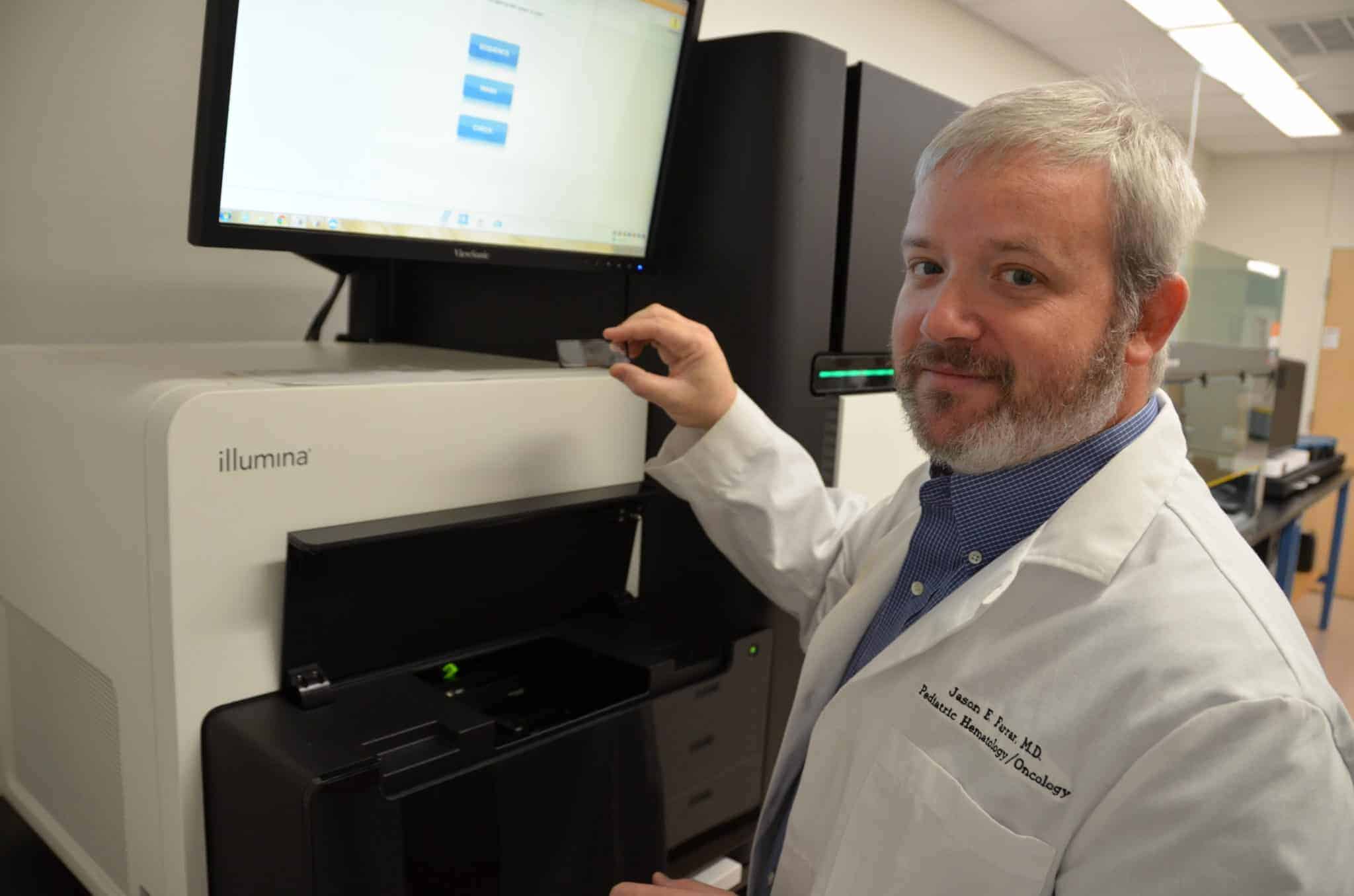
UAMS’ Jason Farrar, M.D., and collaborators at eleven other institutions published their study in the journal Nature Medicine and presented findings at the 2017 American Society of Hematology Annual Meeting (ASH) held Dec. 9-12 in Atlanta. Many of the published results were first released at the 2016 ASH Annual Meeting, held in San Diego.

Scientist in lab
The UAMS College of Medicine’s Jason Farrar, M.D., is a lead author on a study, published in Nature Medicine, that identifies key differences between the molecular structure of acute myeloid leukemia in young patients compared to those who are older.

“Although research has made great strides in improving survival rates for children with acute lymphocytic leukemia, progress in AML, a less common less form of childhood leukemia, has lagged behind. Our research is a step forward in understanding how to better treat children with this challenging disease,” said Farrar, assistant professor in the UAMS College of Medicine Department of Pediatrics.

The study’s findings identified key differences between the molecular structure of AML in young patients as opposed to those who are older. Due to these differences, the researchers concluded that traditional therapies used to treat adults with AML are not effective for children and young adults with the same disease.

“One of our key findings is that there is a clear age continuum in the biology of AML. Because the disease develops differently in the young, middle aged and old, we know that we can’t use the previously accepted therapies that were designed for older adults and expect them to have the same outcomes for children and young adults,” Farrar said.

The study involved an analysis of the genomes of more than 1,000 AML patients treated nationwide through the Children’s Oncology Group, with ages ranging from 8 days to 29 years. Of that number, 200 had their entire genome sequenced for the study, however the group’s continuing research includes whole-genome sequencing for hundreds more participants.

Data also was gathered from about 400 of these patients to determine how their cancer cells read and interpreted the DNA changes.

“We need high-depth data on every AML patient we treat to get the best possible understanding of how this disease works at a molecular level,” Farrar said.

Most commonly diagnosed in older adults, AML starts in the bone marrow and can move quickly to the blood. According to the American Cancer Society, about 21,000 Americans are diagnosed with AML each year and about 10,600 die of it. As stated in the researchers’ paper, four out of 10 young AML patients do not survive long term.

Based on their findings, Farrar and his collaborators have already developed an improved system for determining the severity of AML in young people at the time of their diagnosis. The individual patient’s treatment is then tailored to the severity of their disease, with those who have less severe disease receiving treatment with fewer possible side effects.

This system is implemented at Seattle Children’s Hospital, where collaborator Soheil Meshinchi, M.D., of Fred Hutchinson Cancer Research Center, sees patients and will soon be integrated into national cooperative clinical trials for children and young adults with AML.

“Being able to identify whether a child has high-risk or low-risk disease is very important to their long-term outlook. For example, many of the drugs used to treat AML can cause young patients to have cardiac conditions as they age. If we can effectively treat their cancer with drugs that do not damage their heart, we definitely want to do that,” Farrar said.

Funded by the National Cancer Institute, this research effort is part of a program called the TARGET Initiative, which is focused on determining the genetic changes that drive the formation and progression of hard-to-treat childhood cancers. TARGET stands for Therapeutically Applicable Research to Generate Effective Treatments.

In addition to AML, the TARGET Initiative researchers also study acute lymphoblastic leukemia, kidney tumors, neuroblastoma and osteosarcoma.

Additional support for this study comes from the Arkansas Biosciences Institute, the Center for Translational Pediatric Research at Arkansas Children’s, Scientific Computing at Fred Hutchinson Cancer Research Center, the University of Southern California’s Center for High-Performance Computing, St. Baldrick’s Foundation and the Jane Anne Nohl Hematology Research Fund.

In addition to Farrar and Meshinchi, the paper’s lead authors include Hamid Bolouri, Ph.D., and Rhonda E. Ries of Fred Hutchinson Cancer Research Center and Timothy Triche Jr., M.D., Ph.D., of the Van Andel Research Institute and University of Southern California Norris Comprehensive Cancer Center.

By Susan Van Dusen| December 19th, 2017

Filed Under: News

Perry Initiative Helping to Change Face of Orthopaedics

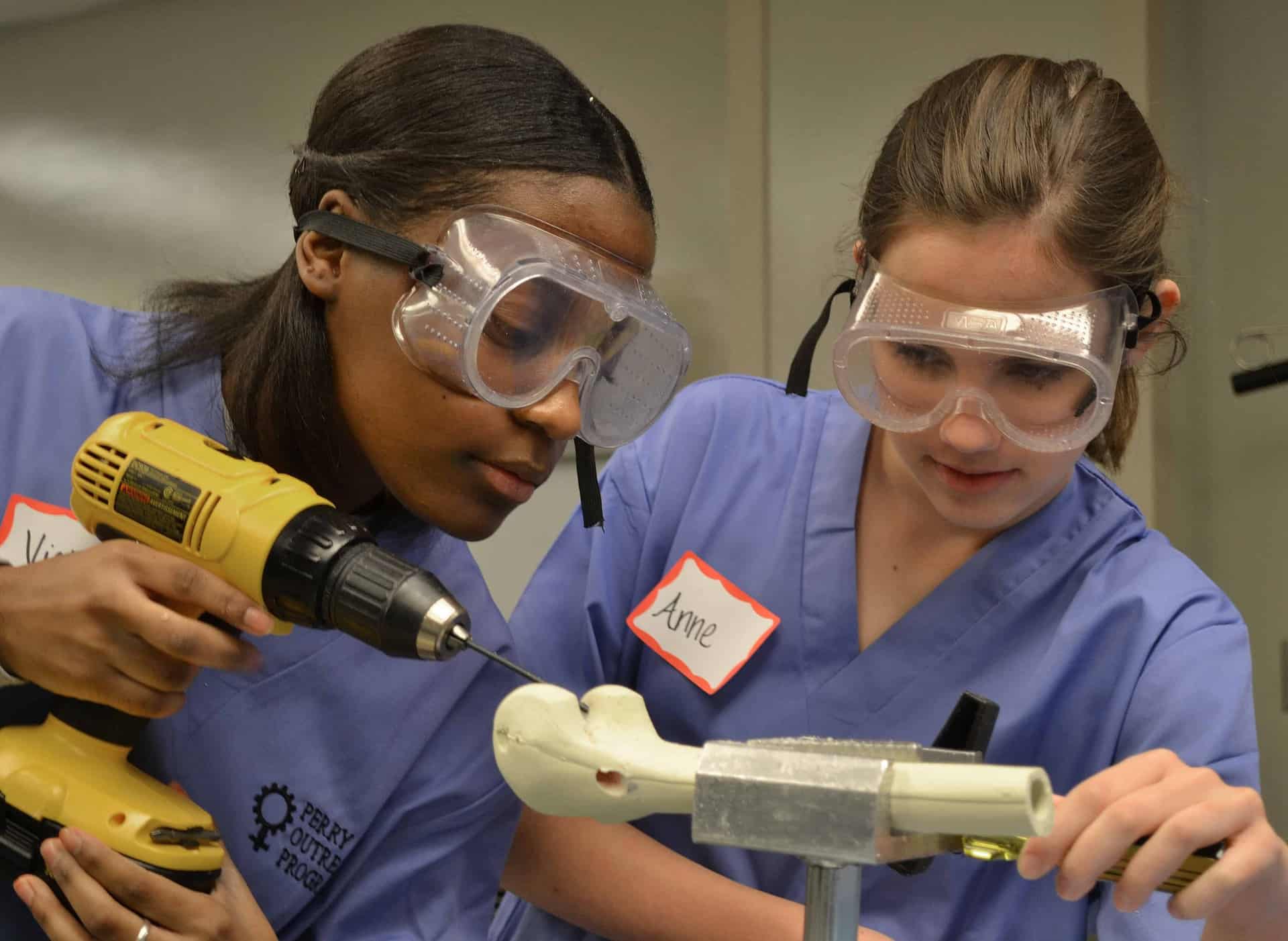
Dec. 19, 2017 | Faces serious with concentration as drill bits spiral into bone. Faces protected by goggles as fragments start to fly. Faces that break into smiles and nervous laughter as they examine their first attempts at standard orthopaedic surgery techniques.

Faces that – unlike the trend for most of orthopaedic surgery and engineering disciplines – are female.

Twenty-five female high school students from Arkansas took part in a daylong, hands-on introduction to orthopaedics and engineering Dec. 9 as part of the Perry Outreach Program, held in UAMS’ Jackson T. Stephens Spine & Neurosciences Institute.

Professor with two students
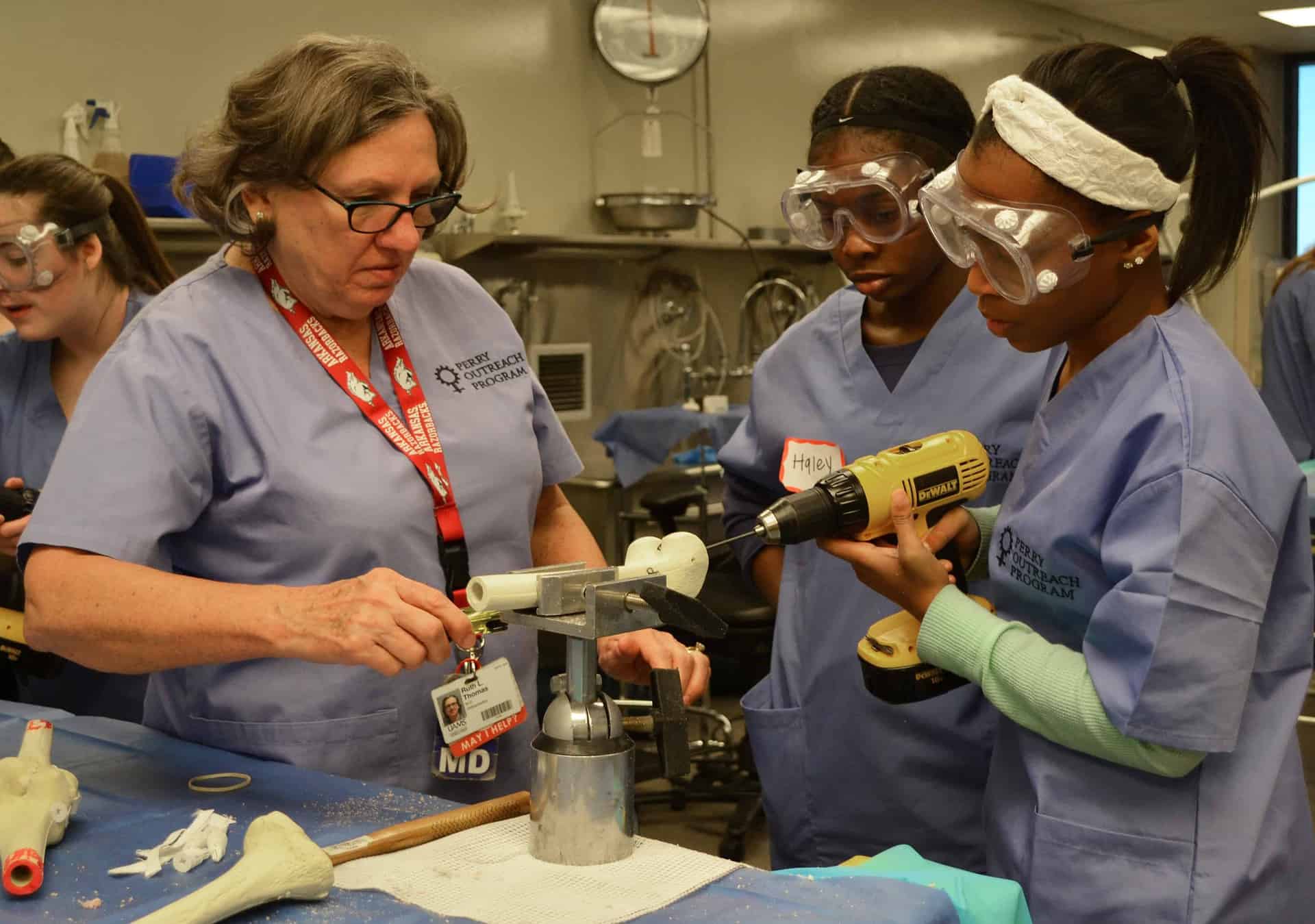
Ruth Thomas, M.D., an orthopaedic foot specialist at UAMS, leads two of the students through one of the hands-on exercises. A total of 25 girls participated.

“It’s rewarding to see the girls come in at the beginning of the day, anxious as they try things, and to see them by the end of the day, when they grab the drill and just do it, with total confidence and problem solving — that is so powerful,” said Theresa Wyrick, M.D., a UAMS orthopaedic hand specialist.

The program is organized by the Perry Initiative, a national nonprofit that aims to increase the number of women in orthopaedics and engineering through programs with students in high school, college and medical school. This was UAMS’ seventh year to partner with the Perry Initiative for the program, which in some years also includes medical students.

Student with bones
A student examines her work after completing an exercise to reconstruct a torn knee ligament.

Wyrick, who is also vice chair of the orthopaedic surgery and an associate professor in the College of Medicine’s Department of Orthopaedic Surgery, spoke in the morning to the students about work-life balance. Erin Mannen, Ph.D., director of orthopaedic research at UAMS and an assistant professor in the College of Medicine, spoke about her work engineering new methods for treating hip dysplasia. Kasa Cooper, an orthopaedic surgery resident, talked about the process of getting into medical school.

“Engineering and orthopaedics work hand-in-hand, because a lot of the innovations in orthopaedics come from engineering approaches to problem-solving,” said Ruth Thomas, M.D., an orthopaedic foot specialist, professor in the College of Medicine and director of UAMS’ Center for Foot and Ankle Surgery. “We need women to be contributing to medical advancement in these areas. For example, Dr. Mannen’s work in hip dysplasia may allow a baby to be treated for hip dysplasia while being carried close to mom. Women are needed in these fields for the betterment of our world.”

Professor with students
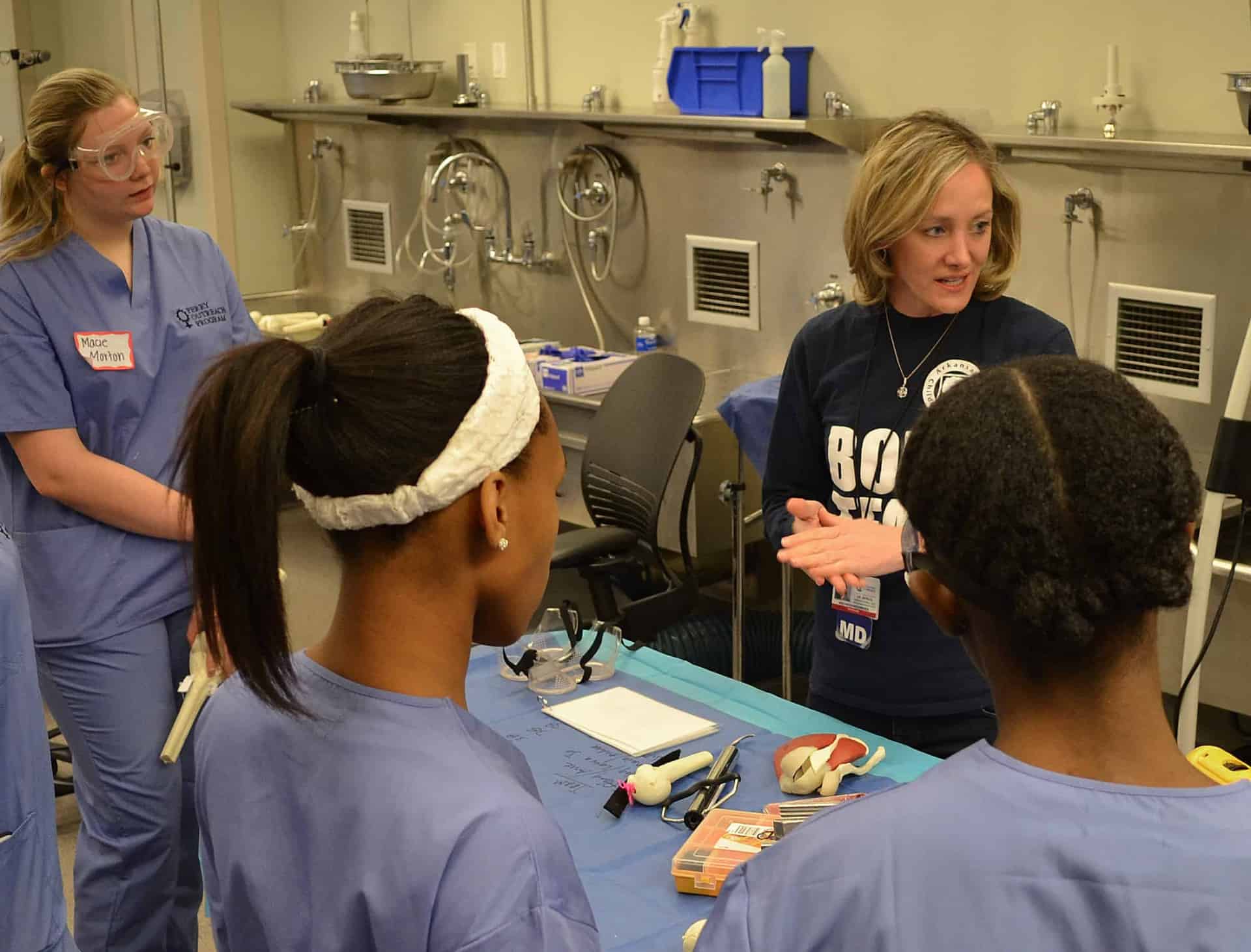
Theresa Wyrick, M.D., a UAMS orthopaedic hand specialist, explains an activity to repair a torn rotator cuff.

In the afternoon, Wyrick, Thomas, staff from the Perry Initiative and other women with an interest in orthopaedics from UAMS and across central Arkansas led the students through hands-on modules that included casting, suturing (on pigs feet), breaking a bone and repairing it (external fixation), reconstructing a torn knee ligament, repairing a rotator cuff and inserting an intramedullary nail. They worked with “bones” made of compressed sawdust that mimic the density and feel of real human bones.

While medicine in general has not always welcomed women, orthopaedics in particular has been slow to open up. Only 6 percent of fully accredited practicing orthopaedic surgeons in the United States are women.

Thomas was the only female in her residency group and spent much of her early career alone as well.

Students with drill
Only 6 percent of fully accredited practicing orthopaedic surgeons in the United States are women. The Perry Initiative hopes to ‘change the face’ of orthopaedics and engineering

.

“I definitely think programs like these are making a difference,” Thomas said. “Both ortho and engineering are now wide-open fields for women, when that wasn’t always the case.”

UAMS is proud to be a part of this trend, not only by partnerships with organizations like the Perry Initiative, but by having a Department of Orthopaedic Surgery with a robust representation of females.

“The whole purpose is to show these girls that they can do it, that engineering and orthopaedics are fun,” Thomas said.

Wyrick said it feels special to her just to get the experience of participating.

“At the end of the day, it’s about empowering the girls to do what they want to do. Go out and do it,” Wyrick said. “This is what an orthopaedic surgeon looks like. We all look like orthopaedic surgeons now.”

Medtronic Inc., a global medical device company, provided a $5,000 sponsorship for the program. The UAMS Graduate School provided lunch for the participants.

By Amy Widner| December 19th, 2017

Filed Under: News

  • «Previous Page
  • Page 1
  • Interim pages omitted …
  • Page 28
  • Page 29
  • Page 30
  • Page 31
  • Page 32
  • Interim pages omitted …
  • Page 39
  • Next Page»
UAMS College of Medicine LogoUAMS College of MedicineUniversity of Arkansas for Medical Sciences
Mailing Address: 4301 West Markham Street, Little Rock, AR 72205
Phone: (501) 296-1100
  • Facebook
  • X
  • Instagram
  • YouTube
  • LinkedIn
  • Pinterest
  • Disclaimer
  • Terms of Use
  • Privacy Statement
  • Legal Notices

© 2026 University of Arkansas for Medical Sciences