• Skip to primary navigation
  • Skip to main content
  • Skip to primary navigation
  • Skip to main content
Choose which site to search.
University of Arkansas for Medical Sciences Logo University of Arkansas for Medical Sciences
College of Medicine
  • UAMS Health
  • Jobs
  • Giving
  • About Us
    • Fast Facts
    • Leadership
    • Features
    • COMmunication Newsletter
    • Maps and Directions
    • College of Medicine History
    • Professionalism Guidelines
  • Departments
  • Admissions
    • Apply
    • Financial Aid and Scholarships
    • Life in Little Rock or Fayetteville
    • Dual Degree Programs
      • M.D./MBA Program
      • M.D./Ph.D. Program
      • M.D./MPH Program
    • Three-Year M.D. Program
    • Rural Practice Programs
      • Community Match Rural Physician Recruitment Program
      • Rural Practice Scholarship Program
    • Contact Admissions
  • Students
    • Academic Calendar
    • Academic Houses
    • Career Advising
    • Financial Aid and Scholarships
    • Visiting Students
    • Mentor Spotlight Podcast
    • Preparing for Residency
    • Non-Discrimination Statement
    • Outstanding Teacher Nominations
    • Parents Club
    • Student Links
    • Honors in Research
    • UAMS Campus Security
    • Undergraduate Medical Education Competencies
  • Graduate Medical Education
  • Alumni
  • Faculty Affairs
  • Research
  1. University of Arkansas for Medical Sciences
  2. College of Medicine
  3. Author: Chris Lesher
  4. Page 34

Chris Lesher

UAMS Translational Research Institute Receives $3.5 Million in NIH Funding

LITTLE ROCK — The UAMS Translational Research Institute has received funding for a Clinical and Translational Science Award (CTSA) totaling $3,497,558 through Aug. 31, 2018.

The 11 months of funding comes from the National Center for Advancing Translational Sciences (NCATS) of the National Institutes of Health (NIH). It will enable UAMS to continue its mission of accelerating scientific discovery with innovative programs that help researchers translate their findings into new knowledge and treatments, said Translational Research Institute Director Laura James, M.D., UAMS associate vice chancellor for clinical and translational research.

TRI Director Laura James, M.D., speaks to researchers at a recent TRI Open House.

“This is a significant federal research award for Arkansas,” James said. “We are very excited and proud to receive this award so that we can expand translational research at UAMS and improve the health of Arkansans through collaboration with our partner institutions – the Arkansas Children’s Research Institute and the Central Arkansas Veterans Healthcare System.”

The Translational Research Institute will apply for five years of CTSA funding in May 2018. If the May application is fully funded, the award would likely total more than $25 million. The first CTSA grant was awarded to UAMS in 2009.

Receipt of the $3.5 million award ensures that UAMS remains a member of the national CTSA consortium, made up of 62 academic research institutions across the country.

“In essence, the CTSA is the most important NIH grant an institution can receive,” said James, the award’s principal investigator. “Consortium members work very closely with each other to develop transferable solutions that address many of today’s greatest human health challenges.”

As a CTSA-funded site, UAMS directly helps researchers overcome long-standing obstacles to their work and provides patients tremendous opportunities to participate in cutting-edge clinical trials, in which they receive new medications and/or benefit from new treatments that are not available commercially. In addition, UAMS will continue to harness extremely large data sets, in concert with other institutions, to develop state-of-the-art solutions to health challenges. For example, these types of studies allow UAMS to use available data to understand if one treatment is better than another treatment for complex health care problems, such as mental illness, diabetes and other diseases that are common in Arkansas.

“The UAMS Translational Research Institute has been a significant contributor to the CTSA consortium in helping it meet its goals,” said Lawrence Cornett, Ph.D., UAMS vice chancellor for research. “This award ensures that UAMS clinical and translational investigators have ready access to diverse resources and approaches that the Translational Research Institute provides. Moreover, our researchers will benefit from resources available at over 60 other institutions within the consortium.”

In the last three years, the Translational Research Institute has launched or improved several research resources that are now being used by the UAMS research community:

  • ARresearch.org, a volunteer research participant registry and website, was established in collaboration with lay members of the community so that researchers have access to a pool of over 3,600 individuals who have indicated an interest in hearing more about research volunteer opportunities.
  • Arkansas Clinical Data Repository, a research data warehouse with de-identified patient data that researchers can use to understand patterns in data that will provide a framework to guide future studies testing new research treatments or approaches.
  • UAMS Profiles, an online researcher-to-researcher networking/collaboration tool, which gives researchers a user-friendly way to locate potential research partners locally and nationally.
  • TRI Portal, a cost-saving electronic request system for researchers, which allows the researcher to select from a menu of over 30 unique services and receive customized help with a research-related task in an efficient manner.

The Translational Research Institute partners with the UAMS Fay W. Boozman College of Public Health to provide a robust community engagement program to increase public involvement and participation in research at UAMS. Representative components of the program include:

  • TRI’s Community Advisory Board, a diverse board whose members represent multiple grassroots segments of the state’s population. The board provides critical viewpoints, including their cultural and logistical perspectives that researchers need to make their studies operational.
  • TRI’s Community Scientist Academy, which teaches the public how research is conducted and provides readiness training so that community members can serve as consultants to researchers and help plan the design and tools used in the research.

Additional components of the new CTSA award include funds to start a new informatics research consultation service, a new research subject recruitment program, and statistical services to ensure studies are properly designed to answer research questions. Other new programs that will be provided by the grant are dissemination services, so that the findings of research studies are communicated to numerous audiences, including research participants, the local community, other researchers, treating physicians and national audiences.

“The new grant allows us to get services to researchers, but more importantly, it allows UAMS, and our research partners, to tackle the health challenges we face here in Arkansas,” James said. “Our mission goes beyond research and really helps us as an academic community take better care of patients. The secondary effects of this grant will have a very important impact on Arkansas that includes benefits to our local workforce, economy and productivity as Arkansans.”

The NCATS/NIH award is under Award Number U54TR001629.

UAMS is the state’s only health sciences university, with colleges of Medicine, Nursing, Pharmacy, Health Professions and Public Health; a graduate school; hospital; northwest Arkansas regional campus; statewide network of regional centers; and seven institutes: the Winthrop P. Rockefeller Cancer Institute, Jackson T. Stephens Spine & Neurosciences Institute, Myeloma Institute, Harvey & Bernice Jones Eye Institute, Psychiatric Research Institute, Donald W. Reynolds Institute on Aging and Translational Research Institute. It is the only adult Level 1 trauma center in the state. UAMS has 2,834 students, 822 medical residents and six dental residents. It is the state’s largest public employer with more than 10,000 employees, including 1,200 physicians who provide care to patients at UAMS, its regional campuses throughout the state, Arkansas Children’s Hospital, the VA Medical Center and Baptist Health. Visit www.uams.edu or www.uamshealth.com. Find us on Facebook, Twitter, YouTube or Instagram.

UAMS is the state’s only comprehensive academic health center, with colleges of Medicine, Nursing, Pharmacy, Health Professions and Public Health; a graduate school; a hospital; a northwest Arkansas regional campus; a statewide network of regional centers; and seven institutes: the Winthrop P. Rockefeller Cancer Institute, the Jackson T. Stephens Spine & Neurosciences Institute, the Myeloma Institute, the Harvey & Bernice Jones Eye Institute, the Psychiatric Research Institute, the Donald W. Reynolds Institute on Aging and the Translational Research Institute. It is the only adult Level 1 trauma center in the state. UAMS has 3,021 students, 789 medical residents and two dental residents. It is the state’s largest public employer with more than 10,000 employees, including about 1,000 physicians and other professionals who provide care to patients at UAMS, Arkansas Children’s Hospital, the VA Medical Center and UAMS regional centers throughout the state. Visit www.uams.edu or www.uamshealth.com. Find us on Facebook, Twitter, YouTube or Instagram.

###

By David Robinson | October 11th, 2017

Filed Under: News

Collaborations Billed as Key at Health Services Showcase

Do patients follow through with treatments after they’ve left the doctor’s office? Will they come back for follow-up appointments? Will they take advantage of known, effective treatments? What factors are within the doctor’s control to help ensure that these things happen?

Many researchers at UAMS are exploring such questions – often employing technologies like telemedicine, mobile applications and wearables – and their work was on display Sept. 20 at the Showcase of Medical Discoveries: A Focus on Health Services. The 19th of such events in a series, it was hosted by the College of Medicine and held in the UAMS Winthrop P. Rockefeller Cancer Institute.

While welcoming the crowd to the event, Teresa Hudson, Pharm.D., Ph.D., director of the Division of Health Services Research in the Psychiatric Research Institute, noted the collaborations with colleges from across campus represented among the 17 posters and their presenters.

Dr. Hudson at podium
Teresa Hudson, Pharm.D., Ph.D., director of the Division of Health Services Research in the Psychiatric Research Institute, welcomes participants to the showcase.

“We have almost every college and we have many kinds of training and expertise represented here,” Hudson said. “That’s one of the things I think is so important about health services research. It brings together the best of all disciplines.”

She described health services research as “where the rubber meets the road” – where investigators explore what works best in the real world for real patients for real improvements to health.

Researchers, physicians, staff and students enjoyed wine and hors d’oeuvres as they learned about different types of research under the health services umbrella, networked and looked for opportunities to collaborate.

Richard R. Owen, M.D., is professor in the Department of Psychiatry in the UAMS College of Medicine and director of the Center for Mental Healthcare and Outcomes Research at the Central Arkansas Veterans Healthcare System, where he is also associate chief of staff for research.

Crowd shot from above
The showcase was held in the Winthrop P. Rockefeller Cancer Institute.

The center’s goal is to improve access to and engagement in mental health and substance use treatments for veterans. For example, one project is looking into whether a computer-assisted cognitive behavioral therapy program can help both the patient and the therapist complete the entire course of treatment.

“The idea is that it helps both the patient and the provider stay on track, especially in smaller rural clinics where contact may be sporadic,” Owen said.

Other topics include, telemedicine for mental health treatments in rural communities, suicide prevention, how to improve the overall health of people with mental health issues, substance use, access to care, patient engagement, implementation science, effects of coaching and more.

Researchers at poster
Benjamin Teeter, Ph.D., left, and Jeremy Thomas, Pharm.D., present their poster with Geoffrey Curran, Ph.D., and Appathurai Balamurugan, M.D., titled ‘Adaptation of a Motivational Interviewing Intervention during Implementation in Four Community Pharmacies.’

“Participating in events like these is important. I try to be out there as much as possible, talking about this research, which is already very collaborative in nature, but the more we can locate opportunities for collaborations, the better. It strengthens the quality of what we’re doing at UAMS and the VA,” Owen said.

Carolyn J. Greene, Ph.D., associate professor in the Division of Health Services Research and national manager for mental health web services with the Department of Veterans Affairs Central Office, presented her research on whether combining coaching with mental health self-help mobile apps would encourage patients to continue to use the apps instead of lapsing in the treatment.

“In Arkansas, there are so many places where mental health treatment is not available, or maybe it is, but spending an hour in traditional therapy seems like an indulgence,” Greene said. “Meanwhile, everyone has a phone, and many of these apps are designed so if you have two to three minutes to spare, that’s enough. Or, they can be there for you right in the moment, say, if you’re dealing with anxiety. Giving the tools for people to self-help is powerful, and we’re working to understand how to make them even more effective.”

By Amy Widner | October 9th, 2017

Filed Under: News

Surgeon Saved by the Trauma System He Helped Establish

When Todd Maxson, M.D., worked to implement a trauma system for the state of Arkansas in 2009, he didn’t know that his own life would be among the many saved.

“It’s certainly different being on the opposite end of care,” Maxson said.

On Sept. 1, Maxson, a professor of surgery in the UAMS College of Medicine left Arkansas Children’s Hospital on his motorcycle after a long day in the operating room. Maxson is chief of pediatric trauma surgery and was on call.

Anna Privratsky, D.O., checks on her patient and former professor Todd Maxson, M.D.

A car hit him on Woodrow Street, minutes away from Children’s Hospital. Maxson flew off the bike, breaking his helmet. The vehicle dragged his motorcycle 150 feet. Fortunately, two bystanders stopped to help. One of them called 911. The other, at Maxson’s request, called Children’s Hospital. His work and his patients remained a priority even as he lie in the street with life-threatening injuries.

“As a trauma surgeon on call, my responsibility is for emergencies at the hospital,” Maxson said. “We can’t leave that uncovered for even a second.”

Maxson said Metropolitan Emergency Medical Services were quick to the scene and some of the EMS professionals recognized him from training.

“I may have provided a couple of suggestions,” Maxson said with a chuckle. “It’s in my nature. But they smiled and took care of me. They did everything right.”

That included transporting him to UAMS — the state’s only adult level one trauma center. Anna Privratsky, D.O., in the UAMS Department of Surgery, was in the Emergency Department that night. She says it had been relatively quiet when the trauma call came in.

“I saw it was a motorcycle accident. Minutes later the chief resident told me it was Dr. Maxson,” Privratsky said. “As a trauma surgeon, there’s not a lot that can shake you. But when someone you know comes in for trauma, that’ll do it.”

Privratsky, a former UAMS resident who worked under Maxson, says her training prepared her for even the most stressful situations.

“We all know Dr. Maxson. But when something like this happens you must tuck aside everything except focusing on getting him better. We do that for everyone who rolls through the doors.”

As a level one trauma center, UAMS had access to interventional radiologists who worked to stop the bleeding within an hour. Orthopeadic surgeons were immediately available. Maxson had a shattered pelvis, a shattered right femur, lots of bruises and significant blood loss. He had four major operations in four days.

“Doing the major surgeries together prevents complications,” Maxson said.

Todd Maxson, M.D., performing surgery.

Maxson left the hospital two weeks later. He’ll have to keep weight off his legs before a few more surgeries. Then he’ll begin physical and occupational therapy. He hopes to be back to work summer 2018.

“I’m coming back,” Maxson said. “I’m absolutely coming back. And I’ll be a better surgeon after this. I now have a level of empathy that I couldn’t have gained before this.”

Before 2009, Arkansas had the highest injury-related mortality rates in the country. After the trauma system was established, the state saw a 50 percent reduction in preventable deaths.

“The gift given by the Legislature in the form of a trauma system has paid unbelievable dividends,” Maxson said. “Had that system not been in place, I think I would’ve died. And if I lived, I wouldn’t be in the shape I am today. The investment has a positive return.”

By Katrina Dupins | October 3rd, 2017

Filed Under: News

UAMS Researchers, Students, Urged to Become Science Advocates

Oct. 4, 2017 | By being effective advocates for science funding, researchers can help the U.S. lead the world in science and help their own careers, UAMS students and faculty were told at a recent lecture.

“The public does not understand what we do and they don’t understand why we do it,” said Richard L. Eckert, Ph.D., from the University of Maryland, School of Medicine, where he is a professor and chair of the Department of Biochemistry and Molecular Biology.

The Sept. 27 lecture was sponsored by the Office of Interprofessional Education and the College of Medicine Department of Biochemistry and Molecular Biology.

Richard L. Eckert, Ph.D. speaking
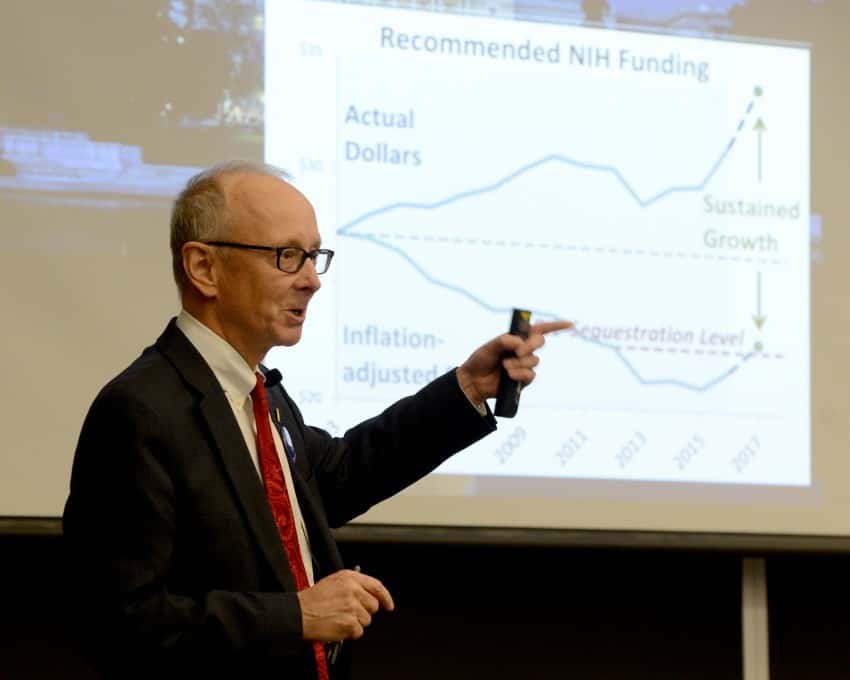
Richard L. Eckert, Ph.D., said funding for the National Institutes of Health (NIH) remains below 2003 levels in inflation-adjusted dollars.

Knowing how to talk to nonscientists about the importance of research is an important skill for researchers, Eckert said.  “Leave out the calcium concentrations. Tell the big picture.”

Whether talking to family or friends at a party, the importance of science and the threats to funding must be communicated clearly.

He noted that the U.S. share of worldwide research and development has fallen in recent years from 35 to 27 percent, while Asia’s share has climbed from 27 to 40 percent.

The good news is that Congress has started to increase funding for research, but current funding levels for the National Institutes of Health (NIH) remain below 2003 levels in inflation-adjusted dollars.

Funding stability is especially critical in science, he said, because a sudden cut in funding such as occurred in 2013 can sabotage years invested in science programs.

“This will be very important to your careers because you’re going to be funded by the federal government to do research, and you’ll want to pursue your work,” Eckert said.  “Very few Americans know what the NIH is, and that’s why you have to make an effort to tell them.”

Eckert leads delegations of researchers to Capitol Hill in Washington D.C. to speak directly to members of the House and Senate.

“In the years to come you’re going to have to increasingly engage with this kind of activity because lots of people are asking for support from government and sometimes budgets are limited so we have to be there and we have to lobby with our congressmen and senators to do things that are in the interest of science progression,” he said.

At UAMS, such outreach is led by Maurice Rigsby, J.D., vice chancellor for Institutional Relations.

By David Robinson | October 4th, 2017

Filed Under: News

Impaired Driving is Focus at 18th Annual Geriatrics Conference

Oct. 3, 2017 | It’s a subject that Germaine Odenheimer, M.D., finds harder to talk about to patients than having a terminal illness: impaired driving, and that’s what she wanted to speak about to the audience at the 18th annual Geriatric Update and Long-term Care Conference held at UAMS.

“One of the reasons I got interested in this area is because I found this topic of driving was the most difficult topic I have to deal with,” Odenheimer said recently to a conference audience. “It was harder than telling them they have Alzheimer’s disease and even harder than telling them they were going to die. There’s something about this topic that is so powerful. I felt I needed to learn more about it and how to deal with this issue. It became the focus of my research interest.”

Odenheimer, an associate professor in the Donald W. Reynolds Department of Geriatric Medicine at the University of Oklahoma’s College of Medicine, was a guest speaker at the conference held from Sept. 21-23 at the UAMS Donald W. Reynolds Institute on Aging.

Panel of experts
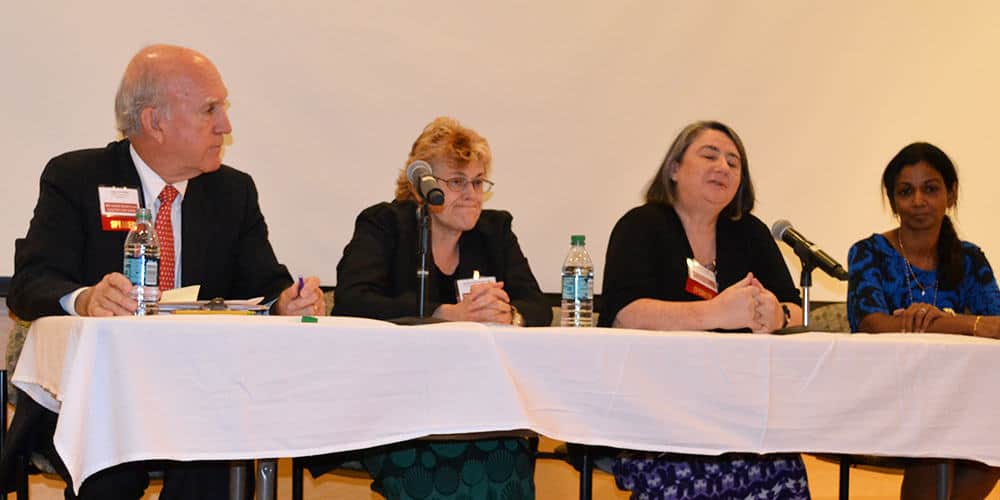
A panel of experts discussed the medical and legal aspects of impaired driving at the Geriatric Update. The panel included Little Rock District Court Judge Vic Fleming; left; Germain Odenheimer, M.D.; and UAMS’ Lou Ann Eads, M.D.; and Masil George, M.D.

Throughout the three days, speakers, presentations and expert panels covered a range of topics from trauma in the elderly, infection control and food disparities to legal and social issues in geriatric care. More than 120 people attended the conference, which was sponsored by the Arkansas Geriatric Education Collaborative at UAMS.

The conference has been supported annually by Jeanne Wei, M.D., Ph.D., executive director of the Reynolds Institute, to provide the latest information to physicians and other health professionals, as well as caregivers to the aging population.

“The updates are giving important and practical information to professionals directly involved in senior care,” Wei said. “Update speakers aren’t presenting abstract concepts. They’re communicating the latest findings and best practices. Feedback over the years has shown the tremendous value our attendees find in the information communicated at the update. Dr. Germaine Odenheimer’s presentation is a great example of that.”

Odenheimer said as young drivers mature, they progress from being high-risk drivers with a high fatal crash rate to lower-risk experienced drivers through early and middle adulthood. Drawing further on vehicle collision data, she said the crash rate doesn’t increase again until age 75 when it starts slowly and steadily rises again. At 85 and older, it exceeds the fatal crash risk for teenagers.

two doctors talking
Germaine Odenheimer, M.D., left, a guest speaker at the conference, talks during a break with UAMS’ Mark Pippenger, M.D.

In almost every state, the driver is held responsible for accidents that occur when driving is impaired. But several years ago, the American Medical Association determined that physicians need to play a role in deciding when a patient is fit to drive or not and even have an ethical obligation to do so, Odenheimer said.

Odenheimer said a physician can refer the patient to an occupational therapist for evaluation. In some cases, a change in medication, treating an underlying condition that is contributing or causing the impairment or limiting the patient’s driving can be enough to resolve the impairment or reduce the risk.

“Most people wait until there is a crisis,” she said. “The time to start that conversation is early. If they have a diagnosis that is likely to lead to loss of driving, like dementia or Parkinson’s or other similar conditions, then you need to have that conversation early. It’s much easier to start the conversation before they have to stop.”

Following Odenheimer’s presentation, she also took part in a four-person panel discussion on the topic that included Little Rock District Court Judge Vic Fleming, who oversees a traffic court; Lou Ann Eads, M.D., a geriatric psychiatrist at the UAMS Psychiatric Research Institute; and Masil George, M.D., a geriatrician and pain management specialist at the Reynolds Institute.

As part of the panel, Fleming reviewed the legal processes that can be used to determine whether or not someone’s driving is impaired and unsafe.

He said he too had to work through the issue with a family relative, who passed a driving test and then had three car accidents in two years.

“If your loved one has an offense pending in front of a traffic judge, and you know that, by golly, just go with them,” Fleming said. “We judges get it. If the defendant is in his or her nineties and there are a couple of people with them who are in their forties or fifties, then it’s usually a niece or nephew, son or daughter who wants to make a comment to get a license revoked. We’ll listen.”

In dialogue with members of the audience, the panel engaged in an in-depth discussion of the role physicians play in helping patients and families wrestle with the issue of impaired driving.

Eleven geriatrics research posters also were on display at the conference. A number attended from out of state, including some who have participated for as many as 13 consecutive years.

By Ben Boulden | October 3rd, 2017

Filed Under: News

Nikki Edge, Ph.D., named to College of Medicine Research Council

DFPM RED Faculty member Nikki Edge, Ph.D., (Associate Professor, Department of Family and Preventative Medicine) was recently added to the UAMS College of Medicine’s Research Council.  The members of the new Research Council were recently announced by Richard P. Morrison, Ph.D. – Executive Associate Dean for Research | UAMS | College of Medicine.

Filed Under: News

Dr. Stavros Manolagas Receives Top Honors from ASBMR

Oct. 2, 2017 | Stavros Manolagas, M.D., Ph.D., who holds several roles at the University of Arkansas for Medical Sciences (UAMS) and the Central Arkansas Veterans Healthcare System, received the American Society for Bone and Mineral Research’s oldest and most prestigious honor – the William F. Neuman Award – at the ASBMR’s annual meeting, Sept. 8-11 in Denver.

The Neuman Award honors an ASBMR member for outstanding and major scientific contributions in the area of bone and mineral research and for contributions to associates and trainees in training, research and administration.

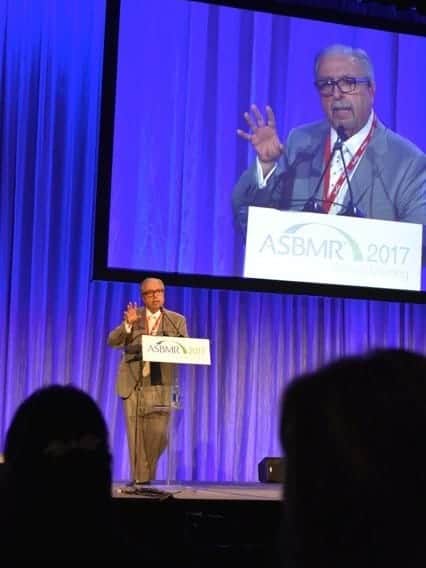
Stavros Manolagas, M.D., Ph.D., delivers the Louis B. Avioli Lecture at the American Society for Bone and Mineral Research’s annual meeting. He also won the society’s highest honor, the William F. Neuman Award.

“Art is I. Science is we,” Manolagas said during his acceptance speech. “The Neuman award is, at least as much, a recognition of a team as it is of the individual awardee. The most important job of the leader is to find and hire people who are smarter than she or he. By that measure, I believe that I succeeded with each one of my current and former UAMS co-workers with whom I had the joy to work with. To all of them, I am indebted for sharing their talents and scientific journeys.”

Manolagas also delivered the Louis V. Avioli Lecture during the meeting, the only invited plenary lecture presented by an ASBMR member at the annual conference, which draws as many as 4,000 physicians, scientists and other participants from around the world. This was the first time since the ASBMR’s founding 40 years ago that the Neuman Award and Avioli Lecture went to the same individual.

Manolagas is a distinguished professor of medicine, professor of orthopaedics and director of the Division of Endocrinology and Metabolism in the Department of Internal Medicine in the UAMS College of Medicine. He is director of the UAMS and Central Arkansas Veterans Healthcare System Center for Osteoporosis and Metabolic Bone Diseases – one of the largest and longest-funded osteoporosis research centers in the world.

In his lecture, Manolagas discussed the dramatic progress that has been made in understanding bone biology and the underlying mechanisms of osteoporosis over the past 40 years. He traced the advancement of pharmaceutical drugs for osteoporosis, as well as the work that remains to be done to develop therapies that continue to be both effective and safe with long-term use.

“The overarching cause of osteoporosis is aging, and bone-intrinsic mechanisms are the primary culprits of the disease in both women and men,” Manolagas said. “Bone-extrinsic mechanisms such as menopause are only contributory. Several new classes of drugs targeting age-related mechanisms have shown the potential to treat more than one age-related disease, including osteoporosis, simultaneously. The future of research and patient care in this area is bright.”

Manolagas also serves as vice chair for research and holds the Thomas E. Andreoli, M.D., M.A.C.P. Clinical Scholar Chair in the Department of Internal Medicine at UAMS. In addition, Manolagas is chief of the Endocrinology Section in the Central Arkansas Veterans Healthcare System.

His scholarly contributions have been recognized over the years with induction to the Association of American Physicians in 1996; the AlliedSignal award for research on aging in 1999; the inaugural Louis V. Avioli Award of ASBMR, 2000; a Doctor Honoris Causa from the National and Kapodistrian University of Athens, Greece, 2007; the International Bone and Mineral Society (IBMS) D. Harold Copp award, 2013; and the William S. Middleton Award of the Department of Veterans Affairs (VA) for achieving international acclaim for research accomplishments in areas of prime importance to VA’s research mission, 2016.


UAMS is the state’s only health sciences university, with colleges of Medicine, Nursing, Pharmacy, Health Professions and Public Health; a graduate school; a hospital; a northwest Arkansas regional campus; a statewide network of regional centers; and seven institutes: the Winthrop P. Rockefeller Cancer Institute, the Jackson T. Stephens Spine & Neurosciences Institute, the Myeloma Institute, the Harvey & Bernice Jones Eye Institute, the Psychiatric Research Institute, the Donald W. Reynolds Institute on Aging and the Translational Research Institute. It is the only adult Level 1 trauma center in the state. UAMS has 2,870 students, 799 medical residents and five dental residents. It is the state’s largest public employer with more than 10,000 employees, including about 1,200 physicians who provide care to patients at UAMS and its regional campuses throughout the state, Arkansas Children’s Hospital, the VA Medical Center and Baptist Health. Visit www.uams.edu or www.uamshealth.com. Find us on Facebook, Twitter, YouTube or Instagram.

###

By Amy Widner | October 2nd, 2017

Filed Under: News

Faculty Talks on Diversity: Understand Own Privileges, Be Ally

Sept. 28, 2017 | To be accepting of one another and work to unify the country, individuals must better understand their privileges and identify ways to help others, said Sara Tariq, M.D., assistant dean for undergraduate clinical education in the UAMS College of Medicine.

The interactive, lunchtime talk Sept. 20 was the third in a series of events sponsored by the UAMS Center for Diversity Affairs to celebrate UAMS Diversity Month.

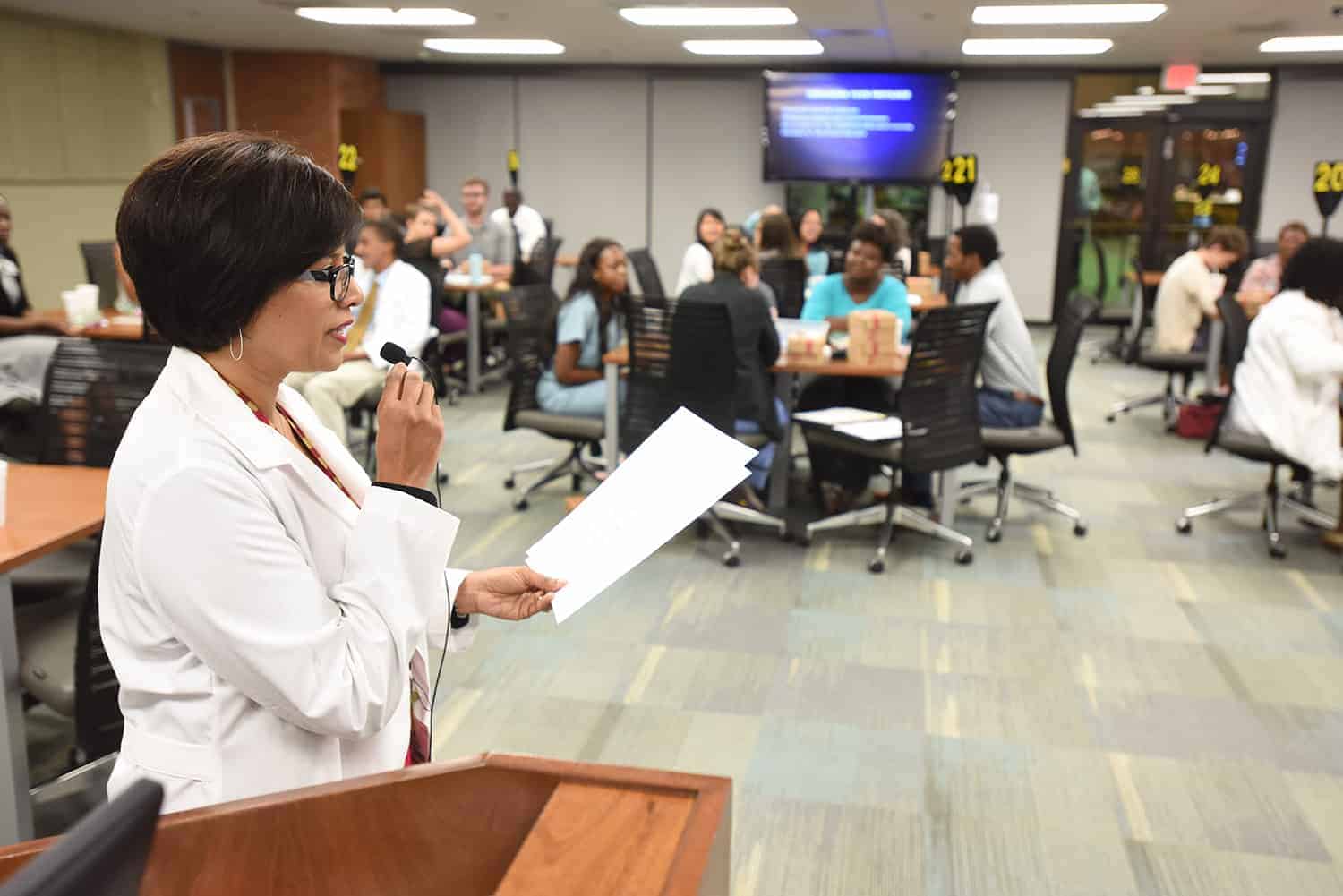
Sara Tariq, M.D., assistant dean for undergraduate clinical education in the UAMS College of Medicine, gave a lecture on understanding privilege and helping others Sept. 20.

Privilege is a set of unearned benefits afforded to a group of people, often inherently, that can include financial status, race, property, freedom, education and culture, said Tariq. Privilege can come with many negative connotations, said Tariq; however, having privilege is not an insult or accusation.

“Privilege doesn’t mean you have lived a life free of suffering or free of challenges,” she said. “It doesn’t infer you’re a bad or selfish person and it doesn’t denote you didn’t work hard to get where you are, nor does it mean you’re a racist.”

The important step is to recognize privilege. To emphasize the point, Tariq quoted Peggy McIntosh, a well-known professor at Wellesley College in Massachusetts who said failing to reckon with privilege means settling for a partial view of reality.

Nadia Lalla, associate provost for Library and Student Services, speaks during a UAMS Diversity Month event on Sept. 20.

Still quoting McIntosh, Tariq said to identify privilege, individuals must be able to see patterns and systems throughout social life and also care about others’ individual experiences.

“Oftentimes, we feel unheard and that’s part of the problem when it comes to the discussion of privilege,” said Tariq. “It’s making ourselves stand back and make sure we’re listening to what the other person is saying.”

Tariq invited the audience to take part in a 20-question survey to help better identify its individual advantages. The questions ranged from marriage equality, discrimination, the recognition of religious holidays and the representation of the individual’s race, nationality and religion within society.

Following the exercise, Tariq encouraged the audience to find ways to help others, whether it’s by advocating for a specific cause or finding simple ways in daily life to be hospitable.

“It can be as simple as smiling and greeting someone,” said Tariq. “That might be enough to create a little bit of safety for that person in that space. It’s important to be an ally.”

By Lee Hogan | September 28th, 2017

Filed Under: News

UAMS Neuroscientist Receives Grant to Study Resilience of Brain to Mental Illness

Sept. 26, 2017 | A University of Arkansas for Medical Sciences (UAMS) research scientist has been awarded a $409,750 grant from the National Institute on Drug Abuse to lead a study investigating ways the brain develops resilience to mental illnesses like addiction.

Andrew James, Ph.D., an associate professor in the UAMS College of Medicine’s Department of Psychiatry, is the principal investigator in the two-year study, which will use functional magnetic resonance imaging (fMRI) to examine patterns of brain organization in adult subjects who experienced childhood trauma.

Andrew James, Ph.D., is leading a two-year study that will use MRI scans to attempt to determine the different ways adults adapt to childhood traumatic experiences.

James and his research team will conduct a series of cognitive tests on the subjects while they undergo an MRI scan in an attempt to determine the different ways males and females adapt to traumatic experiences.

The study is a follow-up to research initiated in 2014 by James and Clint Kilts, Ph.D., director of the Brain Imaging Research Center, which demonstrated how childhood trauma may lead to addiction.

“We know from our previous research that adults who experienced childhood trauma and didn’t become addicted to drugs or alcohol had a unique brain organization compared to those who did become addicted,” said James. “We hope this study will help us determine the role gender plays in these trauma outcomes.”

James’ study will also involve subjects from a previous research trial pertaining to trauma and adolescent girls. James will be following up with former participants to determine the long-term effects of trauma.

“We’re going to be studying 40 girls with varying trauma histories. They were 12 to 16 years of age when they first participated in our research study,” said James, who will be testing the subjects’ motor skills and attention control in the MRI scanner and comparing their results to earlier data. “We’re interested in whether or not they developed an addiction to drugs. Were their brains born resilient or did they learn resilience?”

For information about the study, contact the Brain Imaging Research Center at (501) 420-2653.


UAMS is the state’s only health sciences university, with colleges of Medicine, Nursing, Pharmacy, Health Professions and Public Health; a graduate school; a hospital; a northwest Arkansas regional campus; a statewide network of regional centers; and seven institutes: the Winthrop P. Rockefeller Cancer Institute, the Jackson T. Stephens Spine & Neurosciences Institute, the Myeloma Institute, the Harvey & Bernice Jones Eye Institute, the Psychiatric Research Institute, the Donald W. Reynolds Institute on Aging and the Translational Research Institute. It is the only adult Level 1 trauma center in the state. UAMS has 2,870 students, 799 medical residents and five dental residents. It is the state’s largest public employer with more than 10,000 employees, including about 1,200 physicians who provide care to patients at UAMS and its regional campuses throughout the state, Arkansas Children’s Hospital, the VA Medical Center and Baptist Health. Visit www.uams.edu or www.uamshealth.com. Find us on Facebook, Twitter, YouTube or Instagram.

###

By Amy Widner | September 26th, 2017

Filed Under: News

UAMS Pathologist Named to Top 5 of ’40 Under 40′ List

Sept. 25, 2017 | Jerad Gardner, M.D., an associate professor in the University of Arkansas for Medical Sciences (UAMS) College of Medicine’s Departments of Pathology and Dermatology, was named among the top five of the American Society for Clinical Pathology’s “40 Under 40” 2017 list.

The “40 Under 40” list honors pathologists and laboratory medicine professionals globally under the age of 40. Gardner was named among the top five at the society’s annual meeting, Sept. 6-8 in Chicago.

Jerad Gardner, M.D. (left) is congratulated by William E. Schreiber, M.D., immediate past president of the American Society for Clinical Pathology.

The honorees come from various health systems and universities around the world. Each was selected based on their achievements and leadership qualities that impact the field of pathology and laboratory medicine. The top five were selected as “true future leaders who are advancing the next generation of professionals,” according to the society.

“It is such an honor not only to be recognized by the American Society for Clinical Pathology, but even more importantly, to be named alongside so many of my fantastic friends and colleagues who also made this list,” Gardner said. “Having colleagues like these makes me proud to be a pathologist.”

Gardner was also elected in August to the American Society of Dermatopathology Board of Directors through 2020.

Gardner is a dermatopathologist and bone/soft tissue sarcoma pathologist. He directs the dermatopathology fellowship program and co-directs the musculoskeletal/skin module, both in the College of Medicine.Gardner has lectured internationally on bone and soft tissue tumors and skin disease.

He also speaks to health care professionals nationally and internationally on how to use Facebook, Twitter and Instagram professionally. Gardner was one of the first to use social media in his field and is now the chair of social media subcommittees for two pathology organizations — the American Society of Dermatopathology and the United States and Canadian Academy of Pathology. He has created Facebook discussion groups for pathologists that now have 18,000 and 25,000 followers and has created a social media guide for pathologists. He also volunteers with rare cancer patient support groups on Facebook.


UAMS is the state’s only health sciences university, with colleges of Medicine, Nursing, Pharmacy, Health Professions and Public Health; a graduate school; a hospital; a northwest Arkansas regional campus; a statewide network of regional centers; and seven institutes: the Winthrop P. Rockefeller Cancer Institute, the Jackson T. Stephens Spine & Neurosciences Institute, the Myeloma Institute, the Harvey & Bernice Jones Eye Institute, the Psychiatric Research Institute, the Donald W. Reynolds Institute on Aging and the Translational Research Institute. It is the only adult Level 1 trauma center in the state. UAMS has 2,870 students, 799 medical residents and five dental residents. It is the state’s largest public employer with more than 10,000 employees, including about 1,200 physicians who provide care to patients at UAMS and its regional campuses throughout the state, Arkansas Children’s Hospital, the VA Medical Center and Baptist Health. Visit www.uams.edu or www.uamshealth.com. Find us on Facebook, Twitter, YouTube or Instagram.

###

By Amy Widner | September 25th, 2017

Filed Under: News

  • «Previous Page
  • Page 1
  • Interim pages omitted …
  • Page 32
  • Page 33
  • Page 34
  • Page 35
  • Page 36
  • Interim pages omitted …
  • Page 39
  • Next Page»
UAMS College of Medicine LogoUAMS College of MedicineUniversity of Arkansas for Medical Sciences
Mailing Address: 4301 West Markham Street, Little Rock, AR 72205
Phone: (501) 296-1100
  • Facebook
  • X
  • Instagram
  • YouTube
  • LinkedIn
  • Pinterest
  • Disclaimer
  • Terms of Use
  • Privacy Statement
  • Legal Notices

© 2026 University of Arkansas for Medical Sciences