• Skip to primary navigation
  • Skip to main content
  • Skip to primary navigation
  • Skip to main content
Choose which site to search.
University of Arkansas for Medical Sciences Logo University of Arkansas for Medical Sciences
College of Medicine
  • UAMS Health
  • Jobs
  • Giving
  • About Us
    • Fast Facts
    • Leadership
    • Features
    • COMmunication Newsletter
    • Maps and Directions
    • College of Medicine History
    • Professionalism Guidelines
  • Departments
  • Admissions
    • Apply
    • Financial Aid and Scholarships
    • Life in Little Rock or Fayetteville
    • Dual Degree Programs
      • M.D./MBA Program
      • M.D./Ph.D. Program
      • M.D./MPH Program
    • Three-Year M.D. Program
    • Rural Practice Programs
      • Community Match Rural Physician Recruitment Program
      • Rural Practice Scholarship Program
    • What Our Graduates Do
    • Contact Admissions
  • Students
    • Academic Calendar
    • Academic Houses
    • Career Advising
    • Financial Aid and Scholarships
    • Visiting Students
    • Mentor Spotlight Podcast
    • Preparing for Residency
    • Non-Discrimination Statement
    • Outstanding Teacher Nominations
    • Parents Club
    • Student Links
    • Honors in Research
    • UAMS Campus Security
    • Undergraduate Medical Education Competencies
  • Graduate Medical Education
  • Alumni
  • Faculty Affairs
  • Research
  1. University of Arkansas for Medical Sciences
  2. College of Medicine
  3. News
  4. Page 40

News

NIH Awards $11.5 Million to Arkansas Children’s Research Institute to Establish Unique Pediatric Research Center

July 12, 2017 | The National Institutes of Health (NIH) has awarded $11.5 million to the Arkansas Children’s Research Institute (ACRI) to develop the Center for Translational Pediatric Research (CTPR). The award is the largest-ever grant award that ACRI has received from NIH.  Under the direction of Alan Tackett, Ph.D., the center will result in new treatments and therapies developed specifically for children.

Dr. Tackett, an ACRI expert in systems biology, is the Scharlau Family Endowed Professor of Cancer Research and a professor of Biochemistry, Pediatrics and Pathology in the College of Medicine at the University of Arkansas for Medical Sciences (UAMS). The Center for Translational Pediatric Research at ACRI will use state-of-the-art technology and a systems biology approach to study how pediatric diseases develop, with the ultimate goal of identifying points in the intersection of disease and development that will produce targets for therapeutic intervention and the development of new treatments for children. Systems biology is a holistic approach that enables researchers to simultaneously study all of the events occurring in a cell that are leading to a particular outcome or disease.

“Historically, science has answered one question at a time,” Dr. Tackett said. “By employing a more comprehensive systems biology approach, we can ask many questions at the same time, which allows us to more quickly understand the fundamental reasons that a disease is occurring and how to more specifically develop treatments.

“To my knowledge, there is not a pediatric research center in the U.S. and probably in the world that focuses on utilizing these specific approaches. In that way, we are uniquely positioned to develop ways to improve children’s health in Arkansas and our nation.”

The NIH Institutional Development Award (IDeA) program will fund the CTPR as one of NIH’s prestigious Centers of Biological Research Excellence (COBRE). These grants create world-class research environments for young faculty who are identified as the next generation of excellence in research. The awards focus on building research in states that have historically had low levels of NIH funding. This first phase of COBRE funding will start in July of 2017 and last five years. A total of 15 years of funding is available through this federal program, and Tackett’s award is the second COBRE grant ACRI has received from NIH in the last year.

“This award is a promise to the children of Arkansas that we will create a healthier tomorrow specifically for them,” said Gregory Kearns, PharmD, Ph.D., FAAP, president of ACRI and Arkansas Children’s senior vice president/chief research officer. He is also the Ross & Mary Whipple Family Distinguished Research Scientist Endowed Chair and a professor of Pediatrics at UAMS. “NIH sees that we have the potential to create a transformational center that will improve children’s lives directly where they live, learn and play.”

Dr. Tackett will serve as director of the CTPR and Sonet Weed, MS, will oversee the administration of the grant. The junior faculty that were selected to seed this center include:

  • Jason Farrar, M.D., UAMS Assistant Professor of Pediatrics
  • Xiawei Ou, Ph.D., UAMS Assistant Professor of Radiology and Pediatrics
  • Laxmi Yeruva, Ph.D., UAMS Assistant Professor of Pediatrics
  • Boris Zybailov, Ph.D., UAMS Assistant Professor of Biochemistry & Molecular Biology

Their research focuses on pediatric blood disorders, infant brain development in obese mothers, immune system development in breastfed infants, and pediatric chronic kidney disease – respectively.

All-in-all, the Center for Translational Pediatric Research will support 30 faculty – making it one of the largest centers of its kind. Located at ACRI, the CTPR will also partner with the Arkansas Children’s Nutrition Center and UAMS and its Winthrop P. Rockefeller Cancer Institute. The cutting-edge research technology investment will create discoveries in proteomics, genomics, and bioinformatics – overseen by:

  • Rick Emondson, Ph.D., UAMS Associate Professor of Medicine
  • Samuel Mackintosh, Ph.D., UAMS Research Assistant Professor of Biochemistry & Molecular Biology
  • Stewart MacLeod, Ph.D., UAMS Assistant Professor of Pediatrics
  • Stephanie Byrum, Ph.D., UAMS Research Assistant Professor of Biochemistry & Molecular Biology
  • Galina Glazko, Ph.D., UAMS Assistant Professor of Biomedical Informatics

Arkansas Children’s, Inc. is the only health system in the state solely dedicated to caring for children, which allows the organization to uniquely shape the landscape of pediatric care in Arkansas. The system includes a 359-bed hospital in Little Rock with the state’s only pediatric Level 1 trauma center, burn center, Level 4 neonatal intensive care and pediatric intensive care, and research institute as well as a nationally-recognized transport service. It is one of the 25 largest children’s hospitals in the United States and is nationally ranked by U.S. News World & Report in pulmonology and neonatal care. A sister campus is under development in Northwest Arkansas and will bring 233,613 square feet of inpatient beds, emergency care, clinic rooms and diagnostic services to children in that corner of the state. Arkansas Children’s also blankets the state with outreach programs that include telemedicine, mobile health, and school-based health solutions. A private not-for-profit, Arkansas Children’s boasts an internationally renowned reputation for medical breakthroughs and intensive treatments, unique surgical procedures and forward-thinking research and is committed to providing every child with access to the best care available, regardless of location or resources. Founded as an orphanage, Arkansas Children’s has championed children by making them better today and healthier tomorrow for more than 100 years. For more info, visit archildrens.org.

ACRI is a free-standing state-of-the-art pediatric research center which provides a research environment on the ACH campus to foster research and scholarship of faculty members of University of Arkansas for Medical Sciences who are investigating questions relative to development, disease and treatment as it relates to the health of infants, children and adolescents. Physician and biomedical scientist investigators at ACRI and the Arkansas Children’s Nutrition Center (ACNC) conduct clinical, basic science, and health services research for the purpose of treating illnesses and preventing disease and thereby, improving the health of the children of Arkansas and beyond.


UAMS is the state’s only comprehensive academic health center, with colleges of Medicine, Nursing, Pharmacy, Health Professions and Public Health; a graduate school; a hospital; a northwest Arkansas regional campus; a statewide network of regional centers; and seven institutes: the Winthrop P. Rockefeller Cancer Institute, the Jackson T. Stephens Spine & Neurosciences Institute, the Myeloma Institute, the Harvey & Bernice Jones Eye Institute, the Psychiatric Research Institute, the Donald W. Reynolds Institute on Aging and the Translational Research Institute. It is the only adult Level 1 trauma center in the state. UAMS has 3,021 students, 789 medical residents and five dental residents. It is the state’s largest public employer with more than 10,000 employees, including about 1,000 physicians and other professionals who provide care to patients at UAMS, Arkansas Children’s Hospital, the VA Medical Center and UAMS regional centers throughout the state. Visit www.uams.edu or www.uamshealth.com. Find us on Facebook, Twitter, YouTube or Instagram.

###

By Amy Widner | July 12th, 2017

Filed Under: News

UAMS Pathologist Jerad Gardner, M.D., Makes ‘40 Under 40’ List

LITTLE ROCK —Jerad Gardner, M.D., an associate professor in the University of Arkansas for Medical Sciences (UAMS) College of Medicine’s Departments of Pathology and Dermatology, was named to the American Society for Clinical Pathology’s “40 Under 40” 2017 list which honors pathologists and laboratory medicine professionals globally under the age of 40.

The honorees come from various health systems and universities around the world. Each were selected based on their achievements and leadership qualities that impact the field of pathology and laboratory medicine.

Jerad Gardner, M.D.

“It is such an honor not only to be recognized by the American Society for Clinical Pathology, but even more importantly, to be named alongside so many of my fantastic friends and colleagues who also made this list,” said Gardner. “Having colleagues like these makes me proud to be a pathologist.”

Gardner is a dermatopathologist and bone/soft tissue sarcoma pathologist. He directs the dermatopathology fellowship program and co-directs the musculoskeletal/skin module, both in the College of Medicine.

Gardner has lectured internationally on bone and soft tissue tumors and skin disease. He also speaks to health care professionals nationally and internationally on how to use Facebook, Twitter and Instagram professionally. Gardner was one of the first to use social media in his field and is now the chair of social media subcommittees for two pathology organizations — the American Society of Dermatopathology and the United States and Canadian Academy of Pathology. He has created Facebook discussion groups for pathologists that now have 18,000 and 25,000 followers and has created a social media guide for pathologists. He also volunteers with rare cancer patient support groups on Facebook.

UAMS is the state’s only health sciences university, with colleges of Medicine, Nursing, Pharmacy, Health Professions and Public Health; a graduate school; a hospital; a northwest Arkansas regional campus; a statewide network of regional centers; and seven institutes: the Winthrop P. Rockefeller Cancer Institute, the Jackson T. Stephens Spine & Neurosciences Institute, the Myeloma Institute, the Harvey & Bernice Jones Eye Institute, the Psychiatric Research Institute, the Donald W. Reynolds Institute on Aging and the Translational Research Institute. It is the only adult Level 1 trauma center in the state. UAMS has 2,870 students, 799 medical residents and five dental residents. It is the state’s largest public employer with more than 10,000 employees, including about 1,200 physicians who provide care to patients at UAMS and its regional campuses throughout the state, Arkansas Children’s Hospital, the VA Medical Center and Baptist Health. Visit www.uams.edu or www.uamshealth.com. Find us on Facebook, Twitter, YouTube or Instagram.

Filed Under: News

New DFPM RED Research on “Table Talk”

A recent paper from DFPM RED (currently In Press) looks at the value of verbal feeding communications, or, “Table Talk” as a possible influencing

factor in children’s diets. The purpose of the paper is to present the development of the Table Talk observational tool to measure Early Care and Education Teachers (ECETs) verbal feeding communications.

The research introduces an observational tool to assess verbal communications at mealtime among 75 Head Start educators. The study evaluated both positive and supportive comments such as “Exploring Foods” as well as negative comments such as “Pressuring to Eat”.  The study concluded that “Table Talk” may be a useful tool to assess ECETs’ verbal feeding communications with potential applications such as informing ECET training and assessing intervention efforts.

Swindle, T., Rutledge, J., Dix, B. & Whiteside-Mansell, L. (in press). Table Talk: Development of an Observational Tool to Characterize the Early Childcare Feeding Environment. Public Health Nutrition.

Filed Under: News

Four ACH Specialties Rank on U.S. News & World Report 2017-18 Best Children’s Hospitals List

U.S. News & World Report has ranked our affiliate facility, Arkansas Children’s Hospital, in four specialties – the most ever – in its new 2017-18 Best Children’s Hospitals rankings published online today. Our Department of Pediatrics partners with Arkansas Children’s Hospital and the Arkansas Children’s Research Institute. The department’s services include pediatric training, clinical assessment, diagnosis and treatment of acute and chronic disorders, and cutting-edge research on techniques to enhance a child’s home and medical environment.

The Arkansas Children’s specialties highlighted include:

  • Pediatric Cardiology & Heart Surgery, ranked No. 37
  • Neonatology, ranked No. 38
  • Pediatric Pulmonology, ranked No. 47
  • Pediatric Urology, ranked No. 48

Learn more on the Children’s Hospital site.

Filed Under: News

UAMS Patent Hopefuls Gather for Medical Inventions Showcase

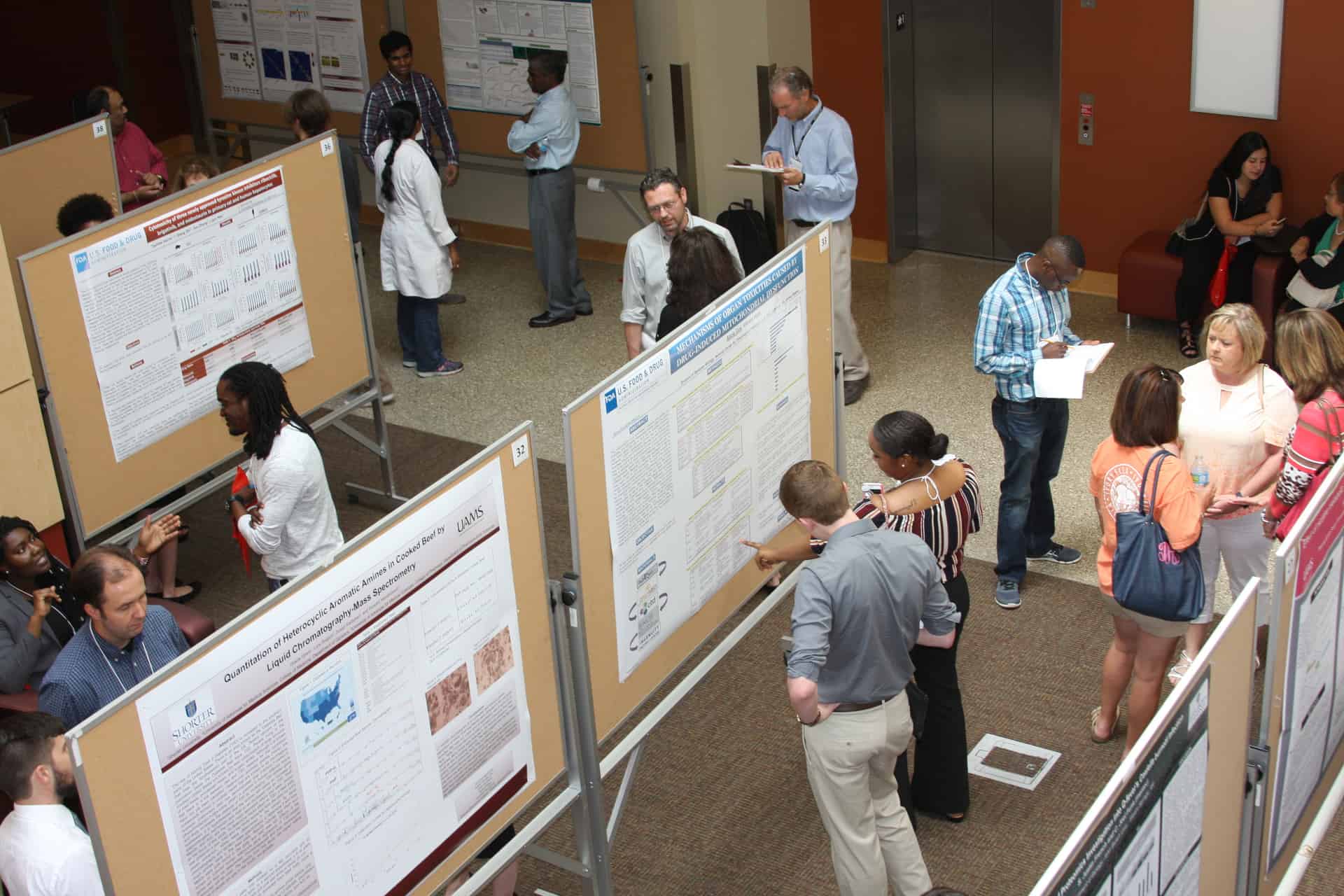
Potential patents for medical inventions as small as a molecule prompted big discussions among UAMS researchers who gathered for a showcase hosted June 6 by the College of Medicine to highlight medical research.

“Every poster you see here today has a patent application on file with the Patent and Trademark Office,” said Nancy Gray, Ph.D., director of BioVentures, UAMS’ technology licensing office and business incubator.

From left, Peter Crooks, Ph.D., D.Sc., and Narsimha Penthala, Ph.D., discuss their research on small-molecule derivatives as anti-cancer agents.

Eight projects were featured at the Showcase of Medical Discoveries: Inventors— the 18th in a series to foster communication and collaboration among UAMS investigators and clinicians. About 70 researchers, physicians, staff and students attended the event, held at the UAMS Winthrop P. Rockefeller Cancer Institute.

Each group of researchers had applied for a patent within the last two years, Gray said. Receiving a patent is often a lengthy process that takes several years to complete, she said.

“We are very interested in making sure that research ultimately makes its way to the patient, and it’s not going to make it to the patient if it doesn’t have a commercial path,” Gray said.

“Most faculty in academic health centers think about writing papers and disseminating their research findings through publications, but they don’t always think about protecting their intellectual property,” said Lawrence Cornett, Ph.D., UAMS vice chancellor for research. “The patent is just the beginning, so that you can go forward with the research and no one will steal your idea.”

Many projects focused on small molecule therapies to fight cancer and infection.

A small-molecule drug is a substance that is able to enter cells easily because it has a low molecular weight. Once inside the cells, it can affect other molecules, such as proteins, and may cause cancer cells to die. This is different from drugs that have a large molecular weight, such as monoclonal antibodies, which are not able to get inside cells very easily. Many targeted therapies are small-molecule drugs or small-molecule inhibitors.

Mark Smeltzer, Ph.D., professor in the Department of Microbiology and Immunology and Department of Orthopaedic Surgery, presented his team’s research on using antibiotic-loaded gold nanocages to target staphylococcal infections. Gold nanoparticles are emerging as promising agents for cancer therapy. Smeltzer’s team is using that approach to target infections.

Researchers and guests gather at the Showcase of Medical Discoveries.

Gold nanocages carry antibiotics to a specific location for treatment, only releasing the antibiotics after the nanocage is targeted with a laser. This releases energy that damages the pathogen, making it easier for the antibiotic to do its work. It’s a one-two punch that aims to combat growing antibiotic resistance, Smeltzer said.

“If you can use it to therapeutic advantage in the context of cancer, why can’t you use it for therapeutic advantage in the context of an infection?” Smeltzer said. “At the end of the day, what you’re trying to do is eradicate some sort of cell that has pathological consequences and do it in a manner that does not harm the human host.”

The Showcase of Medical Discoveries is organized by Cornett and supported by Pope Moseley, M.D., UAMS executive vice chancellor and dean of the College of Medicine. It originated from discussions about the faculty’s desire for more opportunities to display their scientific work in a social setting.

Posters at the showcase described the researchers’ work. They were:

Looking for drugs in all the wrong places: Are antibiotic-loaded gold nanocages the solution for treating Staphylococcus aureus biofilm infections?

Researchers: Daniel Meeker, Karen Beenken, Weston Blake Mills, Dmitry Nedosekin, Mark Smeltzer

Design and Synthesis of Bcl-xL Degraders as Potent Senolytic Agents

Researchers: Xuan Zhang, Yingying Wang, Daohong Zhou, and Guangrong Zheng

Assessing the Interest of UAMS Investigators in fastPACE Biomedical Commercialization Course

Researchers: Nancy Gray, Nancy Rusch, Curtis Lowery

Development and Commercialization of Tocol-containing Pharmaceuticals

Researchers: Ujwani Nukala, Shraddha Thakkar, Awantika Singh, Nukhet Aykin-Burns, Rajeshkumar Manian, John House, Guangrong Zheng, Sanchita Ghosh, Mahmoud Kiaei, Marjan Boerma, Martin Hauer-Jensen, Philip J. Breen and Cesar M. Compadre

Novel Potent Anti-leukemia Stem Cell Compounds

Researchers: Paola E. Ordóñez, Krishan K. Sharma, Laura M. Bystrom, Ujwani Nukala, Rajeskumar Manian, Maria A. Alas, William F. Reynolds, Raul G. Enriquez, Darcy C. Burns, Omar Malagón, Darin E. Jones, Michael Balick, Shraddha Thakkar, Philip J. Breen, Monica L. Guzman and Cesar M. Compadre

Valchlor gel (Mechlorethamine): an approved FDA drug in the USA, and marketed in Europe as Ledaga for the treatment of Mycosis fungoides and cutaneous T-cell lymphoma (MF-CTCL)

Researchers: Zaineb A.F. Albayati, Vipin P. Nair, Sundar Neelakantan, David R. Worthen, Marhaba Hojahmat and Peter A. Crooks

Combretastatin A-4 and Apysinopsin Analogs as Lead Anti-cancer Agents

Researchers: Narsimha R. Penthala, Grace Coggins, Maddukuri Leena; Jessica H. Hartman, Dae Song Jang; Alexei G. Basnakian, Suja Arattuthodiyil, Kevin M. Raney, Nikhil R. Madadi, Thirupathi R. Yerramreddy, Rajashekar Konjeti, Michael L. Freeman, Robert L. Eoff and Peter A. Crooks

Aryl Esters of Melampomagnolide B as Anticancer Agents

Researchers: Shobanbabu Bommagani, Jessica Ponder, Craig T. Jordan, Michael J. Borrelli, Meenakshisundram Balasubramaniam, Robert Reis, and Peter A. Crooks

Sesquiterpene Lactone Derivatives as Potential Lead Molecules for Treatment of Acute Myelogenous Leukemia

Researchers: Venumadhav Janganati, Jessica Ponder, Craig T. Jordan and Peter A. Crooks

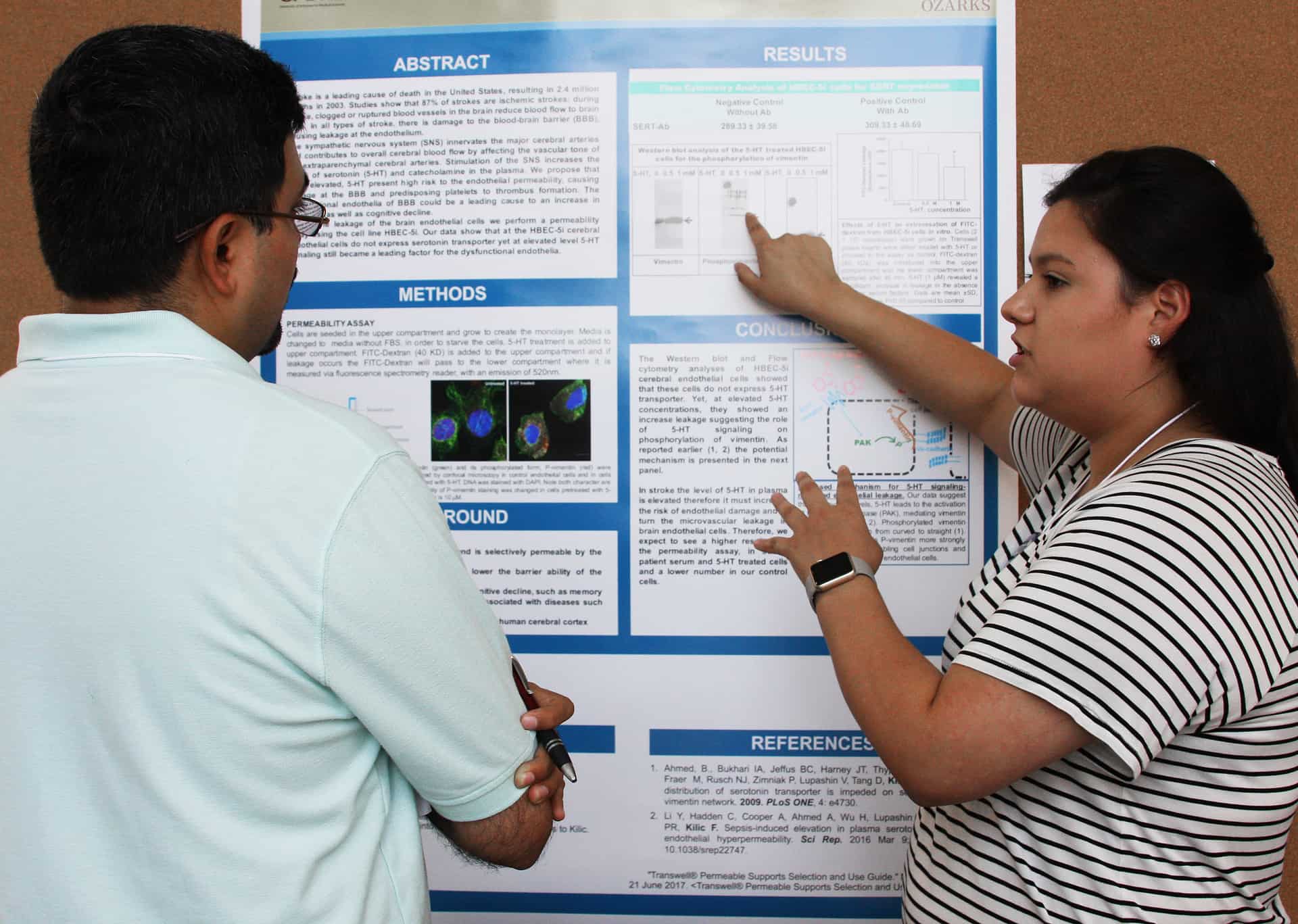
Venumadhav Janganati (background), a post-doctoral fellow in the Department of Pharmaceutical Sciences, explains his research on anti-leukemia drugs.

UAMS is the state’s only comprehensive academic health center, with colleges of Medicine, Nursing, Pharmacy, Health Professions and Public Health; a graduate school; a hospital; a northwest Arkansas regional campus; a statewide network of regional centers; and seven institutes: the Winthrop P. Rockefeller Cancer Institute, the Jackson T. Stephens Spine & Neurosciences Institute, the Myeloma Institute, the Harvey & Bernice Jones Eye Institute, the Psychiatric Research Institute, the Donald W. Reynolds Institute on Aging and the Translational Research Institute. It is the only adult Level 1 trauma center in the state. UAMS has 3,021 students, 789 medical residents and five dental residents. It is the state’s largest public employer with more than 10,000 employees, including about 1,000 physicians and other professionals who provide care to patients at UAMS, Arkansas Children’s Hospital, the VA Medical Center and UAMS regional centers throughout the state. Visit www.uams.edu or www.uamshealth.com. Find us on Facebook, Twitter, YouTube or Instagram.

###

By Benjamin Waldrum | June 14th, 2017

Filed Under: News

All Slots for Prestigious Neuro-Oncology Fellowship Filled by UAMS Residents

June 13, 2017 | Two residents from the University of Arkansas for Medical Sciences (UAMS) have been selected for a prestigious fellowship in neuro-oncology administered jointly by the Johns Hopkins University School of Medicine and the National Institutes of Health Neuro-Oncology Branch.

A maximum of two fellows per year are selected for the program, and this year, both are from UAMS.

Carlos Romo, M.D., co-chief resident physician; and Orwa Aboud, M.D., Ph.D., will complete their residencies in the Department of Neurology in the UAMS College of Medicine in June and begin their fellowships in July.

The fellowship provides advanced training for neurosurgeons, radiation therapists, medical and pediatric oncologists and neurologists to prepare them for academic careers in neuro-oncology. The experience is tailored individually to the needs of the fellow. Both Romo and Aboud will spend three years expanding both their research and clinical experience through courses, research projects, mentoring and clinical rotations.

“It is extremely prestigious for us to have not just one of the two, but both,” said Robert L. “Lee” Archer, M.D., professor and interim chairman of the Department of Neurology. “Their selection says a lot about the level of residents we are producing. Dr. Romo and Dr. Aboud have done outstanding work during their time here, and I would also like to credit their adviser, Dr. Shirley Ong, and our residency director, Dr. Kinshuk Sahaya, for contributing to their success.”

Ong, M.D., said that both have unique skillsets to offer their patients and expand the future of neuro-oncology.

“There are very few good neuro-oncology fellowship training programs in the U.S., and they are extremely competitive,” Ong said. “Neuro-oncology is a small field and requires hard work and a strong fortitude, and I had zero hesitation in recommending Drs. Aboud and Romo to the Johns Hopkins/NIH fellowship program. I know they will represent UAMS well.”

Romo is from Aguascalientes, Mexico, and earned his medical degree at Tec de Monterrey in Monterrey, Mexico. Sahaya, M.D., described him as a dynamic and multifaceted resident whose teaching ability is appreciated by students and faculty alike. For example, Romo helped Sahaya redesign part of the neurology residency curriculum. Ong described him as a leader who sets goals and accomplishes them.

Shirley Ong, M.D.; Orwa Aboud, M.D., Ph.D.; Carlos Romo, M.D.; and Kinshuk Sahaya, M.D.
From left, Shirley Ong, M.D.; Orwa Aboud, M.D., Ph.D.; Carlos Romo, M.D.; and Kinshuk Sahaya, M.D., celebrate the achievements of neurology residents Aboud and Romo, who were both selected for a prestigious neuro-oncology fellowship with the Johns Hopkins University School of Medicine and the National Institutes of Health Neuro-Oncology Branch. Ong is their adviser and Sahaya is the neurology residency director.

Romo said his time at UAMS exposed him to a wide variety of patients, especially because of UAMS’ partnerships with Arkansas Children’s Hospital and the Central Arkansas Veterans Healthcare System. He is looking forward to expanding his experiences even further.

“This fellowship, unlike any other in the country, provides the fellows with access to two different institutions that are leaders in the field,” Romo said. “Faculty members at Johns Hopkins and NIH are recognized worldwide for their contributions in the area of neuro-oncology. NIH also offers opportunities for collaboration between basic and clinical scientists, and particularly among scientists across other disciplines. This collaboration creates a nurturing environment for the development of ideas that can improve outcomes for patients with cancer of the nervous system.”

Aboud is from Swaida, Syria. He attended medical school at the University of Damascus in Syria and graduate school at UAMS. Sahaya described him as an outstanding resident and researcher and a skilled physician. He is a great team leader who is loved by colleagues, faculty, students and patients alike. His research is already garnering him top honors. Ong said Aboud is extremely compassionate and goes above-and-beyond with his patients.

Aboud said that early in his neurology residency, he took part in a neuro-oncology rotation that exposed him to how big the impact of basic and clinical research can be on patients’ treatment options and quality of life. He values the fact that both the UAMS residency and the NIH/Johns Hopkins fellowship give him both research and clinical exposure.

“The field of neuro-oncology is about giving patients options for a better quality of life, longer survival, and, hopefully, a cure,” Aboud said. “In preparation for my career as a neuro-oncologist, this training is essential to gain a broad knowledge of the science of brain tumor development and the scientific strategies used in the development of the next generation of treatment. As a clinician scientist, my goal is to achieve a more immediate and positive impact on my patients’ lives.”

The UAMS Neurology Residency is a four-year program open to students who already have a medical degree and are looking for advanced training in neurology. Residents can then move on to become practicing neurologists or pursue additional specialized training through fellowships, like Romo and Aboud.

“Both are very different in their interests and approach, and they exemplify the diversity of our learning approach, both culturally and academically,” Sahaya said. “It’s our goal to provide a supportive environment for our residents where they can both learn the essentials and develop their own interests while we assist them in that process. We support our residents in all career choices, from general to specialized neurology. These two are just another example of the careers we hope to nurture with our residency.”

For more information, visit neurology.uams.edu.


UAMS is the state’s only comprehensive academic health center, with colleges of Medicine, Nursing, Pharmacy, Health Professions and Public Health; a graduate school; a hospital; a northwest Arkansas regional campus; a statewide network of regional centers; and seven institutes: the Winthrop P. Rockefeller Cancer Institute, the Jackson T. Stephens Spine & Neurosciences Institute, the Myeloma Institute, the Harvey & Bernice Jones Eye Institute, the Psychiatric Research Institute, the Donald W. Reynolds Institute on Aging and the Translational Research Institute. It is the only adult Level 1 trauma center in the state. UAMS has 3,021 students, 789 medical residents and five dental residents. It is the state’s largest public employer with more than 10,000 employees, including about 1,000 physicians and other professionals who provide care to patients at UAMS, Arkansas Children’s Hospital, the VA Medical Center and UAMS regional centers throughout the state. Visit www.uams.edu or www.uamshealth.com. Find us on Facebook, Twitter, YouTube or Instagram.

###

By Amy Widner

Filed Under: News

Medical Student Survives Stroke Thanks to Classmates’ Quick Reaction

June 15, 2017 | Justin Treas is a busy man. The 29-year-old has a Ph.D. in environmental toxicology and has worked in cancer research. He’s married with three children and just earned his medical degree from the UAMS College of Medicine. On March 28, 2017, Treas had a stroke that his doctors believe would have killed him if those around him hadn’t acted quickly and efficiently.

Justin Treas dons his ceremonial doctoral hood at the College of Medicine honors convocation ahead of the UAMS Commencement in May.

“I remember being with other students. The professors were teaching us about geriatrics,” Treas said. “I remember going outside because I wasn’t feeling well. Some friends came to check on me and quickly called Dr. Mendiratta. She took me to the clinic. They checked my glucose and other vitals. I was doing very poorly so they took me to the emergency department.”

Benedict Tan, M.D., listened as Treas recounted the events of that day.

“The fact that you can recall that much is very impressive,” Tan told his patient. “Once you see your CT scans, you’ll be impressed, too. Your clot was massive.”

Tan is the director of neurocritical care at UAMS, treating the most serious brain and spine cases in emergency and intensive care. He is the only neurointensivist in Arkansas.

“The stroke pager was activated, and we were called to the emergency room,” Tan said. “As soon as the CT scan was complete you could see the clot. That’s very unusual because it was probably the biggest clot I have seen without using further imaging techniques. We knew right away that he needed treatment immediately.”

Mehmet Akdol, M.D., an interventional neuroradiologist and assistant professor in the UAMS College of Medicine’s Department of Radiology, removed the clot after Treas received tPA. The tissue plasminogen activator is a clot-busting agent used to quickly improve blood flow to the brain. Tan says since the onset of the stroke was clear and verified by multiple witnesses, he felt confident to give him the clot-busting drug. Clot-busting medication is the first line of medication for stroke patients but must be used in the first three hours after onset of symptoms. Treas received tPA 19 minutes after he entered the emergency department.

“We used a microcatheter to grab the clot and pull it down like a cork screw, resuming blood flow to the brain,” Akdol said. “We have several cases that received this kind of treatment. What is unique in this case is the timing and aggressive treatment with no delay, which brought an excellent neurological result.”

“The staff, physicians and nurses were amazing,” said Debra Johnson, R.N., stroke nurse coordinator and outreach nurse for the AR SAVES program. “He was ranked a 26 on the National Institutes of Health (NIH) Stroke Scale. Twenty-four hours later, he was at a two.”

The NIH stroke scale increases with severity. The lower the score the less severe it is; anything above 20 is extremely severe.. Three nurses and a resident physician were recognized for their distinct aptitude in treating Treas by receiving an “I Saved a Brain” pin: Stacy Bennett, R.N; Emily Boyd, R.N.; Erin Sanders, R.N., and Heather McLemore, M.D.

It is uncommon for a person as young as Treas to have a stroke except in the case of traumatic injury. The size of the clot prompted Tan to examine Treas for signs of trauma around his neck.

“We later found out that the stroke was caused from a carotid artery dissection,” Tan said.

Carotid artery dissection is a tear in one of the two main arteries in the neck. It’s almost exclusively caused by trauma. Over time, the tear can get bigger and a clot will form around it, cutting blood flow to the brain. Tan says the trauma doesn’t have to come from an assault or something very severe. He says there have been examples of carotid artery tears caused from being hit too quickly, falling, whiplash, dancing violently or riding a roller coaster. Treas’ physicians believe a roller coaster may have caused his tear. He’d visited an amusement park two weeks prior.

“Rides like that can cause a tear because of the abrupt changes in gravity,” Tan said. “That creates a reversal in blood flow and in some degree can cause stress on the vessel itself. If the vessels obtain stress, they can tear and over time cause a clot.”

Akdol says Treas’ ability to make a complete recovery is because of swift reaction from those around him. “There was no waste of time. We have implemented a system here at UAMS that allows us to deal with these cases very quickly. This is why we want people to know the symptoms and remember the acronym FAST.”

F – Face Drooping.

A – Arm Weakness.

S – Slurred Speech.

T – Time to call 911.

Lillie Belle Treas
Lillie Belle Treas was born April 20, nearly one month after her father, 29-year-old Justin Treas, suffered a massive stroke. Treas says his wife was about 36 weeks pregnant when she got the news and raced to be by his side at UAMS.

Since the stroke, Treas has been recovering and says he’s been improving daily. He and his wife have a baby, Lillie Belle, born April 20. He graduated from UAMS on May 20 and he soon starts his internal medicine residency with hopes to eventually be an oncologist or cardiologist.

By Katrina Dupins | June 15th, 2017 |

Filed Under: News

Dr. Pope Moseley Invested in First Arkansas Medical Society Distinguished Dean’s Chair

June 12, 2017 | Pope L. Moseley, M.D., dean of the College of Medicine and executive vice chancellor at the University of Arkansas for Medical Sciences (UAMS), was formally invested June 8 as the inaugural recipient of the Arkansas Medical Society Distinguished Dean’s Chair.

Moseley, a leader in internal medicine and internationally recognized physician-scientist, came to UAMS in July 2015. He oversees the college’s interrelated missions to train the next generation of Arkansas’ physicians, develop new knowledge that leads to better health, and deliver world-class, patient-centered care. The college is the largest at UAMS and home to about three-fourths of the faculty, many of whom also serve in UAMS’ Graduate School, institutes and other units. As executive vice chancellor, Moseley is a senior leader at UAMS.

An endowed distinguished chair is the among the highest academic honors a university can bestow on a faculty member and is established with gifts of $1.5 million, which are invested and the proceeds used to support the educational, research and clinical activities of the chair holder and college. Those named to a distinguished chair are among the most highly regarded scientists, physicians and educators in their fields of expertise.

“An endowed chair is the highest honor that an academic institution bestows on its most distinguished faculty,” said UAMS Chancellor Dan Rahn, M.D. “Those funds can be used for salary support, they can be used for investment in programs that advance knowledge, and the overall goal of an endowed chair is to provide some flexible funds in a very tight environment that the chair holder can use to invest in ways that advance the human condition.”

“This endowment will provide funds for wherever they are needed most. It will help us to meet unexpected challenges,” Moseley said. “And someday this chair will help us find the next dean, because it’s a powerful recruitment tool for us. It’s extremely important for this college and it’s extremely important for Arkansas.”

The UAMS College of Medicine and the Arkansas Medical Society share common roots extending to the 1870s and an ongoing commitment to improve health care in Arkansas through education, training and support for the very best physicians. By establishing a distinguished chair for the college’s most important leadership post, the society is making a transformative investment that will benefit Arkansas’ future physicians – and their future patients – in perpetuity.

Arkansas Medical Society President Amy B. Cahill, M.D., a 1995 UAMS graduate, noted that the doctors who originally started the College of Medicine were also members of the medical society.

“This day will go down in the archives of both the AMS and the College of Medicine,” Cahill said. “For the Arkansas Medical Society to have the honor of endowing the dean’s chair is a logical choice. Our histories have been blended for so many years as Arkansas physicians either attended school here or did their residency or have some attachment to this university. What better choice, what better alliance, what better society to anchor this than the Arkansas Medical Society.”

Moseley’s special guest speaker at the event was Matthew L. Cotten, Ph.D., of the Department of Viroscience at the Erasmus University Medical Centre at Rotterdam in the Netherlands and a researcher in virus genomics at the Wellcome Trust Sanger Institute in Hinxton, Cambridge, U.K. Cotten and Moseley started working together at the University of Iowa in 1984 and co-authored an article that appeared in Nature in 2000.

“Pope is incredibly good at appreciating details without losing track of the larger picture,” said Cotten, “and this is very important for a molecular biologist and a clinician, because in the end, you want to improve the medical health of the patient. There’s a new area in the type of medical research that we are capable of doing, and that’s to detect patterns in very large sets of electronic medical records. I think very quickly after this type of research emerged, Pope realized this was another way to look at details but also the big picture.”

Moseley came to UAMS from the University of New Mexico (UNM) School of Medicine, where he was a distinguished professor and led the Department of Internal Medicine as its chair for 14 years.

He is highly regarded both for his laboratory research focusing on cellular adaptations to exercise and for his expertise in disease systems biology. As an associate director of UNM’s Clinical Translational Science Center, which is funded by the National Institutes of Health, Moseley led comparative effectiveness research initiatives and oversaw development of the UNM Health Sciences Center informatics platform.

Among many initiatives at UAMS, Moseley has launched a major initiative to develop a top-tier biomedical informatics program. The rapidly growing field focuses on the design and use of sophisticated computational tools to manage and assess massive sets of medical and public health information to drive research and improve clinical care and health.

In addition, Moseley continues to oversee graduate students at the University of Copenhagen, in the Systems Biology Group of the Center for Protein Research, where they are developing an informatics approach to uncovering disease associations using the Danish National Health Registry.

Moseley received his undergraduate degree from Davidson College, his medical degree from the University of Illinois College of Medicine and a master’s degree in preventive medicine and environmental health at the University of Iowa.

He completed a residency in internal medicine and occupational medicine and a fellowship in pulmonary and critical care medicine at the University of Iowa. He is certified by the American Board of Internal Medicine, the American Board of Preventive Medicine (specialty in occupational medicine), and by the subspecialty board in pulmonary diseases.

Moseley was recruited to New Mexico in 1995 and served as chief of pulmonary/critical care and as senior associate dean for research prior to his appointment as chair of internal medicine. He also held the Reva S. Skelton Research Endowment and was a Regents’ Professor of the University.

The Arkansas Medical Society was created by and for physicians in 1875 and is now one of the most respected and influential health care organizations in Arkansas. The society is dedicated to improving health care in Arkansas and helping physicians focus on caring for their patients. It serves as an advocate, support system and source for health care news and resources.


UAMS is the state’s only comprehensive academic health center, with colleges of Medicine, Nursing, Pharmacy, Health Professions and Public Health; a graduate school; a hospital; a northwest Arkansas regional campus; a statewide network of regional centers; and seven institutes: the Winthrop P. Rockefeller Cancer Institute, the Jackson T. Stephens Spine & Neurosciences Institute, the Myeloma Institute, the Harvey & Bernice Jones Eye Institute, the Psychiatric Research Institute, the Donald W. Reynolds Institute on Aging and the Translational Research Institute. It is the only adult Level 1 trauma center in the state. UAMS has 3,021 students, 789 medical residents and five dental residents. It is the state’s largest public employer with more than 10,000 employees, including about 1,000 physicians and other professionals who provide care to patients at UAMS, Arkansas Children’s Hospital, the VA Medical Center and UAMS regional centers throughout the state. Visit www.uams.edu or www.uamshealth.com. Find us on Facebook, Twitter, YouTube or Instagram.

###

By Amy Widner | June 12th, 2017

Filed Under: News

Strong Mentorship Helps Researcher Discover Success

Craig Forrest, Ph.D., recalled the day four years ago when one of his Department of Microbiology and Immunology mentors, Xuming  Zhang, Ph.D., D.V.M., came looking for him.

Forrest had sought input from Zhang and mentor Usha Ponnappan, Ph.D., on his first NIH National Cancer Institute grant application. Zhang found him in a fifth-floor lab of the Biomedical One building. There, standing at the freezer, the two had one of the more consequential mentoring sessions of Forrest’s early career.

UAMS’ Crag Forrest, Ph.D., (left) credits his former mentors, Usha Ponnappan, Ph.D., and Xuming Zhang, Ph.D., D.V.M., with his early success.

“This is all wrong,” Zhang said, presenting his marked-up copy with an outline and arrows showing Forrest how to more effectively make his case.

“He knew exactly what he was doing,” Forrest said.

Ponnappan, who joined UAMS 25 years ago, and Zhang, who joined UAMS 20 years ago, said their approaches to mentoring are grounded in their own experiences as junior faculty.

Zhang, as an early career researcher, recalled his own need for the kind of detailed review he gave Forrest’s application. He loved getting thorough critiques from his mentors and colleagues because it gave him a better chance of being funded. Today, Zhang can bring to bear his expertise in the field and experience as an NIH reviewer to help mentees.

“Based on my own experience, for basic science faculty you have to have an NIH grant to be successful,” he said. “Without a grant, you can’t get promoted.”

Leading up to his grant submission, Forrest would pop into the offices of Ponnappan and Zhang to ask questions. “I bothered them constantly.”

Their advice was incorporated into his application, which achieved a rare perfect grant score and a five-year NCI grant totaling $1.83 million. The grant is helping further work on his discovery of a protein with a significant role in controlling herpes infections. Forrest’s early data gathering and a surprise discovery that were cornerstones of his grant application were supported by a UAMS Translational Research Institute pilot award and a COBRE grant.

The NIH application reviewers said they anticipate that his research “may reveal novel therapeutic targets,” and concluded, “In sum, there is considerable enthusiasm for the talented new investigator (Forrest) and the proposed work ….”

Forrest and his team have published three papers so far, and have three more in the works. He’s also filed a patent application through BioVentures.

Mentoring traditionally has been an informal practice, although some departments, such as Microbiology and Immunology in the UAMS College of Medicine, have a prescribed process. Department Chair Richard P. Morrison, Ph.D., started an official mentoring program eight years ago.  He describes it as “simple, straightforward and non-overbearing.”

Each junior faculty member has a three-person mentoring committee. The committees meet with the mentees once a semester to discuss progress and goals, followed by a written report.

Over the program’s eight years, the department’s five most senior junior faculty have produced five R01’s, three R21’s and three K22 awards – and all have received promotion and tenure, Morrison said.

Ponnappan and Zhang also helped Forrest become an associate professor, marking the official end of a six-year mentor-mentee relationship.

“Once they got me through the tenure process, it was kind of over,” Forrest said. “I’m on my own now, although I haven’t completely been away from them.”

Ponnappan said Forrest was a like a sponge and a pleasure to mentor. “He lives science,” she said. “His success is his own success. We just pointed him in right direction, that’s all.”

Forrest is now breaking new ground as a mentor himself, sitting on mentoring committees where he can learn from senior faculty.

He already has a key piece of advice for junior faculty, telling them, “Make sure you use your mentors.”

By David Robinson | June 6th, 2017

Filed Under: News

New Biomedical Informatics Degrees at UAMS to Provide Driving Force for Personalized Medicine

Three new degrees and a certificate in biomedical informatics to help professionals assess and manage large sets of medical and public health information will soon be offered at the University of Arkansas for Medical Sciences (UAMS).

The Arkansas Department of Higher Education recently approved the three graduate degrees — Doctorate of Philosophy, Master of Science and Professional Master’s — and a Graduate Certificate Program in biomedical informatics at UAMS.

“Biomedical informatics is a driving force behind personalized medicine, enabling innovative, customized treatments for individual patients,” said Executive Vice Chancellor and College of Medicine Dean Pope L. Moseley, M.D. “The state’s approval of these advanced biomedical informatics degrees will position UAMS to be a national leader in one of the fastest growing research fields.”

Biomedical informatics professionals use computational tools to assess and manage medical and public health information for patient care and research programs. Professionals have the knowledge and skills to help improve human health through their own research and by aiding other researchers in the use of large amounts of data that are beyond the ability of commonly used software tools to process and manage.

“Our vision is to build a nationally recognized graduate program in biomedical informatics,” said Fred Prior, Ph.D., chair of the Department of Biomedical Informatics in the College of Medicine. “We will do so by first focusing on understanding and meeting the significant biomedical informatics workforce needs of our state.”

As the state’s only academic medical center, Prior said, UAMS has an obligation to serve Arkansas in this way. Meeting this goal will forge a strong, biomedical informatics graduate program that will contribute to meeting state and national workforce needs across the major sub-areas of biomedical informatics, including:

  • Translational bioinformatics. This degree program is for researchers using data in cellular- and molecular-level studies such as a study of genes producing a protein that has a role in disease. The field also includes pre-clinical data as development and testing begins for new drug targets, compounds or devices.
  • Imaging informatics. Training in imaging informatics, offered only a few places nationally, includes the latest methods of managing and interpreting images used in research. It also includes coursework for imaging professionals, such as those who run a hospital’s picture, archiving and communication (PAC) system where images such as CT scans, X-rays, and MRIs are stored.
  • Clinical informatics. This program is for those interested in generating, managing and using information in health care settings, such as predicting patients who are likely to respond well to treatment.
  • Clinical research informatics. UAMS is the first program in the country to offer both specific training and graduate degrees in Clinical Research Informatics, which involves use of data to design, conduct and report clinical studies.

Each of the four tracks are offered as a 36-credit hour master’s degree with a Professional and a Master of Science option. Additionally, the doctoral program will take a minimum 55 credit hours that are inclusive of the master’s degree credit hours.

“Adding these biomedical informatics degrees strengthens our curriculum and will be a significant draw for students nationally,” said Graduate School Dean Robert E. McGehee Jr., Ph.D. “Both master’s options can be completed in two years with full-time enrollment, and the Ph.D. can be completed in four years, though for most individuals we anticipate five years.”

The Graduate Certificate consists of one core course, a practicum, and additional courses of the candidate’s choosing.

At the certificate level, the goals are to deepen knowledge, increase skills and the ability to apply biomedical informatics principles and methods within an area of practice, and to conceptualize, plan, conduct and report an applied biomedical informatics project.

At the professional master’s level, the educational goals will expand on the certificate level to include the ability to productively work as a member of an interdisciplinary team, and to continue professional career development. Students completing the professional master’s degree will possess the knowledge and skills necessary to sit for the relevant professional certification exam.

The Master of Science educational goals include those at the professional master’s level plus gaining the ability to participate in and manage research processes in the relevant area of biomedical informatics.

Doctoral–level goals include those at the master’s level plus the ability to pose compelling scientific questions and new methods in biomedical informatics to design, conduct and report the research that answer them.

UAMS is the state’s only health sciences university, with colleges of Medicine, Nursing, Pharmacy, Health Professions and Public Health; a graduate school; a hospital; a northwest Arkansas regional campus; a statewide network of regional centers; and seven institutes: the Winthrop P. Rockefeller Cancer Institute, the Jackson T. Stephens Spine & Neurosciences Institute, the Myeloma Institute, the Harvey & Bernice Jones Eye Institute, the Psychiatric Research Institute, the Donald W. Reynolds Institute on Aging and the Translational Research Institute. It is the only adult Level 1 trauma center in the state. UAMS has 2,870 students, 799 medical residents and five dental residents. It is the state’s largest public employer with more than 10,000 employees, including about 1,200 physicians who provide care to patients at UAMS and its regional campuses throughout the state, Arkansas Children’s Hospital, the VA Medical Center and Baptist Health. Visit www.uams.edu or www.uamshealth.com. Find us on Facebook, Twitter, YouTube or Instagram.

By David Robinson

Filed Under: News

  • «Previous Page
  • Page 1
  • Interim pages omitted …
  • Page 38
  • Page 39
  • Page 40
  • Page 41
  • Page 42
  • Next Page»
UAMS College of Medicine LogoUAMS College of MedicineUniversity of Arkansas for Medical Sciences
Mailing Address: 4301 West Markham Street, Little Rock, AR 72205
Phone: (501) 296-1100
  • Facebook
  • X
  • Instagram
  • YouTube
  • LinkedIn
  • Pinterest
  • Disclaimer
  • Terms of Use
  • Privacy Statement
  • Legal Notices

© 2026 University of Arkansas for Medical Sciences