• Skip to primary navigation
  • Skip to main content
  • Skip to primary navigation
  • Skip to main content
Choose which site to search.
University of Arkansas for Medical Sciences Logo University of Arkansas for Medical Sciences
College of Medicine
  • UAMS Health
  • Jobs
  • Giving
  • About Us
    • Fast Facts
    • Leadership
    • Features
    • Maps and Directions
    • College of Medicine History
    • Professionalism Guidelines
  • Departments
  • Admissions
    • Apply
    • Financial Aid and Scholarships
    • Life in Little Rock or Fayetteville
    • Dual Degree Programs
      • M.D./MBA Program
      • CREST MSTP (MD/PhD) PROGRAM
      • M.D./MPH Program
    • Three-Year M.D. Program
    • Rural Practice Programs
      • Community Match Rural Physician Recruitment Program
      • Rural Practice Scholarship Program
    • What Our Graduates Do
    • Contact Admissions
  • Students
    • Academic Calendar
    • Academic Houses
    • Career Advising
    • Financial Aid and Scholarships
    • Visiting Students
    • Mentor Spotlight Podcast
    • Preparing for Residency
    • Non-Discrimination Statement
    • Outstanding Teacher Nominations
    • Parents Club
    • Student Links
    • Honors in Research
    • UAMS Campus Security
    • Undergraduate Medical Education Competencies
  • Graduate Medical Education
  • Alumni
  • Faculty Affairs
  • Research
  1. University of Arkansas for Medical Sciences
  2. College of Medicine
  3. News
  4. Page 38

News

UAMS Medical Students Pull for Each Other in Competition – and Medical School

Sept. 15, 2017 | UAMS College of Medicine students gathered with faculty members, family and friends on the field at War Memorial Stadium on a September Saturday afternoon that started with food and games and ended with students literally pulling for one another.

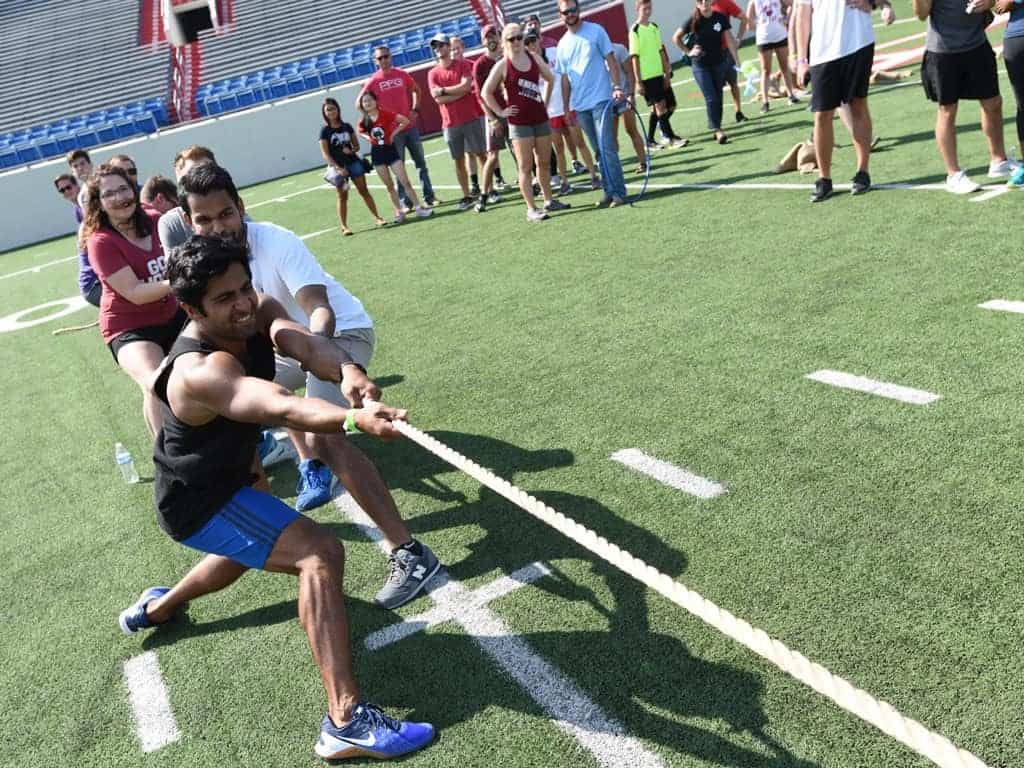
UAMS College of Medicine students pull together in a tug-of-war contest during the college’s first annual Academic House Olympics.

Just as in the tug-of-war matchups that capped the events at the college’s first annual Academic House Olympics, students and faculty in the college’s seven academic houses pull for one another throughout the students’ four years of medical education.

“Medical school poses some of the greatest challenges and most difficult coursework that any students face,” said Sara Tariq, M.D., an associate professor of internal medicine and assistant dean for undergraduate clinical education in the college. “We established academic houses in 2016 to help students connect and mentor one another and develop meaningful relationships with faculty members. In short, our academic houses also help students deal with the stress of medical school.”

Group photo
Tank House faculty leader Jason Mizell, M.D., showcases the house crest while students cheer during judging for the House Spirit Award, which the house won.

The houses are structured learning communities, not physical residences. Each house consists of students from all four years and specially trained physician and basic sciences faculty advisers. Many house activities focus on academic success and preparation for crucial milestone events such as national exams and the increasingly competitive National Resident Matching Program, which determines where physicians will train after graduation. The interaction of students in different class years encourages peer mentoring as students gear up for these challenges.

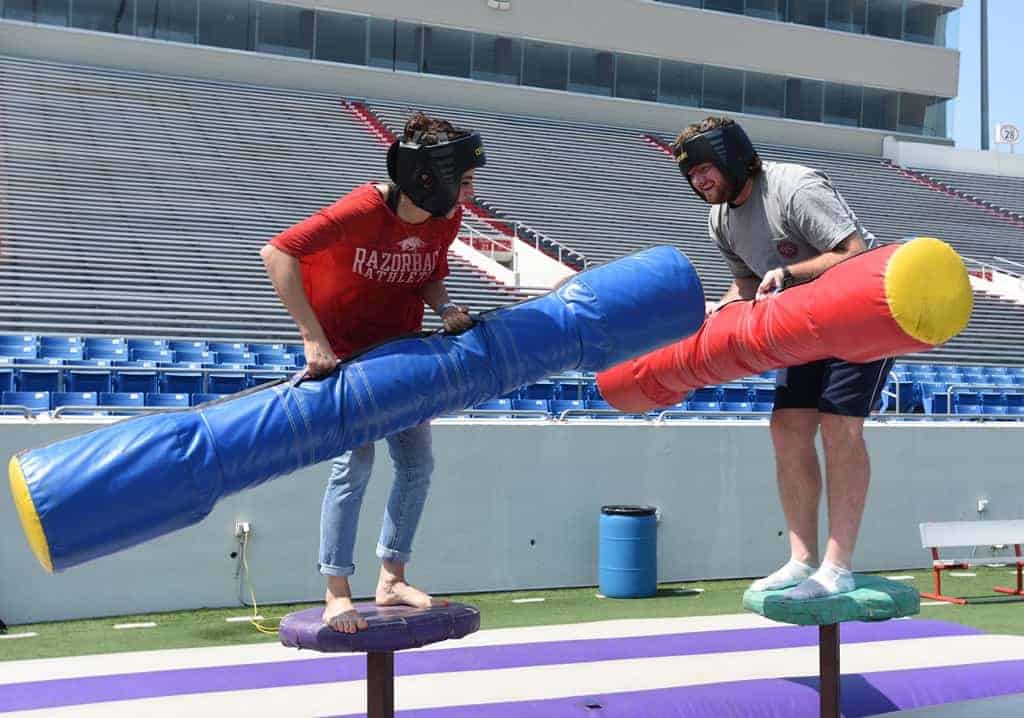
Juniors Nawar Hudefi (left) and Ru Massey square off in a friendly jousting duel.

“We know that sustained professional and personal relationships between students and faculty and among peers contribute to effective learning,” Tariq said. “This is one reason about 60 medical schools across the country – about 40 percent of U.S. medical schools – have adopted academic houses or similar learning communities.”

“Ultimately, we want to ensure that our students are successful in medical school, in the residency match and beyond,” said Pope L. Moseley, M.D., who advocated for implementing academic houses after his recruitment to UAMS as executive vice chancellor and College of Medicine dean in 2015. “We want our students to reach their full potential academically, personally and professionally.”

Sara Tariq, M.D., cajoles students and others to try to dunk her again in a fundraising activity for medical students affected by recent hurricanes.

The Olympics was planned as a way for students, faculty and families to get to know one another outside of the classroom and build bonds. Music filled the stadium until the mid-afternoon kickoff of an Arkansas Razorbacks game, which was played on the Jumbotron. Colorful banners, balloons and other decorations adorned picnic awnings set up by each academic house.

“This is a lot of fun and a totally stress-free day for us,” Nawar Hudefi, a junior, said after hopping down from a giant inflatable jousting ring. She had just used an oversized baton to defeat her classmate, Ru Massey, in a laughter-filled duel. Massey agreed, adding that the event was an opportunity to meet or become better acquainted with students from other houses and class years.

Freshman Billy Buck (left) steadies his hand while extracting a piece from a giant “Under the Knife” game while Kevin D. Phelan, Ph.D., a Beall House faculty adviser and co-director of the Division of Clinical Anatomy, watches.

The seven academic houses were named by students last year in honor of successful UAMS alumni, iconic faculty members, prominent Arkansas physicians and other leaders (all deceased) who made their mark on Arkansas and medicine. Hudefi’s house, for example, is named after George William Stanley Ish, M.D., a Harvard-trained African-American physician who cared for citizens in Little Rock from the 1920s through the 1960s and founded a sanatorium for treating tuberculosis patients. Massey’s house is named after Patrick W. Tank, Ph.D., a nationally prominent anatomist who helped more than 4,000 medical students learn the complexities of the human body while serving on the College of Medicine faculty from 1978 to 2012.

At War Memorial, students vied for possession of the House Cup by earning points in half a dozen sports and other games as well as for overall participation and house spirit. In an unplanned, tie-breaking final obstacle course race, the day’s top honors went to the Lowe House, named after Betty A. Lowe, M.D., a 1956 alumna and highly respected pediatrics faculty member who helped Arkansas Children’s Hospital become one of the largest children’s hospitals in the country.

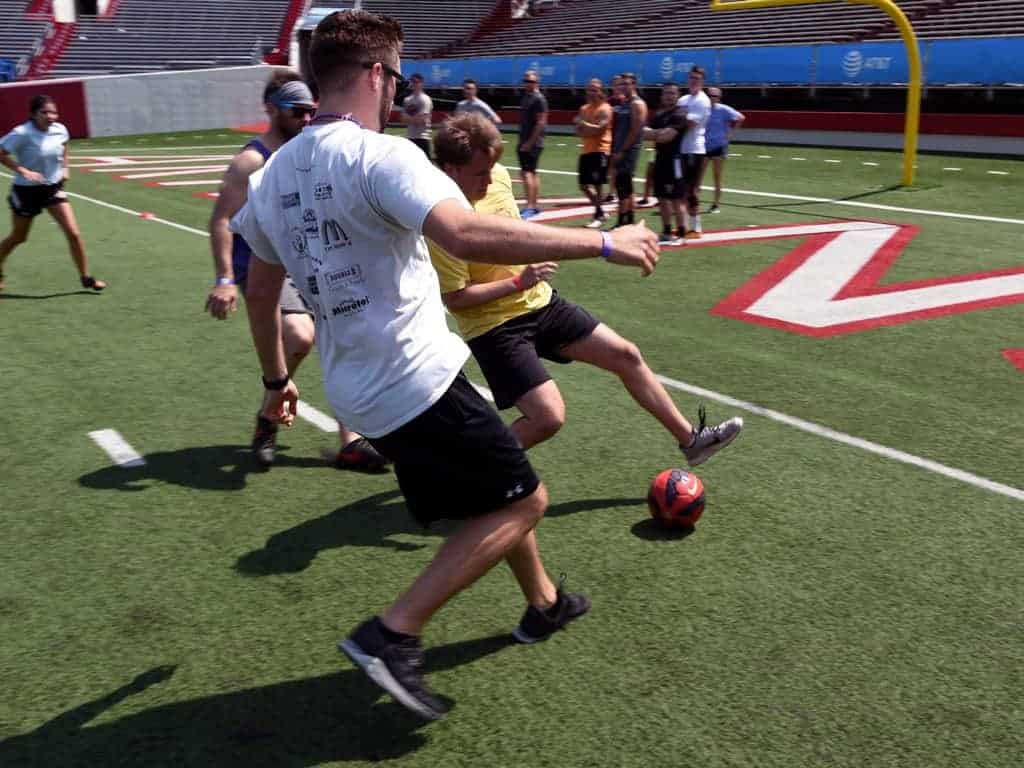
Soccer matches were among the sporting choices for students at the Academic House Olympics.

Several faculty members participated in activities, including a dunking booth that raised money for medical students affected by Hurricane Harvey in Texas and Hurricane Irma in Florida. Students, faculty and family members lined up for the chance to dunk some of their favorite teachers as well as the dean.

Priya Mendiratta, M.D., an associate professor of geriatrics, said she relishes her role as an adviser in the Beall House, named after Ruth Olive Beall, an early leader at Arkansas Children’s Hospital.

“It is wonderful to get to know our students better from their freshman year onward,” Mendiratta said. “They have so many leadership qualities, and we see more of those through the academic houses. Our houses, and events like this, give students and faculty a sense of being one big family. We all share the same goals in the education of these future physicians.”

Senior Cassandra Coleman Lautredou began serving as a student representative on the Leadership Council that helps to govern the seven houses at the program’s inception in August 2016. “We have basically been in the process of building what these academic houses really mean,” she said. “Through my leadership role in the Beall House, I have been able to work collaboratively with faculty and students. Prior to this experience I had not gotten to interact or work with UAMS faculty as much.”

“Our faculty advisers are fantastic,” Lautredou said, praising Mendiratta and Angela Scott, M.D., Ph.D., an assistant professor of pediatrics who was an active adviser in the house before assuming leadership of a major first-year course, Practice of Medicine I. “I know I can count on our faculty advisers if I need anything, whether it is house-related or not.”

Filed Under: News

Doctor Credits His Life to the Trauma System He Helped Create

He still has a long road to recovery, but Professor of Surgery Todd Maxson, M.D.,  said he likely wouldn’t be alive or in as good of shape is he’s in now if it weren’t for the state’s trauma system he helped establish. Read the full story on KATV’s website:

http://katv.com/news/local/doctor-credits-his-life-to-trauma-system-he-helped-create

Filed Under: News

Krishna Nalleballe, M.D., Joins UAMS as a Stroke Neurologist

Sept. 13, 2017 | Krishna Nalleballe, M.D., has joined the University of Arkansas for Medical Sciences (UAMS) as a stroke neurologist, providing comprehensive stroke care from the initial emergency contact to outpatient recovery care.

In addition, Nalleballe will serve as a consulting neurologist with the Arkansas Stroke Assistance through Virtual Emergency Support(AR SAVES) network, which is hosted at UAMS. In this role, Nalleballe will assist doctors across the state via two-way video as they make potentially life-altering treatment decisions in the first few hours after a stroke. He will also serve as an assistant professor in the Department of Neurology in the College of Medicine, conducting research and training future neurology doctors.

“Dr. Nalleballe is joining a team of talented health professionals who work together to provide the best in complete stroke care,” said Robert L. “Lee” Archer, M.D., professor and chairman of the Department of Neurology. “Whether he’s working with neuroradiologists and neurosurgeons here at UAMS after determining that a stroke patient needs surgery, or working with an AR SAVES partner hospital to assess a patient many miles away from Little Rock, his expertise is invaluable.”

Krishna Nalleballe, M.D.

Nalleballe will see emergency stroke patients who come to the UAMS Medical Center and continue to work with patients as they recover through the Stroke Services Clinic.

“Any stroke neurologist will tell you ‘time is brain’ because the most dramatic interventions available have the biggest impact if they are administered in the first few hours after a stroke, so it’s important for people to get help quickly,” Nalleballe said. “I also provide follow-up care for patients – everything from identifying potential causes for the stroke to setting up physical therapy.”

Nalleballe comes to UAMS from Jamaica Hospital Medical Center in New York, where he was a neurologist and director of neurological research, and the New York Institute of Technology College of Osteopathic Medicine in Old Westbury, New York, where he was an assistant professor. Previously, he also served as an assistant professor in the Department of Neurology at the Albert Einstein School of Medicine in Bronx, New York.

Nalleballe earned his medical degree from Osmania Medical College in Hyderabad, India. He completed internships at Osmania General and allied hospitals in India and North Shore Medical Center in Salem, Massachusetts. He was chief resident during his neurology residency at Temple University School of Medicine in Philadelphia and completed a vascular neurology fellowship at the Albert Einstein School of Medicine.

UAMS is nationally certified by The Joint Commission as an Advanced Primary Stroke Center. UAMS has the only comprehensive stroke treatment team in Arkansas, with one of the few stroke neurologists in the state. The stroke team includes Nalleballe, interventional neuroradiologists, who provide catheter-based treatments of the brain, vascular neurosurgeons, and a neurocritical care specialist.

The AR SAVES telestroke program links 53 hospitals throughout the state. AR SAVES enables a stroke neurologist to view brain images from a distant location. Neurologists can act quickly to interact with and examine a patient to determine whether the stroke is the type that can be treated by a special clot-busting drug that must be administered within the first few hours from stroke onset.

By Amy Widner | September 13th, 2017

Filed Under: News

Curtis Lowery, M.D., featured in Wall Street Journal

The Wall Street Journal interviewed Curtis Lowery, M.D., chairman of the Dept. of Obstetrics and Gynecology at UAMS about how The UAMS Center for Distance Health telemedicine program is helping high-risk pregnant women across Arkansas. 

Read the article for more information about how our 15-year-old telemedicine program is serving patients in remote locations for a Better State of Health.

Filed Under: News

Kevin Young, Ph.D., Named Chair of Microbiology and Immunology

Kevin D. Young, Ph.D., has been appointed chair of the Department of Microbiology and Immunology in the College of Medicine at the University of Arkansas for Medical Sciences (UAMS), effective Sept. 1.

Young has served as a professor in the department since 2009. He succeeds Richard P. Morrison, Ph.D., who became the college’s executive associate dean for research Aug. 1.

“Dr. Young is an accomplished, well-funded scientist who will ensure that the Department of Microbiology and Immunology continues its outstanding trajectory in research, scholarly work and education,” said Pope L. Moseley, M.D., executive vice chancellor at UAMS and dean of the College of Medicine.

Young has received more than $6.4 million from the National Institutes of Health (NIH) over the past two decades for his innovative research into bacterial cell walls, which could lead to new classes of antibiotics with longer effective life. He has been continuously funded for the past 32 years with more than $10 million in grant funding from federal agencies, national organizations and the pharmaceutical industry.

Young has focused his research on a pivotal step in the process of bacterial cell division, at which point bacteria are more vulnerable to antibiotics. He has served on numerous NIH and other federal agency panels that review grants or conduct advisory activities relating to research. Young has published extensively in prominent scientific journals. He serves on the editorial board for the Journal of Bacteriology and is a past member of the advisory boards for Molecular Microbiology and Microbe.

At UAMS, Young has served on numerous committees in support of research programs as well as the scientific advisory committees for faculty members, graduate students and post-docs. He has chaired the Promotion and Tenure Committee in the Department of Microbiology and Immunology since 2013. He received the Red Sash Award for teaching from senior medical students in 2016.

Young received his doctorate in microbiology at the University of Oklahoma in Norman in 1981. He completed postdoctoral work in the Department of Medical Biochemistry at Texas A&M College of Medicine in 1981-1983 and in the Department of Molecular Biology at the University of California at Berkeley in 1983-1985.


UAMS is the state’s only health sciences university, with colleges of Medicine, Nursing, Pharmacy, Health Professions and Public Health; a graduate school; a hospital; a northwest Arkansas regional campus; a statewide network of regional centers; and seven institutes: the Winthrop P. Rockefeller Cancer Institute, the Jackson T. Stephens Spine & Neurosciences Institute, the Myeloma Institute, the Harvey & Bernice Jones Eye Institute, the Psychiatric Research Institute, the Donald W. Reynolds Institute on Aging and the Translational Research Institute. It is the only adult Level 1 trauma center in the state. UAMS has 2,870 students, 799 medical residents and five dental residents. It is the state’s largest public employer with more than 10,000 employees, including about 1,200 physicians who provide care to patients at UAMS and its regional campuses throughout the state, Arkansas Children’s Hospital, the VA Medical Center and Baptist Health. Visit www.uams.edu or www.uamshealth.com. Find us on Facebook, Twitter, YouTube or Instagram.

###

Filed Under: News

UAMS Scientists Believe Enzyme Could Help Avoid Transplant Rejection

Sept. 6, 2017 | UAMS scientists believe they have identified an enzyme that could be manipulated to help stave off transplant rejection in patients following surgery.

Lyle Burdine, M.D., Ph.D., and Marie Schluterman Burdine, Ph.D., are part of a team of UAMS researchers that believes an enzyme has been identified that could provide immunosuppression after transplant surgeries.

The findings of Lyle Burdine, M.D., Ph.D., transplant surgeon and assistant professor in the UAMS College of Medicine’s Division of Surgical Research and his research team — including postdoctoral fellow Ara Kim Wiese, Ph.D., and assistant professor Marie Schluterman Burdine, Ph.D. — were published July 27 in PLOS ONE, an online, peer-reviewed journal.

The team uncovered a new role for an enzyme, DNA-dependent protein kinase, or DNA-PKcs, central to many immune system processes, most notably the production of IL-2 which regulates white blood cell activity.

The majority of unsuccessful transplant surgeries are due the recipient’s immune system rejecting the transplanted tissue and attacking it.

“DNA-PKcs, is critically important in processes that are essential to a properly functioning immune system,” said Burdine. “We knew this enzyme could be inhibited so we decided to study it closer to see how it works and if it could manipulate the protein to aid in preventing transplant rejection.”

The team’s research included the study of a DNA-PK inhibitor, NU7441, a small molecule inhibitor. The study found that in the presence of NU7441, the production of IL-2 by lymphocytes, a subtype of white blood cells, decreased significantly. This could prove to be a successful method of immunosuppression, which is done deliberately after transplant surgeries to prevent the recipient’s body from rejecting the transplant.

“Our results underscore an additional role of DNA-PKcs in the immune system and suggest that inhibition of this enzyme will likely have an immediate and profound effect on the maturation of lymphocytes as well as antibody formation,” said Burdine.

The next step will be to see if suppressing DNA-PKcs following a transplant will help avoid a rejection from the recipient’s immune system. The team of UAMS researchers is starting pre-clinical studies this year. The work will take place in the new home of the Division of Surgical Research at the Arkansas Children’s Research Institute.


UAMS is the state’s only health sciences university, with colleges of Medicine, Nursing, Pharmacy, Health Professions and Public Health; a graduate school; a hospital; a northwest Arkansas regional campus; a statewide network of regional centers; and seven institutes: the Winthrop P. Rockefeller Cancer Institute, the Jackson T. Stephens Spine & Neurosciences Institute, the Myeloma Institute, the Harvey & Bernice Jones Eye Institute, the Psychiatric Research Institute, the Donald W. Reynolds Institute on Aging and the Translational Research Institute. It is the only adult Level 1 trauma center in the state. UAMS has 2,870 students, 799 medical residents and five dental residents. It is the state’s largest public employer with more than 10,000 employees, including about 1,200 physicians who provide care to patients at UAMS and its regional campuses throughout the state, Arkansas Children’s Hospital, the VA Medical Center and Baptist Health. Visit www.uams.edu or www.uamshealth.com. Find us on Facebook, Twitter, YouTube or Instagram.

###

By Lee Hogan | September 6th, 2017

Filed Under: News

UAMS Center Helps Secure More than $100 Million in Research Funding

LITTLE ROCK — A nationally funded research center that was created to help the University of Arkansas for Medical Sciences (UAMS) grow its research enterprise has helped UAMS researchers successfully compete for grants totaling more than $100 million in just 13 years.

Edgar Garcia-Rill, Ph.D., a professor in the UAMS College of Medicine Department of Neurobiology and Developmental Sciences, directs the Center for Translational Neuroscience at UAMS.

UAMS is reaping the rewards of its first Center of Biomedical Research Excellence (COBRE) award. It funds UAMS’ Center for Translational Neuroscience (CTN), now in its third and final phase of funding. Led by Edgar Garcia-Rill, Ph.D., the CTN has benefited UAMS’ research enterprise in many ways since it was first funded in 2004, said Lawrence Cornett, Ph.D., UAMS vice chancellor for research.

“Over the years, the CTN has helped support a number of researchers at UAMS capable of overseeing large-scale research programs funded by the National Institutes of Health (NIH) and others,” Cornett said. “It has also helped us acquire and maintain the core research equipment and facilities necessary for the highest caliber science anywhere.”

Garcia-Rill, a professor of neurobiology and developmental sciences in the UAMS College of Medicine, applied for the nation’s first Center for Translational Neuroscience COBRE in response to a national decline in medical doctors with NIH grants. The COBRE funding has come in three phases:

  • Phase I, $7.5 million, 2004-2009. CTN activities included bringing established, nationally funded researchers to UAMS who could mentor early-career researchers; and support to help early-career researchers at UAMS and Arkansas Children’s Research Institute reach independent status with their own national funding awards.
  • Phase II, $7.5 million, 2009-2014. More mature programs were supported along with collaborations between clinical and basic scientists. Investments in these efforts helped increase grant support at UAMS by more than $33 million.
  • Phase III, $3.5 million, 2014-2019. The CTN has focused on helping UAMS successfully compete for large-scale research programs, such as additional COBREs and Centers. CTN investigators have generated over 550 articles and chapters, averaging more than 40 per year over the last 13 years.

The CTN was designed to benefit a wide range of research at UAMS, from studies in the laboratory to studies that involve human participants. The success of the CTN started early, Garcia-Rill said, and is a credit to the researchers who received funding support and to the CTN external advisory committee that identified them. As just one of many examples, he cited Mary Aitken, M.D., a professor of pediatrics and injury prevention researcher in the College of Medicine.

“The first time we funded Mary Aitken was 2004 and within a year she had three or four grants,” he said. “And we gave her peanuts; we just gave her a little pilot study money. We’re fortunate to have researchers like that, people who can take a tiny amount of money and turn it into millions.”

The CTN’s more recent focus on helping land large research programs at UAMS has paid significant dividends. The CTN has provided targeted funding to help UAMS researchers earn three major awards, including two new COBREs:

  • IDeA States Pediatric Clinical Trial Network (ISPCTN) Data Coordinating and Operations Center, $41.8 million, led by UAMS’ Charlotte Hobbs, M.D., Ph.D., the College of Medicine executive associate dean for clinical and translational research and the Pamela D. Stephens Professor of Birth Defects Research; and Jeannette Lee, Ph.D., professor of biostatistics in the College of Medicine.
  • Center for Translational Pediatric Research, $11.5 million, led by UAMS’ Alan Tackett, Ph.D., Scharlau Family Endowed Professor of Cancer Research and a professor of biochemistry, pediatrics and pathology.
  • Center for Studies of Host Response to Cancer Therapy, $10.5 million, led by UAMS’ Martin Hauer-Jensen, M.D., Ph.D., professor of pharmaceutical sciences, surgery and pathology.

“All of these people scored well on their applications,” Garcia-Rill said. “They may just need a little tweaking here and there, just a little nudge to get one more point and get funded. That’s what we help invest in – that extra point.”

The CTN can claim a number of achievements, possibly its biggest being the reduction in infant mortality in Arkansas. The CTN’s COBRE-supported telemedicine program, Pediatric Physician Learning and Collaborative Education (Peds PLACE), led by pediatrics professor Whit Hall, M.D., connects UAMS neonatologists such as Hall with physicians caring for newborns in hospital nurseries across the state.

In 2006, 8.5 of 1,000 newborns died in Arkansas. Since then, the rate has fallen to 6.8 per 1,000, with the biggest improvement among African-Americans. That equates to saving about 60 babies a year, Garcia-Rill said.

The success of Peds PLACE recently led to additional federal funding that will allow the program to expand into Oklahoma, where five telemedicine units will be placed in hospitals that serve American Indians, a population with high infant mortality rates.

UAMS is the state’s only comprehensive academic health center, with colleges of Medicine, Nursing, Pharmacy, Health Professions and Public Health; a graduate school; a hospital; a northwest Arkansas regional campus; a statewide network of regional centers; and seven institutes: the Winthrop P. Rockefeller Cancer Institute, the Jackson T. Stephens Spine & Neurosciences Institute, the Myeloma Institute, the Harvey & Bernice Jones Eye Institute, the Psychiatric Research Institute, the Donald W. Reynolds Institute on Aging and the Translational Research Institute. It is the only adult Level 1 trauma center in the state. UAMS has 3,021 students, 789 medical residents and two dental residents. It is the state’s largest public employer with more than 10,000 employees, including about 1,000 physicians and other professionals who provide care to patients at UAMS, Arkansas Children’s Hospital, the VA Medical Center and UAMS regional centers throughout the state. Visit www.uams.edu or www.uamshealth.com. Find us on Facebook, Twitter, YouTube or Instagram.

###

By David Robinson | September 5th, 2017

Filed Under: News

UAMS Grads Reunite at Alumni Weekend 2017

Aug. 31, 2017 | Amid all the handshakes, hugs, smiles and laughter, UAMS alumni reminisced and caught up on their divergent paths, delighted to be together again – some who hadn’t seen each other since graduation, decades ago.

The 2017 Alumni Weekend held Aug. 18-20 welcomed back more than 200 graduates from all colleges with a chance to reconnect, not only with classmates and friends, but their university as well.

William Weaver, M.D. (left) and John Webb, M.D., both COM '52, have been close friends for more than 60 years.
William Weaver, M.D. (left) and John Webb, M.D., both COM ’52, have been close friends for more than 60 years.

Weekend festivities began with a Friday night reception on the 12th floor of the Jackson T. Stephens Spine & Neurosciences Institute, co-hosted by UAMS Interim Chancellor Stephanie Gardner, Pharm.D., Ed.D., and the Chancellor’s Circle, UAMS’ premier annual giving society. Gardner thanked alumni for their support of the institution, particularly through scholarships.

Sponsors for this year’s Alumni Weekend were the Arkansas Medical Society, Crothall Healthcare, ARORA, Arkansas Urology and Westrock Coffee Company.

Deans from four colleges were in attendance: Pope. L. Moseley, M.D., UAMS executive vice chancellor and dean of the College of Medicine; Patricia Cowan, Ph.D., R.N., dean of the College of Nursing; Keith M. Olsen, Pharm.D., dean of the College of Pharmacy; and Douglas L. Murphy, Ph.D., dean of the College of Health Professions.

James Suen, M.D., COM '66, received the College of Medicine's 2017 Dean's Distinguished Alumnus Award from Pope Moseley, M.D.
James Suen, M.D., COM ’66, received the College of Medicine’s 2017 Dean’s Distinguished Alumnus Award from College of Medicine Dean Pope Moseley, M.D.

Golden Graduates – those celebrating 50 years or more – were given commemorative medallions with red and blue ribbons, which many wore proudly. Alumni and their guests met and mingled, some needing a quick glance at buttons featuring their yearbook photos to reacquaint with old friends. A gaggle of Class of ’97 graduates spent the evening together, 20 years seeming barely any time at all.

As the sun set and splashed the room with bright colors, alumni sat in small groups at tables decorated with white hydrangea blooms, enjoying heavy hors d’oeuvres and live jazz music. Several lingered by televisions with a slideshow of the 1967 Caduceus, pointing out themselves or former classmates. Others carried glossy copies of class pictures and examined them closely.

Members of the COM Class of ’97 celebrated their 20-year reunion.

William Weaver, M.D., of Lake Village, and John Webb, M.D., of Gainesville, Texas, both COM ’52, spent much of the weekend attending events together. Because their names are so close alphabetically, Weaver and Webb sat next to each other for four years in medical school and were side-by-side in their Caduceus class pictures. They became close friends and have kept in touch for more than 60 years.

Webb said that, as a UAMS graduate, he had an advantage over other medical schools because of the hands-on experience he had treating patients – in his case, those with diphtheria and typhoid fever. “They [at other schools] had more research experience than we had, but we [at UAMS] had more clinical experience,” Webb said.

It was a family affair for Weaver, who was escorted by his granddaughter, Natalie Burr, M.D., COM ’14. Burr said that having multiple generations of small-town doctors in Lake Village comes with a lot of name recognition. “Even still, 30 years after he quit practicing, you’d go in the grocery store and meet someone he delivered,” she said of her grandfather.

It was a more casual atmosphere on Saturday morning. A continental breakfast with plenty of hot coffee greeted alumni at the I. Dodd Wilson Education Building. Several enjoyed the historical display, courtesy of the UAMS Historical Research Center, featuring old annuals, textbooks, various medical equipment and a bird’s-eye view of the campus as it was nearly 50 years ago.

From left to right, Robert Bell, M.D., Nathan Hale, M.D., Richard Green, M.D. and Don Perdue M.D., all COM '67.
From left to right, Robert Bell, M.D., Nathan Hale, M.D., Richard Green, M.D. and Don Perdue M.D., all COM ’67.

After a welcome from Gardner and Dean Lee, Ed.D., UAMS executive director of alumni and constituent relations, class was in session. Joseph Bates, M.D., COM ’57, professor and associate dean of public health for the UAMS Fay W. Boozman College of Public Health, led a wide-ranging discussion on public health in Arkansas. Bates, renowned as a public health hero, recently retired as deputy state health officer and chief science officer for the Arkansas Department of Health.

That kind of commitment is only a small part of the dedication of UAMS alumni, Lee said.

Lee praised alumni for their service across multiple disciplines. “In unison, everybody turns and looks at you as the go-to person to save the day – and you do,” he said. “It’s not just a 40-hour-a-week job. It’s 365 days a year, 24 hours a day, 7 days a week. Thank you for choosing a life of service, and thank you for choosing UAMS.”

Saturday showcase lectures, always a popular item, were brought back. Alumni from each college broke into groups and settled into classrooms, where they listened and learned about a range of topics including neurology, mental health, precision medicine, orthopaedics, heart disease and community pharmacy. Follow-up questions and the ensuing discussions led to many showcases being extended, as they were the year before.

Charles Born, Ph.D., and Carol Born, Pharm.D., both COP '67.
Charles Born, Ph.D., and Carol Born, Pharm.D., both COP ’67.

Their appetites whet for knowledge, alumni were led across campus for college-centered catered lunches, and a chance to talk one-on-one with their dean. At the College of Medicine luncheon, held at the I. Dodd Wilson Education Building, Moseley thanked alumni for serving as ambassadors. “You, as graduates, demonstrate every day the successes of UAMS,” he said.

Moseley presented the 2017 Dean’s Distinguished Alumnus Award to James Y. Suen, M.D., COM ’66, distinguished professor and former chair of the Department of Otolaryngology – Head and Neck Surgery. Suen stepped down as chair of the department in April after 43 years of continuous service and is believed to be the longest-serving chair of otolaryngology in United States history. He was instrumental in development of what is now the UAMS Winthrop P. Rockefeller Cancer Institute, serving from 2001 to 2007 as its third director, and he holds the Patricia and J. Floyd Kyser, M.D., Endowed Chair in Otolaryngology-Head and Neck Surgery.

“James has really embodied the physician-scholar that we’ve talked about – someone who has pioneered clinical innovation and used scholarship to develop new ways to care for patients,” Moseley said.

“Success and achievements are rarely accomplished by one person,” Suen said. “I accept this honor on behalf of my nurses, my administrative assistants, my residents, my colleagues, all who have helped me with patient care, my academic achievements or endeavors – I could not do anything I do without all of the people that help me.”

Glenda Langston, CHP '64 and Lloyd Langston, M.D., COM ''67.
Glenda Langston, CHP ’64 and Lloyd Langston, M.D., COM ”67.

Saturday night’s Southern Supper, held in the main ballroom of the Little Rock Marriott, was the weekend’s smash hit. Inside, dozens of tables draped in elegant black surrounded a wooden dance floor leading up to the main stage, where the Lockhouse Orchestra played golden oldies and contemporary hits. A smorgasbord of Southern delicacies were on the menu, including red beans and rice, fried okra and gumbo, with pecan pie and bread pudding for dessert.

Alumni waited in long lines throughout the evening to get their pictures etched into a small commemorative crystal keepsake. In the meantime, several hit the dance floor – at least one in bare feet – to sway and rock as the music took them. Song requests came in for Chuck Berry, Glen Campbell and Led Zeppelin. “Boy, that band is great – they can play anything,” said Rick Bell, M.D., COM ’67, before breaking into an air guitar riff.

Midway through the evening, most Golden Graduates – many still wearing their medallions – retired to private rooms and reminisced. The Class of ’67, this year’s newest Golden Graduates, took class photos with their phones, remembered old times and talked of their grandchildren.

Sunday morning, Golden Graduates arrived early for brunch at the Capital Hotel. Held in the hotel’s first floor ballroom, alumni crowded around lavishly appointed tables and tucked in to heaping plates of eggs benedict, crispy bacon, plump sausages, cheese grits and fresh fruit.

CON '67 graduates Freda Bush, M.D. (second from left), Marilyn Harper and Anita Mitchell, Ph.D., with College of Nursing Dean Patricia Cowan, Ph.D., R.N.
CON ’67 graduates Freda Bush, M.D. (second from left), Marilyn Harper and Anita Mitchell, Ph.D., with College of Nursing Dean Patricia Cowan, Ph.D., R.N.

Anita Mitchell, Ph.D., Marilyn Harper and Freda Bush, M.D., all CON ’67, had a happy and long-awaited reunion in the foyer – the first time they’d seen each other since graduation 50 years ago. Initially, they didn’t recognize each other, until each looked at the other’s button of her younger self, Harper said. After that, they were inseparable.

“We’re older versions of our younger selves,” Bush said, laughing.

There was plenty to catch up on, but they quickly made up for lost time, telling stories.

“When you start thinking about the dreams and goals that we had then, and how we separated from each other, didn’t see each other, didn’t communicate with each other, and now we’re back together,” Bush said. “We’ve fulfilled our dreams and our goals! It’s nice seeing that we have really made significant contributions; we didn’t just go away.”

By Benjamin Waldrum | August 31st, 2017

Filed Under: News

New DFPM RED publication on nutrition practices in early care and education setting

A recent paper from DFPM RED published in the Journal of Nutrition Education and Behavior looks at studies on factors associated with nutrition practices in early care and education settings. The article suggests that these studies often focus on sociodemographic and programmatic characteristics. This qualitative study adapted and applied Dr. Jay Belsky’s determinants of parenting model to inform a broader exploration of Early Care and Education Teachers (ECETs) practices.  The RED study finds that the influence of ECET developmental histories and their related beliefs can be addressed through professional development and ongoing support. Future study should quantify model constructs in a larger sample and study their relationships over time.

Link to Article

Swindle, T., Patterson, Z., Boden, C. A Qualitative Application of the Belsky Model to Explore Early Care and Education Teachers’ Mealtime History, Beliefs, and Interactions. Journal of Nutrition Education and Behavior

Filed Under: News

DFPM RED is BUSY!

DFPM RED continues to be at the forefront of research-based work advocating for children in Arkansas and beyond. RED researchers work daily to study the factors that challenge and support children. RED research seeks, first, to understand and then to put understanding into usable practices that meet the needs of children across the state and the country. Here are just a few of RED’s recent publications… work that is truly making a difference.

  • McKelvey, L. M., Conners Edge, N.A., Fitzgerald, S., Kraleti, S., & Whiteside-Mansell, L., (in press).  Screening for Adverse Childhood Experiences from Birth to Five: Examining Associations with Children’s Health. Families, Systems, Health.
  • Swindle, T., Rutledge, J., Dix, B. & Whiteside-Mansell, L. (in press). Table Talk: Development of an Observational Tool to Characterize the Early Childcare Feeding Environment. Public Health Nutrition.
  • McKelvey, L. M., Selig, J. P., & Whiteside-Mansell, L. (2017, In Press). Foundations for Screening Adverse Childhood Experiences: Exploring Patterns of Exposure through Infancy and Toddlerhood.  Child Abuse and Neglect.  http://www.sciencedirect.com/science/article/pii/S0145213417302284
  • Swindle, T., Ward, W, & Whiteside-Mansell, L. (in press). Facebook: The Use of Social Media to Engage Parents in a Pre-school Obesity Prevention Curriculum. Journal of Nutrition Education and Behavior.
  • Whiteside-Mansell, L. & Swindle, T. (in press). Together We Inspire Smart Eating: A Preschool WISE curriculum for obesity prevention in low-income families. Journal of Nutrition Education and Behavior.
  • Swindle, T., Johnson, S.L., Whiteside-Mansell, L., & Curran, G. (2017). A mixed methods protocol for developing and testing implementation strategies for evidence-based obesity prevention in childcare: A cluster randomized hybrid type III trial. Implementation Science, 12:90 DOI: 10.1186/s13012-017-0624-6

Filed Under: News

  • «Previous Page
  • Page 1
  • Interim pages omitted …
  • Page 36
  • Page 37
  • Page 38
  • Page 39
  • Page 40
  • Interim pages omitted …
  • Page 42
  • Next Page»
UAMS College of Medicine LogoUAMS College of MedicineUniversity of Arkansas for Medical Sciences
Mailing Address: 4301 West Markham Street, Little Rock, AR 72205
Phone: (501) 296-1100
  • Facebook
  • X
  • Instagram
  • YouTube
  • LinkedIn
  • Pinterest
  • Disclaimer
  • Terms of Use
  • Privacy Statement
  • Legal Notices

© 2026 University of Arkansas for Medical Sciences