• Skip to main content
  • Skip to main content
Choose which site to search.
University of Arkansas for Medical Sciences Logo University of Arkansas for Medical Sciences
College of Medicine: Department of Pharmacology and Toxicology
  • UAMS Health
  • Jobs
  • Giving
  • About Us
    • Alumni
    • Contact Us
  • Faculty/Staff
    • Primary Faculty
    • Secondary Faculty
    • Emeritus Faculty
    • Administrative Staff
  • Postdoctoral Fellows
  • Students
    • Graduate Program in Interdisciplinary Sciences (GPIBS)
      • Pharmacology, Toxicology and Experimental Therapeutics (PTET)
      • T-SPaT
        • T-SPaT Faculty
        • T-SPaT Trainees
        • T-SPaT Trainee Publications
        • Program Information
        • T-SPaT Annual Symposium
        • Program Outcomes
    • Meet Our Students
    • Graduate School Application
    • Journal Club
    • Summer Undergraduate Research Program (SURF)
    • Graduates
  • Research Areas
  • Seminars
  • News
  1. University of Arkansas for Medical Sciences
  2. College of Medicine
  3. Department of Pharmacology and Toxicology
  4. Department News

Department News

Research Collaboration Between Departments of Pharmacology & Toxicology and Ophthalmology Exemplifies Translational Spirit

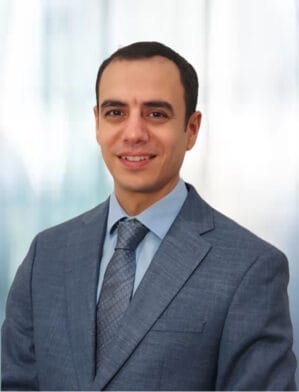
Dr. Fouda headshot
Abdel Fouda, Ph.D.

Abdel Fouda, Ph.D., had just joined the Department of Pharmacology and Toxicology in the College of Medicine at the University of Arkansas for Medical Sciences (UAMS) in 2021 when Department Chair Nancy Rusch, Ph.D., introduced him to Paul Phillips, M.D., Chair of the Department of Ophthalmology and Director of the Harvey & Bernice Jones Eye Institute. It turned out to be a fruitful introduction.

Dr. Fouda, a basic science Assistant Professor specializing in retinal ischemic diseases, began working with the two chairs and other faculty members in Ophthalmology to build a collaborative, interdepartmental research team. Professor Ahmed Sallam, M.D., Ph.D., brings expertise in uveitis and eye inflammation; Professor Sami Uwaydat, M.D., and Assistant Professor Florin Grigorian, M.D., are retina specialists; and Associate Professor Paula Grigorian, M.D., is a pediatric retina specialist with expertise in retinopathy of prematurity. The team began meeting regularly under Dr. Phillips’ leadership to initiate and track collaborative projects. Dr. Fouda and members of his lab also presented their research projects at Ophthalmology Grand Rounds to connect with more physicians and residents. 

“I have been fortunate to be able to quickly grow my National Institutes of Health (NIH) funded research team at UAMS, and the collaboration between our two departments has catalyzed this success,” said Dr. Fouda. “I am truly thankful for the expertise and contributions of our team members in Ophthalmology and Pharmacology & Toxicology.”

With a shared goal of training the next generation of scientists focused on retinal and ischemic diseases, Dr. Phillips and Dr. Rusch both serve as dissertation mentors to one of Dr. Fouda’s graduate students, Carol Morris. Morris has earned honors at UAMS and nationally, along with fellowship funding, for her research in stroke and retinal ischemic injury.

Two new Institutional Review Board (IRB) protocols at UAMS – a regulatory approval process for projects involving research and human subjects – permit the collection of clinical vitreous humor samples for proteomic analysis by Dr. Fouda’s research team. Vitreous humor is the substance that fills the space between the lens and retina of the eye. Findings from the team’s analysis were recently published in Translational Vision Science & Technology and represent the first proteomic analysis of aqueous humor from patients with central retinal artery occlusion, a devastating disease in which vision is recovered in only 15% of affected patients. Additionally, a co-authored review article focused on ischemic retinopathy was published this year in the Journal of Neuroinflammation, a top-ranking neuroscience journal.  

The collaboration also has enabled new extramural grant funding. Esraa Shosha, Ph.D., a new Assistant Professor in Dr. Fouda’s lab, secured a Knights Templar Career Starter grant of $90,000 to study the role of endothelial HDAC3 in retinopathy of prematurity. Co-mentored by Drs. Phillips and Rusch, Dr. Shosha seeks to identify new therapeutic targets to mitigate this condition while using the award as a launch pad to secure NIH research funding.

Another recent achievement was an Association of Research in Vision and Ophthalmology (ARVO) EyeFind research grant from the Eye Bank Association of America awarded to Abdel Elhusseiny, M.D., a fourth-year Ophthalmology resident who is collaborating with Dr. Fouda. His project analyzes eye tissues post-mortem to advance the understanding of the role of insulin-like growth factor-binding protein 6 (IGFBP6) in diabetic retinopathy.

“My vision for the future of the Department of Ophthalmology includes expanding basic science and translational research by recruiting nationally renowned scientists to the Jones Eye Institute to catalyze vision research at UAMS and further strengthen the collaborative translational research studies with vision researchers in the Department of Pharmacology/Toxicology,” said Dr. Phillips.

“These collaborations between basic researchers and clinicians enable our scientists to ensure that findings in the laboratory translate to conditions involving human health and ensure that important clinical observations can be mechanistically explored in the laboratory,” said Dr. Rusch. “The Department of Pharmacology and Toxicology is very appreciative of Dr. Phillips and the physicians in the Department of Ophthalmology for their interest in translational research.”
Filed Under: Department News

Katherine (Katie) Deck Receives NIH F31 Predoctoral Fellowship Award

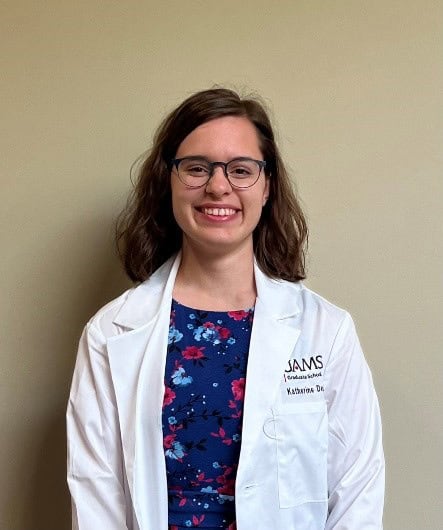
Katherine Deck

Congratulations to Katherine (Katie) Deck, a graduate student in Dr. Mu’s lab, who has been awarded a highly competitive two-year NIH Predoctoral Fellowship grant. Katie’s research project, titled “Kidney-resident memory CD8+ T cells promote hypertension and memorize salt-sensitivity,” seeks to uncover critical mechanisms by which kidney-resident memory CD8T cells contribute to hypertension and the phenomenon of ‘salt memory,’ which drives the progression and recurrence of hypertension. Katie, who has already received fellowship funding from the American Heart Association (AHA), is now also recognized by the NIH with a grant totaling $77,890. This funding will support her stipends and research-related expenses for the next two years. Associate Professor Dr. Shengyu Mu is serving as Katie’s mentor and sponsor. Collaborators contributing to this award include Assistant Professor Dr. Yunmeng Liu, Associate Professor Dr. Yuet-Kin (Ricky) Leung from the Department of Pharmacology and Toxicology, Assistant Professor Dr. Lu Huang, and Associate Professor Dr. Lin-Xi Li from the Department of Microbiology and Immunology.

Filed Under: Department News

Katherine (Katie) Deck Receives NIH F31 Predoctoral Fellowship Award

Congratulations to Katherine (Katie) Deck, a graduate student in Dr. Mu’s lab, who has been awarded a highly competitive two-year NIH Predoctoral Fellowship grant. Katie’s research project, titled “Kidney-resident memory CD8+ T cells promote hypertension and memorize salt-sensitivity,” seeks to uncover critical mechanisms by which kidney-resident memory CD8T cells contribute to hypertension and the phenomenon of ‘salt memory,’ which drives the progression and recurrence of hypertension. Katie, who has already received fellowship funding from the American Heart Association (AHA), is now also recognized by the NIH with a grant totaling $77,890. This funding will support her stipends and research-related expenses for the next two years. Associate Professor Dr. Shengyu Mu is serving as Katie’s mentor and sponsor. Collaborators contributing to this award include Assistant Professor Dr. Yunmeng Liu, Associate Professor Dr. Yuet-Kin (Ricky) Leung from the Department of Pharmacology and Toxicology, Assistant Professor Dr. Lu Huang, and Associate Professor Dr. Lin-Xi Li from the Department of Microbiology and Immunology.

Filed Under: Department News

NIH Awards Additional $3.7 Million to UAMS to Continue Groundbreaking Research into High Blood Pressure

By Linda Satter 

June 18, 2024 | LITTLE ROCK — In a major boost to cardiovascular research, the National Institutes of Health has awarded an additional $3.7 million to Shengyu Mu, Ph.D., and his team of researchers at the University of Arkansas for Medical Sciences (UAMS) to continue their groundbreaking study on the role of immune cells in hypertension.

Mu, an associate professor in the UAMS College of Medicine Department of Pharmacology and Toxicology, was awarded an initial $1.89 million grant in 2019 to fund his laboratory’s exploration of the link between immune cells and hypertension, a widespread and serious health condition.

During that time, the team made substantial discoveries indicating that immune disorders contribute to high blood pressure, paving the way for the next phase of research.

The five-year grant renewal began with a $685,749 payment in April and is expected to fund a comprehensive series of experiments and advanced analyses over the next five years.

“We are thrilled to receive this continued support from the NIH,” said Mu, a leading expert in hypertension. “Our initial research has provided strong evidence that immune cells play a key role in the development and progression of hypertension. This new funding will allow us to delve even deeper, aiming to identify new therapeutic targets and develop novel strategies to manage hypertension.”

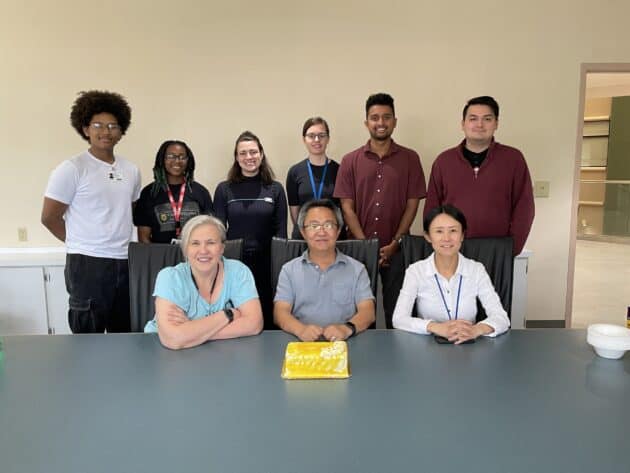
Dr. Mu with his research group

His team includes researchers Yunmeng Liu, Ph.D., an assistant professor in the Department of Pharmacology and Toxicology; Lin-Xi-Li, Ph.D., an associate professor in the Department of Microbiology and Immunology; Lu Huang, Ph.D., an assistant professor in the Department of Microbiology and Immunology; John Imig, Ph.D., professor and chair of the Department of Pharmaceutical Sciences in the College of Pharmacy; and key lab members Katherine Deck, Tonya Rafferty and Christoph Mora.

“Together, they will leverage their diverse expertise and state-of-the-art technology and methods to further investigate this important area of research,” Mu said.

He said the ongoing research has the potential to advance scientific knowledge and translate insights into clinical practice.

“By unraveling the influence of immune cells on hypertension, it could pave the way for new interventions designed to modulate the immune response, potentially offering more effective and personalized treatments for patients,” Mu said.

The NIH’s support underscores the importance of the research in addressing a critical public health crisis, Mu said.

“Hypertension remains a leading cause of illness and death worldwide,” Mu said. “Innovative research like that being done at UAMS is crucial for developing new ways to prevent and treat it.”

He hopes that the research findings will help reduce the burden of hypertension and improve cardiovascular health globally.

This research is supported by the National Heart, Lung, And Blood Institute of the National Institutes of Health under Award Number R01HL146713. The content is solely the responsibility of the authors and does not necessarily represent the official views of the National Institutes of Health.

Filed Under: Department News

“Sweethearts” Learn about Heart Health, Cardiovascular Research at UAMS

UAMS Website

Abdelrahman Fouda, Ph.D., holds a model of an eye as he discusses treatments for stroke and retinal diseases.

Faculty and lab teams from the departments of Pharmacology and Toxicology and Neurobiology and Developmental Sciences in the College of Medicine and Pharmaceutical Sciences in the College of Pharmacy hosted 30 “sweethearts” — high school sophomore and junior girls participating in the American Heart Association and AHA Arkansas Chapter “Sweethearts” program — on two evenings in January.

Nancy Rusch, Ph.D., Distinguished Professor and Chair of the Department of Pharmacology and Toxicology, organized the event and welcomed each evening’s participants during an introductory session. Groups of “sweethearts” then rotated through five laboratories to learn about cardiovascular health and cardiovascular research at UAMS.

Conducted over several months, the AHA program focuses on heart healthy lifestyles, prevention of heart disease and volunteer work.

Participating laboratories and faculty included:

  • Abdelrahman Fouda, Ph.D., Assistant Professor of Pharmacology and Toxicology, who discussed treatments for stroke and retinal diseases.
  • Yunmeng Liu, Ph.D., Assistant Professor of Pharmacology and Toxicology, who along with trainees in the lab of Associate Professor Shengyu Mu, Ph.D., demonstrated blood pressure measurement and discussed salt-sensitive hypertension.
  • Nirmala Parajuli, DVM, Ph.D., Assistant Professor of Pharmacology and Toxicology, and staff, who discussed the team’s research to improve renal transplant outcomes.
  • Kevin Phelan, Ph.D., Professor of Neurobiology and Developmental Sciences, who demonstrated cardiovascular ultrasound imaging with hands-on opportunities for students to image the heart.
  • Amanda Stolarz, PharmD, Ph.D., Assistant Professor of Pharmaceutical Sciences, who introduced the students to the lymphatic circulation and discussed her lab team’s efforts to find a treatment for lymphedema.

Kudos from the AHA Arkansas Chapter and Dr. Rusch to the many department administrators, faculty and trainees who contributed to this year’s event.

Filed Under: Department News

UAMS Researcher Receives $1.8 Million NIH Grant to Study Key Cell Processes in Energy Production

By David Robinson 

Dec. 5, 2023 | LITTLE ROCK — Huiliang Zhang, Ph.D., at the University of Arkansas for Medical Sciences (UAMS), will use a $1.8 million grant from the National Institutes of Health (NIH) to study proton leak, a process within the body that affects metabolism and energy.

Although scientists have been aware of proton leak for decades, Zhang said, little is known about its underlying causes, how prevalent it is across organ systems, and whether it has benefits or harms.

Proton leak is like a tiny leak in a cell’s energy system. There is a proton gradient across the mitochondrial inner membrane. Energy is made when protons move a certain way across a cell’s mitochondrial inner membrane. However, there can be a small portion of protons crossing the mitochondrial inner membrane that are unable to produce energy. This is called proton leak.

Zhang is an assistant professor in the College of Medicine Department of Pharmacology and Toxicology. His research has previously focused on the heart, but the five-year award from the NIH National Institute of General Medical Sciences (NIGMS) will allow him to broaden his scope. Using a new fluorescence test that he developed, Zhang will measure proton leak levels in the cells of different organs and determine the molecular mechanisms responsible for proton leak.

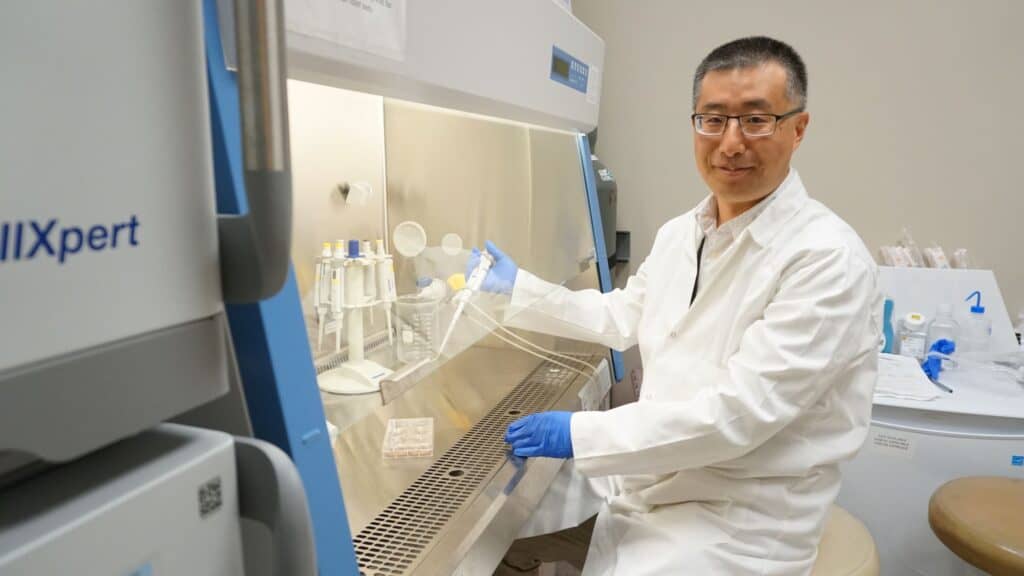
Dr. Zhang in his lab
Huiliang Zhang, Ph.D.

His findings will inform his next effort to find potential drug targets that can either increase or decrease the levels of proton leak.

For example, he said, chronic, excessive proton leak in the high energy-demanding heart muscle would make it weaker, which would call for a drug that could reduce proton leak.

“For some cases that mitochondria are not working efficiently, maybe we need some proton leak blockers to make proton leak less,” he said.

On the other hand, increasing proton leak in some tissues might be beneficial, for example, for someone trying to lose weight.

“When the proton leak is elevated, the mitochondria need to work much harder to produce energy, which increases metabolism,” he said. “This could be beneficial to someone struggling to lose weight.”

Filed Under: Department News

UAMS’ Andrew Morris, Ph.D., Recognized with Prestigious VA Research Career Scientist Award

By David Robinson 

Aug. 21, 2023 | UAMS and Veterans Affairs (VA) researcher Andrew Morris, Ph.D., has received the prestigious Research Career Scientist Award from the VA Office of Research and Development. The designation is for established researchers who have distinguished themselves through scientific achievements and substantial contributions to the VA research community.

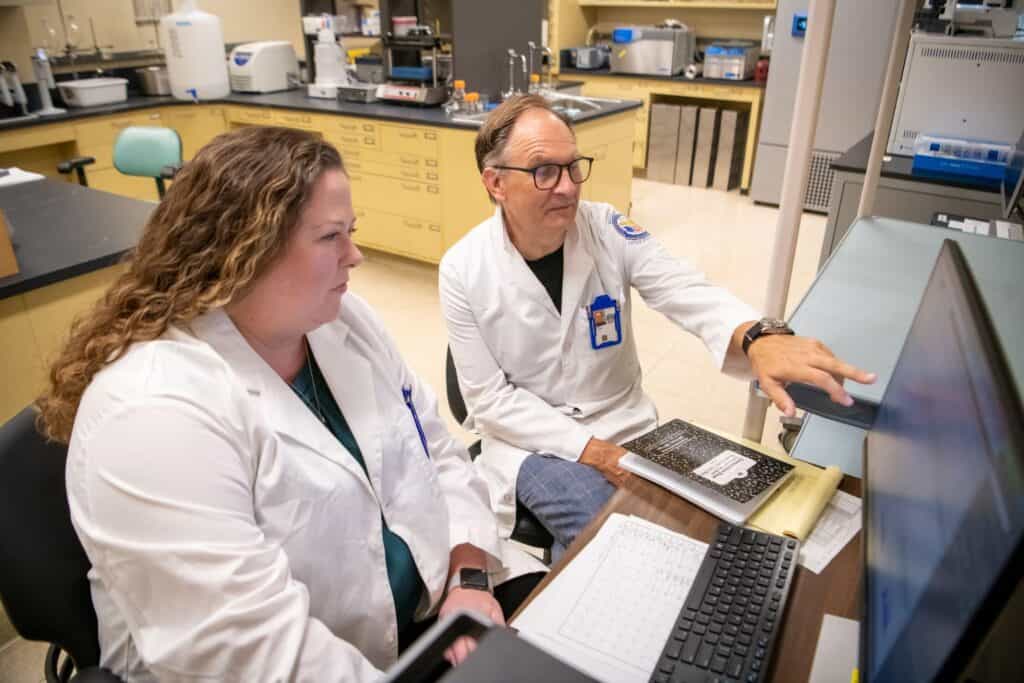
Andrew Morris, Ph.D., points to a computer monitor. His research associate is sitting with him in the lab.
Andrew Morris, Ph.D., works with his research associate, Lauren Havens, in his lab.

Morris is the UAMS Mehta/Stebbins Chair in Cardiovascular Research and a professor in the College of Medicine Department of Pharmacology and Toxicology.

“I am deeply honored to receive the VA’s Research Career Scientist Award,” said Morris, who has been recognized for ranking among the top 2% of most influential researchers. “This recognition is a reflection of the hard work of my dedicated and talented research team and the unwavering support and collaboration of my esteemed colleagues and mentors.”

Morris has been funded by the VA since 2007, both individually and with his wife, the late Susan Smyth, M.D., former College of Medicine dean, for studies of lipid metabolism and signaling in vascular inflammation and thrombosis. Morris developed and now directs an analytical laboratory at the Central Arkansas Veterans Healthcare System (CAVHS) that provides biomonitoring services to support health research studies of veterans and active-duty military personnel. A current focus is on per- and polyfluorinated substances, which are pervasive, manmade surfactant chemicals with toxic effects.

Shuk Mei-Ho, Ph.D., UAMS vice chancellor for Research and Innovation, said the award underscores the vital research alliance between UAMS and the VA.

“Our partnership with CAVHS has enabled talented UAMS faculty like Dr. Morris to deliver meaningful, high-quality research to the benefit of Arkansas and beyond,” Ho said.

Recipients of the Research Career Scientist Award are selected through a competitive peer review process. Morris’ award totals $750,000 and will provide him with five years of additional salary support. His work is also funded by grants from the VA, National Institutes of Health and Department of Defense, which support the six members of his research team.

Ho noted that while the honor typically goes to researchers at larger VA-affiliated universities, multiple UAMS faculty, including herself, are recipients.

Other UAMS awardees include Teresita Bellido, Ph.D., professor and chair of the Department of Physiology and Cell Biology; and Alexei Basnakian, M.D., Ph.D., a professor in the Department of Pharmacology and Toxicology. Robert J. Reis, Ph.D., a professor in the Department of Geriatrics, received the VA’s Senior Research Career Scientist Award, which provides seven years of funding.

Filed Under: Department News

UAMS Invests Andrew J. Morris, Ph.D., in Mehta/Stebbins Chair in Cardiovascular Research

By Andrew Vogler 

Dr. Morris with chancellor and dean at his investiture

Nov. 16, 2022 | LITTLE ROCK — The University of Arkansas for Medical Sciences (UAMS) College of Medicine invested Andrew J. Morris, Ph.D., professor in the Department of Pharmacology and Toxicology, in the Mehta/Stebbins Chair in Cardiovascular Research during a Nov. 9 ceremony.

“I am honored to have this chair, and as I learn more about UAMS, I am grateful for the opportunity to be part of its community and to contribute to its history,” said Morris. “I’ve been an independent researcher for almost 30 years, and I am lucky in that I’ve had a very rewarding career.”

Morris also serves as a research investigator at the Central Arkansas Veterans Healthcare System. His work is related to understanding interactions between genetic, behavioral and environmental risk factors for non-communicable diseases using multidisciplinary approaches that combine biochemical, molecular genetic and cell biological methods with preclinical models and population health studies.

An endowed chair is among the highest academic honors a university can bestow on a faculty member. An endowed chair is established with gifts of at least $1 million, which are invested, and the interest proceeds used to support the educational, research and clinical activities of the chair holder. Those named to a chair are among the most highly regarded scientists, physicians and professors in their fields.

“The forged medallion that Dr. Morris will receive today represents the work that has been done and the great work that he will conduct,” said Cam Patterson, M.D., MBA, UAMS chancellor and CEO of UAMS Health. “I have known Andrew for a very long time, and I couldn’t be prouder to be on this stage to celebrate this honor with him.”

Dr. Cam Patterson speaking at a podium
Cam Patterson addresses guests

The chair was established in 2011 by a gift from the estate of the late Howard and Elsie Stebbins to help fund their longtime vision of a cardiovascular research chair at UAMS.

“The Mehta/Stebbins Chair in Cardiovascular Research is the second endowed chair at UAMS made possible thanks to the late Howard and Elsie Stebbins,” said Stephanie Gardner, Pharm. D., Ed.D., UAMS provost and chief strategy officer. “The Stebbins family, whose primary philanthropic interest has been related to cardiology, began their generous relationship in 1993. Dr. Jay Mehta, whose family was close friends of the Stebbins, was the inaugural holder of the chair.”

Morris was born in Hampstead, England. He obtained a First-Class Honors degree in biochemistry from the University of Bristol. He completed post-doctoral training at the University of Birmingham with Sir Peter Downes and Bob Michell. He was a post-doctoral Fellow and research faculty member at the University of North Carolina at Chapel Hill and held tenured faculty positions at Stony Brook University in Stony Brook, New York, the University of North Carolina-Chapel Hill and the University of Kentucky in Lexington, where he worked for 16 years as an endowed professor. He joined UAMS in the fall of 2021.

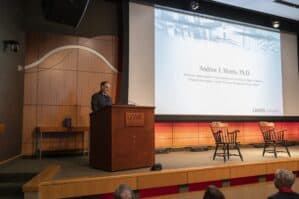
Dr. Morris speaking at a podium with a large projection screen to his left.
Andrew J. Morris addresses guests

Morris’s laboratory has made important contributions to the identification of genes involved in intracellular lipid metabolism and signaling. He now directs an analytical laboratory at the Central Arkansas Veterans Healthcare System that provides biomonitoring services to support population health research, including studies of veterans and active-duty military personnel enrolled in the Millennium Cohort in the Million Veteran Program. Morris’s research primarily is supported by grants from the Veterans Health Administration, National Institutes of Health and the U.S. Department of Defense. He has authored almost 300 peer-reviewed research articles, and a recent report placed him in the top 2% of highly cited researchers in the biomedical sciences.

“UAMS is very fortunate to have recruited Dr. Morris from the University of Kentucky — his research accomplishments, interests and activities are well aligned with Arkansas and the university,” said Linda S. Birnbaum, Ph.D., director of the Department of Environment Sciences and Engineering at the University of North Carolina. “He is very deserving of the recognition provided by the Mehta/Stebbins Chair, and I am looking forward to following his research contributions.”UAMS is the state’s only health sciences university, with colleges of Medicine, Nursing, Pharmacy, Health Professions and Public Health; a graduate school; a hospital; a main campus in Little Rock; a Northwest Arkansas regional campus in Fayetteville; a statewide network of regional campuses; and seven institutes: the Winthrop P. Rockefeller Cancer Institute, Jackson T. Stephens Spine & Neurosciences Institute, Harvey & Bernice Jones Eye Institute, Psychiatric Research Institute, Donald W. Reynolds Institute on Aging, Translational Research Institute and Institute for Digital Health & Innovation. UAMS includes UAMS Health, a statewide health system that encompasses all of UAMS’ clinical enterprise. UAMS is the only adult Level 1 trauma center in the state. UAMS has 3,240 students, 913 medical residents and fellows, and five dental residents. It is the state’s largest public employer with more than 11,000 employees, including 1,200 physicians who provide care to patients at UAMS, its regional campuses, Arkansas Children’s, the VA Medical Center and Baptist Health. Visit www.uams.edu or uamshealth.com. Find us on Facebook, Twitter, YouTube or Instagram.

###

Filed Under: Department News

Pharm Tox Weekly Buzz October 10 – 14, 2022

Basnakian Team Publishes Collaborative Manuscript

Alexei Basnakian
Alexi Basnakian
Alena Savenka
Alena Savenka

Professor Alexei Basnakian and former research associate Alena Savenka published a manuscript in the journal Antioxidants. The article titled “Effects of gamma-tocotrienol on partial-body irradiation-induced intestinal injury in a nonhuman primate model” is a collaborative study with investigators from the Winthrop P. Rockefeller Cancer Institute, which includes retired professor Martin Hauer- Jensen, assistant professor Isabelle Miousse, assistant research professor Tarun Garg, and assistant staff scientist Sarita Garg, as well as scientists from the Uniformed Services University of Health Sciences in Bethesda, Maryland. The study evaluated the vitamin E analog gamma-tocotrienol (GT3) as a radio- protector and determined its ability to accelerate GI recovery in partial-body irradiated (PBI) nonhuman primates subjected to X-rays. The data relied on the TUNEL assay and im- munostaining of Ki67 and other markers of cell injury and recovery to suggest that X-rays induce severe intestinal injury post-PBI and GT3 confers a short-term radioprotective effect.

Dr. Julia Tobacyk Wins Second Place in People’s Choice Award

Julia Tobacyk

Postdoctoral fellow Julia Tobacyk and postdoctoral fellow Megan Reed (Biochemistry and Molecular Biology) won second place in the People’s Choice Award at a recent Seed Funding Pitch Competition at the Sam M. Walton College of Business at UA Fayetteville. Dr. Tobacyk and her team, which includes two other graduate students from the UA Fayetteville, won $1000 for their project, “A diagnostic tool for treating glioblastoma using precision medicine”. The competition was part of the New Venture Development course that Dr. Tobacyk is enrolled in as a scholar in the CTSA-funded Health Sciences Innovation and Entrepreneurship Postdoctoral Training Program. Way to go Dr. Tobacyk!

Dr. Fantegrossi Wins First Place in Lightweight Masters Division

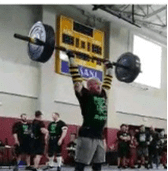
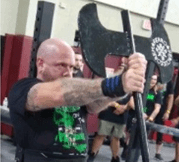
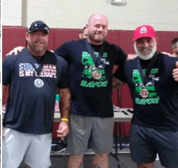
Associate professor Bill Fantegrossi recently took first place in the New Orleans Strength Expo Battle on the Bayou in the Lightweight Masters Division. Congratulations Dr. Fantegrossi!

Dr. Fantegrossi lifting weights at competition
Dr. Fantegrossi holding an axe at competition
Dr. Fantegrossi and friends

Filed Under: Department News

Drs. Prather and MacMillan-Crow Receive Barton Award

Prather

Professors Lee Ann MacMillan-Crow and Paul Prather are the recipients of a Barton Pilot Award. “Characterization of synthetic cannabinoid-induced mitochondrial dysfunction leading to renal injury” is funded for $25,000 for one year beginning January 1, 2021.  K2” and “Spice” are products sold as “synthetic marijuana”; however, contain dangerous synthetic cannabinoids (SCBs).

In addition to producing a variety of toxic effects, SCBs induce acute kidney injury (AKI) via unknown mechanisms. The studies funded by this award will test the hypothesis that SCBs induce renal mitochondrial dysfunction via mechanisms involving Cannabinoid Type 1 (CB1) receptor-mediated induction of reactive oxygen species (ROS).

Filed Under: Department News

  • Page 1
  • Page 2
  • Next Page»
UAMS College of Medicine LogoUAMS College of MedicineUniversity of Arkansas for Medical Sciences
Mailing Address: 4301 West Markham Street, Little Rock, AR 72205
Phone: (501) 686-7000
  • Facebook
  • X
  • Instagram
  • YouTube
  • LinkedIn
  • Pinterest
  • Disclaimer
  • Terms of Use
  • Privacy Statement
  • Legal Notices

© 2026 University of Arkansas for Medical Sciences