• Skip to primary navigation
  • Skip to main content
  • Skip to primary navigation
  • Skip to main content
Choose which site to search.
University of Arkansas for Medical Sciences Logo University of Arkansas for Medical Sciences
College of Medicine
  • UAMS Health
  • Jobs
  • Giving
  • About Us
    • Fast Facts
    • Leadership
    • Features
    • Maps and Directions
    • College of Medicine History
    • Professionalism Guidelines
  • Departments
  • Admissions
    • Apply
    • Financial Aid and Scholarships
    • Life in Little Rock or Fayetteville
    • Dual Degree Programs
      • M.D./MBA Program
      • CREST MSTP (MD/PhD) PROGRAM
      • M.D./MPH Program
    • Three-Year M.D. Program
    • Rural Practice Programs
      • Community Match Rural Physician Recruitment Program
      • Rural Practice Scholarship Program
    • What Our Graduates Do
    • Contact Admissions
  • Students
    • Academic Calendar
    • Academic Houses
    • Career Advising
    • Financial Aid and Scholarships
    • Visiting Students
    • Mentor Spotlight Podcast
    • Preparing for Residency
    • Non-Discrimination Statement
    • Outstanding Teacher Nominations
    • Parents Club
    • Student Links
    • Honors in Research
    • UAMS Campus Security
    • Undergraduate Medical Education Competencies
  • Graduate Medical Education
  • Alumni
  • Faculty Affairs
  • Research
  1. University of Arkansas for Medical Sciences
  2. College of Medicine
  3. Author: mtrieschmann

mtrieschmann

100 DAYS IN: Dean Robertson on Leadership, Teamwork, and Staying in the OR

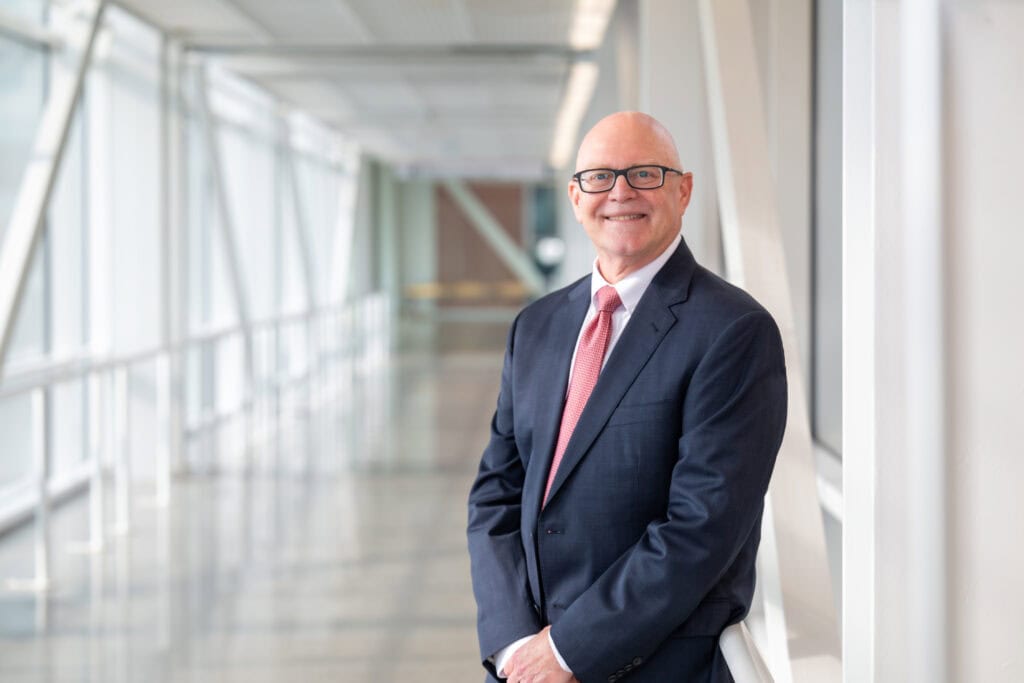
When Ron Robertson, M.D., stepped into the role of Dean of the UAMS College of Medicine on May 1, he wore the “interim” label for a while before it came off. Now, a little more than 100 days into the permanent role, he says the shift has changed more than just his title.

“It’s always easier to work in a role when you know it’s yours and you can make it your own,” Robertson said. He believes the certainty has rippled through his team, too. With the interim title gone, colleagues know he’s in it for the long haul, freeing them to lay out real plans.

That confidence has been tested by a learning curve Robertson didn’t fully anticipate. After seven years as Chair of the Department of Surgery, he had that role “pretty much figured out,” he said. The Dean’s office is entirely different — “like being chair of multiple departments at once,” he said, with a faster pace and problems that rarely have a solution involving just one person or group.

What has struck him most, though, is the people.

“We have exceptional people who are very committed to our mission,” Robertson said.

It’s a mission Robertson approaches the way he has every operating room for decades: as a team sport. His trauma career was built on assembling and leading teams that function under pressure, and he sees the Dean’s role as the ultimate test of that approach — one that spans education, research, and clinical care all at once.

“Being the Dean may be the ultimate expression of teamwork,” he said. “Building, and then watching, that team thrive is what I love most about the job.”

Looking ahead, Robertson lays out a vision for strengthening the College of Medicine across all three pillars of its mission. In clinical care, that means leveraging the hospital system to widen access and improve the health of Arkansans. In education, it means building a curriculum that keeps the college competitive for top talent long into the future. In research, it means growing the portfolio across both basic science and clinical programs.

“We have huge opportunities in all three aspects of our mission and the right leadership team starting at the top,” Robertson said.

Ask him for a single defining moment in his first 100 days and Robertson points to a string of them — graduation, welcoming new students and residents, working alongside fellow deans and the leadership team. Each one, he says, sharpens his sense of what’s at stake: training excellent physicians, delivering exceptional care, and pursuing research that helps patients.

“The people of Arkansas are counting on me, and they’re counting on us to accomplish our goals.”

Through it all, Robertson hasn’t stepped out of the operating room.

“At the core of my being, I’m a surgeon, and I don’t want to lose that,” he said. Staying in clinical practice keeps him grounded in what faculty actually face day to day — insight he considers essential to leading real change.

“I love taking care of patients. I can’t imagine that not being a part of my life.”

Filed Under: News

Nearly 80% From Underserved Areas: UAMS Class of 2030 Reflects a Commitment to Rural Care

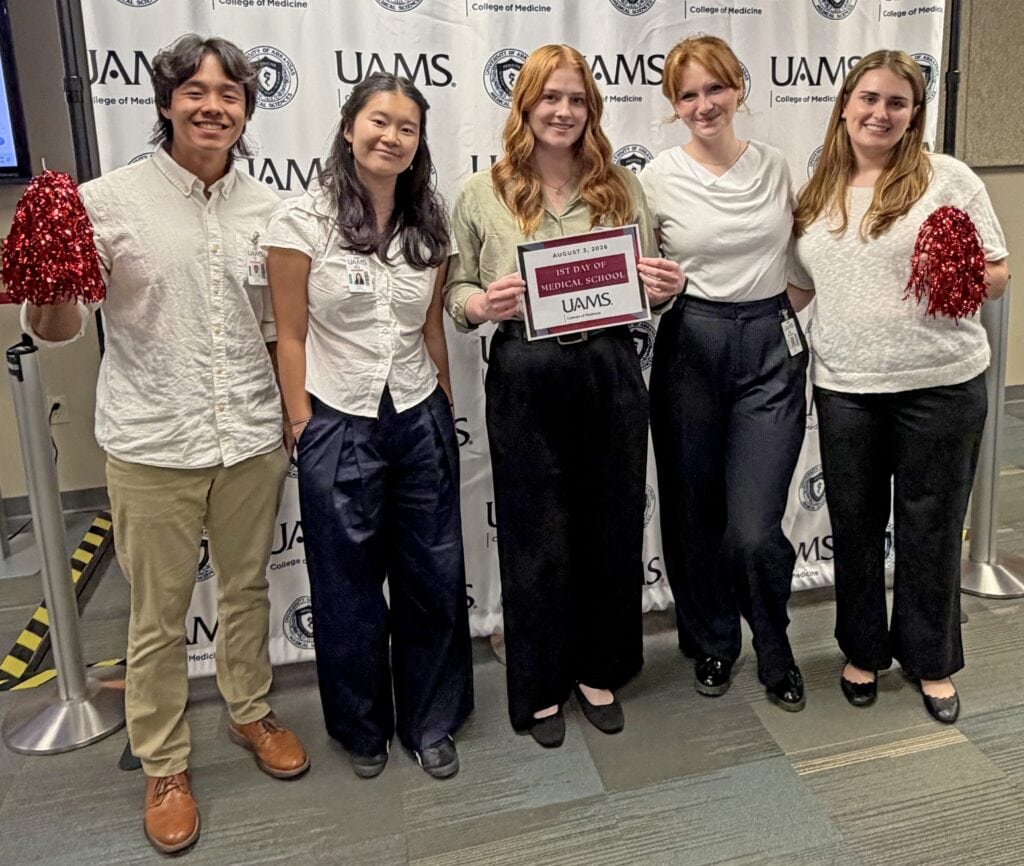
On the morning of Aug. 3, 172 first-year medical students filed into the UAMS library carrying a mix of nerves and excitement.

They came from rural Arkansas towns and cities across the country, straight from college and others after careers in education, engineering, and other fields. All have spent years working toward the moment.

Together, they make up the UAMS College of Medicine Class of 2030 — the 148th class to begin medical school at UAMS.

For five students — Ruth Walters, Rachael Wehrle, Jenny Zhang, Ella Roper and Kyle Lee — arriving at UAMS was a homecoming in the most literal sense: They were born at the hospital where they are now training to become physicians.

Becky Latch, M.D., Associate Dean for Student Affairs, said she was struck by the energy and range of experiences represented in the class.

“They came ready to get started,” Latch said. “There was a lot of energy and enthusiasm from the very beginning. I was impressed by the different experiences and perspectives they bring with them.”

Of 3,337 applicants, the Class of 2030 includes 143 Arkansas residents. Nearly one-third come from rural areas, and nearly 80% come from medically underserved areas. They enter medical school with an average GPA of 3.86 and an average MCAT score of 510.

Beyond the numbers is a class shaped by a remarkable range of experiences. Before medical school, students turned wrenches as mechanics and automotive engineers, built virtual worlds as Roblox game developers, sold real estate, drove for Uber, taught dance, and worked as EMTs, medical scribes, and nurse’s aides.

They volunteered in homeless shelters, hospice centers, wound care clinics, and food pantries; worked with the Salvation Army, Girl Scouts, and animal rescues; and participated in medical mission trips.

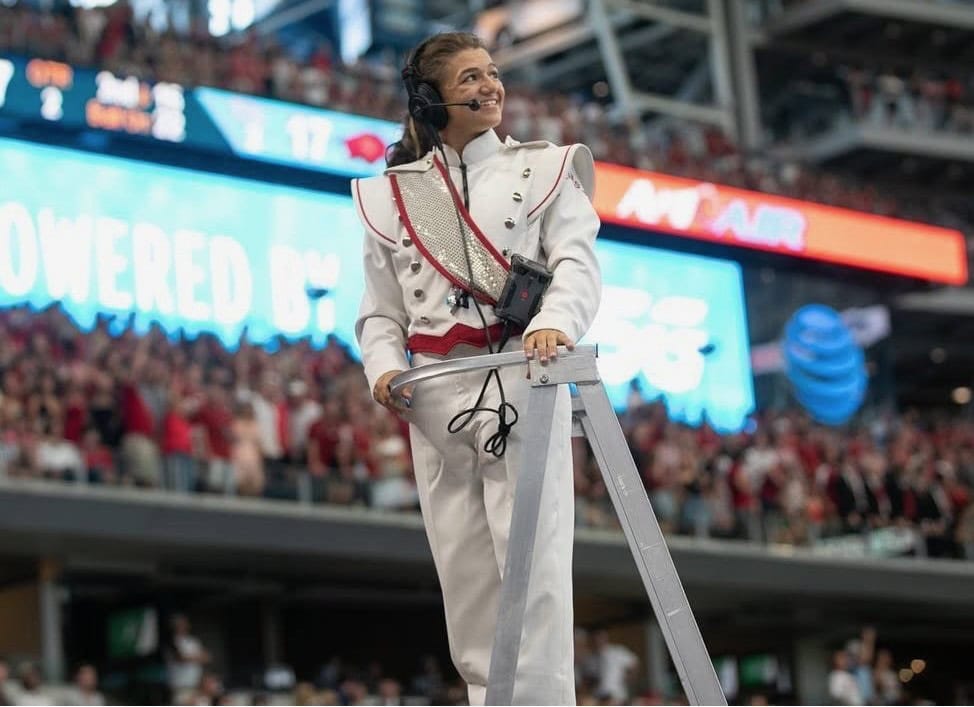
M1 Sallie Hendrix once led hundreds of musicians on the SEC sidelines as drum major for the Arkansas Razorbacks Marching Band (Go, Hogs!)

Many members of the class are also accomplished athletes, bringing years of competition, coaching, and teamwork with them to medical school. They have captained an NCAA golf team, played women’s rugby, competed in soccer, swimming and diving, taught PGA golf, coached Little League softball and volleyball, and umpired baseball.

Different Paths, Same Room

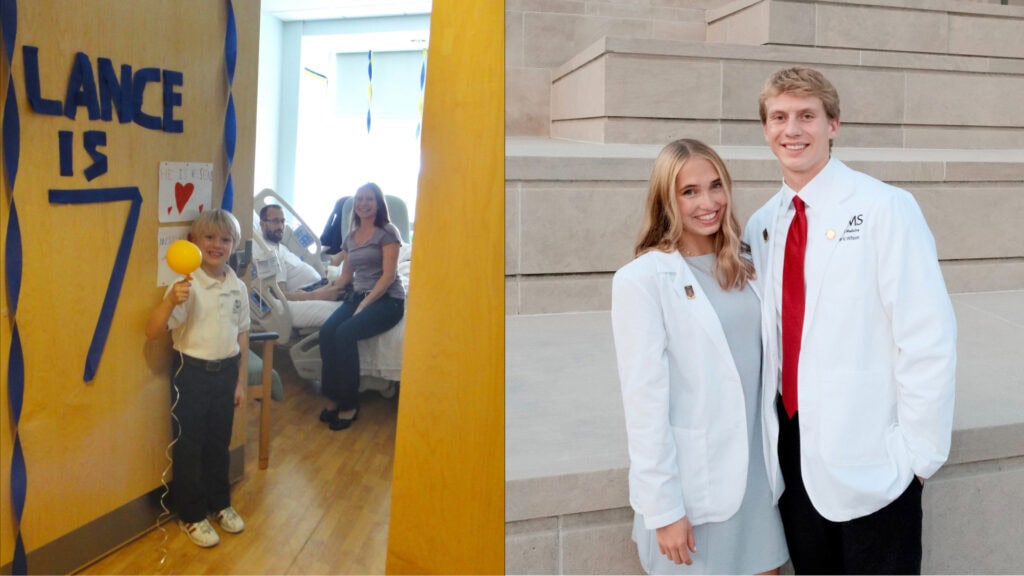
For Chancellor’s Scholar Lance Viscioni-Wilson, starting medical school was also a homecoming. He was just a year old when his father was diagnosed with multiple myeloma. The family relocated from Chicago to Little Rock so his father could receive specialized care at the UAMS Myeloma Center.

For the next six years, UAMS became a familiar part of his childhood as his father underwent treatment.

(left) M1 Lance Viscioni-Wilson celebrated his seventh birthday at UAMS, where his father was undergoing treatment for multiple myeloma. It was in rooms like this one, watching his father’s care team, that Lance’s own path toward medicine began to take shape. (right) Years later, he returned to UAMS as a medical student, alongside his wife, Gabriella.

After returning to UAMS as a medical student and receiving his white coat, he reflected on what the moment meant.

“My father’s physicians and their teams provided the precious extra years I had with him, and I owe my memories of my dad to the intentional, patient- and family-centered care they delivered,” he wrote in a social media post. “Fifteen years later, I have now been given the opportunity to give back to the same institution that gave so much to my family through the symbol of this white coat.”

For Sara Fritz, a 33-year-old former high school chemistry teacher, the road to medical school took 10 years.

Fritz earned a bachelor’s degree in movement science and a master’s degree in education before teaching science in Chicago Public Schools during the COVID-19 pandemic. She loved working with students but eventually found herself drawn back to science and medicine.

“I came back to how much I love science, the body, and its ability to heal itself,” she said. “I want to use science and my teaching background to explain health issues to patients and help them understand how their bodies work.”

For fellow Chancellor’s Scholar Kate Stidman, the journey began in Flippin, Arkansas, a medically underserved community of about 1,280.

“I started thinking about being a doctor at a very young age,” Stidman said. “I remember in seventh grade I told my English teacher that I wanted to be an OB/GYN.”

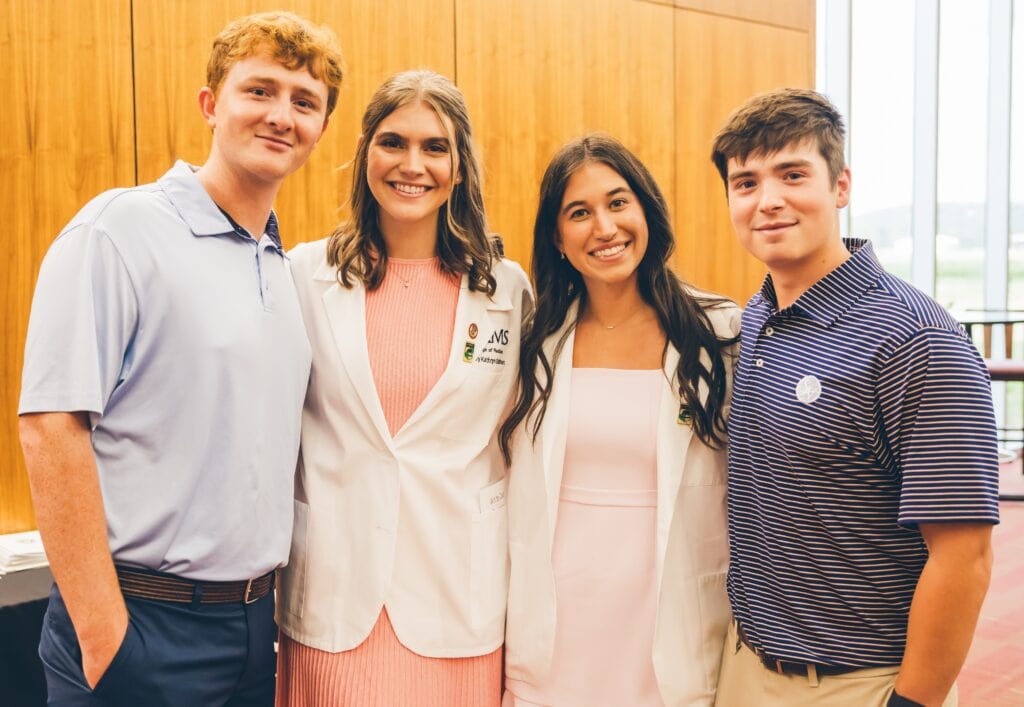
Chancellor’s Scholar Kate Stidman celebrates on the Northwest Arkansas Campus after the White Coat Ceremony. She will be the first physician in her family.

Stidman will be the first physician in her family, although her mother is an advanced practice registered nurse. She is considering primary care or internal medicine.

Her first day at UAMS was the realization of a longtime goal.

“It was truly a day where I realized so many of my dreams had come to fruition,” she said.

The Journey Begins

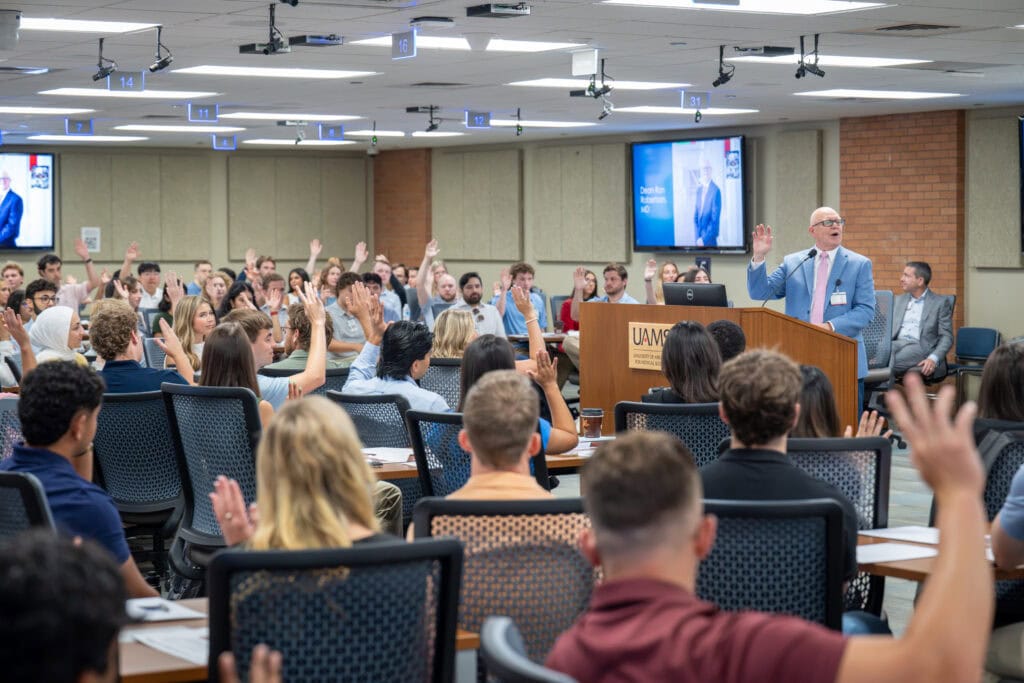
During Welcome Week, UAMS leaders reminded students that reaching medical school was both an accomplishment and the beginning of a demanding new chapter.

“In four years, you’ll be a doctor,” said UAMS Chancellor C. Lowry Barnes, M.D. “Expectations are different when you have an M.D. after your name. People will expect more of you. And because you represent UAMS, you must hold yourself to high standards.”

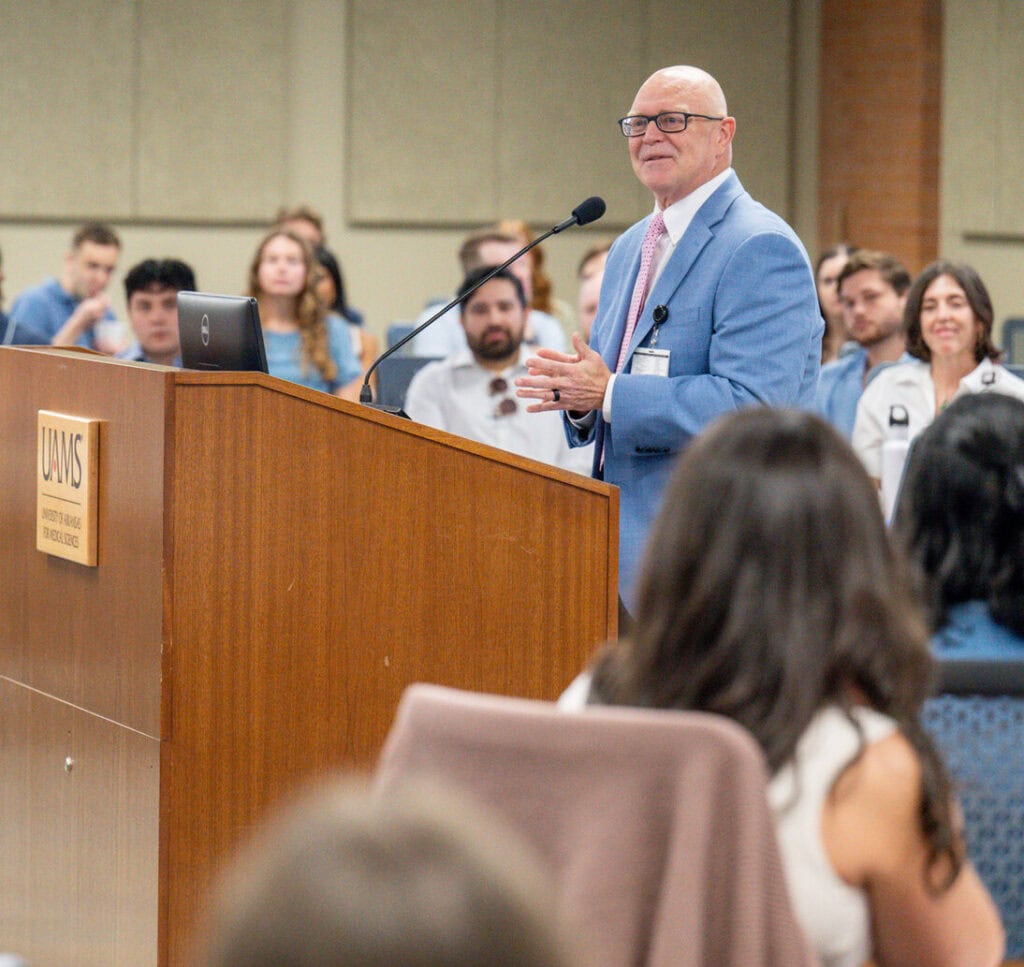
Dean Ron Robertson, M.D.

Ron Robertson, M.D., Dean of the UAMS College of Medicine and Executive Vice Chancellor, spoke to the weight and reward of the path ahead.

“As physicians, we have both the extraordinary privilege and the great responsibility of caring for patients and their families,” he said. “Healthcare has changed a lot over the years, but it’s still the best profession there is. The rewards are profound.”

Latch offered students another piece of advice: Give themselves permission not to know everything yet.

“Stay curious and keep a growth mindset,” she said. “If you can’t do something, remember that you can’t do it yet. You may struggle to learn some things, but you will get there.”

It’s advice informed by her own first days at UAMS.

“I remember being nervous and wondering if I was really ready for medical school,” Latch said.

At the time, medical school culture often made students reluctant to admit when they were struggling or unsure of themselves. That has changed for the better.

“Now we acknowledge that many students have those feelings,” she said. “Helping them recognize and address those feelings of imposter syndrome allows them to get down to learning what they need to learn.”

That support will be important as the Class of 2030 prepares for a profession that continues to evolve. Latch said she is particularly encouraged by the number of students coming from rural communities and hopes medical education remains accessible to students from a wide range of backgrounds.

“Arkansas is a rural state, and training doctors from rural areas means they understand where their patients are coming from,” she said. “That’s something we want to continue.”

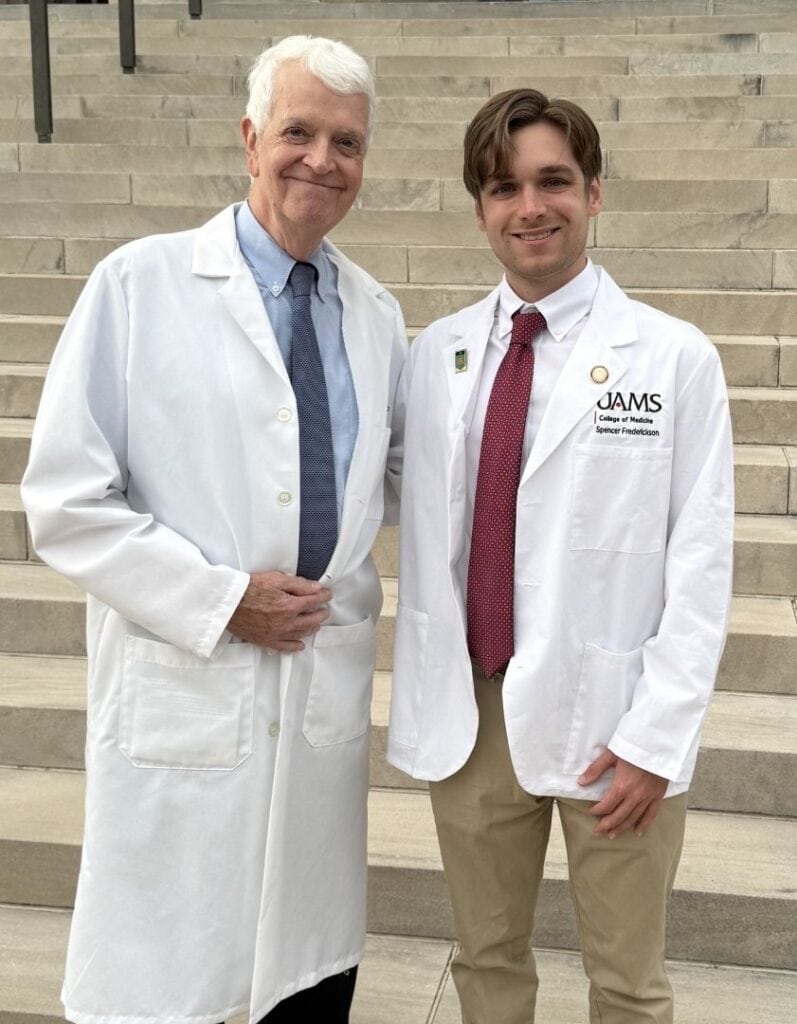
Spencer Frederickson will be a 4th generation physician in his family. He received his white coat from his grandfather, a family physician.

Welcome Week culminated Aug. 7 with the White Coat Ceremony, when students recited a professional oath marking their public entry into medicine.

For Robin Eluvathingal, one of three M.D./Ph.D. students in the class, the ceremony marked the first step on an eight-year path that will combine patient care with scientific research. Eluvathingal, Brahmi Prayaga, and Sadie Farmer are the first students in the new NIH-funded Medical Scientist Training Program at UAMS.

“I know it’s just the beginning,” Eluvathingal said. “But it’s the first time this whole thing has felt real instead of just a plan.”

Five days after arriving at UAMS as newly minted medical students, the Class of 2030 left Welcome Week wearing white coats.

They join a tradition that began in 1880, when the first UAMS medical school class had just 22 students. Nearly a century and a half later, that journey has officially begun for the UAMS Class of 2030. Good luck!

Filed Under: News

UAMS Builds Pipeline for Student Success in Competitive ENT Specialty

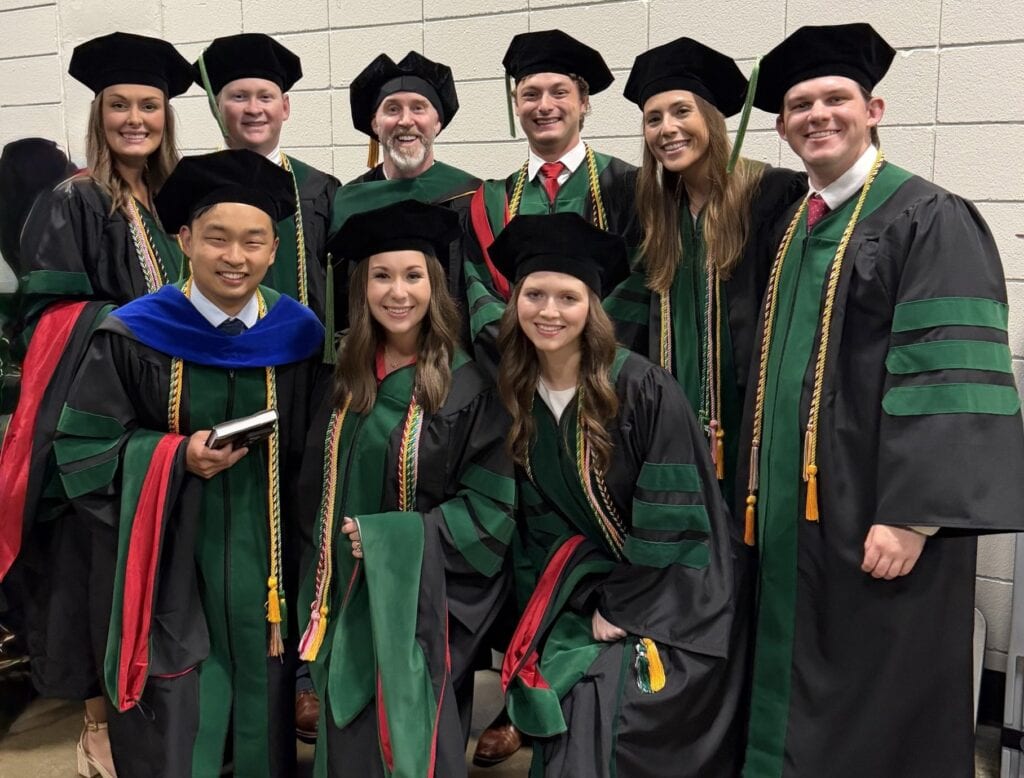
(back, l to r) Class of 2026 UAMS medical school graduates (back, l to r) Lindsey Herberger, John Odom, ENT Department Chair Gresham Richter, M.D., Michael Hahn, Alexa Pearce, Roger Roe; (front, l to r) Ravi Sun, Peyton Pinkus, and Anna Benafield celebrate during commencement ceremonies after matching into highly competitive ENT residency programs.

Eight students in the UAMS College of Medicine’s most recent graduating class matched into the field of Otolaryngology Head and Neck Surgery, an extraordinary accomplishment in one of medicine’s most competitive specialties.

The specialty offered only 370 residency positions nationwide for more than 550 applicants in 2026. The national match rate in the specialty fell to 67% during one of the toughest cycles on record. UAMS students matched at 100%.

The eight students represent nearly 4% of the UAMS College of Medicine graduating class — almost double the percentage typically seen at many top-tier medical schools nationwide.

UAMS faculty credit the success to years of intentional collaboration between the UAMS College of Medicine and the UAMS Department of Otolaryngology – Head and Neck Surgery to create a structured support system that sets students up for success. This includes early exposure to the specialty through meaningful research, mentorship, and extensive clinical exposure at UAMS, Arkansas Children’s, and the Central Arkansas Veteran’s Healthcare System.

“We are incredibly proud of these students and the work they put in to reach this milestone,” said Gresham Richter, M.D., Chair of the UAMS Department of Otolaryngology. “Matching eight students in a year this competitive speaks not only to their talent but also to the strength of the training environment and collaborative culture we’ve created at UAMS.”

Filed Under: News

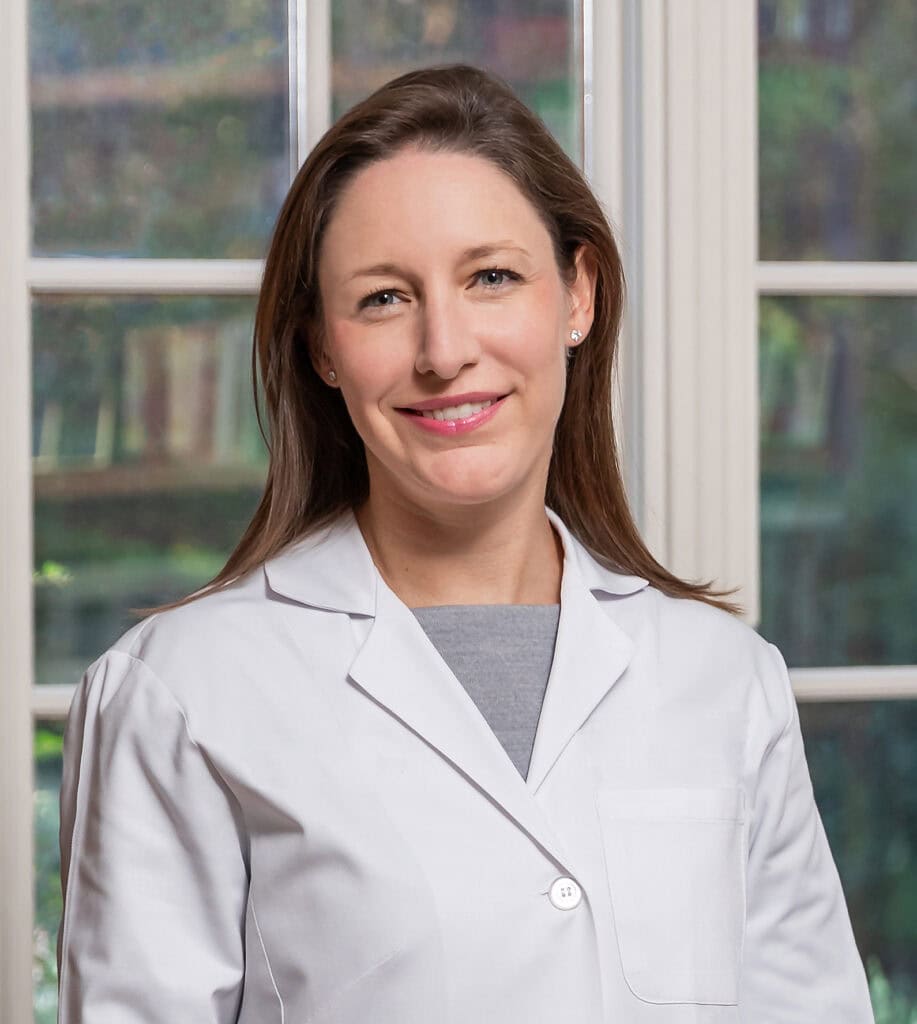
Executive Associate Dean for Faculty Affairs and Development

Renee Bornemeier, M.D.

Dr. Renee Bornemeier serves as Executive Associate Dean of Faculty Affairs and Development for the University of Arkansas for Medical Sciences (UAMS) College of Medicine. In this role, she leads faculty development initiatives including mentoring, leadership development, wellness culture, and work-life integration, while overseeing promotion and tenure, faculty merits and awards, compensation plan development, and personnel matters.

Dr. Bornemeier has dedicated her entire career to UAMS and Arkansas Children’s Hospital (ACH), building a legacy of clinical excellence, teaching, and faculty leadership. A pediatric cardiologist specializing in fetal cardiology, she has provided outstanding clinical care for children across Arkansas alongside decades of teaching and mentorship for medical students, residents, and fellows.

She earned her medical degree from UAMS in 1988 and completed her pediatrics residency at UAMS and Arkansas Children’s. She completed a fellowship in pediatric cardiology at the Children’s Hospital of Philadelphia before returning to UAMS in 1994 as an Instructor in the Department of Pediatrics. She rose through the faculty ranks and has served as Professor in the Division of Pediatric Cardiology since 2009.

Her clinical leadership roles at Arkansas Children’s have included Medical Director of the ACH Heart Station (1995–2008), Director of the Bale Fetal Heart Center (since 2009), and Vice Chief of Staff (2017–2018) before becoming Chief of Staff. She also directed the development of the Cardiac 3D Print Lab at Arkansas Children’s.

Dr. Bornemeier has long championed her faculty colleagues, serving as Vice Chair for Faculty Affairs in the Department of Pediatrics since 2017, as Assistant Dean for the College of Medicine leading faculty affairs for all faculty at Arkansas Children’s. She has served on the Pediatrics Promotion and Tenure Committee since 2013, and previously served on the College of Medicine Promotion and Tenure Committee from 2012 to 2016, chairing the committee in 2015–2016.

Filed Under: News

UAMS College of Medicine LogoUAMS College of MedicineUniversity of Arkansas for Medical Sciences
Mailing Address: 4301 West Markham Street, Little Rock, AR 72205
Phone: (501) 296-1100
  • Facebook
  • X
  • Instagram
  • YouTube
  • LinkedIn
  • Pinterest
  • Disclaimer
  • Terms of Use
  • Privacy Statement
  • Legal Notices

© 2026 University of Arkansas for Medical Sciences