• Skip to primary navigation
  • Skip to main content
  • Skip to primary navigation
  • Skip to main content
Choose which site to search.
University of Arkansas for Medical Sciences Logo University of Arkansas for Medical Sciences
College of Medicine
  • UAMS Health
  • Jobs
  • Giving
  • About Us
    • Fast Facts
    • Leadership
    • Features
    • Maps and Directions
    • College of Medicine History
    • Professionalism Guidelines
  • Departments
  • Admissions
    • Apply
    • Financial Aid and Scholarships
    • Life in Little Rock or Fayetteville
    • Dual Degree Programs
      • M.D./MBA Program
      • CREST MSTP (MD/PhD) PROGRAM
      • M.D./MPH Program
    • Three-Year M.D. Program
    • Rural Practice Programs
      • Community Match Rural Physician Recruitment Program
      • Rural Practice Scholarship Program
    • What Our Graduates Do
    • Contact Admissions
  • Students
    • Academic Calendar
    • Academic Houses
    • Career Advising
    • Financial Aid and Scholarships
    • Visiting Students
    • Mentor Spotlight Podcast
    • Preparing for Residency
    • Non-Discrimination Statement
    • Outstanding Teacher Nominations
    • Parents Club
    • Student Links
    • Honors in Research
    • UAMS Campus Security
    • Undergraduate Medical Education Competencies
  • Graduate Medical Education
  • Alumni
  • Faculty Affairs
  • Research
  1. University of Arkansas for Medical Sciences
  2. College of Medicine
  3. News
  4. Page 11

News

New Publications and Presentations

DFPM-RED continues to share their research and their work in publications and at conferences around the country. Here are the team’s latest entries:

Publications:

Whiteside-Mansell, L., Swindle, T. M. & Davenport, K (In Press, 2019). Evaluation of “Together, We Inspire Smart Eating” (WISE) nutrition intervention for young children: Assessment of fruit and vegetable consumption with parent reports and measurements of skin carotenoids as biomarkers. Journal of Hunger & Environmental Nutrition

Whiteside-Mansell, L., Swindle, T., & Selig, J. (In Press, 2019). Together We Inspire Smart Eating: An examination of implementation of a WISE curriculum for obesity prevention in children 3 to 7 years. Global Pediatric Health.

Whiteside-Mansell, L, McKelvey, L., Saccente, J, & Selig, J. (2019) Adverse Childhood Experiences for Preschool Children Living in Poverty: Rural, Minority Status. International Journal of Environmental Research and Public Health) https://doi.org/10.3390/ijerph16142623
https://www.mdpi.com/1660-4601/16/14/2623/htm

Swindle, T., Johnson, S. L., Davenport, K., Whiteside-Mansell, L., Thirunavukarasu, T., Sadasavin, G., & Curran, G. M. (In Press, 2019). A Mixed-Methods Exploration of Barriers and Facilitators to Evidence-Based Practices for Obesity Prevention in Head Start. Journal of Nutrition Education and Behavior. https://doi.org/10.1016/j.jneb.2019.06.019
https://www.sciencedirect.com/science/article/pii/S1499404619309066?via%3Dihub

Conners Edge, N. A., Kraleti, S., McKelvey, L. M., Jarrett, D. M., Sublett, J. D., & Bennett, I. M. (In Press, 2019). Training Residents in Maternal Depression Care to Improve Child Health: A CERA study. Family Medicine.

McKelvey, L. M., & Fitzgerald, S. (In Press, 2019). Family Functioning and Involvement in Home Visiting: Examining Program Characteristics as Moderators to Support Retention in Services. Infant Mental Health Journal.

Presentations/ conference abstracts:

Whiteside-Mansell, L., Johnson, D., & Swindle, T. (2019). FP2 Predictors of CNP Nutrition-Related Engagement with Families. Journal of Nutrition Education and Behavior, 51(7), S25. https://doi.org/10.1016/J.JNEB.2019.05.363

Johnson, D., & Whiteside-Mansell, L. (2019). FP1 Extending Education: WISE Lessons From Facebook and Retail Connections. Journal of Nutrition Education and Behavior, 51(7), S25. https://doi.org/10.1016/j.jneb.2019.05.362

Filed Under: News Tagged With: DFPM RED

On the Bus: UAMS Pediatric Interns Gain Insights on Tour of Little Rock

Tourist attractions are the usual highlights on a bus tour, but Becca Perin, M.D., had different sights on the itinerary for more than two dozen new UAMS pediatric interns this summer. Each stop was planned to help them provide the best possible care for some of Arkansas’ most vulnerable children.

“The bus tour was a way to show our brand new interns, who are just beginning their training to become pediatricians, some of the many things that impact a child’s health,” said Perin, an assistant professor in the General Pediatrics Section of the Department of Pediatrics who serves as an associate director of the Pediatrics Residency Program.

“The medical care we provide in clinic at Arkansas Children’s Hospital is just one small element of taking care of a child,” she said. “Social determinants of health are extremely important, and we wanted to show our interns what it means, for example, to have food insecurity and live in a food desert with limited access to nutritious, affordable food, and what it is like to have housing insecurity.”

The June 20 tour introduced the interns to many community organizations that serve low-income families and children with special needs, such as the Immerse Center, which supports children aging out of foster care and other youths in crisis.

“For many families in need, their child’s pediatrician may be their only access point for learning about community resources, and they look to their pediatrician for help in navigating those resources,” said Perin, who modeled the bus tour partly on an innovative program at Children’s National Medical Center in Washington, D.C.

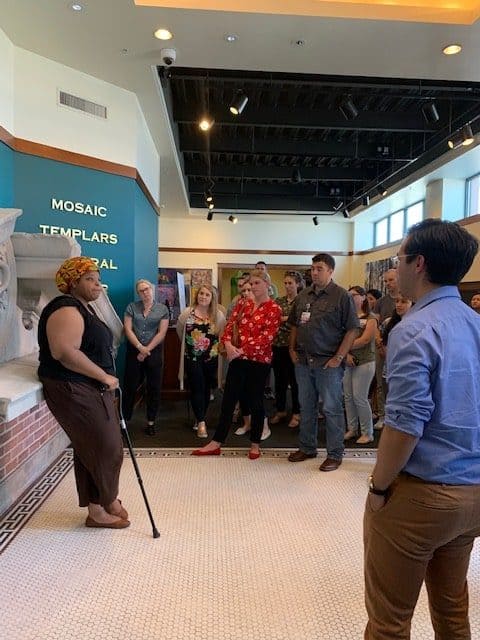
Mosaic Templars guide speaks to medical interns in museum
The Mosaic Templars Cultural Center was one of the stops on the tour for UAMS pediatric interns. The museum’s mission is to preserve, interpret and celebrate African American history and culture in Arkansas.

The interns also learned about the role of Central High School in the integration of public schools and the Civil Rights Movement, and explored African American history and culture at the Mosaic Templars Cultural Center.

An internship is the first year of residency training for medical school graduates. A pediatrics residency is three years, and many graduates continue their training with a fellowship in a subspecialty such as pediatric cardiology, neonatology or critical care medicine for one or more additional years. This year’s 26 pediatric interns came to UAMS and Arkansas Children’s from 16 states and two other countries. Five interns training in medicine-pediatrics, a four-year program, also participated in the bus tour.

Sydney Middleton, M.D., a pediatric intern who graduated from the University of Alabama School of Medicine in Birmingham, was eager to learn about factors impacting the lives of the children and families she will be caring for during her residency. She had been active in the student-run free clinic in Birmingham, serving as the organization’s outreach executive officer during her second year.

“So much of patient care involves social elements that are not taught in textbooks in medical school, so getting out in the community and learning about those we care for was an invaluable experience,” Middleton said.

“The tour was incredibly well done, and it helped me start to recognize some of the disparities, resource needs and locations of our families within this community,” she said. “It also provided me with options for how we can address some of these needs. I am so grateful to Dr. Perin for putting this together because now I have a better, clearer perspective from which to care for my patients while here in Little Rock.”

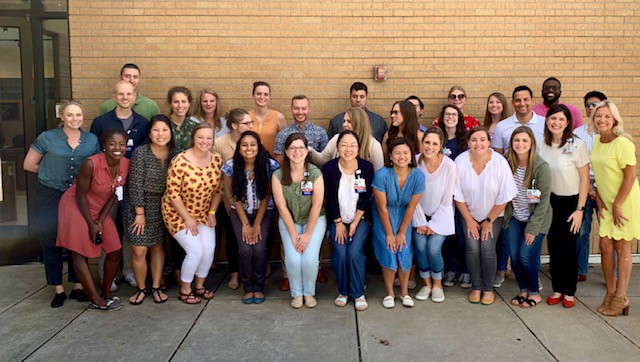
Group photo of interns and faculty
Tour participants pause for a group photo during their tour of Little Rock. Becca Perin, M.D., an assistant professor of pediatrics and associate residency director (front row, second from right) organized and led the tour.

Filed Under: News

James Graham, M.D., Appointed Next Executive Associate Dean in UAMS College of Medicine

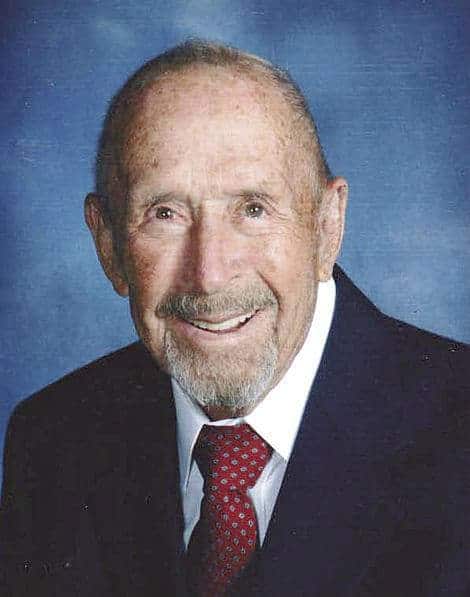
James Graham, M.D., a longtime educational leader in the UAMS College of Medicine, has been named the college’s next executive associate dean for academic affairs. He will begin serving in his new role following the retirement of Richard P. Wheeler, M.D., on January 31, 2020.

Dr. James Graham
James Graham, M.D., will begin serving as executive associate dean for academic affairs in the UAMS College of Medicine in early 2020.

“Those who have worked with Dr. Graham in his current post as associate dean for undergraduate medical education know that he brings great enthusiasm, collegiality and dedication to our educational mission, as well as extensive experience in medical education and strong institutional knowledge,” said Christopher T. Westfall, M.D., FACS, executive vice chancellor of UAMS and dean of the college. “These strengths will serve Dr. Graham very well as he leads our academic mission in collaboration with our outstanding leaders in undergraduate medical education and student affairs.”

Graham graduated from the College of Medicine in 1985 and remained at UAMS for his general pediatrics residency. He completed the University of Oklahoma-based National Center on Child Abuse and Neglect’s Interdisciplinary Training Program and continued his training in the Pediatric Emergency Medicine Fellowship at UAMS before joining the faculty as an assistant professor in 1991. He became an associate professor in 1996 and was promoted to professor in 2005.

Graham directed the Pediatric Emergency Medicine Fellowship in 1992-1997 and again in 2005-2010. He directed the Pediatrics Junior Clerkship in 2004-2009. He served as associate medical director of the Pediatric Emergency Department at Arkansas Children’s Hospital in 1992-2004 and as chief of Pediatric Emergency Medicine in 2005-2010.

Graham has held central educational roles in the college for the past two decades. He directed the Introduction to Clinical Medicine I course (now Practice of Medicine I) from 1999 to 2017. He has been active in numerous education-focused committees at UAMS and ACH, including the COM Curriculum Committee and the Undergraduate Medical Education Competencies Committee. Graham was appointed to his current post as associate dean for undergraduate medical education in 2010.

He has received many awards for teaching including the college’s student-selected Gold Sash and Red Sash awards, and he was three-time winner of the Educator of the Year award in the Department of Pediatrics. In addition to his work at UAMS, Graham served as chair of the Governor’s Trauma Advisory Council in 2008-2014, during development of Arkansas’ statewide trauma system.

“A strong mark of Dr. Graham’s leadership in our educational programs was the great success of our most recent Liaison Committee on Medical Education site visit and accreditation process in 2014-2015,” Westfall said.

With Graham as the primary leader of the comprehensive effort, UAMS received the maximum eight-year re-accreditation and exceptionally positive comments from the organization. Sponsored by the Association of American Medical Colleges and the American Medical Association, the Liaison Committee on Medical Education accredits medical schools in the United States and Canada.

Filed Under: News

REACH is International!

DFPM-RED’s Research-Based Early Childhood Professional Development includes, REACH; training and coaching to manage challenging behaviors and promote social-emotional health. The project is targeted to programs with limited access to state professional development resources.

Researcher Rabia Özen Uyar, Cukurova University Faculty of Education, Early Childhood Education, Sarıçam ADANA/TURKEY read a published article highlighting the REACH project and proposed to translate REACH materials and pilot in Turkey. The program was piloted this year in Turkey and initial feedback has been very positive. Teachers reported that they were very satisfied with the REACH program and also reported that behaviors of both teachers and children were positively impacted.  Data on the pilot is currently being analyzed and Dr. Uyar hopes to publish research findings in the coming year.

For more information on REACH, visit: http://familymedicine.uams.edu/REACH

Filed Under: News

Morehouse Medicine Leader Sees Challenges, Promise in Pursuing Health Equity

By Amy Widner

Arkansas and Georgia both face challenges and opportunities when it comes to reaching underserved health populations in the rural South, said Valerie Montgomery Rice, M.D., president and dean of Morehouse School of Medicine.

Rice said both Morehouse and UAMS have vital roles to play in addressing health equity as a means of improving health care as a whole — in Arkansas, Georgia and beyond.

Rice visited UAMS June 21-22 to give advice, but also to engage in dialogue. She gave lectures, met one-on-one with leadership and held a discussion roundtable with city and state leadership.

As part of the visit, Rice gave two visiting distinguished lectures. During “The Blueprint to Health Equity,” Rice said that older models focused on equality, which means giving everyone the same thing. Newer approaches recognize that not everyone starts with the same resources.

Instead, equity should be the goal, Rice said. Equity treats people as individuals.

“Equity gives them what they need, when they need it, and in the amount they need to reach their optimal level of health, based on all the circumstances that they bring to the table,” Rice said. “Many times, those circumstances are not within that individual’s control.”

At Morehouse School of Medicine — a historically black medical college in Atlanta, Georgia, which was founded in 1975 — Rice said they have made health equity part of their strategic vision. When they talk about translating scientific discoveries, building bridges and preparing future health care leaders, health equity is always part of the equation, she said.

Medical schools like Morehouse and UAMS can serve as health equity leaders, Rice said. For example, when it comes to preparing future leaders, Morehouse uses a strategic plan to target young people from rural areas in Georgia, inspire them to pursue medical careers, and mentor them through the process. This technique takes advantage of the fact that people who are from the rural South are more likely than others to return to the rural South to practice health care when they finish their education.

“It’s important because we need to deliver on the promise of science,” Rice said. “Science is making miracles every day. We create opportunities for life, we improve quality of life, and we extend life. That’s what science does, and everyone ought to have the opportunity for that. That promise should not be affected by your gender, your identity, your race, your ethnicity, your orientation or your ZIP code. Our goal is equity, but our real goal is liberation.”

Rice is the first woman to lead the freestanding medical institution, which began as part of Morehouse College before becoming independent in 1981. She is the founding director of the Center for Women’s Health Research at Meharry Medical College. She is a renowned infertility specialist and researcher. Among her recent honors, she was named to the Horatio Alger Association of Distinguished Americans and received the 2017 Horatio Alger Award. Rice has been named to the 100 Most Influential Georgians three years in a row.

During her visit to UAMS, Rice met with UAMS College of Medicine Executive Vice Chancellor and Dean Christopher T. Westfall, M.D.; Provost and Chief Strategy Officer Stephanie Gardner, Pharm.D., Ed. D.; Interim Senior Vice Chancellor for Clinical Programs and Interim UAMS Medical Center CEO Stephen A. Mette, M.D.; Vice Chancellor for Diversity and Inclusion Brian Gittens, Ed.D.; and many others.

The roundtable discussion was moderated by Gloria Richard-Davis, M.D., a professor in the UAMS Department of Obstetrics and Gynecology, and attended by members of the Arkansas Medical, Dental & Pharmaceutical Association, Arkansas Legislative Black Caucus, Arkansas Minority Health Commission and representatives of the Arkansas Department of Health and the city of Little Rock Mayor’s Office.

Filed Under: News

Edith Irby Jones, M.D., Trailblazing Medical Pioneer, Passes Away at 91

By Benjamin Waldrum

Edith Irby Jones, M.D., who became a pioneer when she enrolled at UAMS in 1948 as the first African American to enroll in an all-white medical school in the South, and who went on to a distinguished career as a doctor, educator and philanthropist, passed away on July 15. She was 91.

“All of UAMS is deeply saddened to hear that Dr. Jones has passed away,” said UAMS Chancellor Cam Patterson, M.D., MBA. “She shook the world when she enrolled at UAMS in 1948, and we will honor her by recognizing that the journey she started is not done.”

Portrait of Edith Irby Jones
“She shook the world when she enrolled at UAMS in 1948, and we will honor her by recognizing that the journey she started is not done,” said UAMS Chancellor Cam Patterson.

“Dr. Jones has had a dramatic, lasting impact on health care that will never, ever go away,” Patterson said. “She was a tremendous woman, and she opened so many doors for minority students. We are forever in her debt. I would like to extend my heartfelt sympathies to Dr. Jones’ family and to all those here at UAMS who counted her as a mentor and friend.”

“Our beloved alumna was a courageous trailblazer, not only during her time as a student at UAMS, but in the decades since then as she dedicated her career to the underserved,” said Christopher T. Westfall, M.D., FACS, executive vice chancellor of UAMS and dean of the College of Medicine. “We are profoundly grateful for all that she gave and everything she accomplished throughout her lifetime.”

“We are deeply saddened by the loss of Dr. Edith Irby Jones, but encouraged by her international legacy of service,” said Brian Gittens, Ed.D., M.P.A., vice chancellor for diversity, equity and inclusion. “Her life embodied Dr. Martin Luther King’s call that ‘Life’s most persistent and urgent question is, ‘What are you doing for others?’ We are honored to uphold her tremendous legacy of service in our efforts to advance diversity, equity and inclusion at UAMS and beyond.”

Edith Mae Irby was born near Conway in 1927 to Mattie and Robert Irby. Her father, a sharecropper, died when she was 8, and her older sister died of typhoid fever at the age of 12, largely due to her impoverished family’s lack of access to medical attention. Jones herself had rheumatic fever as a child and was unable to walk or attend school for a year. These experiences prompted her to seek a career in medicine, with the goal of helping those who could not afford standard medical care.

According to her official biography in the National Library of Medicine, Jones recalled, “The children who were able to have medical care would live; I saw the doctor going in and out of their homes. Although it may not be true, I felt that if I had been a physician, or if there had been physicians available, or we had adequate money, that a physician would have come to us.”

Medical student Edith Irby featured in a page from Ebony magazine
Jones’ enrollment attracted national media attention from publications such as Ebony magazine.

When Jones enrolled at UAMS in 1948, there were 6,500 medical students in the country, but only 185 were African American – and nearly all of them attended historically black colleges. Jones ranked 28th out of 230 applicants to UAMS that year, and H. Clay Chenault, M.D., then dean of the College of Medicine, made the decision to desegregate medical education and accept her. That year, the University of Arkansas Board of Trustees voted to increase the class size by one, so that it could not be said by those in the public who opposed the decision that Jones was somehow “taking a spot” from a white person.

Although she had been accepted to attend classes, Jones faced death threats and intimidation, and was not allowed to use the same dining, lodging or bathroom facilities as other UAMS students. Resisting the segregationist rules, many of her classmates chose to eat with her and study with her at her apartment.

During her second year of school, Irby and Dr. James B. Jones married; they subsequently had three children. In 1952, Jones received her Doctor of Medicine degree and was accepted to complete the first residency by an African American at a hospital in Arkansas.

Myra Jones Romain, Jones’ daughter, spoke in September on her mother’s love of UAMS.

“Her first love has always been UAMS, because she realized that they were taking a big leap of faith in admitting her,” Romain said. “She made a commitment to make sure that she did her part, not just to finish, not just to graduate, but to go forward after graduation and do something.”

Jones and her husband, James B. Jones, with former UAMS College of Medicine Dean Tom Bruce, M.D.

She would receive financial help from the community as a show of support, Romain said, such as a quarter taped to a piece of cardboard from members of her church. Once, when she was missing $50 for tuition, Daisy Bates collected the amount for her in a coffee can.

“She never forgets that,” Romain said. “She recognizes that there were a lot of people behind her getting her here, and there were people here who had to then say, ‘Okay, we’ll open the door.’”

After graduation, Jones opened a general practice in Hot Springs before moving to Houston, Texas, and became the first African American woman intern at Baylor College of Medicine Affiliated Hospital. She maintained her practice in Houston’s “third ward” for several decades, serving those who could not afford to go anywhere else for medical care.

In 1985, Jones was elected the first female president of the National Medical Association, and was the only female founding member of the Association of Black Cardiologists. She taught, consulted, or provided health care in not only the United States but in Haiti, Mexico, Cuba, China, Russia and throughout Africa. Jones continued teaching and practicing medicine at the University of Texas Medical School and the Baylor College of Medicine until 2014.

“Her first love has always been UAMS, because she realized that they were taking a big leap of faith in admitting her,” Romain (at left) said.

Among her many awards and honors, Jones was inducted into the UAMS College of Medicine Hall of Fame in 2004 and was inducted into the inaugural class of women honored by the Arkansas Women’s Hall of Fame in 2015.

In addition to her distinguished medical career, Jones was also an activist for civil rights, working with Dr. Martin Luther King Jr. as part of the civil rights movement. She was the only physician and female member of the so-called “Freedom Four,” who spoke across the South in homes and churches encouraging people to join the civil rights movement.

UAMS honored Jones in September with a month-long celebration of her life and career, with three events sponsored by the Center for Diversity Affairs: a historical presentation and exhibit; a four-woman discussion panel; and luncheon attended by Jones and featuring M. Joycelyn Elders, M.D., former U.S. surgeon general, as keynote speaker.

In a statement read at the celebration, Gov. Asa Hutchinson said, “Edith Irby Jones was a skilled and compassionate healer who demonstrated exemplary courage in breaking through racial and gender barriers, and her ongoing commitment to providing health care to those in need had a positive impact on the lives of countless individuals.”

“This African American woman, 5 feet tall, was a giant,” said Erick Messias, M.D., associate dean for faculty affairs, at the historical presentation.

M. Joycelyn Elders, M.D. (seated, at left) credits Jones as her inspiration. Behind them are (from left) Elder Granger, M.D., Brittany Demmings, Tia’Asia James, and Billy Thomas, M.D., M.P.H.

“There are going to be days where you don’t feel like you necessarily belong,” said Sasha Ray, an SNMA regional director and third-year student, at the four-woman panel. “But there’s always a quiet strength in the back of my mind, of knowing that I am participating in the tradition of a long line of women of color, of black women here at this institution, who have asserted their right to take up space. Dr. Jones was the genesis of that.”

Elders, an emeritus professor of pediatrics and distinguished professor of public health, was the first African American, second woman and first Arkansan appointed as U.S. surgeon general. She was inspired to become a doctor in 1950 after hearing Jones give a lecture at Philander Smith College.

“I’ve been following her ever since,” Elders said. “Before that time, I came from the cotton fields in southern Arkansas. I thought that if I got out of the cotton patch, that would’ve been real progress, but after that day, all I wanted to be was just like Dr. Irby.”

During the ceremonies, a scholarship was established in Jones’ honor by retired Maj. Gen. Elder Granger, M.D., a distinguished alumni in the College of Medicine. To make a donation in support of the Edith Irby Jones, M.D., Scholarship, visit www.giving.uams.edu/EIJScholarship.

In a 2006 interview with the David and Barbara Pryor Center for Arkansas Oral and Visual History, Jones said she learned her greatest life lesson from her father on the day he died.

“The greatest lesson I’ve ever learned, [which] I learned from my father, is that indeed what you give, comes back in multiples,” Jones said. “He told me then, ‘Edith, you don’t get it back all at that time, but when you give, you do get back in multiples – but it may not come back at the same time nor from the same source that you give it.’ And that has been my philosophy in life – never fail to give – expecting it to come back from the same source or that it might come back immediately.”

Filed Under: News

Jason Mizell, M.D., Featured on Doctors Unbound Podcast

Jason Mizell, M.D.

Most physicians have never taken a financial course. As a result, many make mistakes with money early in their career. Jason Mizell, M.D., of the Department of Surgery, realized this was a huge issue in the medical community and developed a Business and Medicine course from scratch. Perhaps one of the first of its kind, the full 4-year track helps students and residents learn about and take charge of their finances both in and out of practice. Dr. Mizell was recently featured on the Doctors Unbound podcast. Listen to hear more of the story of his course: https://www.doctorsunbound.com/podcast/financial-education-fixing-the-missing-link-in-med-school/ 

Filed Under: News

Researcher Receives Junior Faculty Enhancement Award from National Consortium

By Amy Widner

UAMS researcher Tiffany Weinkopff, Ph.D., has received a 2019 Ralph E. Powe Junior Faculty Enhancement Award, sponsored by Oak Ridge Associated Universities, which recognizes promising new scientific careers and supports their development.

UAMS Chancellor Cam Patterson, M.D., MBA; Vice Chancellor for Research Shuk-Mei Ho, Ph.D.; and Associate Vice Chancellor for Research Lawrence E. Cornett, Ph.D., surprised Weinkopff recently in her office to present the award.

“You were selected from among 167 other applicants in a peer-reviewed evaluation process that included scientists from throughout the nation,” Patterson said. “You’re going to get $5,000 to go toward your research, and we’ve matched that with $5,000 more for a total of $10,000. Congratulations! I see this as validation that other people see your work as we do: as important research at the forefront of medical advancement.”

Weinkopff is an assistant professor in the Department of Microbiology and Immunology in the UAMS College of Medicine. She studies the disease process behind leishmaniasis, an infection spread by parasites that is found in tropical and subtropical regions of the world. Some patients easily heal their skin lesions following infection, while others suffer long-term issues like skin ulcers and destroyed tissue. Some forms of the infection are fatal.

In the body, leishmaniasis causes a massive influx of immune cells to the infection site, dramatic changes to the surrounding blood vessels, and an expansion to the body’s lymphatic network. Weinkopff’s lab hopes to uncover exactly how some of these processes occur at the cellular and molecular level to understand how they might be controlled. They are also studying how the wounds caused by the infection heal.

Surprisingly, when Patterson, Ho and Cornett met Weinkopff, they learned that Patterson worked on the same cells and molecular pathway earlier in his career.

Weinkopff’s work could have implications for treating leishmaniasis and similar diseases. Known as the Neglected Tropical Diseases, they affect more than 1 billion people — or one-sixth of the world’s population — according to the Centers for Disease Control and Prevention. In addition, better understanding the disease process could have applications for treating other types of infection, autoimmune disease and cancer.

“Dr. Weinkopff’s work has the potential to help millions, if not billions of people,” Ho said.

Weinkopff came to UAMS about two years ago. She earned her Ph.D. from the University of Georgia and performed her Ph.D. dissertation work at the Centers for Disease Control and Prevention. She held postdoctoral fellowships at the University of Lausanne in Switzerland and the University of Pennsylvania in Philadelphia.

Shortly after coming to UAMS, she was offered a position in the UAMS Center for Microbial Pathogenesis and Host Inflammatory Responses, directed by Mark Smeltzer, Ph.D. The center has earned $21 million in funding through the NIH’s Centers of Biomedical Research Excellence (COBRE) program, which provides funding and mentoring to researchers who are early in their careers.

“Dr. Weinkopff is the first faculty member from UAMS to receive the Ralph E. Powe Junior Faculty Enhancement Award,” said Cornett, who represents UAMS with the Oak Ridge Associated Universities. “We recruited her to UAMS and got her involved in the COBRE because we think her work could have a significant impact on human health. We are pleased to see that a national organization like the ORAU agrees.”

One of the goals of the COBRE program is to help institutions establish themselves as centers of technology and expertise by attracting promising scientists with adjacent interests to work in the same place, sharing knowledge and tools.

Weinkopff said that a key piece of technology needed for her work, a two-photon microscope that allows her to look at the behavior of cells near the Leishmania infection site in real time, was already at UAMS. She said this two-photon microscope and other COBRE-funded technologies are instrumental in her work. With the Powe grant, she will be able to invest in more of the technology she needs to pursue her research.

“The Powe Award is almost like a pilot seed investment, and by matching the grant, the university shows that it’s behind you as well,” Weinkopff said. “It will help me take this work to the next level and expand into new techniques and technologies.”

UAMS has three COBRE centers, which are launching new scientific careers, attracting top talent and creating concentrations of expertise on topics like infectious diseases, cancer therapy and bone health. UAMS faculty lead two additional COBRE centers on childhood obesity prevention and pediatrics at Arkansas Children’s Research Institute.

The Oak Ridge Associated Universities is a consortium of American universities that aims to advance national priorities and serve the public interest by integrating academic, government and scientific resources globally.

Filed Under: News

SONOcamp Aims to Inspire STEM Possibilities for High School Students

By Amy Widner

“So if I told you this is where the diaphragm sits, where do you think the right superior, middle, and inferior lobes are on him?”

Kevin D. Phelan, Ph.D., co-director of the Division of Clinical Anatomy in the UAMS College of Medicine, drew an arc with his finger just along the bottom of the rib cage on the “patient” — actually a UAMS medical student — while a group of high school students from the Little Rock School District followed the gesture with their eyes.

“Think about when we saw the lungs in the lab this morning.”

The students hesitated.

“It’s weird, right, taking what you saw and now thinking about where that sits in the body? Our medical students have to learn that too. Talk amongst yourselves and use these stickers to label the lobes. Do the left side too.”

A student took the stickers, assumed a leadership role, and the discussion started. By the end, they correctly labeled all of the lobes except the — admittedly tricky — right inferior, which Phelan adjusted by a couple of centimeters. Next, they used a spirometer to measure the patient’s lung flow and volume, while watching the results appear in real time on an iPad.

SONOcamp Uses Hands-On Tech

Welcome to SONOcamp, held June 10-14 at UAMS with 60 Little Rock high school students.

Similar scenes repeated throughout week with the heart, kidneys, gastrointestinal tract, vasculature, and more. The students used hand-held ultrasounds, augmented reality, infrared cameras, and a 3D anatomy simulation table in same gross anatomy lab and patient simulation center used to train UAMS medical students. They learned about applying tourniquets in the field and saw a simulation of fetal sonography.

They interacted with faculty and students from the UAMS College of Medicine, College of Health Professions, College of Nursing and Graduate School, and undergraduate students who are conducting biomedical research through the Arkansas INBRE program.

The camp focused on hands-on, tech-heavy lab experiences. At the end of the week, they tested their knowledge and skills at the SONOlympics.

Twelve medical students helped lead the small-group exercises. Ryan Coleman, who is entering his second year of medical school, said he was amazed by the advanced labs and tech the students were able to experience because of the camp.

“I never used an ultrasound for anything before I came to med school,” Coleman said. “I had never done any human dissection before I came to med school. This is a very real experience for them. A lot of the things that they’ve learned in this camp, I literally learned this year or — in some cases — I learned this week, right along with them.”

Despite the complexity of some of the concepts, Coleman said, the camp’s goal to use hands-on tech to aid in student interest appeared to be working.

“It’s been really interesting to see how much they’ve actually retained,” Coleman said. “We did our trivia session, the SONOlympics, on the last day, and they got a lot of it right — like a lot — and that was really impressive.”

Grant Enables STEM Educational Outreach

As great as SONOcamp is, it’s only one small part of a larger project called ArkanSONO.

In 2018, Phelan received a $1.27 million, five-year science education research grant called a Science Education Partnership Award (SEPA) from the National Institute of General Medical Sciences, with is part of the National Institutes of Health.

Phelan is researching whether using handheld and interactive technology to teach students about health will inspire more students to pursue careers in STEM: science, technology, engineering and math.

“More and more educational research is showing that the sooner young people are exposed to STEM careers, the greater the likelihood they’re carry that interest into adulthood,” Phelan said. “If we’re going to support the STEM careers of the future, we have to inspire younger students by showing them their real-life potential before they disengage and start to believe it’s not a path that’s interesting or open to them.”

The program also aims to teach students about cardiovascular health, which is a leading cause of death in Arkansas. The students learned how the heart and blood vessels work and the importance of exercise, eating a healthy diet and refraining from smoking.

The partnership with the Little Rock School District began in January with UAMS faculty visiting ninth-grade physical science classes. They used real medical-grade handheld ultrasound devices to teach basics about the physics of sound, how ultrasounds work and how they are used in various STEM fields, including medicine, biomedical research and industry.

SONOcamp was the next step in the effort to deepen student engagement. Next year, some of the students from this year’s camp will be asked to come back to assist in teaching the next group.

School Superintendent Michael Poore, Ph.D., spoke at the opening day of camp and emphasized to the students to importance of the opportunity.

“I’m very excited for you,” Poore said. “I’m excited for our district. I’m excited for our community that this opportunity has been made available. This is a unique thing. You can be proud of yourselves as the first class that ever accomplished this, and I expect you’ll hear about it years down the line. I hope you leave here fired up and excited about what possibilities your futures hold.”

The process will repeat over five years, and Phelan will track which experiences are the most successful at sparking the inspiration for careers in STEM.

As for the first group of SONOcamp participants, Phelan was impressed.

“We have a great, diverse group of students here, and all the medical students and all the faculty, we have just been amazed at their enthusiasm, their engagement and how quickly they’re learning everything, and just how excited they are to be here.”

Phelan is joined in administering the grant, program and accompanying research by Gregory Snead, M.D., chief of the Division of Emergency Medicine Ultrasound in the UAMS College of Medicine Department of Emergency Medicine; Billy R. Thomas, M.D., a professor in the Pediatric Neonatology Department; Noor Akhter, Ph.D., and Mohsin M. Syed, Ph.D., both assistant professors in the UAMS College of Medicine Department of Neurobiology and Developmental Sciences; and Karen Yanowitz, Ph.D., professor in the Arkansas State University Department of Psychology and Counseling.

For more information about ArkanSONO and for ideas for using ultrasounds to teach science, find ArkanSONO on the UAMS College of Medicine Department of Neurobiology website —  or follow @ArkanSONO on Twitter.

Filed Under: News

UAMS Researcher Awarded $1.75 Million Grant to Study New Therapies for Metastatic Melanoma

Alan Tackett, Ph.D., a cancer researcher at the University of Arkansas for Medical Sciences (UAMS), has received a five-year $1.75 million grant from the National Cancer Institute (NCI) to identify new tumor targets in the treatment of metastatic melanoma.

Tackett is a professor in the UAMS College of Medicine Department of Biochemistry and Molecular Biology and serves as associate director of basic research in the UAMS Winthrop P. Rockefeller Cancer Institute.

Although melanoma is less common than other forms of skin cancer, it is the most deadly form of the disease. About 96,480 Americans – including 760 Arkansans – are estimated to be diagnosed with melanoma of the skin in 2019. While not all of these cases will metastasize, or move to other areas of the body, for those that do, treatment options are limited and often unsuccessful.

In recent years, a type of immunotherapy known as immune checkpoint inhibition has shown unprecedented success in the treatment of metastatic melanoma. Immunotherapy harnesses the body’s natural immune system to seek and destroy cancer.

However, while immunotherapies, such as the drugs Keytruda and Opdivo, are successful for many patients, others fail to receive the same positive outcome.

“While these new therapies show great promise for many people, approximately half of metastatic melanoma patients do not respond to immune checkpoint inhibitors. My laboratory is focused on understanding why some patients do not respond to these immunotherapies, so we can use that information to turn these patients into responders” said Tackett, who holds the Scharlau Family Endowed Chair for Cancer Research at UAMS.

To accomplish this task, Tackett uses a sophisticated approach called proteomics that allows his team to measure molecular changes in melanoma cells at the atomic level.

In 2016, Tackett received funding from the National Institutes of Health to implement a National Resource for Proteomics at UAMS, which provides a biomarker discovery platform to researchers at UAMS, as well as those in 23 other states and Puerto Rico.

“By defining pathways active in certain types of melanomas, we can identify new targets for drug development that could increase responsiveness to immune checkpoint inhibitors and thereby save the lives of thousands of patients each year,” said Tackett, whose research has been highly funded by the National Institutes of Health for his entire career.

To accomplish its research, Tackett’s team works closely with UAMS surgeons, oncologists and pathologists to obtain fresh tumor samples removed during surgery at UAMS Medical Center.

“Getting fresh tissue out of surgery and into our lab very quickly is key. This gives us the ability to sort it into individual cell populations and analyze it in ways that are difficult to do with older, fixated tissue samples,” he said.

New patients at the UAMS Winthrop P. Rockefeller Cancer Institute are asked in the early stages of treatment about their interest in donating a portion of their surgically removed tumor, or other specimen such as blood or urine, to benefit research.

The procurement of donated tumor tissue does not require any type of additional procedure, but makes use of a portion of the tissue that was removed during the normal surgical process.

“The research environment at UAMS is ideal for these types of studies as basic scientists work seamlessly with clinicians to move research from the lab to the clinic as quickly as possible,” said Tackett.

This federal grant will bolster the Cancer Institute’s ongoing efforts to receive National Cancer Institute Designation, which requires the institution achieve at least $20 million in annual direct cost research funding from an approved list of funding agencies.

To achieve designation, cancer centers undergo a highly competitive assessment process that demonstrates an outstanding depth and breadth of research in three areas: basic laboratory, patient/clinical and population-based. The designation brings with it many benefits, including expanded access to federal funding for researchers and improved access to clinical trials for patients.

Filed Under: News

  • «Previous Page
  • Page 1
  • Interim pages omitted …
  • Page 9
  • Page 10
  • Page 11
  • Page 12
  • Page 13
  • Interim pages omitted …
  • Page 42
  • Next Page»
UAMS College of Medicine LogoUAMS College of MedicineUniversity of Arkansas for Medical Sciences
Mailing Address: 4301 West Markham Street, Little Rock, AR 72205
Phone: (501) 296-1100
  • Facebook
  • X
  • Instagram
  • YouTube
  • LinkedIn
  • Pinterest
  • Disclaimer
  • Terms of Use
  • Privacy Statement
  • Legal Notices

© 2026 University of Arkansas for Medical Sciences