• Skip to primary navigation
  • Skip to main content
  • Skip to primary navigation
  • Skip to main content
Choose which site to search.
University of Arkansas for Medical Sciences Logo University of Arkansas for Medical Sciences
College of Medicine
  • UAMS Health
  • Jobs
  • Giving
  • About Us
    • Fast Facts
    • Leadership
    • Features
    • COMmunication Newsletter
    • Maps and Directions
    • College of Medicine History
    • Professionalism Guidelines
  • Departments
  • Admissions
    • Apply
    • Financial Aid and Scholarships
    • Life in Little Rock or Fayetteville
    • Dual Degree Programs
      • M.D./MBA Program
      • M.D./Ph.D. Program
      • M.D./MPH Program
    • Three-Year M.D. Program
    • Rural Practice Programs
      • Community Match Rural Physician Recruitment Program
      • Rural Practice Scholarship Program
    • Contact Admissions
  • Students
    • Academic Calendar
    • Academic Houses
    • Career Advising
    • Financial Aid and Scholarships
    • Visiting Students
    • Mentor Spotlight Podcast
    • Preparing for Residency
    • Non-Discrimination Statement
    • Outstanding Teacher Nominations
    • Parents Club
    • Student Links
    • Honors in Research
    • UAMS Campus Security
    • Undergraduate Medical Education Competencies
  • Graduate Medical Education
  • Alumni
  • Faculty Affairs
  • Research
  1. University of Arkansas for Medical Sciences
  2. College of Medicine
  3. Author: Chris Lesher
  4. Page 22

Chris Lesher

Two Ph.D. Graduates Head to Post-docs at Emory

Two Ph.D. students in the spring graduating class of the UAMS Graduate School have accepted positions at Emory University in Atlanta to continue their postdoctoral work.

“They will join other UAMS alumni at Emory for us to have a strong presence there,” said Robert E. McGehee Jr., Ph.D., dean of the UAMS Graduate School. “We’re proud of the accomplishments of these students and look forward to following the course of their promising careers.”

Kimberly Cooney completed the Graduate Program in Interdisciplinary Biomedical Sciences program at UAMS and participated in the Initiative for Maximizing Student Development (IMSD) program, which aims to increase the number of students from underrepresented groups graduating with doctorates in the biomedical sciences.

At Emory University, she’ll be working in the College of Medicine studying cardiovascular disease and its role in upregulating inflammatory signaling pathways. During her tenure at UAMS, she was mentored by Giulia Baldini, M.D., Ph.D., where her studies focused on the function and trafficking of the Melanocortin-4 Receptor, a receptor that influences appetite regulation and energy expenditure. That experience helped her discover her passion for obesity research and other areas that can directly impact her community.

“I can see the work I did at UAMS translating later and I want to continue doing relevant research, particularly in areas of health disparities,” Cooney said.

Cooney’s ultimate career goal is to establish a lab, possibly in an academic setting, that focuses on clinical research while mentoring other minority students in STEM areas.

Johnasha Stuart, who is also an IMSD scholar, conducted her graduate studies and training in the Microbiology and Immunology Department with Karl Boehme, Ph.D., at UAMS. At Emory, she will be working with Arash Grakoui, Ph.D., on Hepatitis C virus pathogenesis and its involvement with the immune system and how contribution to liver disease.

“At UAMS, I have already had the experience of working in a virology lab, which has given me a good basis for my next step,” Stuart said.

Stuart also credited the Graduate Student Teachers of Central Arkansas for providing her with opportunities to advance her teaching experience and achieve her career goals.

“My goal is to become an independent researcher and educator so that I can use my research as a platform to educate and encourage students to pursue careers in biomedical research,” Stuart said.

By Amy Widner | June 11th, 2018 |

Filed Under: News

Dr. Luis Juncos Named Nephrology Director at CAVHS

Luis Juncos, M.D.

Luis Juncos, M.D., has joined the Department of Internal Medicine as a Professor in the Division of Nephrology and Director of Nephrology at the Central Arkansas Veterans Healthcare System.

Dr. Juncos, who previously served as Nephrology Division Director at the University of Mississippi Medical Center, is nationally recognized for his expertise and contributions in acute care nephrology and continuous renal replacement therapy, as well as for his work as an educator and researcher.

Dr. Juncos is a standing member of the National Institutes of Health Kidney, Urologic and Hematologic Diseases D Subcommittee (DDK-D) and has served as an ad hoc reviewer for other study sections. He has served as Associate Editor of the Journal of the American Society of Nephrology and on the editorial boards of the American Journal of Physiology-Renal Physiology, and Critical Care Medicine. He has also served on the American Heart Association’s Council on Hypertension Publications Committee.

Filed Under: News

Well Done, Class of 2018!

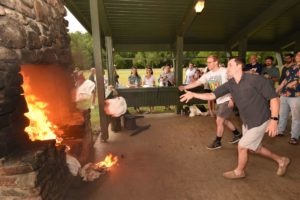
The College of Medicine Class of 2018 said goodbye to medical school with the time-honored traditions of burning their short white coats, receiving accolades at Honors Convocation, and formally receiving the M.D. after their names at the UAMS Commencement Ceremony on May 19.

Faculty member speaking at podium
Toby Vancil, M.D., delivers the Faculty Charge to the Class of 2018.

Toby Vancil, M.D., spoke on behalf of the faculty at Honors Convocation, held the night before Commencement. He emphasized that UAMS has prepared the graduating seniors well for residency, the next phase of their journey to becoming licensed practicing physicians.

Senior medical student burn their student white coats
Seniors gleefully burn their white student coats at a May 16 celebration at Murray Park.

“As we bring this ship into the dock closing this adventure we call medical school, I would like to tell you how excited we are as a collective faculty to have been a part of your voyage thus far,” said Dr. Vancil, an Associate Professor of Internal Medicine and award-winning educator who was also chosen by students to deliver the Faculty Charge two years ago.

Faculty member and student with award
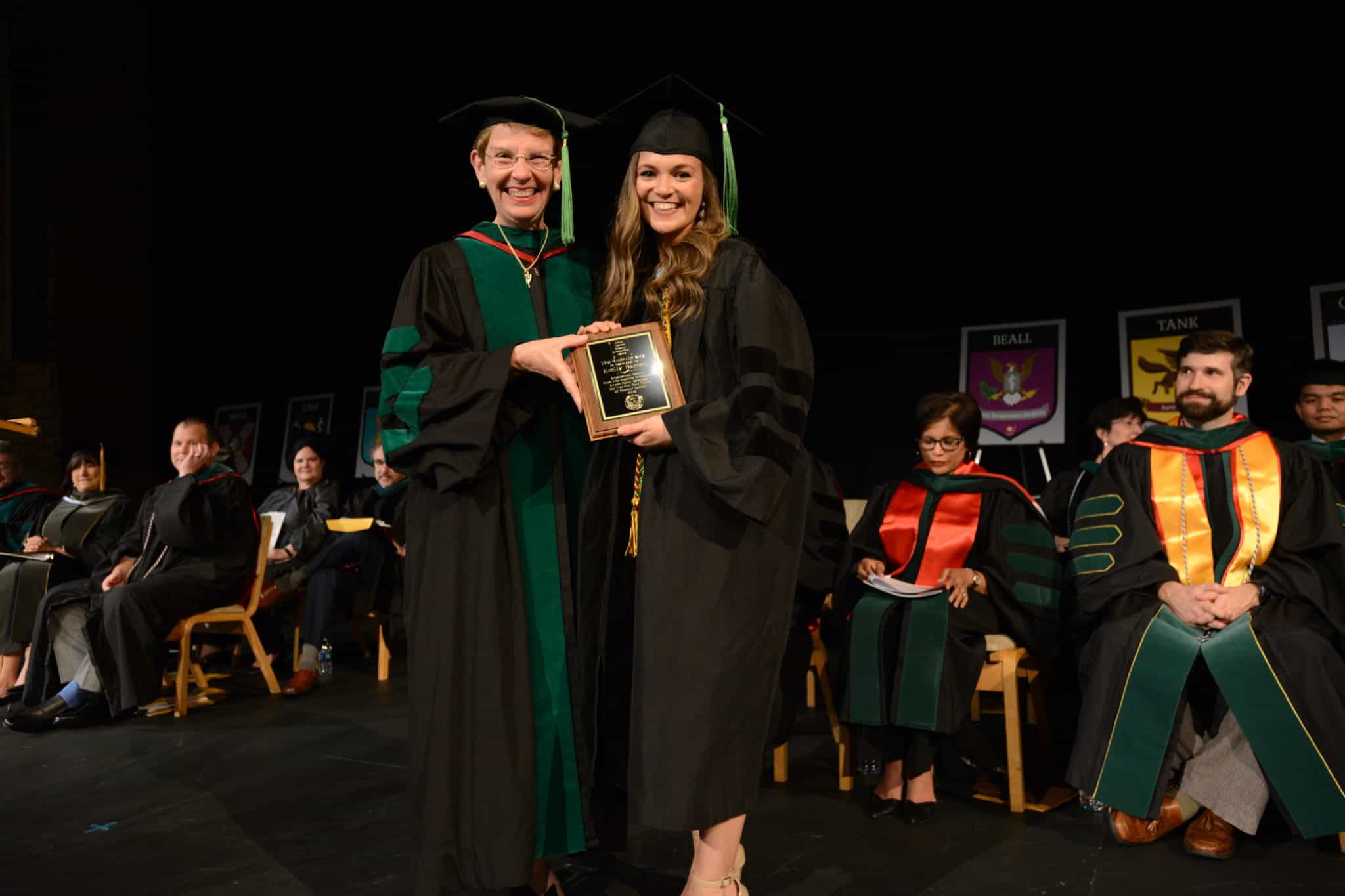
Emily Barrett (right) receives the Roberts Key as one of a record-breaking 16 seniors achieving a perfect 4.0 GPA in all four years of medical school. Jeannette M. Shorey II, M.D., UAMS Associate Provost for Faculty, presented the Roberts Key to all 16 recipients.

“My final charge to all of you is to always keep in mind who that person was who filled out that medical school application years ago,” Dr. Vancil said. “Take time every day to remember who you are, where you came from, and why you have dedicated so much time to this very moment.”

Golden Apple Winner

Selected as the most outstanding teacher of the year by a vote of each class.

Graduating seniors chose Jason Mizell, M.D., an Associate Professor in the Department of Surgery, as the recipient of their class’s Golden Apple Award. Dr. Mizell, who was unable to attend Honors Convocation this year, has received four previous Golden Apples from junior and senior classes.

Filed Under: News

Katie Brown, O.D., Chosen Young Optometrist of the Year

Katie Brown, O.D., an optometric physician at the UAMS Harvey & Bernice Jones Eye Institute, is the Arkansas Optometric Association’s 2018 Young Optometrist of the Year award recipient.

The award is given to an optometrist who has practiced at least four years, shows promise and interest in Arkansas Optometric Association leadership, and volunteers their time.  Brown was nominated and selected by an awards committee comprised of optometric physicians.

Brown has been at UAMS since 2013. She sees patients at the eye institute, performs comprehensive eye exams, diabetic eye exams, glaucoma screenings and contact lens fittings, and treats conditions such as corneal abrasions, pink eye, corneal ulcers, dry eye syndrome and glaucoma.

She works closely with cornea and retina specialists to provide prosthetic contact lens fittings for vision rehabilitation due to corneal dystrophies or after ocular trauma and corneal transplantation. Brown is also an assistant professor in the UAMS College of Medicine’s Department of Ophthalmology and teaches ophthalmic medical technology students, medical students and ophthalmology residents.

Brown is involved with the association’s student membership, education and recruitment. She also volunteered this year with a UAMS medical student’s non-profit, ROOTS, which provided eye exams to children. She is the coordinator at the Shepherd’s Hope Neighborhood Health Center’s free eye clinic in Little Rock.

“I have a passion for optometry and providing high-quality eye care for Arkansans,” she said.

Brown graduated magna cum laude from Southern College of Optometry in Memphis. She completed internships at the Air Force Academy in Colorado Springs, Colorado, and The Eye Center in Memphis. She received contact lens training at Alcon Academy for Eye Care Excellence in Fort Worth, Texas, and at Vistakon Vision Care Institute in Jacksonville, Florida.

Brown is certified by the National Board of Examiners in Optometry and the Arkansas State Board of Optometry. She is a member of the Arkansas Optometric Association and the American Optometric Association.


UAMS is the state’s only health sciences university, with colleges of Medicine, Nursing, Pharmacy, Health Professions and Public Health; a graduate school; hospital; northwest Arkansas regional campus; statewide network of regional centers; and seven institutes: the Winthrop P. Rockefeller Cancer Institute, Jackson T. Stephens Spine & Neurosciences Institute, Myeloma Institute, Harvey & Bernice Jones Eye Institute, Psychiatric Research Institute, Donald W. Reynolds Institute on Aging and Translational Research Institute. It is the only adult Level 1 trauma center in the state. UAMS has 2,834 students, 822 medical residents and six dental residents. It is the state’s largest public employer with more than 10,000 employees, including 1,200 physicians who provide care to patients at UAMS, its regional campuses throughout the state, Arkansas Children’s Hospital, the VA Medical Center and Baptist Health. Visit www.uams.edu or www.uamshealth.com. Find us on Facebook, Twitter, YouTube or Instagram.

###

By Lee Hogan | June 4th, 2018 |

Filed Under: News

On the Shoulders of Giants: College of Medicine Honors Academic House Namesakes

UAMS College of Medicine students, faculty and leaders paid homage to the namesakes of the college’s seven Academic Houses at a recent dinner for family members of the iconic educators, alumni and other groundbreakers whose legacies live on through their impact on health care in Arkansas.

“It is an understatement to say that our Academic Houses are named after some of the giants in medicine in Arkansas,” Interim Dean Christopher T. Westfall, M.D., told guests at the May 17 dinner.

“Abernathy, Beall, Bruce, Compton, Ish, Lowe, and Tank …” he said, reciting the house names.

“With names like these, the Academic Houses are providing our students with powerful inspiration for the physicians that they – and all of us in the College of Medicine – hope they will become.”

Students echoed Westfall’s words of gratitude in presentations about each house and the namesakes (all deceased) that members chose for inspiration when the houses were launched two years ago. They gave family members or a representative a framed copy of their house’s student-designed crest and explained the symbolism they had incorporated.

11 people flank a poster on an easel
Eight family members of George William Stanley Ish, M.D., join students of the Ish House for a photo with the house’s crest at the dinner celebrating the legacy of the academic house namesakes.

“We chose a lion as our house symbol,” said Chase Wingfield, a junior in the house named after Betty Lowe, M.D., a 1956 UAMS graduate who became a nationally prominent pediatrician, transformative medical director at Arkansas Children’s Hospital (ACH), and beloved faculty member and mentor for generations of students, trainees and colleagues at UAMS and ACH.

“Just as Dr. Lowe was steadfast in her resolve to advance medicine in Arkansas, seeing that every child has not only an opportunity to receive health care, but also the most up-to-date, advanced treatments at their fingertips, we want to continue that resolve into the future,” Wingfield said.

The houses are structured learning communities, not physical residences. Each house includes students from all four class years along with specially trained physician and basic sciences faculty advisors. The houses provide extensive academic and career counseling, foster peer mentoring, and host wellness-focused events.

Scientist-educator with two students
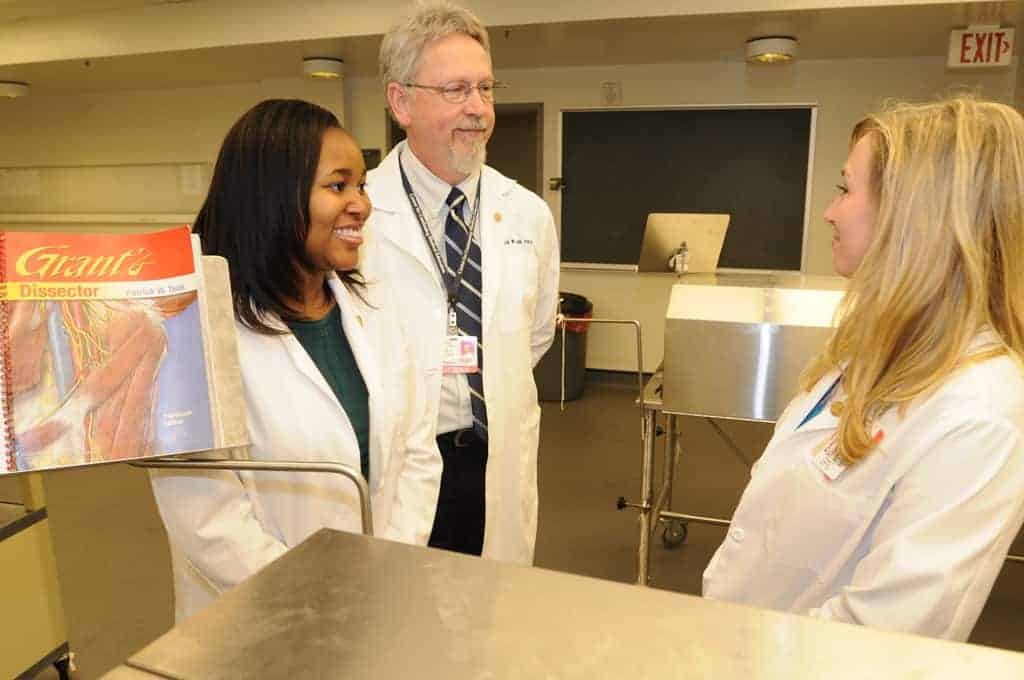
Patrick W. Tank, Ph.D., pictured here with students in 2009, taught gross anatomy to more than 4,000 medical students during his 34 years on the faculty

Many house activities focus on academic success and preparation for crucial milestones such as national exams and the increasingly competitive National Resident Matching Program, which determines where medical school graduates will train in their specialty before becoming fully licensed physicians. For the past two years, UAMS’ graduating seniors achieved their highest residency match rates in over a decade, and the academic houses are credited as a factor.

The dinner welcomed namesakes’ family members from around the country, including eight family members of the late George William Stanley Ish, M.D., a Harvard-trained African-American physician who cared for citizens in his hometown of Little Rock from the 1920s through 1960s. Among many accomplishments, Ish established hospitals and the state’s McRae Memorial Tuberculosis Sanatorium, which cared for black patients during the long era of segregated facilities. It was the first institution in Arkansas and one of the first in the nation to use isoniazid and streptomycin to treat the disease, according to the online Encyclopedia of Arkansas.

Man sitting by a canoe
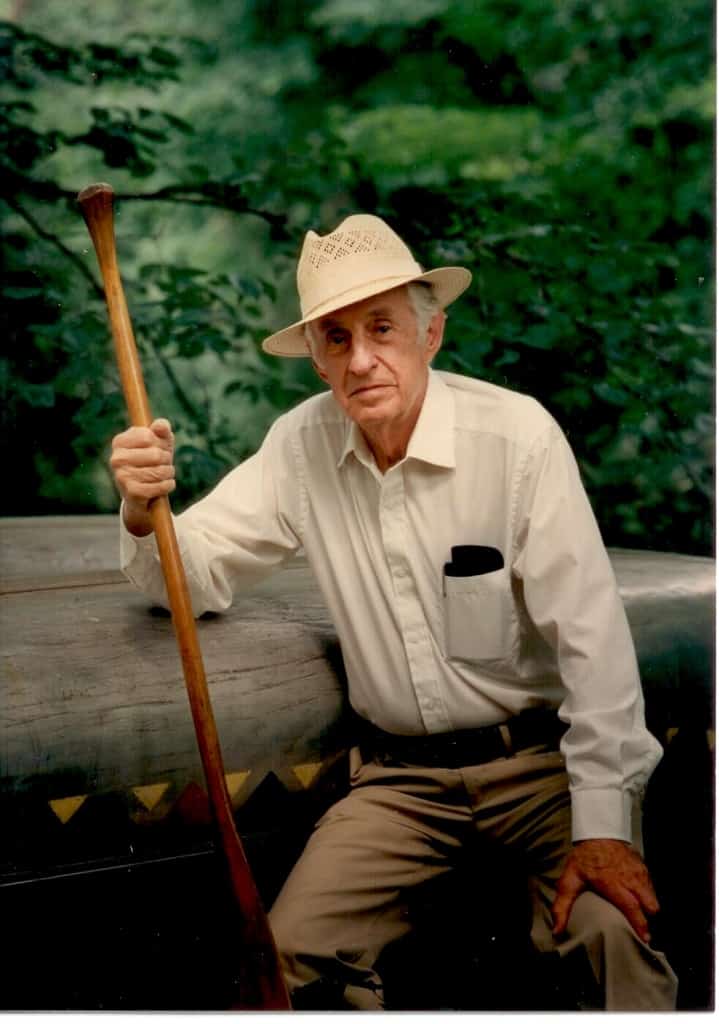
Neil E. Compton, M.D., a 1939 UAMS graduate, practiced obstetrics and gynecology in northwest Arkansas for decades. He gained acclaim as a conservationist and champion of the Buffalo River. (Photo by Debra Billingsby, 1992, Special Collections, University of Arkansas Libraries, Fayetteville.)

“We are proud and so happy that the college is honoring our grandfather,” said Marye Ish of Fort Washington, Maryland, who attended with her sister, Lynette Ish-Greene, of Novi, Michigan, and six other family members. “We can’t tell you how much that means to us. Even as children, we knew our grandfather was doing special work, even if we didn’t fully understand it.”

Emily Holthoff, a graduating senior and student leader in the Ish House, expressed gratitude to the family for expanding her understanding of Dr. Ish’s legacy while they enjoyed dinner together. She explained for other guests how the phoenix rising from ashes on her house’s crest represents renewal and overcoming adversity. “We felt like that is exactly what Dr. Ish did,” Holthoff said. “And that is something that we hope we can do as physicians throughout our careers. We hope to overcome the obstacles we face, for the betterment of our patients.”

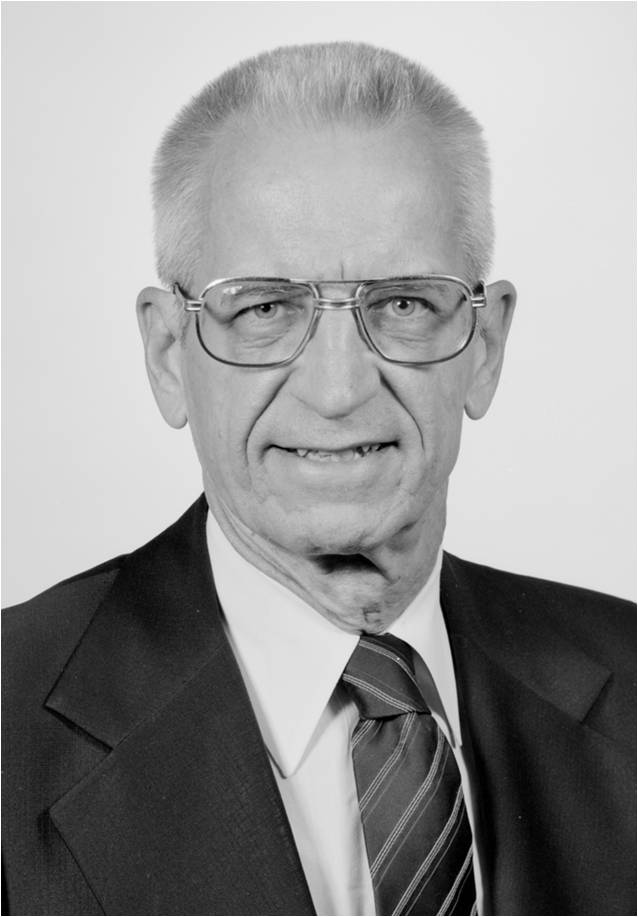
Portrait
Robert Abernathy, M.D., Ph.D., served on the faculty from 1957-2002 and chaired the Department of Internal Medicine from 1967-1977.

Colleen Flanagan, a junior, spoke on behalf of the Tank House, whose namesake, Patrick W. Tank, Ph.D., helped more than 4,000 medical students learn the complexities of the human body during his 34 years on the faculty, including 27 as director of the gross anatomy course for freshmen. Tank died in 2012. Today, medical students at UAMS continue to be guided by “Grant’s Dissector,” a manual that was edited by Tank for three of its editions and is used at medical schools around the world. His name is also on UAMS’ state-of-the-art gross anatomy lab.

“The name Tank is most likely the first distinguished name a medical student learns upon starting at UAMS,” Flanagan said.

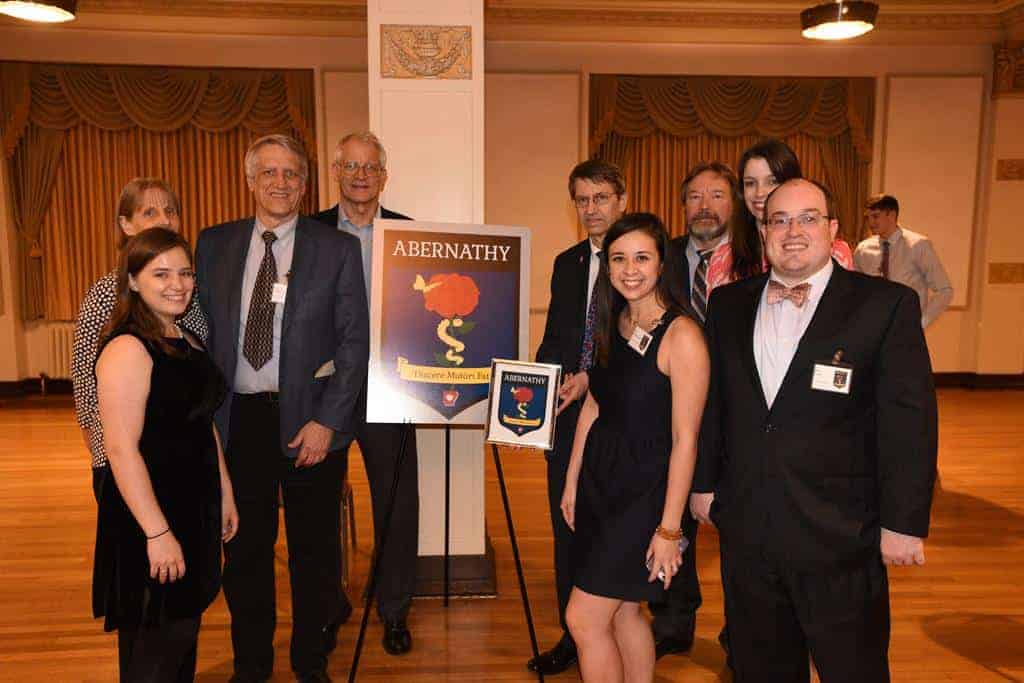
nine people next to easel
Family members of academic house namesake Robert Abernathy, M.D., Ph.D., pose with students and faculty representatives of the Abernathy House and the house’s crest.

“Dr. Tank’s time at UAMS came before my classmates’ arrival. However, looking back at all of his accomplishments, three things are obvious. Dr. Tank devoted his life to his profession; his students cherished him; and UAMS would not be what it is today without Dr. Tank’s work.”

Filed Under: News

Ph.D. Candidate Bolden Wins Prestigious SREB Fellowship

Ever since Ph.D. candidate Chris Bolden can remember, he’s been fascinated by how small changes can have big impacts in the biological world.

Today, he studies how he can harness for positive purposes one of the basic functions of viruses, using them to deliver antibodies into cells that work against methamphetamine addiction.

In the past few years, he has grown to love how similar effects can occur in education. One specific approach, analogy or teaching method could make all the difference for a particular student.

Student and mentor working together
Bolden works in the lab of Eric Peterson, Ph.D., right, in the Department of Pharmacology and Toxicology.

“I love it when a student tells me, ‘I see what you’re getting at,’ or you can literally see it in their face when they have that ‘ah-ha’ moment – it makes you feel like you’re actually getting through to them,” Bolden said.

In both microbiology and education, small changes can make big differences, and Bolden has decided to continue exploring both by going into academia. He also knows that one of the ways in which he might be the right person to connect with a student is because of his race. He can only remember having one African-American male professor during his undergraduate science education, and he wants to be part of changing that.

“Seeing that similar face, it helps some students feel more comfortable, and it also helps give some students a different outlook, because some students come from an area where there’s only one race or ethnicity and they don’t get to experience diverse teaching methods or teachers,” Bolden said. “I think that’s where I come into play and can have a positive impact.”

While working toward this goal, Bolden applied for and has received the Southern Regional Education Board (SREB) fellowship for doctoral students. He begins the one-year fellowship in July 2018 and it is renewable for two years. It is specifically for minority Ph.D. candidates who want to pursue careers in education. It will include financial assistance, research funding, attendance at the Institute on Teaching and Mentoring in October in Atlanta, career mentoring, and assistance finding postdoc positions specifically for teaching.

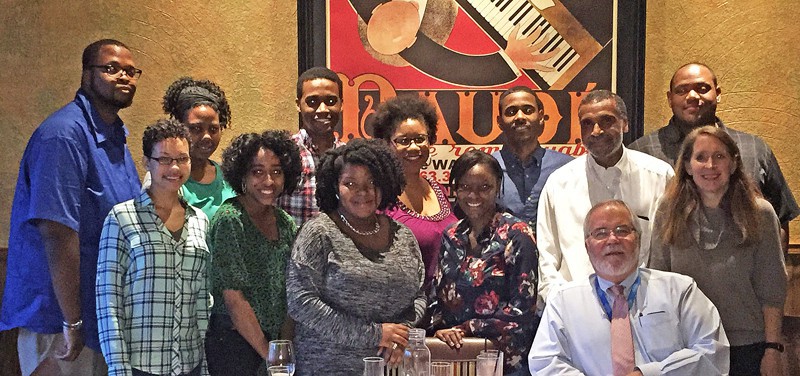
Group photo of initiative participants
Bolden, far left, is also part of the Graduate School’s Initiative for Maximizing Student Development, which aims to increase the number of students graduating with doctorates in biomedical sciences who come from underrepresented groups.

He will network, be exposed to teaching opportunities, have assistance with logistical hurdles and generally have a group of people who are invested in helping him advance his career goals – a combination of support and accountability.

“It’s a little like having extra parents, but for your career,” Bolden said.

The SREB’s goal is for there to be more minority Ph.D. students who seek careers as faculty on college campuses. They note that while more than one-third of America’s college students are people of color, those numbers are not reflected in college faculty, where about 5 percent are African-American, 3 percent are Hispanic and 1 percent are Native American.

Since it began in 1993, the SREB has supported about 1,200 students at 94 institutions in 31 states.

At UAMS, Bolden is in the Graduate School’s Interdisciplinary Biomedical Sciences program. He is working in the Department of Pharmacology and Toxicology in the College of Medicine in the lab of Eric Peterson, Ph.D.

“When Chris first came to my lab, he immediately impressed me with his drive and his scientific curiosity, and since then he has continued to impress me with his ability to network professionally and find opportunities and sources of funding, like this SREB fellowship, which is instrumental to any successful career in the academic sciences,” Peterson said.

He is also a member of the Graduate School’s Initiative for Maximizing Student Development, which aims to increase the number of students graduating with doctorates in biomedical sciences who come from underrepresented groups. It is funded by a grant from the National Institute of General Medical Sciences and provides participants with tuition, fees and a $24,000 annual salary for their first two years of graduate study. It also includes training, networking and mentoring opportunities.

“We’re very proud of Chris for everything he’s accomplished so far and for receiving this prestigious fellowship. We know the selection committee saw in him what we already know – that he is going to be a great science-educator and his future is worth investing in,” said Robert E. McGehee Jr., Ph.D., dean of the UAMS Graduate School.

By Amy Widner | May 30th, 2018 |

Filed Under: News

Retired Lieutenant General Faces Prostate Cancer Head-on at UAMS

George Crocker is up to just about any challenge. A retired Army lieutenant general, Crocker spent the good part of his life defending his country both at home and abroad. From two tours in Vietnam to serving as commander at Fort Lewis in Tacoma, Washington, Crocker made a lasting mark through his distinguished military service.

That steely determination carried over into other parts of his life as well, and when he was told he needed treatment for prostate cancer, Crocker was ready to do whatever it took to take care of the problem.

“I told him, ‘We can take the prostate out,’” he said, recalling his conversation with UAMS urologic oncologist Rodney Davis, M.D., following his biopsy in 2017.

Davis, though, had other ideas. After studying Crocker’s medical history, which included a massive stroke two years earlier, Davis quickly determined that surgery presented too many risks.

“I wanted to find the treatment that was the safest and least stressful overall,” said Davis, professor and chairman of the Department of Urology in the UAMS College of Medicine. Surgery could have increased Crocker’s risk of a second stroke, so Davis recommended a course of radiation therapy instead.

Plus, radiation presented the definite possibility of a cure.

A resident of Clinton, Crocker was already confident in the ability of UAMS doctors to successfully treat the most complex medical conditions. When he fell to the floor of his garage unconscious in 2015, Crocker’s wife, Vonda, quickly called emergency medical services. They, in turn, alerted the emergency department at the Ozark Health Medical Center, a partner in the UAMS-led statewide stroke program AR Saves.

AR Saves, which stands for Stroke Assistance through Virtual Emergency Support, began at UAMS in 2008 and has grown to include 54 partner sites throughout Arkansas. It uses a high-speed video communications system to help provide immediate, life-saving treatments to stroke patients by enabling a stroke neurologist to evaluate whether emergency room physicians should use a powerful blood thinner known as t-PA within the critical three-hour period following the first signs of stroke.

After receiving the drug, Crocker’s cramped arm began to relax and he was transferred by ambulance to the UAMS hospital where he underwent a brain scan, was administered more t-PA and had two clots removed from his brain. In fewer than 24 hours, he was forming complete sentences and on the road to recovery.

Now, however, Crocker was facing a new challenge with his diagnosis of prostate cancer and he was trusting fellow Army veteran Davis to determine the best course of treatment. Davis, an Iraq war veteran who underwent military training at Fort Lewis and holds the rank of colonel in the U.S. Army Retired Reserve, assured Crocker that radiation therapy was the best choice to maintain his quality of life, as well as kill the cancer cells in the prostate and any malignant cells that might be adjacent to it.

Crocker began his round of 28 treatments in late 2017 at the UAMS Radiation Oncology Center under the supervision of Sanjay Maraboyina, M.D., assistant professor in the Radiation Oncology Department in the UAMS College of Medicine.

“When I first met with Mr. Crocker, I told him that recent clinical studies have shown a five-week course of treatment to be just as safe and effective as the typical eight-week regimen. It’s also more convenient for patients, who have to come in every day for treatment. I want to be sure our patients have access to the latest advancements, because this is truly what sets UAMS apart from other cancer centers,” Maraboyina said.

Although he is still experiencing some side effects related to the hormone therapy necessary to reduce his testosterone level, Crocker is back to his active lifestyle. Left unchecked, testosterone can stimulate prostate cancer cells to grow.

“Mr. Crocker had a fierce determination throughout his treatment and approached every obstacle related to his health in much the same way he has his military career. Together with his team of doctors, he was determined to beat prostate cancer,” Maraboyina said.

With a European vacation and reunion of his West Point class coming up, Crocker shows no signs of slowing down and is thankful he does not have to.

“Dr. Davis gave me clear and logical reasons for the treatment I needed, and the staff at the UAMS Radiation Oncology Center was first class in every respect. I couldn’t be happier,” he said.

By Susan Van Dusen |May 29th, 2018 |

Filed Under: News

UAMS Professor Offers Insights into Criminal Intent, Co-Authors Law Review Article

A University of Arkansas for Medical Sciences (UAMS) professor of neurobiology recently co-authored a Kentucky Law Review article that offers insights into the nature of criminal intent and urges the court system to admit more expert testimony into trials regarding the subject.

In “Actus Reus, Mens Rea, and Brain Science: What Do Volition and Intent Really Mean?,” Edgar Garcia-Rill, Ph.D., and the late Erica Beecher-Monas, J.D., give the example of someone walking along a sidewalk while in conversation yet being ‘preconscious’ of traffic and other pedestrians so as to allow for safe navigation.

The co-authors conclude that “we are ‘conscious’ while performing the movement and that the activity preceding the intent is a manifestation of ‘our preconscious awareness.’ That is, we are preconscious to the performance of our movements, and therefore responsible for all of our actions. And yes, free will is alive and well.”

Studies by the late researcher Benjamin Libet in the early 1980s have suggested that one’s voluntary movements begin “unconsciously” because brain waves are manifested in advance of the subjective “will” to move. This led to the suggestion that there is no free will. Libet surmised that individuals still have the ability to stop actions or movements of which they are not fully conscious.  This became known as “free won’t.”

However, Garcia-Rill has been working on the brain regions that further preconscious awareness, and such activity is present in a person’s brain while conscious (not when one is unconscious) but the person is just not paying attention to it, thus the name “preconscious awareness.”

Garcia-Rill is director of the UAMS Center for Translational Neuroscience, funded by the National Institute for General Medical Sciences’ IDeA Program. Beecher-Monas was a professor of law at Wayne State University until her death in the summer of 2017.

Garcia-Rill and Beecher-Monas argue that the legal concepts of criminal act and criminal intent are outmoded.

“The legal meaning of choice, intent and volition originated not from empirical studies about human brains and behavior, but from ungrounded beliefs about human nature,” the authors state. “The law still operates on outdated, 19th century assumptions about how human beings function.”

Refusing to admit expert testimony about mental illness is contributing to the complex problem of mental illness among prison inmates and failing to protect society when the convicted are released, Garcia-Rill and Beecher-Monas argue.

“Judges should instead admit expert testimony so the jury can perform its interpretive and evaluative functions,” they conclude.

The article and the edition of Kentucky Law Review in which it was published were dedicated to the family of Beecher-Monas.

“Through a protracted illness, she worked doggedly on this article that stands as a legacy to a unique law professor,” Garcia-Rill stated in a dedication. “It is to the more informed decision-making, the more humane policy drafting, and the more relevant law enactment, that Erica devoted her life.  And she did so with the same love and commitment she had for her children and grandchildren, to whom this article and entire issue is dedicated.”

By Ben Boulden | May 23rd, 2018 |

Filed Under: News

WISE Childhood Nutrition Program Wins Education Award

Rarely are child temper tantrums a sign of success, but this is one of those circumstances.

The WISE program – Together, We Inspire Smart Eating – has been working to introduce fresh fruits and vegetables into the diets of Arkansas children since 2011.

“Parents come into the program thinking, ‘oh, my child won’t eat that,’ but then we hear stories about kids throwing fits in the grocery store aisles, not because they want candy, but because they want green beans. Those are their own kind of success story,” said Leanne Whiteside-Mansell, Ed.D., principal investigator for WISE and a professor in the Department of Family & Preventive Medicine in the College of Medicine.

Windy Wise logo
Windy the owl visits the classroom to introduce the children to fruits and vegetables.

The WISE program recently welcomed another – more formal – acknowledgement of its success: The Journal of Nutrition Education and Behavior recognized a report about WISE with its 2018 Best GEM (Great Educational Materials) award.

The journal’s committee selected finalists for the recognition, which was voted on by its board of editors. The award recognizes innovativeness/creativity, quality of design, quality of writing and presentation and quality of evaluation. The report was titled “Together We Inspire Smart Eating: A Preschool Curriculum for Obesity Prevention in Low-Income Families,” by Whiteside-Mansell and Taren M. Swindle, Ph.D., an assistant professor in the Department of Family & Preventive Medicine.

WISE is for children age 3-8 to establish healthy early eating habits and encounter a variety of fruits and vegetables – with the ultimate aim of combating childhood and adult obesity. It includes a classroom curriculum, educator training and parent education outreach materials. There are versions of the program for pre-K and kindergarten through first grade.

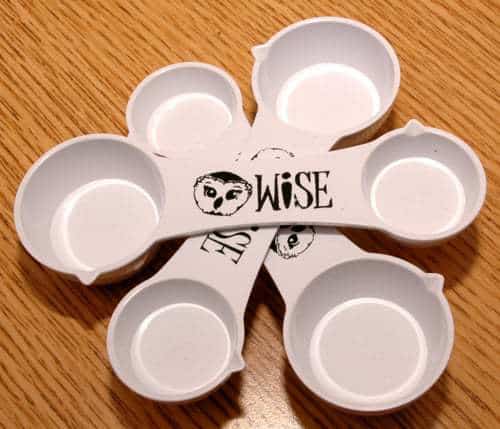
Measuring spoons with Windy logo
Food preparation tools like measuring spoons and blenders used in the classroom as part of the WISE program are branded with Windy the owl’s image.

WISE is organized around eight monthly units. Windy Wise, a barn owl puppet, brings letters from farms to the classroom to introduce the featured fruits and vegetables to children: apples, tomatoes, broccoli, sweet peppers, carrots, berries, greens and green beans. Activities throughout the month allow the children to explore the food and use it in recipes.

The program also includes educator training and parent engagement through backpack letters from the farmer and a Facebook and Pinterest page. Windy Wise’s branded logo is printed on utensils used by educators in the classroom and is featured on cardboard cutouts in participating grocery stores.

The program is specifically designed to be effective with high-risk children from resource-poor backgrounds. It is being used in 147 classrooms in Arkansas and 30 classrooms in Louisiana.

Whiteside-Mansell and Swindle have made some interesting discoveries during their time on the project. During their preliminary research before designing the curriculum, they found that 25 percent of Head Start children hadn’t had an apple at home. Among the educators, many lacked food as children, and 33 percent reported still experiencing bouts of food insecurity.

With this context in mind, the WISE program encourages families and educators alike to cultivate healthy food habits such as allowing kids to decide how much to eat, so they only eat when they are hungry and are not urged to “clean their plates” or “make happy plates.” Kids are also encouraged to play with their food and see it transform, which makes them more likely to try unfamiliar foods.

Windy the owl cardboard cutout in grocery store
Children can also find Windy by the fruits and vegetables in participating grocery stores.

“When we go for classroom visits, that cue to ‘make a happy plate’ still frequently comes up. At first we didn’t understand why, because we cover the negative results of that in the training, but once we surveyed our educators and found their history – and for some, current struggles – with food insecurity, it made more sense. In certain cultures, and the South is one of them, that is a hard habit to break,” Swindle said.

The curriculum is also organized to be budget-sensitive and value the educator’s time. For example, many of the food activities include math or reading or other activities that educators are required to include in their classroom time.

“We’ve tried to make it something that helps educators meet their goals, not something that needs to be tacked on as an additional requirement or afterthought. It can’t compete with other requirements,” Whiteside-Mansell said.

The program also emphasizes the connection between food, people and the land, instead of the abstract notion of food coming from stores or restaurants. The letters from farmers that introduce the foods and communicate with parents feature a variety of types of farming families – from small, backyard-gardens to large-scale family farms and everything in between.

“We’ve documented positive changes in the behavior of children, teachers and parents. We feel that Windy Wise is helping change the culture in the places she visits, and we’re happy to have some of that recognized with the award,” Whiteside-Mansell said.

WISE is a project of the Department of Family and Preventive Medicine Research and Evaluation Division (RED), which Whiteside-Mansell directs.

Funding for WISE comes from grants from the U.S. Department of Agriculture National Institute of Food and Agriculture, UAMS Translational Research Institute, National Institutes of Health National Center for Research Resources and the National Center for Advancing Translational Sciences.

By Amy Widner | May 22nd, 2018 |

Filed Under: News

WISE Childhood Nutrition Program Wins Education Award

Rarely are child temper tantrums a sign of success, but this is one of those circumstances. The WISE program – Together, We Inspire Smart Eating – has been working to introduce fresh fruits and vegetables into the diets of Arkansas children since 2011. “Parents come into the program thinking, ‘oh, my child won’t eat that,’ but then we hear stories about kids throwing fits in the grocery store aisles, not because they want candy, but because they want green beans. Those are their own kind of success story,” said Leanne Whiteside-Mansell, Ed.D., principal investigator for WISE and a professor in the Department of Family & Preventive Medicine in the College of Medicine.

The WISE program recently welcomed another – more formal – acknowledgement of its success: The Journal of Nutrition Education and Behavior recognized a report about WISE with its 2018 Best GEM (Great Educational Materials) award. The journal’s committee selected finalists for the recognition, which was voted on by its board of editors. The award recognizes innovativeness/creativity, quality of design, quality of writing and presentation and quality of evaluation. The report was titled “Together We Inspire Smart Eating: A Preschool Curriculum for Obesity Prevention in Low-Income Families,” by Whiteside-Mansell and Taren M. Swindle, Ph.D., an assistant professor in the Department of Family & Preventive Medicine. WISE is for children age 3-8 to establish healthy early eating habits and encounter a variety of fruits and vegetables – with the ultimate aim of combating childhood and adult obesity. It includes a classroom curriculum, educator training and parent education outreach materials. There are versions of the program for pre-K and kindergarten through first grade.

WISE is organized around eight monthly units. Windy Wise, a barn owl puppet, brings letters from farms to the classroom to introduce the featured fruits and vegetables to children: apples, tomatoes, broccoli, sweet peppers, carrots, berries, greens and green beans. Activities throughout the month allow the children to explore the food and use it in recipes. The program also includes educator training and parent engagement through backpack letters from the farmer and a Facebook and Pinterest page. Windy Wise’s branded logo is printed on utensils used by educators in the classroom and is featured on cardboard cutouts in participating grocery stores. The program is specifically designed to be effective with high-risk children from resource-poor backgrounds. It is being used in 147 classrooms in Arkansas and 30 classrooms in Louisiana. Whiteside-Mansell and Swindle have made some interesting discoveries during their time on the project. During their preliminary research before designing the curriculum, they found that 25 percent of Head Start children hadn’t had an apple at home. Among the educators, many lacked food as children, and 33 percent reported still experiencing bouts of food insecurity. With this context in mind, the WISE program encourages families and educators alike to cultivate healthy food habits such as allowing kids to decide how much to eat, so they only eat when they are hungry and are not urged to “clean their plates” or “make happy plates.” Kids are also encouraged to play with their food and see it transform, which makes them more likely to try unfamiliar foods.

“When we go for classroom visits, that cue to ‘make a happy plate’ still frequently comes up. At first we didn’t understand why, because we cover the negative results of that in the training, but once we surveyed our educators and found their history – and for some, current struggles – with food insecurity, it made more sense. In certain cultures, and the South is one of them, that is a hard habit to break,” Swindle said. The curriculum is also organized to be budget-sensitive and value the educator’s time. For example, many of the food activities include math or reading or other activities that educators are required to include in their classroom time. “We’ve tried to make it something that helps educators meet their goals, not something that needs to be tacked on as an additional requirement or afterthought. It can’t compete with other requirements,” Whiteside-Mansell said. The program also emphasizes the connection between food, people and the land, instead of the abstract notion of food coming from stores or restaurants. The letters from farmers that introduce the foods and communicate with parents feature a variety of types of farming families – from small, backyard-gardens to large-scale family farms and everything in between. “We’ve documented positive changes in the behavior of children, teachers and parents. We feel that Windy Wise is helping change the culture in the places she visits, and we’re happy to have some of that recognized with the award,” Whiteside-Mansell said. WISE is a project of the Department of Family and Preventive Medicine Research and Evaluation Division (RED), which Whiteside-Mansell directs. Funding for WISE comes from grants from the U.S. Department of Agriculture National Institute of Food and Agriculture, UAMS Translational Research Institute, National Institutes of Health National Center for Research Resources and the National Center for Advancing Translational Sciences.

By Amy Widner | May 22nd, 2018

Filed Under: News

  • «Previous Page
  • Page 1
  • Interim pages omitted …
  • Page 20
  • Page 21
  • Page 22
  • Page 23
  • Page 24
  • Interim pages omitted …
  • Page 39
  • Next Page»
UAMS College of Medicine LogoUAMS College of MedicineUniversity of Arkansas for Medical Sciences
Mailing Address: 4301 West Markham Street, Little Rock, AR 72205
Phone: (501) 296-1100
  • Facebook
  • X
  • Instagram
  • YouTube
  • LinkedIn
  • Pinterest
  • Disclaimer
  • Terms of Use
  • Privacy Statement
  • Legal Notices

© 2026 University of Arkansas for Medical Sciences