• Skip to primary navigation
  • Skip to main content
  • Skip to primary navigation
  • Skip to main content
Choose which site to search.
University of Arkansas for Medical Sciences Logo University of Arkansas for Medical Sciences
College of Medicine
  • UAMS Health
  • Jobs
  • Giving
  • About Us
    • Fast Facts
    • Leadership
    • Features
    • COMmunication Newsletter
    • Maps and Directions
    • College of Medicine History
    • Professionalism Guidelines
  • Departments
  • Admissions
    • Apply
    • Financial Aid and Scholarships
    • Life in Little Rock or Fayetteville
    • Dual Degree Programs
      • M.D./MBA Program
      • M.D./Ph.D. Program
      • M.D./MPH Program
    • Three-Year M.D. Program
    • Rural Practice Programs
      • Community Match Rural Physician Recruitment Program
      • Rural Practice Scholarship Program
    • Contact Admissions
  • Students
    • Academic Calendar
    • Academic Houses
    • Career Advising
    • Financial Aid and Scholarships
    • Visiting Students
    • Mentor Spotlight Podcast
    • Preparing for Residency
    • Non-Discrimination Statement
    • Outstanding Teacher Nominations
    • Parents Club
    • Student Links
    • Honors in Research
    • UAMS Campus Security
    • Undergraduate Medical Education Competencies
  • Graduate Medical Education
  • Alumni
  • Faculty Affairs
  • Research
  1. University of Arkansas for Medical Sciences
  2. College of Medicine
  3. Author: Chris Lesher
  4. Page 18

Chris Lesher

Seventy Years Later, Edith Irby Jones, M.D., Continues to Inspire

A month-long celebration of the life and career of Edith Irby Jones, M.D., who enrolled 70 years ago at UAMS as the first African-American student in the South to attend a previously all-white medical college, brought thanks and appreciation from those she inspired and served.

A pioneer in the desegregation of higher education in Arkansas and the South, Jones has a distinguished career as a doctor, educator and philanthropist. She graduated from UAMS in 1952.

Three events, sponsored by the UAMS Center for Diversity Affairs, were set to honor Jones’ legacy: a Sept. 5 historical presentation and exhibit; a Sept. 12 four-woman discussion panel; and a Sept. 19 luncheon with Jones herself in attendance and featuring M. Joycelyn Elders, M.D., former U.S. surgeon general, as keynote speaker. Co-sponsors were the UAMS Library and Historical Research Center, the UAMS College of Medicine and the college’s Office of Faculty Affairs.
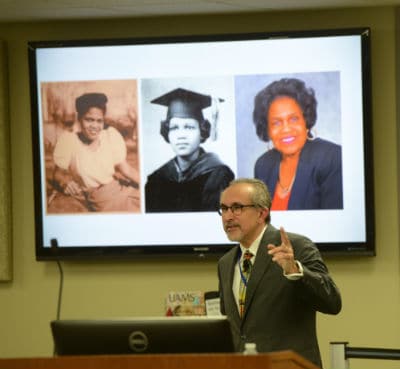
Erick Messias, M.D., speaks on Jones' legacy.
Erick Messias, M.D., speaks on Jones’ legacy.

Erick Messias, M.D., associate dean for faculty affairs, hosted a presentation Sept. 5 in the Active Learning Center of the UAMS Library. A capacity crowd listened intently as Messias went over the struggles that Jones endured throughout her life and career. (Read Dr. Messias’ full essay).

“This African-American woman, five feet tall, was a giant,” Messias said.

Jones was born near Conway in 1927. Her father, a sharecropper, died when she was eight, and her older sister died of typhoid fever at the age of 12, largely due to her impoverished family’s lack of access to medical attention. Jones herself suffered from rheumatic fever as a child and was unable to walk or attend school for a year. These experiences prompted her to seek a career in medicine, with the goal of helping those who could not afford standard medical care.

In 1948, Messias said, there were approximately 6,500 medical students in the country, but only 185 were African-American – and nearly all of them attended historically black colleges. Jones ranked 28th out of 230 applicants to UAMS that year, and H. Clay Chenault, M.D., then dean of the College of Medicine, made the decision to desegregate medical education and accept her. That year, Messias said, the University of Arkansas Board of Trustees voted to increase the class size by one, so that it could not be said by those in the public who opposed the decision that Jones was somehow “taking a spot” from a white person.

Although she had been accepted to attend classes, Jones faced death threats and intimidation, and was not allowed to use the same dining, lodging or bathroom facilities as other UAMS students. Resisting the segregationist rules, many of her classmates chose to eat with her and study with her at her apartment.

After graduation, Jones opened a general practice in Hot Springs before moving to Houston, Texas, and becoming the first African-American woman intern at a Baylor College of Medicine Affiliated Hospital. She maintained her practice in Houston’s “third ward” for several decades, serving those who could not afford to go anywhere else for medical care. In 1985, Jones was elected the first female president of the National Medical Association, and is the only female founding member of the Association of Black Cardiologists. She has taught, consulted, or provided health care in not only the United States but in Haiti, Mexico, Cuba, China, Russia and throughout Africa. Jones continued teaching and practicing medicine at the University of Texas Medical School and the Baylor College of Medicine until 2014.

Messias emphasized that medical education still has a ways to go to build on Jones’ legacy.

“We have made progress, there is no question, but there is work to do for all of us,” Messias said. “Today, we are talking about decisions that people made 70 years ago. Seventy years from now, people will be looking at us the same way: who among us is trying to open doors? Who among us is trying to build walls?”
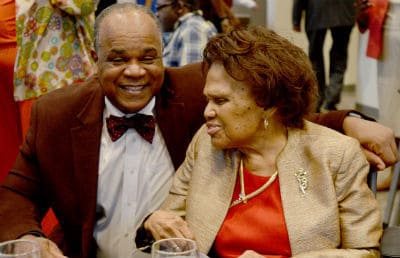
Rodney Davis, M.D., credits Jones with helping him pursue a career in medicine.

Messias pointed out that only 7.2 percent of the UAMS College of Medicine students are African-American – less than half the proportional representation of African-Americans in Arkansas. The number of African-American residents and faculty at UAMS have improved, he said, but are low.

Still, Messias believes that things are looking up.

“We may not have the numbers we want [for representation], but we have the quality we want,” Messias said. “We have amazing scientists, teachers and physicians. They came through a door opened by this woman from Conway, right here.”

Rodney Davis, M.D., professor and chair of the Department of Urology in the UAMS College of Medicine counts himself among those mentored by Jones.

An internationally recognized urology expert, Davis was the first African-American to lead a urology department in the United States. He opted for a career in medicine over missionary work, and met Jones at Baylor University.

“The compassion and care she displayed was enough to impress upon me that I really did want to go into medicine,” he said. “It’s full circle for me, because I got to follow in the footsteps of someone who played an important part in the history of this institution.”

“If you look at Dr. Edith Irby Jones, that’s just pure courage and persistence,” said Billy Thomas, M.D., M.P.H., vice chancellor for diversity and inclusion and Center for Diversity Affairs director. “We’ve got to have that same vision: that we are health care providers and we’re going to create a diverse workforce that can take care of the entire population.”

At the second event honoring Jones on Sept. 12, a four-woman panel, moderated by Lanita White, Pharm.D., director of the UAMS 12th Street Health & Wellness Center, discussed the struggles of making it in the medical field, both as women and as African-Americans.
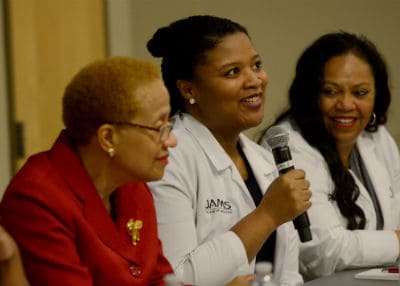
Sasha Ray (center) responds to a question as part of a four-woman panel discussing struggles in the medical field.

The panel consisted of Linda Haynie-Green, M.D., who established the first Arkansas chapter of the Student National Medical Association (SNMA), a student-run organization focused on the needs of medical students of color; Ronda Henry-Tillman, M.D., chief of breast oncology in the UAMS College of Medicine Department of Surgery; Nichole Bauknight-Boles, M.D., a child and adolescent psychiatrist; and Sasha Ray, an SNMA regional director and third-year student.

They shared stories in turn of establishing their medical careers, with similar themes about being overlooked and underpaid that had many of the women in the audience nodding along.

Bauknight-Boles, a 1995 graduate of the College of Medicine, remembered profiling and speaking to Jones when she served as a keynote speaker at graduation. She received emotional support from custodial staff while going through medical school, like Jones had. “I had to wonder how in the world [Jones] got through [medical school],” she said. “It was amazing to know that those same people were looking up to us in 1995, and were praying for us,” she said.

“There are going to be days where you don’t feel like you necessarily belong,” Ray said of Jones’ example. “But there’s always a quiet strength in the back of my mind, of knowing that I am participating in the tradition of a long line of women of color, of black women here at this institution, who have asserted their right to take up space. Dr. Jones was the genesis of that.”

The panel took questions from the audience and discussed various strategies to combat stereotypes and being stigmatized.

An invitation-only luncheon on Sept. 19 in the Hospital Lobby Gallery capped off the month-long celebration, with nearly 100 admirers present to welcome Jones back to UAMS.
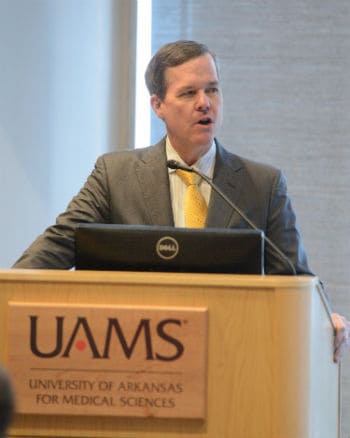
Chancellor Patterson credited Jones as an inspiration to countless others in the medical field.

“From the moment you enrolled in 1948 as a medical student at UAMS, you dedicated your professional life to one thing: helping other people, especially those who are underserved,” said UAMS Chancellor Cam Patterson, M.D., MBA. “You paved the way for so many talented, remarkable African-Americans to follow your footsteps into a career of medicine, to better the lives of others through their work.”

Patterson credited Jones’ work with Dr. Martin Luther King Jr. during the Civil Rights movement, and her role in establishing hospitals and clinics throughout the world, as having “a dramatic and lasting impact on health care that will never, ever go away.”

“Your footprints are all over this institution,” Patterson said. He presented Jones with a commemorative glass sculpture in honor of her contributions to medicine.

Members of Gov. Asa Hutchinson’s office presented a special commendation, which read in part: “Dr. Jones is a skilled and compassionate healer who demonstrated exemplary courage in breaking through racial and gender barriers, and her ongoing commitment to providing health care to those in need has had a positive impact on the lives of countless individuals.”

Christopher T. Westfall, M.D., dean of the College of Medicine, announced an endowed scholarship created in Jones’ honor by retired Maj. Gen. Elder Granger, M.D., a distinguished alumni in the College of Medicine. Westfall and Elders awarded two scholarships to first-year medical students Brittany Demmings and Tia’Asia James.

Elders, an emeritus professor of pediatrics and distinguished professor of public health, was the first African-American, second woman and first Arkansan appointed as U.S. surgeon general. She was inspired to become a doctor in 1950 after hearing Jones give a lecture at Philander Smith College. “It was because of that talk that I’m here today,” Elders said.

M. Joycelyn Elders, M.D. (seated, at left) credits Jones (seated, at right) as her inspiration. Behind them are (from left) Elder Granger, M.D., Brittany Demmings, Tia'Asia James, and Billy Thomas, M.D., M.P.H.
M. Joycelyn Elders, M.D. (seated, at left) credits Jones as her inspiration. Behind them are (from left) Elder Granger, M.D., Brittany Demmings, Tia’Asia James, and Billy Thomas, M.D., M.P.H.

“I’ve been following her ever since,” Elders said. “Before that time, I came from the cotton fields in southern Arkansas. I thought that if I got out of the cotton patch, that would’ve been real progress, but after that day, all I wanted to be was just like Dr. Irby.”

“I want you to know that Dr. Jones has planted a lot of trees,” Elders said of Jones’ legacy. “They’re all coming up, and we’ll continue to plant them for the rest of the country.”

Myra Jones Romain, Jones’ daughter, spoke on her mother’s behalf of her love of UAMS.

“Her first love has always been UAMS, because she realized that they were taking a big leap of faith in admitting her,” Romain said. “She made a commitment to make sure that she did her part, not just to finish, not just to graduate, but to go forward after graduation and do something.”

She would receive financial help from the community as a show of support, Romain said, such as a quarter taped to a piece of cardboard from members of her church. Once, when she was missing $50 for tuition, Daisy Bates collected the amount for her in a coffee can.

“She never forgets that,” Romain said. “She recognizes that there were a lot of people behind her getting her here, and there were people here who had to then say, ‘Okay, we’ll open the door.’”

Filed Under: News

Christopher T. Westfall, M.D., Appointed UAMS College of Medicine Dean

Christopher T. Westfall, M.D., F.A.C.S., a professor of ophthalmology and longtime clinical and academic leader at the University of Arkansas for Medical Sciences (UAMS), has been appointed dean of the College of Medicine.

Westfall has served as interim dean since Feb. 23, when former dean Pope L. Moseley, M.D., stepped down to pursue his research.

Christopher Westfall, M.D.
Christopher T. Westfall, M.D., F.A.C.S.

Cam Patterson, M.D., MBA, became UAMS chancellor June 1 and made Westfall’s position as dean permanent this month.

“We conducted a nationwide search and found that we already had the best person for the job in Dr. Westfall,” Patterson said. “Dr. Westfall has served UAMS for more than 20 years as a physician, department leader and head of the Jones Eye Institute. He is the perfect person for the job and we are thankful he has agreed to continue to serve in this important capacity.”

Until his appointment as permanent College of Medicine dean, Westfall had been chair of the college’s Department of Ophthalmology. UAMS professor Sami H. Uwaydat, M.D., has been appointed the department’s interim chair.

Westfall continues as director of the UAMS Harvey & Bernice Jones Eye Institute and as holder of the Pat Walker Endowed Chair in Ophthalmology.

“In my past six months as interim dean, my understanding of the complex inner workings of this institution has expanded, my respect for the UAMS College of Medicine faculty is deeper than ever before and my dedication to our mission is stronger for the experience,” Westfall said. “I am honored that the chancellor and my colleagues continue to put their trust in me as we work together to educate exceptional physicians, advance research that transforms health care and improves health, and ensure that Arkansans receive the very best medical care.”

Westfall joined the faculty in 1997 and served in numerous leadership positions prior to his appointment as chair of ophthalmology and director of the Jones Eye Institute in 2009. These included vice chairman and medical practice leader; chief of the oculoplastic surgical services at UAMS Medical Center, the John L. McClellan Memorial Veterans Hospital and Arkansas Children’s; chief of service at Arkansas Children’s; and chairman and medical director of the Ophthalmic Medical Technology Program in the UAMS College of Health Professions. Westfall served as UAMS chief of medical staff in 2014-2016. In 2008 he was invested as the inaugural holder of the Pat Walker Endowed Chair in Ophthalmology.

Westfall received his undergraduate degree from the U.S. Military Academy at West Point, New York, and earned his medical degree at the Ohio State University in Columbus, Ohio. He completed a residency in general surgery at Keesler U.S. Air Force Medical Center in Mississippi, was certified by the American Board of Surgery and awarded fellowship in the American College of Surgeons (FACS). He went on to complete a residency in ophthalmology at Wilford Hall U.S. Air Force Medical Center at Lackland Air Force Base in Texas, and a two-year fellowship in ophthalmic plastic and reconstructive surgery at the Massachusetts Eye and Ear Infirmary and Harvard Medical School in Boston. He is certified by the American Board of Ophthalmology.

Westfall served as department chair and residency program director in ophthalmology at Wilford Hall U.S. Air Force Medical Center. He retired at the rank of colonel and as chief consultant in ophthalmology to the U.S. Air Force Surgeon General.

Filed Under: News

Recent Faculty Appointments — September 2018

Youssef Aachoui

Department of Microbiology and Immunology

Youssef Aachoui, Ph.D., has joined the Department of Microbiology and Immunology as an Assistant Professor. Dr. Aachoui received his doctorate from Indiana State University in Terre Haute. He recently completed a postdoctoral fellowship in immunology under the tutelage of Edward Miao, Ph.D., at the University of North Carolina in Chapel Hill.

Dr. Aachoui’s research focuses on the mechanisms by which the innate immune system detects and responds to intracellular pathogens, with special emphasis on caspase and inflammasome activation.

Melissa Zielinski

Department of Psychiatry

Melissa Zielinski, Ph.D., has joined the Department of Psychiatry as an Assistant Professor in the Division of Health Services Research. Dr. Zielinski received her master’s in psychology and doctorate in clinical psychology at the University of Arkansas in Fayetteville. She completed her postdoctoral fellowship in clinical psychology as a National Institute of Drug Abuse-sponsored T32 trainee in the UAMS Psychiatric Research Institute (PRI) Brain Imaging Research Center.

Dr. Zielinski will lead program evaluation efforts for the Pulaski County Regional Crisis Stabilization Unit, see patients via telehealth through the PCORI-funded SPIRIT study, and serve as a Co-Investigator on National Institute of Mental Health-funded research linking jail detainees to PrEP services upon release. She will also serve as a clinical attending at the burn unit at Arkansas Children’s Hospital and supervise psychology interns in both the burn unit and PRI’s Walker Family Clinic.

Filed Under: Faculty Updates

UAMS’ Dr. Martin Radvany Saves Teen from Effects of Rare Stroke

Early on May 27, UAMS neuroradiologist Martin Radvany, M.D., was working to make sure that a joke about stroke from teenager Dra Bishop was not the last joke Dra made.

Bishop’s stroke was not a laughing matter.

Dra, 16, a Bentonville High School and Amateur Athletic Union (AAU) basketball player, was feeling a little sluggish when he got out of bed on the morning of May 26. Typically, Dra was enthusiastic and hard charging on a game day like that Saturday. His mother, Angela Copeland, noticed his lack of energy, but wrote it off as teenage lethargy.

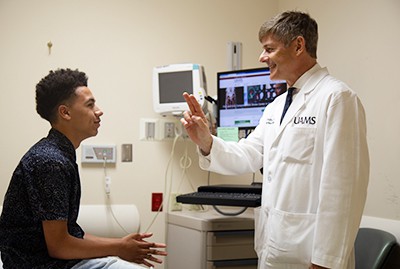
Patient and doctor in exam room
Radvany tests Dra’s ability to follow movement with his eyes during a recent visit to UAMS.

Later in the day, she and Dra traveled from their northwest Arkansas home to Tulsa, Oklahoma, where her son played two AAU games.

“I knew something was off because Dra never misses lay-ups or free throws,” Copeland said. “He hasn’t missed a free throw in years, and he missed three that day. His shooting was just off.”

Dra explained after the game that his misses probably happened because his right hand felt weird and heavy. He and his mother thought that may have been caused by muscle strain and fatigue from some pre-game weight training.

Back at home and on waking at 6 p.m. from an afternoon nap, Dra called his mother on his cell phone, knowing she was only a room or two away in the house. She didn’t answer the call but yelled at him to get out of bed.

“He came in the room and said, ‘Hey, Mom, I think I’ve had a stroke.’ He looked just fine, and we started joking about it. About two hours later, we were watching the Cavs-Celtics game and all of the sudden, I was joking with him, and he wasn’t responding,” Copeland said.

Mother and son
Bishop pauses on the basketball court for a photo with his mother, Angela Copeland

Dra got up to take a shower and fell. His second and third attempts also failed. That’s when Copeland noticed her son couldn’t speak and one side of his face was drooping. Her daughter’s boyfriend carried Dra to her car, and she rushed him to Mercy Northwest Arkansas to find out what was wrong. She didn’t yet suspect a stroke

Initially, they thought his partial paralysis might be due to muscle loss and dehydration, but the hospital staff recommended Dra be transferred to Arkansas Children’s Hospital (ACH) in Little Rock for a full diagnosis by a neurologist.

An MRI scan done there confirmed Dra was having a stroke, and Radvany was called in to the hospital. By 1 a.m., Radvany and the stroke care team were working to remove the clot.

Radvany, a professor and chief of interventional neuroradiology in the UAMS College of Medicine Department of Radiology, also sees ACH pediatric patients.

“Stroke and especially this type of stroke is pretty uncommon in children,” Radvany said. “As far as treating strokes like this in children, I believe we’ve seen maybe one a year and on the adult side, maybe four or five a week. It’s a very large difference we see in the numbers of patients with these kinds of strokes.”

Adults typically develop high blood pressure, arteriosclerosis and other health conditions that can contribute to stroke, but children usually don’t have those issues, Radvany said.

Radvany inserted a catheter through an artery in Dra’s leg and with the visual guidance of a live, real-time x-ray used it to get to the clot. The team deployed a small stent to trap the clot in Dra’s brain, and then introduced a suction catheter very close to the clot to gently pull it out.

Bishop shoots for net
Bishops shoots for the goal after a visit to UAMS.

After the procedure, Dra was moved to a patient bed in the hospital’s intensive care unit to recover. He spent the next three weeks undergoing physical therapy before he was discharged to return home. Dra continued to take part in physical therapy over the summer along with follow-up visits with Radvany.

“Three and a half months out now, he has made fantastic progress,” Radvany said recently. “When I first saw him a month after the stroke, he still had some weakness in his right hand.  He had otherwise recovered well. I saw him today and as soon as I shook his hand I noticed a difference. The strength had improved significantly.”

Both Dra and his mother are grateful to Radvany and the team for saving Dra’s life.

“It’s still terrifying,” Copeland said. “He’s so young. I’m no stranger to stroke. My grandmother died of a stroke. I grew up knowing the signs, but to associate the signs to a healthy 16 year-old, that’s tough. It’s also tough as a mom knowing that 11 hours prior to the onset of his stroke, I could have gotten him medical attention if I had thought about him being sluggish and his right arm. People need to be aware it can happen to anyone.”

Copeland said Dra sometimes still experiences a slight aphasia, a loss of the ability to understand or express speech, and Dra acknowledges that and some remaining small-motion problems in his right hand. Both mother and son are optimistic about his chances of overcoming these remaining effects of the stroke and returning to the basketball court in the coming months.

Likewise, Radvany said Dra’s youth will be advantage in his recovery because his brain still is dynamically growing and developing, allowing it effectively to route around any neural damage and function normally.

“Thank you for saving my life,” Dra said. “Without all of you, I’d be six feet under. Don’t think you’re never too young to have a stroke. You’re not. Keep working. You only have one life, live it.”

Filed Under: News

Arkansas Mutual Scholarship Recipient Planning Career in Rural Primary Care

Zoe Weeks of Jonesboro has been awarded the $10,000 Arkansas Mutual Medical Student Award, a scholarship for third-year medical students at the University of Arkansas for Medical Sciences (UAMS) who want to practice primary care in rural Arkansas.

Weeks, a graduate of the University of Arkansas at Fayetteville and the University of Missouri-St. Louis, first pursued a career in teaching and decided to switch to medicine after spending a summer in the Delta and seeing the health care challenges there.

“Throughout my time in education working in underserved communities, I found the challenges facing our rural communities to be particularly unique and intertwined with so many other barriers, like access to health care,” Weeks said. “This is why I came to medical school, and I hope to one day be a part of a bigger solution that focuses on improved health care access and preventive medicine in rural Arkansas.”

Weeks plans to return to northeast Arkansas to practice either family medicine or pediatrics, particularly in one of Poinsett, Craighead or Jackson counties, where her family is deeply connected: her father is a produce broker, her mother is an agricultural entomologist, and her husband is involved in rural agriculture.

“I am very passionate about rural development, particularly in the Delta, and believe that health care access expansion is critical to the future success of our community,” Weeks said.

Corey Little, president of Arkansas Mutual Insurance Co., the only medical liability insurance provider headquartered in Arkansas, said the company continues to commit its resources to improving rural health care in the state.

“As an Arkansas company, we’re thrilled to provide this scholarship to Zoe,” Little said. “Her passion and commitment regarding quality health care in rural Arkansas is exactly what Arkansas Mutual had in mind when we established this scholarship five years ago.”

More than two-thirds of Arkansas’ counties include federally designated Primary Care Health Professional Shortage Areas. Primary care physician shortages are projected to increase substantially as the state’s population continues to age and require more medical care, and as more Arkansans, now insured as a result of health system reform, seek primary care services.

“The College of Medicine is very pleased to award the Arkansas Mutual Scholarship to Zoe Weeks,” said Christopher T. Westfall, M.D., executive vice chancellor of UAMS and dean of the College of Medicine. “Zoe clearly shares our commitment to improving access to high-quality primary care for all Arkansans and especially those in underserved rural areas and smaller communities.”

Westfall also thanked Arkansas Mutual for the company’s ongoing support. “Scholarships help us attract the very best students to UAMS, and this scholarship is especially helpful because of its focus on students who intend to practice primary care where they are needed most.”

Filed Under: News

Visiting Lecturer: Swelling Key to Diagnosing Mozart’s Death

At 35, Mozart was feeling well and was as productive as ever, then a sudden illness killed him less than two months before his 36th birthday. The cause of death has been the subject of speculation ever since, with more than 100 proposed diagnoses.

Philip A. Mackowiak, M.D., MBA, was invited to UAMS to lecture about his theory of Mozart’s cause of death. The emeritus professor of medicine from the University of Maryland School of Medicine spoke at the UAMS College of Medicine 14th annual George L. Ackerman, M.D., Visiting Professor Internal Medicine Grand Rounds.

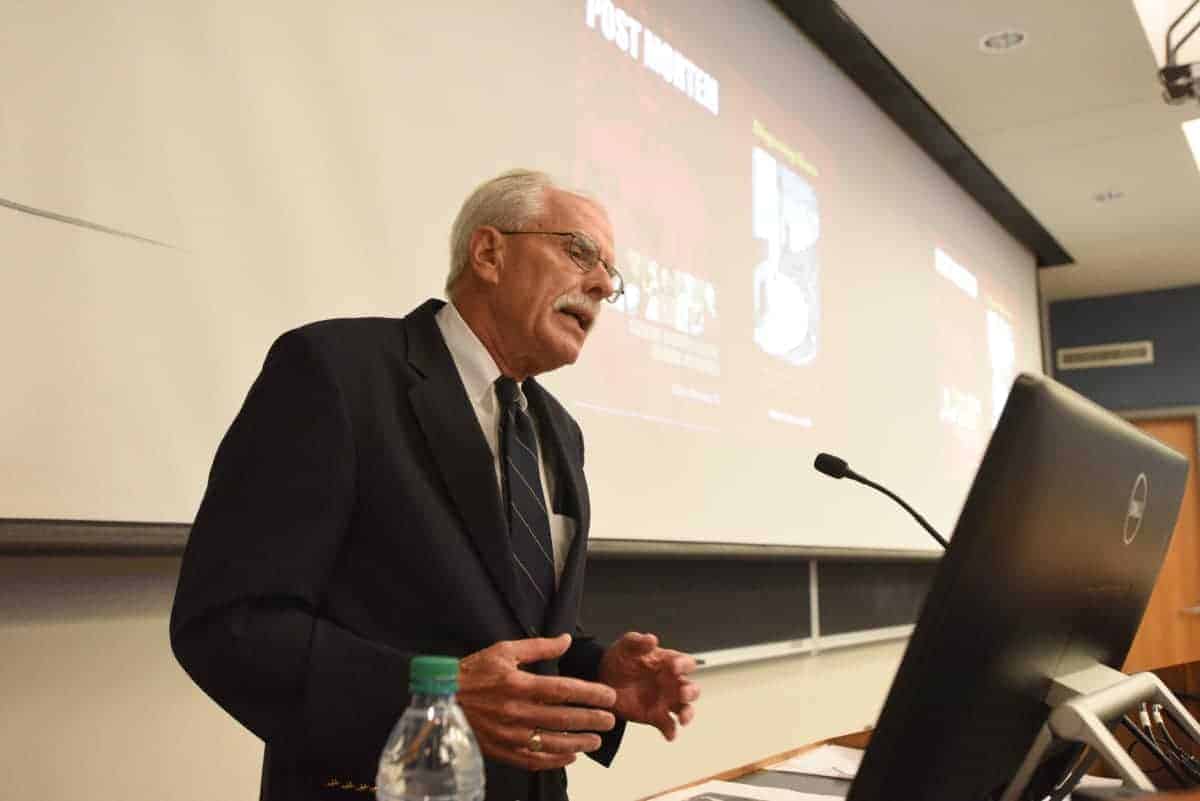
Lecturer at podium
Philip A. Mackowiak, M.D., pointed to Mozart’s edema/anasarca (swelling) as key to his theory on Mozart’s death

The event marked a couple of firsts for the grand rounds: It was the first time it has hosted an historical clinical pathological lecture and the first time with accompaniment by the Quapaw String Quartet from the Arkansas Symphony Orchestra.

Mackowiak’s lecture, “Mozart’s Fatal Anasarca,” followed the quartet’s performance of one of Mozart’s early string quartets, Herschel 159. It was composed by Mozart when he was 17.

Why the interest in Wolfgang Amadeus Mozart’s death?

“The Quapaw Quartet told us the answer to that better than I could possibly articulate,” Mackawiak told the medical professionals and students packing the Rahn Building auditorium. “His music is just sublime, to say the least.”

Mozart’s extraordinary talent was evident at age 3, when he was playing the harpsichord, and age 4, when he was composing quartets. He also overcame numerous debilitating conditions and diseases, including malnutrition as an infant, typhoid fever, rheumatic fever, smallpox and hepatitis, yet he managed to compose a total 626 works, including 22 operas, before he died.

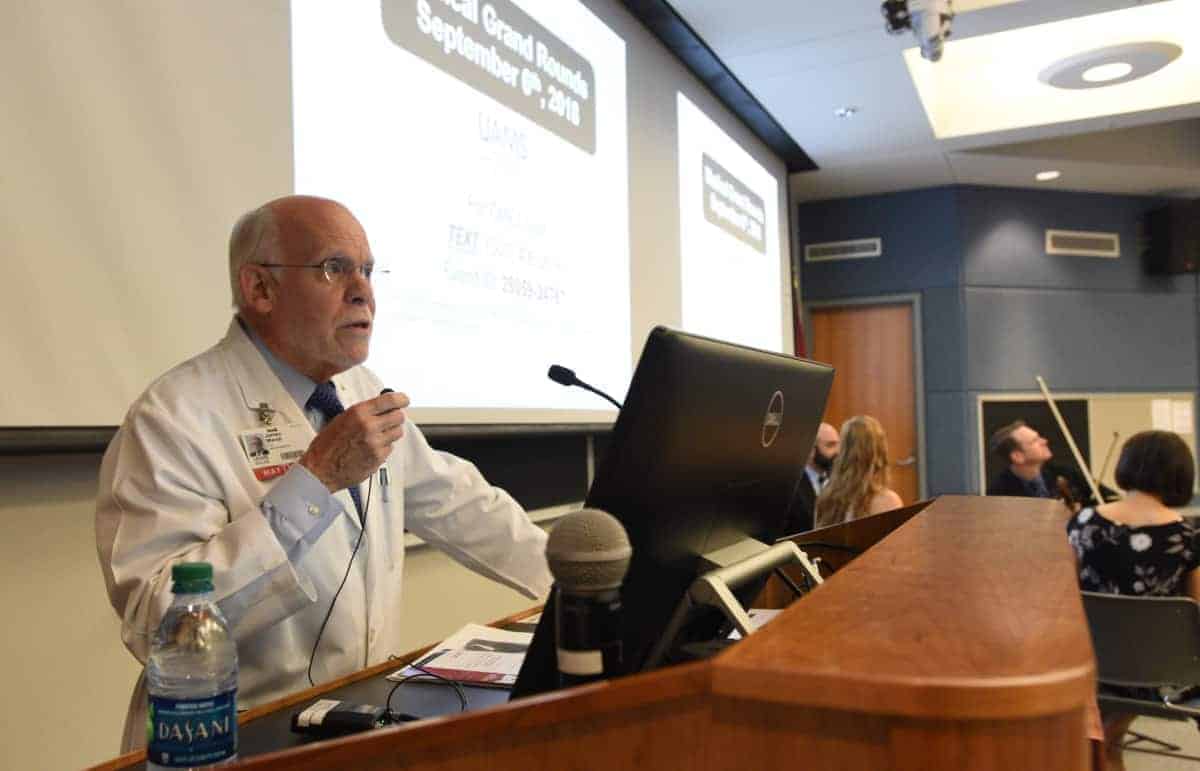
Dr. James Marsh at podium
Internal Medicine Chair James D. Marsh, M.D., introduces the Quapaw String Quartet, which for the first time accompanied the Ackerman Visiting Professorship Grand Rounds, this year featuring Philip A. Mackowiak, M.D., and his theory on Mozart’s cause of death.

Some of the more popular theories about his cause of death include poisoning, syphilis and trichinosis.

“We’ll never know for certain what was the specific culprit that carried him off,” Mackawiak said, although he made a case for Streptococcus equi, a type that can infect humans through consumption of unpasteurized milk and cheese.

Streptococcus equi would account for Mozart’s symptoms – particularly the massive swelling all over his body (anasarca/edema) – that made him unrecognizable according to those who saw him before and after he died, Mackowiak said. A local physician at the time wrote that Mozart had the same symptoms as other residents, indicating an epidemic. In addition, a 2009 investigation of the Vienna Daily Register of Deaths for the winter of 1791 showed a spike in deaths from edema, also indicating an epidemic disorder.

Mackowiak has authored two related books: Post Mortem: Solving History’s Great Medical Mysteries, and Diagnosing Giants: Solving the Medical Mysteries of Thirteen Patients Who Changed the World.

The Quapaw String Quartet closed the grand rounds lecture with one of Mozart’s later movements.

James D. Marsh, M.D., chairman of the Department of Internal Medicine, College of Medicine, said the collaboration with the Arkansas Symphony for the lecture was made possible by Robert W. Bradshear, M.D., professor and director of the Division of Infectious Diseases in the Department of Internal Medicine, and Richard P. Wheeler, M.D., executive associate dean for Academic Affairs in the College of Medicine.

“One of the main points of this professorship is the humanities, and we thought we could bring it to life this way,” Marsh said.

String quartet
The Arkansas Symphony’s Quapaw String Quartet performed Herschel 159, a movement composed by Mozart when he was 17.

The George Link Ackerman Visiting Professorship in Internal Medicine honors the now professor emeritus for having always been an exemplary model of the physician educator. He graduated cum laude from UAMS in 1954, and following an internship at Philadelphia General Hospital and service in the U.S. Navy, he returned to UAMS to complete his residency in internal medicine and his training in nephrology and in metabolic diseases.

Ackerman, a native Arkansan, has received numerous awards and has been frequently recognized as a consummately skilled clinician and exceptional teacher, known for his skillful practice of the Socratic mode of teaching.

He was the Honors Convocation speaker three times; recipient of a Golden Apple Award, an Outstanding Faculty Award from the internal medicine house staff, an Abernathy Award for Excellence in Internal Medicine from the Arkansas Chapter of the American College of Physicians, and the Arkansas Caduceus Club Distinguished Faculty Award. He received the Distinguished Service Award from UAMS and the UAMS Master Teacher Award in 1999. In 2000, he was named a Master of the American College of Physicians. In 2004, he received the Distinguished Alumnus Award and was named as Inaugural Member of the UAMS College of Medicine Hall of Fame.

Ackerman was active in the American College of Physicians, serving as governor for Arkansas 1987-1991. He has always been interested in literature and for many years organized an annual reading retreat for physicians.

Filed Under: News

William Ventres, M.D., Invested in Ben Saltzman, M.D. Distinguished Chair in Rural Family Medicine

Sept. 19, 2018 | William “Bill” Ventres, M.D., M.A., assistant professor in the Department of Family and Preventive Medicine in the College of Medicine at the University of Arkansas for Medical Sciences (UAMS), was invested Sept. 17 as the holder of the Ben Saltzman, M.D., Distinguished Chair in Rural Family Medicine.

Ventres, who joined UAMS in 2017, is a family physician and medical anthropologist with more than 30 years of clinical experience working with disadvantaged patients. He is known as a leader in developing family medicine internationally, researching doctor-patient communication using qualitative methods, and studying the social history of family medicine in the United States. He plans to encourage students and residents to practice in rural and underserved areas in Arkansas to improve health outcomes.

Dr. Bill Ventres with family and COM faculty members
William “Bill” Ventres, M.D., (second from left) with his wife, Estella, and daughter Cory, as well as (from left) College of Medicine Dean Christopher Westfall, M.D., Erick Messias, M.D., and Daniel Knight, M.D.

“It is a great honor to receive the Saltzman Chair, with its emphasis on rural and underserved family medicine,” Ventres said. “When I was in medical school and residency, I saw that lots of patients felt left out. Sometimes they were poor or uneducated, sometimes it was because of where they lived, and sometimes it was because of the color of their skin or the language they spoke. I didn’t see that medicine was doing a very good job helping these people, so I found my small niche in working to try and change things in this area.”

An endowed chair is among the highest academic honors a university can bestow on a faculty member. A distinguished chair is a $1.5 million endowment established to support the educational, research and clinical activities of the chair holder who will lead future innovations in medicine and health care. Those named to a chair are among the most highly regarded scientists, physicians and professors in their fields.

“The choice of Dr. Ventres to assume this chair is a very wise decision, and that’s because of his passion for the very highest quality of medicine and for his passion for taking care of his fellow man, which he has demonstrated throughout a long career and all parts of the world,” said Christopher T. Westfall, M.D., dean of the College of Medicine. “I am absolutely convinced that he is the right holder for this chair.”

The chair is named in honor of Ben Saltzman, M.D., who has been called the father of rural family medicine in Arkansas. Saltzman joined UAMS in 1974 as the first professor and chair of the Department of Family and Community Medicine. During his seven-year tenure, he served as director of rural medicine development and the flexible internship program. In 1981, he was appointed director of the Arkansas Department of Health and served until his retirement in 1987. Saltzman died in 2003.

Saltzman built the first hospital in Mountain Home and helped establish others across the state. He is remembered as a champion of rural health and an international leader in helping eradicate polio. Saltzman made health care more widely available and worked as a traveling doctor who owned a twin-engine plane for his work.

Saltzman was past president of numerous statewide health organizations, including the Arkansas Lung Association, what is now The Arc Arkansas, the Arkansas division of the American Cancer Society and the Arkansas Board of Health. He served as chairman of the American Medical Association’s Council on Rural Health, as a member of the U.S. Department of Health and Human Services’ Community Health Project Review Committee, and as a member of the National Advisory Health Services Council.

“Dr. Saltzman was quite a leader in our state, and this endowment is to help those who follow his example as we expand our programs for the underserved and in rural medicine,” said Daniel Knight, M.D., professor and chair of the Department of Family and Preventive Medicine. “In his short tenure here, Dr. Ventres has made quite a difference, and we’re excited to see the difference he’ll make going forward.”

Ventres with his wife, Estella and daughter, Cory.

Ventres was presented with a commemorative medallion by Westfall and Knight. He thanked Saltzman and recognized Julea Garner, M.D., the previous chair holder. Ventres reserved special thanks for his wife, Estella and his children, Roby and Cory, who were in attendance.

“With all the technologies that are supposed to make things smoother, we are sometimes prone to overlook what is most important in our work – the people we serve,” Ventres said. “I commit to you to learning from the people of Arkansas, as I am able, to see them as full of worth and dignity; to appreciate their presence; and to engage with them in a way that invites conversation, collaboration and compassion.”

“The work of improving the health of all Arkansans, wherever they may be, is not the task of one person – it is a responsibility we all share,” Ventres said. “And we are all enriched by the labor we invest to fulfill it.”

Ventres received his medical degree from the University of Minnesota Medical School and completed his residency and fellowship training in family medicine at the University of Arizona College of Medicine in Tucson. He has received two Core Fulbright U.S. Scholar awards and has taught family medicine residents at the National Experimental University of Táchira in San Cristobal, Venezuela, and public health students at the University of El Salvador in San Salvador. Prior to his arrival at UAMS, he was a research associate for five years in the Institute for Studies in History, Anthropology and Archeology at the University of El Salvador.

Ventres has served as visiting professor at Nelson Mandela University in Port Elizabeth, South Africa, and scholar-in-residence at both the Brocher Institute in Geneva, Switzerland and the Institute for the Medical Humanities at the University of Texas Medical Branch at Galveston.

Filed Under: News

William Ventres, M.D., Invested in Ben Saltzman, M.D. Distinguished Chair in Rural Family Medicine

Sept. 19, 2018 | William “Bill” Ventres, M.D., M.A., assistant professor in the Department of Family and Preventive Medicine in the College of Medicine at the University of Arkansas for Medical Sciences (UAMS), was invested Sept. 17 as the holder of the Ben Saltzman, M.D., Distinguished Chair in Rural Family Medicine.

Ventres, who joined UAMS in 2017, is a family physician and medical anthropologist with more than 30 years of clinical experience working with disadvantaged patients. He is known as a leader in developing family medicine internationally, researching doctor-patient communication using qualitative methods, and studying the social history of family medicine in the United States. He plans to encourage students and residents to practice in rural and underserved areas in Arkansas to improve health outcomes.

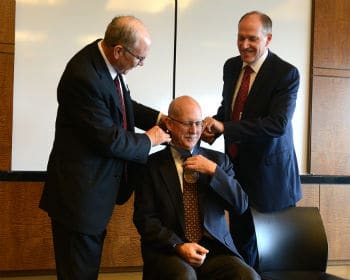
Westfall and Knight presented Ventres with a commemorative medallion.

Westfall and Knight presented Ventres with a commemorative medallion.

“It is a great honor to receive the Saltzman Chair, with its emphasis on rural and underserved family medicine,” Ventres said. “When I was in medical school and residency, I saw that lots of patients felt left out. Sometimes they were poor or uneducated, sometimes it was because of where they lived, and sometimes it was because of the color of their skin or the language they spoke. I didn’t see that medicine was doing a very good job helping these people, so I found my small niche in working to try and change things in this area.”

An endowed chair is among the highest academic honors a university can bestow on a faculty member. A distinguished chair is a $1.5 million endowment established to support the educational, research and clinical activities of the chair holder who will lead future innovations in medicine and health care. Those named to a chair are among the most highly regarded scientists, physicians and professors in their fields.

“The choice of Dr. Ventres to assume this chair is a very wise decision, and that’s because of his passion for the very highest quality of medicine and for his passion for taking care of his fellow man, which he has demonstrated throughout a long career and all parts of the world,” said Christopher T. Westfall, M.D., dean of the College of Medicine. “I am absolutely convinced that he is the right holder for this chair.”

The chair is named in honor of Ben Saltzman, M.D., who has been called the father of rural family medicine in Arkansas. Saltzman joined UAMS in 1974 as the first professor and chair of the Department of Family and Community Medicine. During his seven-year tenure, he served as director of rural medicine development and the flexible internship program. In 1981, he was appointed director of the Arkansas Department of Health and served until his retirement in 1987. Saltzman died in 2003.

Saltzman built the first hospital in Mountain Home and helped establish others across the state. He is remembered as a champion of rural health and an international leader in helping eradicate polio. Saltzman made health care more widely available and worked as a traveling doctor who owned a twin-engine plane for his work.

Saltzman was past president of numerous statewide health organizations, including the Arkansas Lung Association, what is now The Arc Arkansas, the Arkansas division of the American Cancer Society and the Arkansas Board of Health. He served as chairman of the American Medical Association’s Council on Rural Health, as a member of the U.S. Department of Health and Human Services’ Community Health Project Review Committee, and as a member of the National Advisory Health Services Council.

“Dr. Saltzman was quite a leader in our state, and this endowment is to help those who follow his example as we expand our programs for the underserved and in rural medicine,” said Daniel Knight, M.D., professor and chair of the Department of Family and Preventive Medicine. “In his short tenure here, Dr. Ventres has made quite a difference, and we’re excited to see the difference he’ll make going forward.”

Ventres with his wife, Estella and daughter, Cory.

Ventres with his wife, Estella and daughter, Cory.

Ventres was presented with a commemorative medallion by Westfall and Knight. He thanked Saltzman and recognized Julea Garner, M.D., the previous chair holder. Ventres reserved special thanks for his wife, Estella and his children, Roby and Cory, who were in attendance.

“With all the technologies that are supposed to make things smoother, we are sometimes prone to overlook what is most important in our work – the people we serve,” Ventres said. “I commit to you to learning from the people of Arkansas, as I am able, to see them as full of worth and dignity; to appreciate their presence; and to engage with them in a way that invites conversation, collaboration and compassion.”

“The work of improving the health of all Arkansans, wherever they may be, is not the task of one person – it is a responsibility we all share,” Ventres said. “And we are all enriched by the labor we invest to fulfill it.”

Ventres received his medical degree from the University of Minnesota Medical School and completed his residency and fellowship training in family medicine at the University of Arizona College of Medicine in Tucson. He has received two Core Fulbright U.S. Scholar awards and has taught family medicine residents at the National Experimental University of Táchira in San Cristobal, Venezuela, and public health students at the University of El Salvador in San Salvador. Prior to his arrival at UAMS, he was a research associate for five years in the Institute for Studies in History, Anthropology and Archeology at the University of El Salvador.

Ventres has served as visiting professor at Nelson Mandela University in Port Elizabeth, South Africa, and scholar-in-residence at both the Brocher Institute in Geneva, Switzerland and the Institute for the Medical Humanities at the University of Texas Medical Branch at Galveston.

Filed Under: News

Radiology Staff Turns Department’s Newest Residents into “Captive” Audience

By Linda Haymes

Sept. 12, 2108 | Those who pursue a medical degree know the endeavor isn’t all fun and games but at times, learning and levity can intersect.

Just ask the new UAMS radiology residents who recently found themselves locked in a room, working together to escape the clutches of a fictional crazy physician with hazardous nuclear materials.

The game is called an escape room and has become popular in the last few years for fun among friends and for team building with work groups and others. It’s a fun, safe game where four to six players must discover clues and solve a mystery to escape a “locked” room. This one was designed by physicians in the UAMS Radiology Department.

It has attracted national attention, said Kedar Jambhekar, M.D., associate professor of radiology and residency program director in the UAMS College of Medicine’s Radiology Department.

UAMS has been invited to offer it in November in Chicago at the Radiology Society of North America, the largest radiology and technology meeting in the world with about 60,000 attendees annually.

The idea for the escape room was planted after Jambhekar visited an escape room in Boston.

Returning to work at UAMS, he shared his idea with Linda Deloney, assistant professor and medical education director.

“We thought this would be a great team-building and educational activity for radiology residents,” Jambhekar said. “It seems so simple but it’s not,” he added, laughing.

Deloney, in turn, mentioned that Rachel Pahls, M.D., one of the senior resident physicians, is a gamer.

“So then I talked to Rachel and she said ‘Oh, that’s easy to do,’” said Jambhekar.

Deloney wrote a grant proposal for the Association of University Radiologists/ Association of Program Directors in Radiology and they received a $5,000 Jerome Arndt grant from the Association of Program Directors in Radiology. Using the grant, they hired Wero Creative of Toronto, a company that builds escape rooms. Pahls designed the content of the game while Wero designed the room.

“We were able to create the escape room in time to use it during our boot camp for new radiology residents in July,” Deloney said.

The portable, hour- long game uses small props including lanterns, a skeleton, a view box, a small, portable ultrasound machine, boxes with number code locks, photographs and charts. The game masters, Pahls and Jambhekar, can view and communicate with the participants, by video chatting via Facetime or Skype. The participants can ask for up to three clues.

The challenge includes clues and various puzzles to solve, from crosswords, riddles and search-and-find challenges to identifying photos or images and answering trivia questions.

After all the clues are collected, the team is able to escape the room.

“We tried it out first with some really smart faculty members and some senior residents,” Pahls said. “Then we held it for first- and second-year residents.” Four teams, totaling 20 UAMS residents, have experienced the escape room so far and the plan is to hold the challenge for the students annually.

In addition to a team-building experience and educational avenue, the challenge gives administrators insight into which students are leaders or followers and who gets upset easily and who keeps their cool.

“The game also evokes a lot of friendly rivalry among the students wanting to know which teams completed the challenge the fastest,” Pahls said. The students were surveyed before and after the experience.

“Their feedback was extremely positive, confirming that millennial learners prefer learning experiences that are active, innovative, and social with high expectations and immediate feedback,” Deloney said. She said they value working in teams, being engaged and interacting with their instructors and material, and they are motivated by achievement and affiliation. “And they thought it was fun!”

The game, using a computer and several paper-based challenges, teaches some basic facts about radiology as a medical specialty.

“Gaming in the academic world is being used more often as a learning tool among the millennials,” Jambhekar said. “There was already a lot of Jeopardy-type games being played, but an escape room is something unique.”

“We hope to prove the escape room helps increase a student’s grit,” Pahls said, referring to the students’ experience and heartiness.

“As part of the grant, we’ll share it with other universities,” Jambhekar said, adding that the plan includes providing an instructor’s guide for others who may want to replicate it.

“We’ve already been communicating with Johns Hopkins University School of Medicine, sharing information about it with them and we have the ball rolling for them to use it,” Pahls said, adding they met via video conference, walking those at Johns Hopkins through each step, sharing what objects were needed and the posters to print.

Jambhekar and Pahls are also considering holding it for students who have expressed an interest in radiology and building an escape room for other specialties.

“We’d use the same puzzles and mechanisms but instead of asking radiology questions, have clinical ones and redesign the clues,” Pahls said.

Filed Under: News

Passion, Dedication Still Evident for Grads at Alumni Weekend 2018

Sept. 7, 2018 | Although the decades may have separated them, UAMS graduates from all specialties arrived Aug. 17-18 for Alumni Weekend and caught up as if the years didn’t matter.

Chancellor Patterson at podium
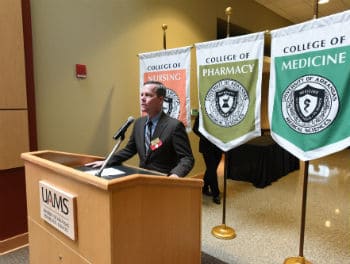
Chancellor Patterson called alumni “the best examples of what UAMS contributes to the community.”

More than 350 UAMS alumni and guests participated in this year’s event, making it the highest attended reunion in recent history. Most were there to reminisce and reconnect with old classmates, but many were eager to see how much UAMS has grown and changed in the years since they had been students.

A Friday night welcome reception, sponsored by the Chancellor’s Circle, featured new UAMS Chancellor Cam Patterson, M.D., MBA, who was nearing the end of his first 90 days. Flanked by banners of UAMS’ five colleges and graduate school, Patterson thanked alumni for their contributions to UAMS and to the better health and health care of the state.

“I hope you are as proud as we are of what UAMS has become,” Patterson said. “It wouldn’t be that way without all the contributions of the people in this room. You, as our alumni, are the best examples of what UAMS contributes to the community.”

Drs. Christopher Westfall and Henry Foster Jr.
COM Hall of Fame member Henry Foster Jr., M.D., COM ’58, with College of Medicine Dean Christopher Westfall, M.D.

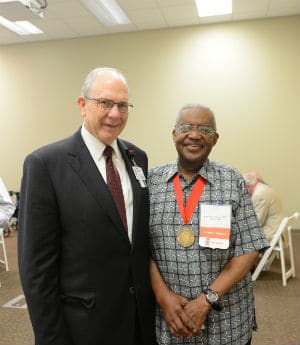
Patterson recognized four college deans in attendance: Christopher T. Westfall, M.D., dean of the College of Medicine; Keith M. Olsen, Pharm.D., dean of the College of Pharmacy; James M. Raczynski, Ph.D., dean of the College of Health Professions; and Patricia Cowan, Ph.D., R.N., dean of the College of Nursing. Golden Graduates, or those celebrating 50-plus years, were given commemorative medallions with red and blue ribbons. There was plenty of bling – in addition to the medallions, Golden Graduates wore buttons with old yearbook photos of themselves in addition to color-coded name tags representing their college and graduation year.

It made everyone easy to identify, though some didn’t need any help recognizing old friends. This year’s featured Golden Graduates, the Class of 1968, wore their medallions proudly and traded a few light barbs as they looked at old annual photos.

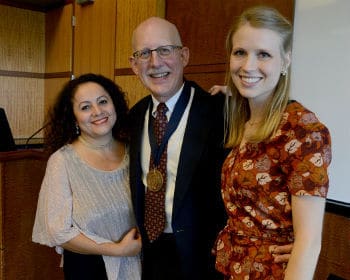
“Our class started out as a bunch of idealists who wanted to take care of patients, and that same group is still here with that same thought,” said Jack Blackshear Jr., M.D., COM ‘68 and class representative. “Everyone has had a full life of service in medicine – some are still practicing – but all of us really thank UAMS for teaching us and for the great role models that we had. You’re always standing on somebody else’s shoulders – you can’t do it all alone. We’re all very grateful.”

Drs. Jeanne Bonar and Douglas Young
Jeanne Bonar, M.D., and Douglas Young, M.D., both COM ’58, at the Golden Graduate dinner.

Saturday morning’s showcase events were a big hit, including a hands-on look at UAMS’ new 4K-resolution virtual dissection table, which allows students to explore human anatomy in 3D with simple gestures common on the average smartphone. Alumni were eager to hear from David L. Davies, Ph.D., and Kevin D. Phelan, Ph.D., who co-direct the Division of Clinical Anatomy in the College of Medicine, as they demonstrated how the table works. Afterward, alumni crowded around the table and had the opportunity to try it themselves.

Some alumni traveled great distances to have the chance to catch up.

Jeanne Bonar, M.D., COM ’58, traveled from Anchorage, Alaska to make the weekend events – a distance of 3,923 miles. Dennis Schreffler, M.D., COM ’73, and wife Karen, were a distant second, traveling 1,400 miles from their home in Dayton, Wyoming.

“I wouldn’t have missed it,” Schreffler said. “I owe everything in my career to the University of Arkansas for Medical Sciences. It’s been phenomenal to see the amount of technological advancement since I graduated – it’s like day and night.”

Leslie and Dr. C.D. Williams
C.D. Williams, M.D., COM ’65, shown here with his wife Leslie, received the Dean’s Distinguished Alumni Award.

C.D. Williams, M.D., COM ‘65, was honored with the College of Medicine’s Dean’s Distinguished Alumni Award at its noon luncheon. Williams, a leading cardiovascular surgeon, was recognized for his pioneering work in heart surgery in Arkansas over the past four decades.

Williams was nominated by fellow COM ‘65 graduate Kent Westbrook, M.D., distinguished professor in the College of Medicine. Westbrook said that Williams built many of the heart programs in Arkansas, performing between 15,000 and 20,000 open heart surgeries. “Without question, heart surgery would not be where it is in in Arkansas without C.D. Williams,” Westbrook said.

Williams credited one of his favorite professors, Joseph Bates, M.D., COM ‘57, associate dean for public health practice in the College of Public Health, with bringing him back to Arkansas to practice. Bates himself was in attendance for the award ceremony. “He told me that I owed it to the state of Arkansas to come back, participate in what was going on up here, and pay back my debt to the state,” Williams said. “That was good advice, Joe, and I appreciate that.”

The College of Health Professions hosted a big bash the same afternoon in the Hospital Lobby Gallery, celebrating the 100-year anniversary of its Medical Laboratory Sciences program. A host of more than 100 program alumni and incoming students attended.

Jo Kathryn Mitchell, CHP ’55, has a history with UAMS dating back to before the campus moved to its present location on Markham Street. “So much has changed that it’s almost overwhelming, but it’s all been for the better,” Mitchell said.

Dr. Cameron and Abbra Best
Cameron Best, M.D., COM ’08 class representative, and his wife Abbra. More than 30 members of the COM Class of 2008 arrived for Alumni Weekend.

Many alumni capped off the weekend in style, with Golden Graduates dining in the ballroom at the Capital Hotel, and several classes making evening plans at Cajun’s Wharf Restaurant. Food and chatter were plentiful as alumni reminisced the evening away. So many COM ’08 graduates signed up for their reunion that they rented out a party room at Cajun’s to celebrate.

David Hunton, M.D., COM ’78, was in an adjacent room with his classmates. He is one of six Huntons to graduate from UAMS, including his wife and their children. “I wish more of us were here, but we’ve had a great time with those of us who are here,” he said. “It’s mind-boggling, the things that have changed. We didn’t have any computers when I was here.”

Sponsors for this year’s event were the Chancellor’s Circle, ARORA, Arkansas Medical Society, Arkansas Urology, National Treasury Solutions, and Westrock Coffee Company.

“We appreciate your commitment to a life of service and all you’ve done,” said Dean Lee, Ed.D., UAMS executive director of alumni and constituent relations. “Most of all, we’re proud that you’re one of us and that you chose UAMS to be your school.”

Filed Under: News

  • «Previous Page
  • Page 1
  • Interim pages omitted …
  • Page 16
  • Page 17
  • Page 18
  • Page 19
  • Page 20
  • Interim pages omitted …
  • Page 39
  • Next Page»
UAMS College of Medicine LogoUAMS College of MedicineUniversity of Arkansas for Medical Sciences
Mailing Address: 4301 West Markham Street, Little Rock, AR 72205
Phone: (501) 296-1100
  • Facebook
  • X
  • Instagram
  • YouTube
  • LinkedIn
  • Pinterest
  • Disclaimer
  • Terms of Use
  • Privacy Statement
  • Legal Notices

© 2026 University of Arkansas for Medical Sciences