• Skip to main content
  • Skip to main content
Choose which site to search.
University of Arkansas for Medical Sciences Logo University of Arkansas for Medical Sciences
College of Medicine: Department of Radiology
  • UAMS Health
  • Jobs
  • Giving
  • About Us
    • News
    • Radiology Alliance for Community & Engagement
    • Giving
    • Contact Us
    • Where We Work
    • Faculty Recruitment
  • Faculty
  • Divisions
    • Neurointerventional Radiology
      • About Us
    • Interventional Radiology
    • Pediatric Radiology
  • Residency Programs
    • Diagnostic Radiology Residency Program
      • Meet Our Residents
      • Your Education
        • Pediatric Radiology On Call Survival Guide
        • Internship Year
        • Boot Camp
        • R1 Education
        • Conferences
        • Clinical Rotations
        • On Call Coverage
        • Mentoring
        • Board Prep
        • Moonlighting
      • Facilities
      • Living in Little Rock
      • Fellowship Placements
      • Wellness
      • Salary and Benefits
    • Interventional Radiology Integrated Residency
      • Guidelines for Selection
      • Clinical Sites
      • Training
      • Faculty
      • Meet Our Residents
      • Program Benefits
    • Interventional Radiology Independent Residency Program
      • Guidelines for Selection
      • Clinical Rotation Sites
      • Block Diagram
      • Training
      • Meet Our Faculty
      • Meet our Resident
      • Benefits
    • Early Specialization in Interventional Radiology Program
    • Newsletter Archive
    • Nuclear Medicine Training Program
    • Application Process
      • Frequently Asked Questions
    • Awards
    • Resident Scrapbook
  • Fellowships
    • Body MRI
    • Breast Imaging
    • Neuroradiology
    • Pediatric Radiology
  • Medical Students
    • Interventional Radiology Interest Group
    • Radiology Interest Group
    • Senior Electives
    • Summer in Radiology
    • The Dr. and Mrs. W.C. Culp Research Student Grant
    • M3s Secure
    • M4s Secure
    • Radiology Technology
  • Research
    • Annual Conferences
    • Ongoing Research
    • Presentations and Posters
    • Recent Publications
    • Resident Research
    • Research Help
    • Radiology Research Symposium
  1. University of Arkansas for Medical Sciences
  2. College of Medicine
  3. Department of Radiology
  4. News
  5. New Spinal Surgery Gets Pulaski County Man Back on His Feet

New Spinal Surgery Gets Pulaski County Man Back on His Feet

By Katrina Dupins

Six months after a fall left him severely injured, Dewey Raper, 65, was not healing as quickly as he thought he would.

“I spent so much time in a wheelchair, a walker and on crutches,” Raper said. “Eventually, I got an MRI. Dr. Radvany viewed it and took the case over.”

Martin Radvany, M.D., is a professor and chief of interventional neuroradiology in the UAMS College of Medicine Department of Radiology. He told Raper about a new procedure that would help with his back pain and get him back to normal activities.
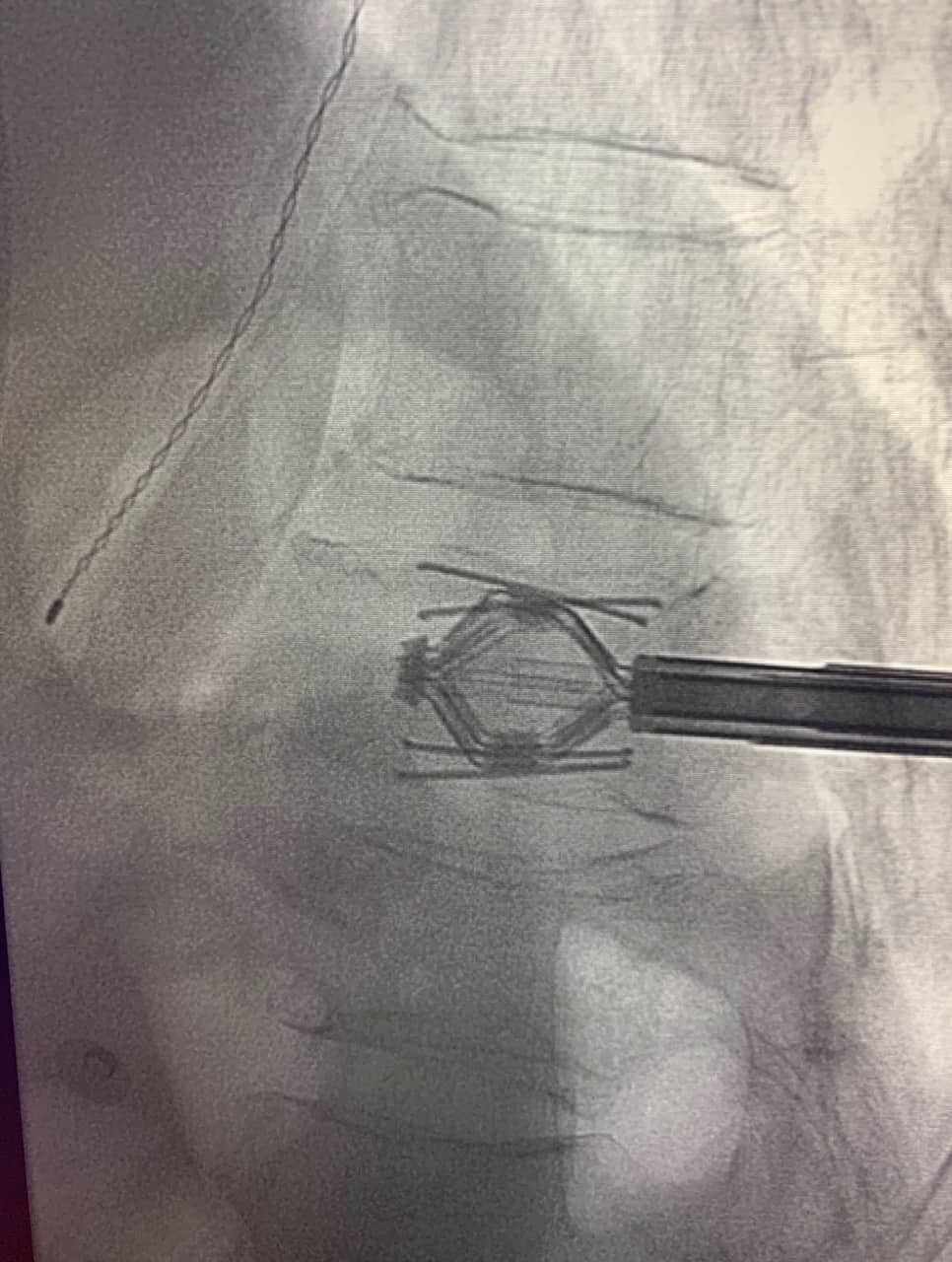
Image of Spine Jack inflated in a vertebra.

“The pain was so awful, I was ready to try anything to help,” Raper said. “I laid around for so long. I wasn’t able to drive or work outdoors.”

The fall happened last September. Raper was on a friend’s farm in Arkansas County preparing for the upcoming deer season.

“As I climbed a ladder to get into a tree, the ladder collapsed and I fell several feet,” Raper said.

Air medical services flew him to UAMS where health care professionals treated his injuries.

“My back still hurt several months later.”

Raper had a compression fracture on one of his vertebrae. Vertebral compression fractures
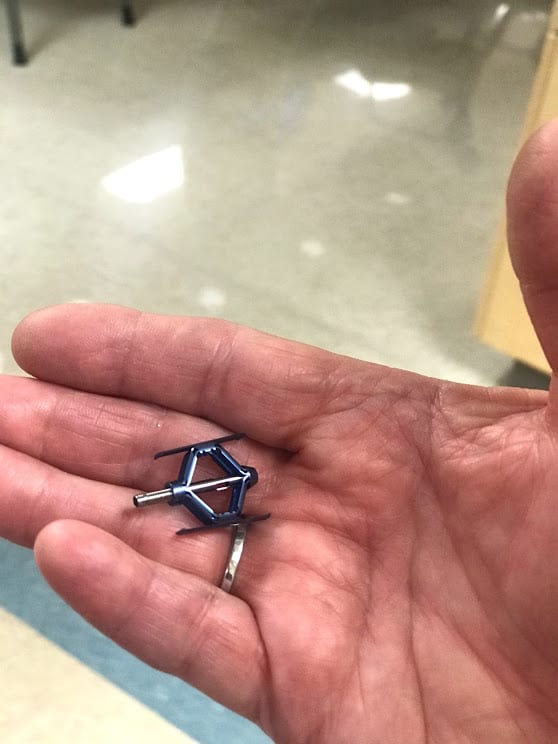
SpineJack titanium implant.

are common among older adults and can be triggered by a fall or heavy lifting. The most typically cause is osteoporosis.

Because it is not possible to stabilize the bones in the spine with a cast, the standard treatment is four to six weeks of bedrest and pain medication. That, Radvany says, is not ideal because it can lead to loss of muscle mass and a possible dependence on opioid medication.

Raper would need a procedure, called a vertebral augmentation, to stabilize the fractured vertebra and prevent other vertebra from getting compression fractures. They scheduled surgery for March.

“Multiple vertebral compression fractures can compromise a person’s ability to breathe and eat once the condition becomes severe enough,” Radvany said. “It also creates an outward curvature of the spine, resulting in a rounded upper back.”

For the vertebral augmentation, Radvany used the Spine Jack system. The device looks like a miniature replica of a car jack. Radvany inserted the flattened jack into the spine through a small hole drilled into the vertebra. Once inside, he expanded the jack to a larger size, expanding the bone. Then he filled the area inside the bone, around the jack, with bone cement to reinforce the bone. Radvany did this for two of Raper’s vertebrae.
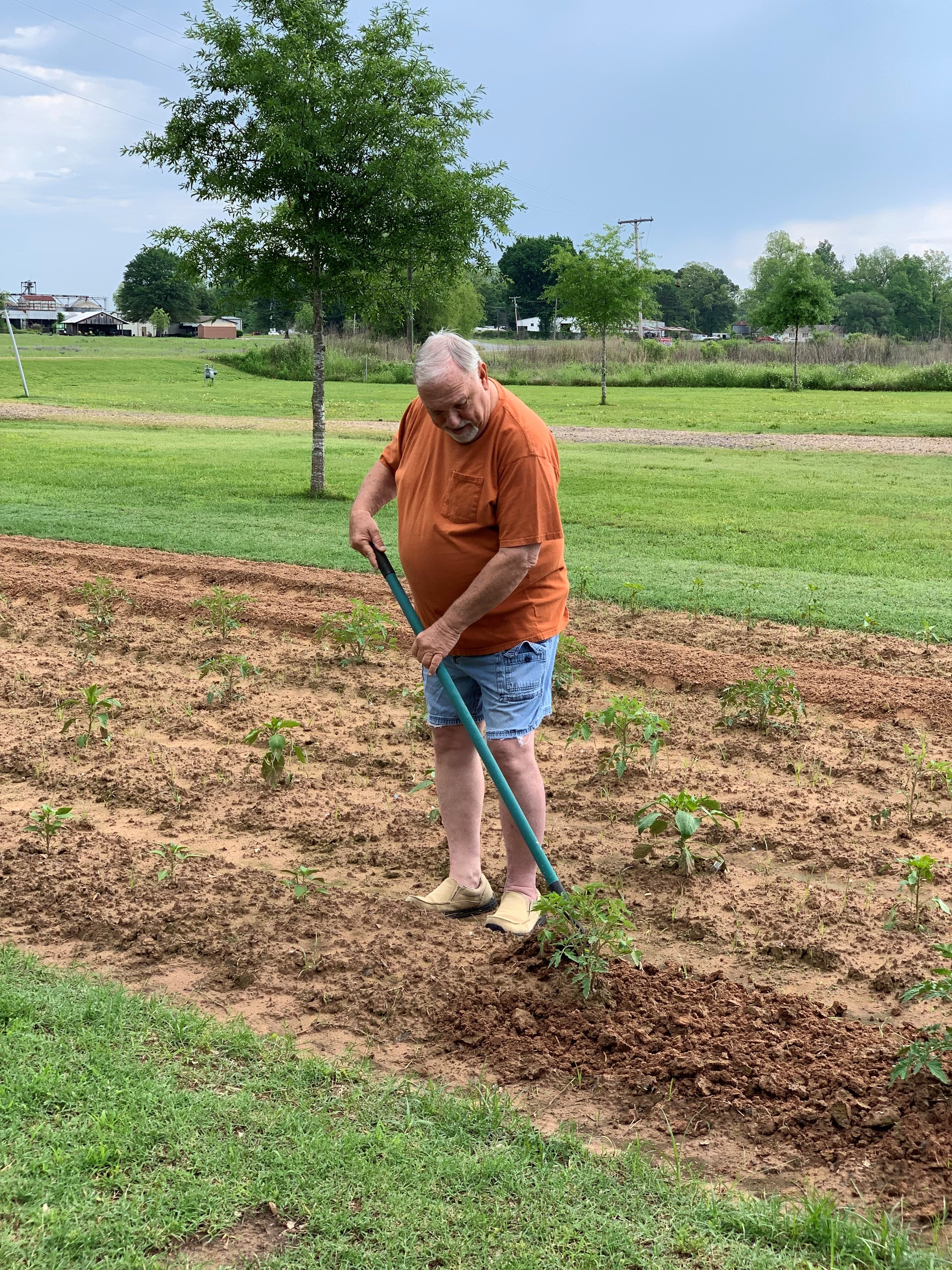
Dewey Raper tends to his garden.

Three months later, Raper’s wife, Cathy, says she is happy to see him back out in the yard, tending to the garden and the farm.

“I’ve noticed that even my posture is better,” Raper said. “I sit up straighter. I’m tickled to death. I could not have asked for anyone better to do my procedure. I appreciate Dr. Radvany dearly.”

UAMS is the first hospital in the state to offer the Spine Jack surgery to patients like Raper. Radvany is among the first 30 doctors in the country trained to use the device.

Posted by Chris Lesher on June 17, 2019

Filed Under: News

UAMS College of Medicine LogoUAMS College of MedicineUniversity of Arkansas for Medical Sciences
Mailing Address: 4301 West Markham Street, Little Rock, AR 72205
Phone: (501) 686-7000
  • Facebook
  • X
  • Instagram
  • YouTube
  • LinkedIn
  • Pinterest
  • Disclaimer
  • Terms of Use
  • Privacy Statement
  • Legal Notices

© 2025 University of Arkansas for Medical Sciences