• Skip to primary navigation
  • Skip to main content
  • Skip to primary navigation
  • Skip to main content
Choose which site to search.
University of Arkansas for Medical Sciences Logo University of Arkansas for Medical Sciences
College of Medicine: Department of Family and Preventive Medicine
  • UAMS Health
  • Jobs
  • Giving
  • About Us
    • The DFPM Chair
    • Department News
    • Department of Family and Preventive Medicine Research Symposium
    • Department of Family and Preventive Medicine CARE Awards
    • Verification of Residency Training
    • Available Positions
  • Residency Programs
    • Family Medicine Residency Programs
    • Preventive Medicine Residency Program
  • Community Health and Education
    • Upcoming Events
    • CME/CE for Family Medicine
    • Partnerships in Colorectal Cancer Screening for Arkansas
      • Who We Are
      • Providers’ Resources for Colorectal Cancer Screening
      • Patient Resources
      • PiCS-AR! Raises the Bar
  • Research and Scholarly Activity
    • Clinical Research
    • Community Research
      • Research & Evaluation
        • Arkansas Early Childhood Care & Education Financing: Cost Modeling & Market Price Analysis
        • Arkansas Workforce Studies
        • Child & Youth Mental Health
        • Healthy Families America (HFA)
        • Home-Visiting Support for Low-Birth-Weight Preterm Infants
        • Parents as Teachers (PAT) Arkansas
      • Research-Based Early Childhood Professional Development
        • Engage Continuum
        • FIRST:ECE
        • TIPS
        • WOW
        • Family Map
        • Project PLAY
        • REACH
        • WISE
        • Strengthening Families
      • Research and Evaluation Division Faculty
        • Nikki Edge, Ph.D.
        • Lorraine McKelvey, Ph.D.
        • Taren M. Swindle, Ph.D.
        • Kanna Lewis, Ph.D.
      • Contact RED
    • Publications
  • Medical Student Education
    • Junior Clerkship
      • Clerkship FAQs
      • Clerkship Syllabus
      • Contacts
      • Community and Housing
    • Senior Students
      • Residency Resources and Timeline
      • Post Match Survey
      • Student Alumni Sign-up Form
    • Scholarships and Loan Repayment
      • Harold H. Hedges III, M.D., Endowed Scholarship in Family Medicine
    • Student Conferences
  • DFPM Offices
    • Communication and Departmental Relations
    • Digital Health
    • Leadership and Professional Development
      • DFPM Chair’s Awards for Recognition of Excellence (CARE)
        • Chair’s Awards for Recognition of Excellence Nomination Form
    • Wellness
      • DFPM/PCPHSL MVP Award Nomination Form
        • MVP of the Month Recipients
  1. University of Arkansas for Medical Sciences
  2. College of Medicine
  3. Department of Family and Preventive Medicine
  4. Community Health and Education
  5. Page 4

Community Health and Education

Hidradenitis Suppurativa: Three Questions to Diagnose and Five Layers of Treatment

Hidradenitis suppurativa (HS) is a skin disorder that starts with blocked hair follicles, leading to painful nodules, abscesses and scarring. Front-line providers can work with dermatologists to diagnose and treat this often debilitating condition by asking three questions and following a five-tiered approach to treatment.

Dr. Vivian Shi, former UAMS dermatologist and director of the hidradenitis suppurativa clinic, offered tips to family medicine providers at the UAMS 2024 Family Medicine Spring Review last April. She said, “It requires a multidisciplinary approach. An HS team including all of these specialists and dermatology providers are the principal providers, but we really lean on front-line providers … to detect, treat, refer and to collaboratively manage.”

Picture of Vivian Shi, MD
Vivian Shi, M.D.

Most of her HS patients have had it more than 10 years after having seen their providers at least five times, and around 15% are disabled or unable to work because of HS pain. Girls typically show signs in their early teens, and boys start in their mid to late teens. If the teen has severe acne, have the patient lift the arms to check for HS signs. The typical onset is between puberty and age 40, with women being three times more likely to be affected.

Three key diagnostic questions every provider must ask the patient:

1. In the last 12 months, did you repeatedly have big, painful nodules and boils in the armpits or groin?

2. Have you had outbreaks of boils in the last six months?

3. Do you repeatedly have outbreaks of big sores, painful nodules or boils that heal with scars in any of these locations?

If the answer is “yes,” there is a 90 percent chance of HS.

“There’s no reason healthcare providers should be missing this if they ask these questions,” said Dr. Shi.

HS can show up anywhere on the body – behind the ears, outer arms or legs – not just the skin folds and areas with sweat glands. The two exceptions are the palms and soles of the feet. It’s chronic, inflammatory and very painful. Initially, the patient will have inflamed nodules, abscesses, white heads and black heads. The more advanced stage includes draining sinus tracts (narrow channels) and severe scarring, which are especially true in Blacks. Often it is misdiagnosed as cellulitis.

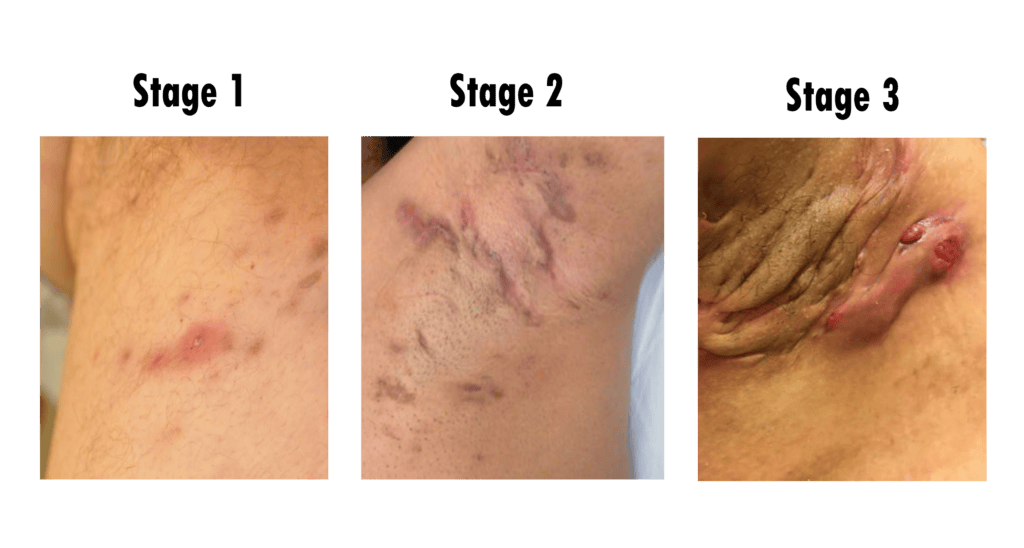
pictures of 3 Hurley stages

HS is divided into three Hurley Stages. The mildest is Hurley Stage 1: Abscesses that resolve without any trace of scarring, but this is rare.  As soon as the patient has any sign of a scar, it’s labeled Hurley Stage 2. This stage includes recurrent abscesses, sinus tracts and scarring, but normal-looking skin will appear between them. The most advanced stage is Hurley 3, characterized by multiple connected sinus tracts and abscesses across the entire area with little to no normal-looking skin between. She describes it as an “over-exaggerated inflammatory response where, over time, the hair follicles connect with each other and form sinus tracts and extensive scarring.”

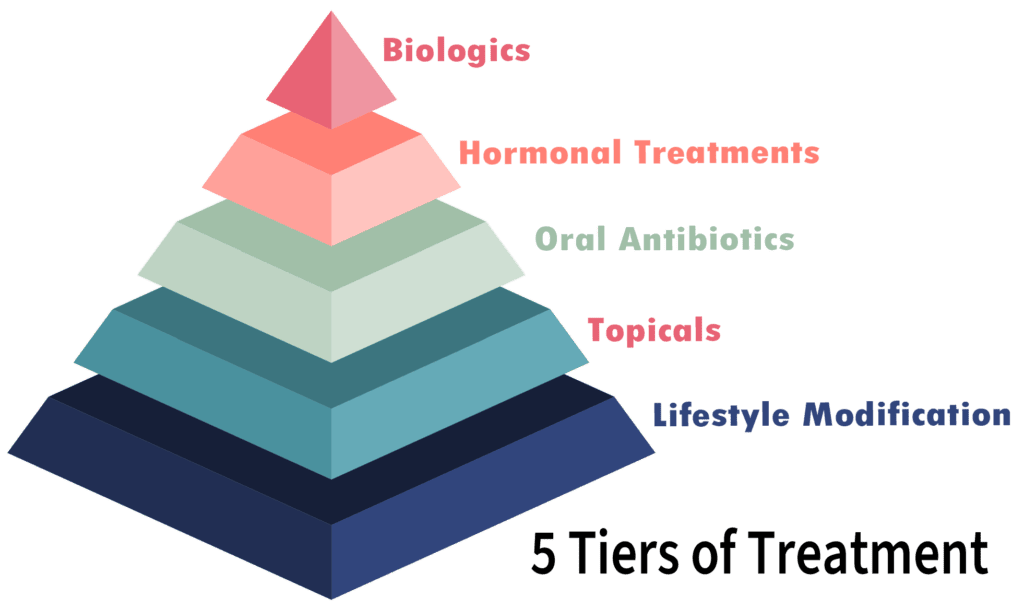
Dr. Shi recommended a pyramid of treatment. The front-line provider can manage all the treatments except for biologics, the top tier. In early moderate to severe patients (late Hurley 1 to early Hurley 2), Dr. Shi suggested preparing patients for biologic therapy by prescribing oral antibiotics because payors typically require patients to fail 90-plus days of systemic antibiotics to qualify. Regardless of disease stage, providers should refer the patient to a dermatologist for advanced therapy, while collaboratively managing the patient.  

The 5 Tiers of Treatment:
Top layer - Biologics
Second layer - Hormonal Treatments
Third layer - Oral Antibiotics
Fourth layer - Topicals
Bottom Layer - Lifestyle Modification

Lifestyle Modification

The first tier of the pyramid is lifestyle modifications where the provider would screen for comorbidities and start treatments. In a recent JAMA Dermatology report, patients with HS said diet changes were the most used non-prescription treatment with the Mediterranean diet and intermittent fasting both being effective. The two exercises that HS patients can tolerate are Pilates and swimming. Weight loss surgery is also a strong consideration if the patient is greater than 35 BMI, and if the patient smokes, encourage them to quit since cigarette smoke has dioxin-like compounds that can cause acne and scarring. Loose-fitting clothing and anti-chaffing products applied in skin folds can reduce friction and pain.

If the patient has draining sinus tracts, bathing helps to rinse out the tunnels. Dr. Shi recommends alternating daily with 10-minute baths of Epsom salt, CBD oil and ¼ cup 6% commercial bleach which help with pain, itch, relaxation and decrease biofilm.

Topicals

The next level is topical treatments. She typically uses clindamycin 1%; however, resorcinol 15% elicits a better response in mild to moderate HS. Resorcinol is especially helpful because it breaks down the outer layers of the skin and unplugs the hair follicles. There are also washes such as benzoyl peroxide, chlorhexidine or dapsone. Dr. Shi cautioned against benzoyl peroxide wash used together with topical dapsone because they’ll have reversible yellowing of the hair follicles.

Oral Antibiotics

Dr. Shi’s office typically starts with the tetracycline family because it’s better at reducing inflammation in the hair follicle and less costly. She recommends 100 milligrams of doxycycline or minocycline twice daily or extended release minocycline at a weight-adjusted dose once a day for eight to 12 weeks. Dr. Shi cautioned that dosage may need to exceed 100 milligrams for it to work, so ensure the patient doesn’t have anemia. She uses this for flare-ups or to bridge to biologic therapy.

Rotating through combined systemic antibiotics also works, being careful not to extend beyond three months. One combination is clindamycin with rifampin. A second choice is rifampin with moxifloxacin and metronidazole, which is especially helpful for drainage. And one thing providers want to consider is to stop the metronidazole after six weeks because longer use can cause reversible peripheral neuropathy.

Certain supplements also should be considered. Persons with HS typically have lower serum zinc levels. Prescribing 100 – 200 milligrams of daily zinc (with copper included after two months) has shown to reduce HS severity in 80% of patients. Another supplement to consider is Vitamin D since most patients with HS are deficient. Vitamin D regulates hair cycle and skin cell activity.  

Hormonal Treatments

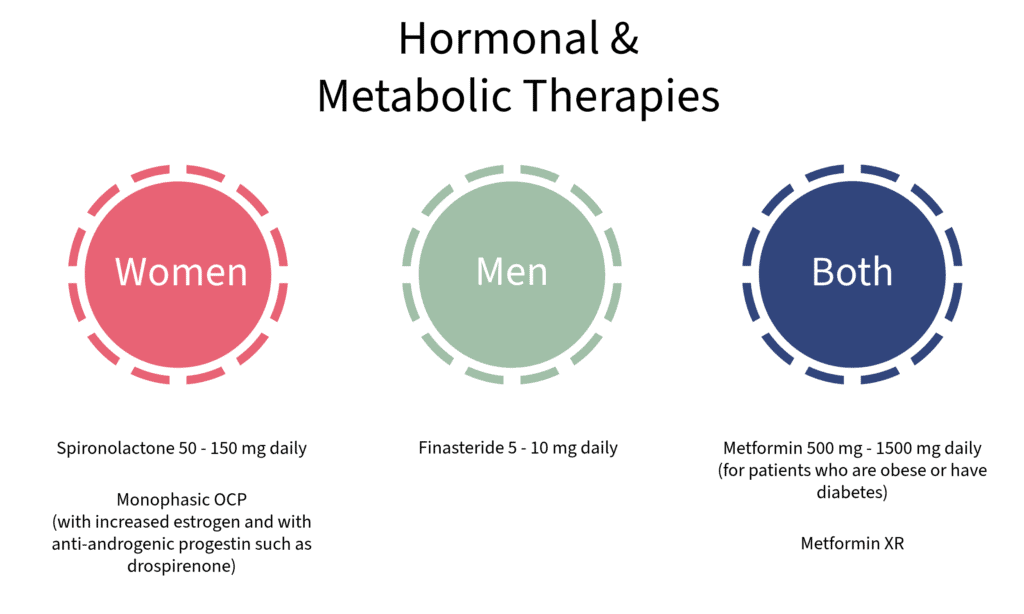
Dr. Shi recommends these hormonal / metabolic therapies:

Hormonal and Metabolic Therapies
For Women - Spironolactone 50 - 150 mg daily. Monophasic OCP (with increased estrogen and with anti-androgenic progestin such as drospirenone)
For Men -- Finasteride 5-10 mg daily
For Both - Metformin 500 mg - 1500 mg daily (for patients who are obese or have diabetes). Also Metformin XR.

Biologics
Biologics is the last step of treatment. Dr. Shi said providers should learn the basics of biologics so they can explain how it works before they refer to a dermatologist.  The patient must be on at least 90 days of an oral antibiotic before most insurance will allow biologics.

Dr. Shi’s takeaways:

  • Ask the three questions to have a high confidence of diagnosing HS.
  • Refer to dermatology once diagnosed.
  • Screen for metabolic syndromes, inflammatory bowel disease, hormonal and mental health abnormalities.
  • Reverse screen for HS if the patient has Down syndrome.
  • Start antibiotics if the patient has any scarring because biologics is the next step. Most insurance requires 90 days to four months of oral antibiotic to be eligible for biologic treatment, so this is the referral window.
  • More information on HS can be found at hs-foundation.org

    If you’re interested in more of UAMS’ primary care CME/CE, check out our list of upcoming CME/CE here.

Filed Under: Community Health and Education Tagged With: diagnosis and treatment of hidradenitis suppurativa, family medicine approach to hidradenitis suppurativa, hidradenitis suppurativa

Physician Wins Award for High Colorectal Cancer Screening Rate

Dr. Clinton Smith with 1st Choice Healthcare was named the Arkansas Cancer Coalition Healthcare Provider of the Year at the Arkansas Cancer Summit March 7 for his 75 percent rate of colorectal cancer screening with his patients.

The family physician has participated in the UAMS Partnerships in Colorectal Cancer Screening for Arkansas (PiCS-AR!) since 2020, a Centers for Disease Control and Prevention grant that seeks to raise colorectal cancer screening rates in the state. His 75 percent rate is closing in on the national goal of 80 percent set by the National Colorectal Cancer Roundtable.

Clinton Smith, DO
Clinton Smith, DO, physician with 1st Choice Healthcare in Corning, Arkansas

Smith’s first year with the PiCS-AR! grant showed a screening rate of 65 percent. His rate grew to 70 percent in 2021 and has escalated in one year to 75 percent.  He said the reasons for his higher screening rate stem from frequently reminding the patients of screening, making it easy for them to screen, and relaying the facts.

“Each time I have a checkup with a patient (not even necessarily a wellness checkup), I try to mention (screening) and see if they’re due for anything. And if they are, we try to go ahead and facilitate that and get it set up,” said Smith. “The best time to (mention) it, in my opinion, is when you see them. Sometimes people are non-compliant and you may not see them for a while.  Now, it does take extra time, and sometimes I get behind, but I feel that prevention is the key.  It’s better to prevent a problem than to have to treat it later.”

Smith gives his patients several screening options: stool-based tests and a colonoscopy. The stool-based tests (FIT or Cologuard) require that the patient send a sample of their stool in the mail, which takes minutes and is not invasive and requires no dieting, fasting or anesthesia. The colonoscopy is considered the most accurate for colorectal cancer screening, but with his rural patient population in northeast Arkansas, arranging a colonoscopy can be cost- and time-prohibitive.

“I tell them about the options and let them decide. I think the FIT tests have helped a lot. We’re rural, so to get a colonoscopy, you not only have to take a day off of work, you have to drive 30 miles outside of town,” said Smith.

Colorectal cancer is the second deadliest cancer for Americans, and it’s on the rise with younger age groups, according to the American Cancer Society. The rate of new colorectal cancer cases among Americans younger than 55 increased from 11 percent of all cases in 1995 to 20 percent in 2019.  The recommended screening age for those with average risk is 45, which the U.S. Preventive Services Task Force lowered from age 50 two years ago because of this new trend. Screening at an earlier age means cancer will be caught in its first stage and is highly treatable if detected early.

Smith also credits his employer, 1st Choice Healthcare, for allowing him to spend more time with his patients who are often chronically ill and require more than the suggested 15 minutes many physicians are tethered to. 1st Choice is one of two healthcare partners working with the PiCS-AR! five-year grant. Mid-Delta Healthcare System in eastern Arkansas is the latest system to join.

Filed Under: Community Health and Education, News Tagged With: cancer, colon, screening

In Memoriam: Kent McKelvey, M.D., CHE Medical Director and Leader in Genetics Research

February 1, 2022 – Kent McKelvey, M.D., 52, of Little Rock died Monday, Jan. 17. He was an Associate Professor in the Division of Genetics and served as Director of Cancer Genetics Services in the UAMS Winthrop P. Rockefeller Cancer Institute. He was also a long-time medical director for the Department of Family and Preventive Medicine’s Community Health and Education division.

Dr. McKelvey had been battling acute myeloid leukemia for the past five years. His devotion to his patients, his mission in his field and his love of life sustained him through three stem cell transplants, the most recent in July 2021.

A faculty member since 2003, Dr. McKelvey was a founding member of the Division of Genetics and served as Director of Cancer Genetics Services in the Winthrop P. Rockefeller Cancer Institute. He was a champion for Arkansans with Down syndrome and other genetic conditions and was instrumental in establishing the Adult Genetics Clinic at UAMS. He was invested as the inaugural recipient of the Winthrop P. Rockefeller Chair in Clinical Genetics in 2009.

Dr. McKelvey was a nationally recognized leader on the ethical use of predictive genetic testing in clinical medicine and was on the forefront of teaching the responsible use of molecular genetics in preventive medicine. Between his own stem-cell transplants, he tenaciously continued his career seeing patients and families via telemedicine and working closely with the Arkansas Down Syndrome Association on their behalf. After many years of research, despite his ongoing battle with AML, he published definitive guidelines for treatment of adults with Down syndrome in JAMA in October 2020, and continued his collaboration with fellow members on the American College of Medical Genetics Secondary Findings Committee, which resulted in authorship of his final publication on genome sequencing in Nature Genetics in Medicine in May 2021.

Dr. McKelvey is one of six doctors from three generations of his family to practice in the state of Arkansas. He received his medical degree from UAMS in 1996 and completed his residency at the UAMS Family Medicine program in Texarkana. After working in emergency departments in DeQueen and Nashville, Arkansas, and two years in private practice in Mountain Home, he completed a fellowship in medical genetics at his college alma mater, the University of North Carolina at Chapel Hill. In 2003, he returned to Arkansas to raise a family and rejoined UAMS as Director of the Family Medicine Pre-doctoral Program in the Department of Family and Preventive Medicine. Dr. McKelvey served in the Division of Genetics following its establishment in 2008, and continued to hold an additional appointment in Family Medicine. He directed the Medical Genetics Course in the College of Medicine, and was elected by his students for numerous teaching awards.

Dr. McKelvey brought his gift of strength and determination to the diverse roles he served at UAMS throughout his life. He was an intense person with a good sense of humor and a force of vitality wherever he went. Although his career goal was to give back to those around him, he spent much of his final years at UAMS as a patient rather than a physician, and he found himself overwhelmed with gratitude for the physicians, colleagues, nurses and staff who would treat him like family at the only hospital that would ever feel like home. He considered these final years to be the happiest of his life. Dr. McKelvey’s family would like to extend their thanks to all those who cared for him.

Service arrangements are on hold due to the recent pandemic surge, but a celebration of life is being tentatively planned both in Memphis and in Little Rock, and dates will be forthcoming.

He is survived by his wife, Elise; his children, Caroline and Kent David McKelvey III; his stepdaughters, Anna Douglas Piper and Mary Catherine Piper; his sister and fellow UAMS faculty member Dr. Samantha McKelvey; his sister and Neonatal Intensive Care CNP, APRN at ACH, Betsy McKelvey Peeler, and their entire family in your thoughts during this difficult time. He is also survived by his mother and stepfather, Don Varner and Josephine Charlotte Egner Varner, and half-brothers Michael Varner and Matthew McKelvey. He was pre-deceased by father Dr. K. David McKelvey Sr.

Filed Under: Community Health and Education Tagged With: McKelvey

UAMS Receives $2.5 Million CDC Grant to Increase Colorectal Cancer Screening in Arkansas

July 27, 2020 | The UAMS Department of Family and Preventive Medicine has received $2.5 million from the Centers for Disease Control and Prevention (CDC) for a five-year project to increase colorectal cancer screening in Arkansas.

Partnerships in Colorectal Cancer Screening in Arkansas is a project of the Department of Family and Preventive Medicine’s Community Health and Education Division. Alysia Dubriske, director of Community Health and Education at UAMS, is leading the program and managing the grant.

Arkansas ranks near the bottom of the list at 34th in the nation for the number of people per capita who are screened annually for colorectal cancer. Nationwide, colorectal cancer is the second leading cause of cancer-related deaths when men and women are combined.

The American Cancer Society predicts 1,540 Arkansans will be diagnosed with colorectal cancer in 2020 and 610 will die of the disease. According to CDC guidelines, people over the age of 50 should be screened annually for colorectal cancer, and people with a family history of the disease should start at a younger age.

Alyisia Dubriske

Alysia Dubriske

“This grant allows us to address these disparities in Arkansas by working with both health care providers and the public,” Dubriske said. “We will educate providers on evidence-based approaches for increasing colorectal cancer screening and then partner with them to implement those interventions. This will be supported by a communication campaign directed at the public so they better understand the importance of screening.”

The approaches include automatic reminders for health care providers to touch base with patients who are overdue for screenings, increasing public awareness about screening though media and communication efforts, and reducing structural barriers that allow Arkansans in rural areas access to prevention, early stage diagnosis, and treatment.

The program will target primary care clinics, especially in counties with low screening rates and low average household incomes. The program will work directly with providers to teach them best practices and help them implement the techniques in their clinics.

“Ultimately, our goal is to reduce the amount of late-stage colorectal cancer in Arkansas and the number of colorectal cancer deaths in Arkansas,” Dubriske said. “Colorectal cancer is a highly treatable disease, especially if caught early, and we know that screening saves lives. We’re looking forward to partnering with clinics to make a difference.”

UAMS will work with Federally Qualified Health Centers and Arkansas’ Quality Improvement Organization to implement the project.

Filed Under: Community Health and Education

CHE Staff Secures Large Donation for Prison Breastfeeding Program

March 2, 2020 | Incarcerated women who are new breastfeeding moms at the J. Aaron Hawkins Sr. Center in Wrightsville, Arkansas, will have access to over 200 pounds of breastfeeding supplies recently donated by Medela, a leading manufacturer of breast pumps in the United States.

The donation came about through UAMS’ partnership with the Hawkins’ Growing Together program. Growing Together was formed to support the needs of incarcerated pregnant and postpartum women in Arkansas. It includes a lactation program, prenatal education classes, and a mental health support group. Childbirth support will launch soon as part of a pilot grant provided by UAMS’ Translational Research Institute.

Dr. Zelinski with boxes

Melissa Zelinski, Ph.D. with donated boxes from Medela.

Marybeth Curtis, B.S.N., a nurse educator in the UAMS College of Medicine Department of Family and Preventive Medicine, saw the need for breastfeeding supplies and contacted Medela.

Medela gave hospital-grade breast pumps, storage bags, maternity and nursing shirts, lanolin, and other products to the new breastfeeding initiative. The items were donated through Hope Rises, a Little Rock non-profit that offers services to women impacted by addiction, trauma and incarceration.

Annemarie McGahagan, SPAN nutrition coordinator at UAMS, is breastfeeding coordinator for the CDC State Physical Activity and Nutrition grant that helps support Growing Together.

“When Annemarie shared with me the need for breast pumps and supplies for the Growing Together program, my first response was to reach out to Medela,” said Curtis. “I have always been amazed at their generosity. I have learned that acts of charity are waiting all around us once you make the need known.”

Melissa Zielinski, Ph.D., a clinical psychologist in the UAMS College of Medicine’s Department of Psychiatry and Behavioral Sciences, spearheads UAMS’ involvement with Growing Together.

Hope Rises Board - Medela

Board members of Little Rock non-profit, Hope Rises.

“Gender-responsive programs like Growing Together are critical. Many people don’t realize that over 75% of incarcerated women are of childbearing age and about 4% are pregnant at intake to prison. Few prisons have specialty services available to meet incarcerated pregnant women’s needs. It will take time, but we are working toward that goal,” said Zielinski.

All pregnant women at the Hawkins Unit receive their routine pre- and postnatal care and deliver their babies at UAMS.

Other groups have joined in the Growing Together initiative: UAMS lactation specialists, the Department of Family and Preventive Medicine, doctoral-level psychology student interns from UAMS and the University of Central Arkansas who co-lead mental health support groups, retired RNs with the Presbyterian Women USA who teach prenatal classes for the women, and one volunteer who offered to sew lactation capes for the women who would like to use them when breastfeeding during visitation.

For more information, contact Zielinski at mjzielinski@uams.edu.

Filed Under: Community Health and Education

Family and Preventive Medicine Receives 5-Year $3.29 Million Grant from CDC to Reduce Obesity

By Amy Widner

The Department of Family and Preventive Medicine at the University of Arkansas for Medical Sciences (UAMS) has received $3.29 million from the Centers for Disease Control and Prevention (CDC) for a five-year project to reduce obesity, increase physical activity and improve nutrition in Arkansas, especially in the Delta.

The State Physical Activity and Nutrition (SPAN) project funding began Oct. 1 and was awarded to the Department of Family and Preventive Medicine’s Community Health and Education Division. Alysia Dubriske, director of Community Health and Education at UAMS, is leading the grant.

“The whole premise of this grant is to try to reduce obesity rates. The CDC has identified target areas, including access to better nutrition, increasing breastfeeding, encouraging healthier foods and physical activity in early childcare centers, and improving activity-friendly communities,” Dubriske said. “At UAMS’ Department of Family and Preventive Medicine, we already have many projects in these areas, so we are looking forward to combining the progress we’ve already made with the CDC’s support to show measurable improvement on this important health issue.”

UAMS staff will be working in partnership with local leadership and stakeholders across the state, but especially in counties where life expectancy is lower than national and state averages. Many rural counties in the eastern Arkansas Delta fall into this category. Obesity, diabetes, high blood pressure, low physical activity, poverty and lack of access to health care are factors.

The project aims to:

  • Develop and implement food service guidelines for food pantries, early childhood education centers, developmental disability day centers and local parks.
  • Support breastfeeding by partnering with family practice clinics, early childhood education centers and developmental disability day centers and by offering continuing medical education hours and early childhood center and developmental disability center professional development training.
  • Partner with communities to create activity-friendly routes to connect everyday destinations by implementing local policies to include bike routes, sidewalks and trails that increase safety and access for all abilities.
  • Implement nutrition standards and physical activity standards into early childhood education centers across the state by changing the Quality and Improvement Rating System in Arkansas to increase physical activity, increase nutrition and physical activity education to staff, and decrease screen time.

Assisting Dubriske with the project are Christopher Long, Ph.D., senior director of Research and Evaluation at the UAMS Northwest Regional Campus; and Leanne Whiteside-Mansell, Ed.D., director of the Research and Evaluation Division in the UAMS Department of Family and Preventive Medicine, which is part of the UAMS College of Medicine. Bettie Cook, senior research administrator at UAMS, assisted with the successful grant application.

Filed Under: Community Health and Education, Research and Evaluation Division

Three Tests for Carpal Tunnel Syndrome

John Bracey, M.D., hand surgeon with the UAMS Department of Orthopaedic Surgery, said that carpal tunnel syndrome affects 2.7 percent of the population and nets 500,000 surgeries a year in the United States, estimated to be a $2 billion annual impact.

Bracey spoke to family medicine providers at the 40th Annual Family Medicine Intensive Review Course last May, covering how providers can test for carpal tunnel and how to manage it.

A few tests he recommended were:

Tinel’s sign (lightly tapping over the nerve to see if it generates a tingling sensation)

Phalen’s test (pushing the dorsal surface of hands together and holding 30 – 60 seconds)

Carpal Compression Test (Apply pressure with thumbs over the median nerve within the carpal tunnel, located just distal to the wrist crease. The test is positive if the patient responds with numbness and tingling within 30 seconds.)

If the patient shows signs of carpal tunnel syndrome, the provider can conservatively manage with a neutral wrist brace (helpful during sleep), stretching and exercises, ergonomic interventions or steroid injection.

Filed Under: Community Health and Education

  • «Previous Page
  • Page 1
  • Page 2
  • Page 3
  • Page 4
UAMS College of Medicine LogoUAMS College of MedicineUniversity of Arkansas for Medical Sciences
Mailing Address: 4301 West Markham Street, Little Rock, AR 72205
Phone: (501) 686-7000
  • Facebook
  • X
  • Instagram
  • YouTube
  • LinkedIn
  • Pinterest
  • Disclaimer
  • Terms of Use
  • Privacy Statement
  • Legal Notices

© 2026 University of Arkansas for Medical Sciences